
A 10x10 patio (100 square feet) typically costs between $600 and $3,000 installed, depending almost entirely on the material you choose and where you live. Plain broom-finish concrete lands on the low end at roughly $6.50–$15 per sq ft, while flagstone or stamped concrete can push toward $30 per sq ft. That means budgeting anywhere from about $650 for a basic DIY concrete slab to $3,000+ for a professionally installed natural-stone patio isn't unrealistic. The sections below break down exactly where that money goes, which material makes sense for your situation, and how to avoid the surprises that blow up small patio budgets.
How Much Is a 10x10 Patio: Cost Guide & Price Ranges

Felix Carver
27 Jul 2026
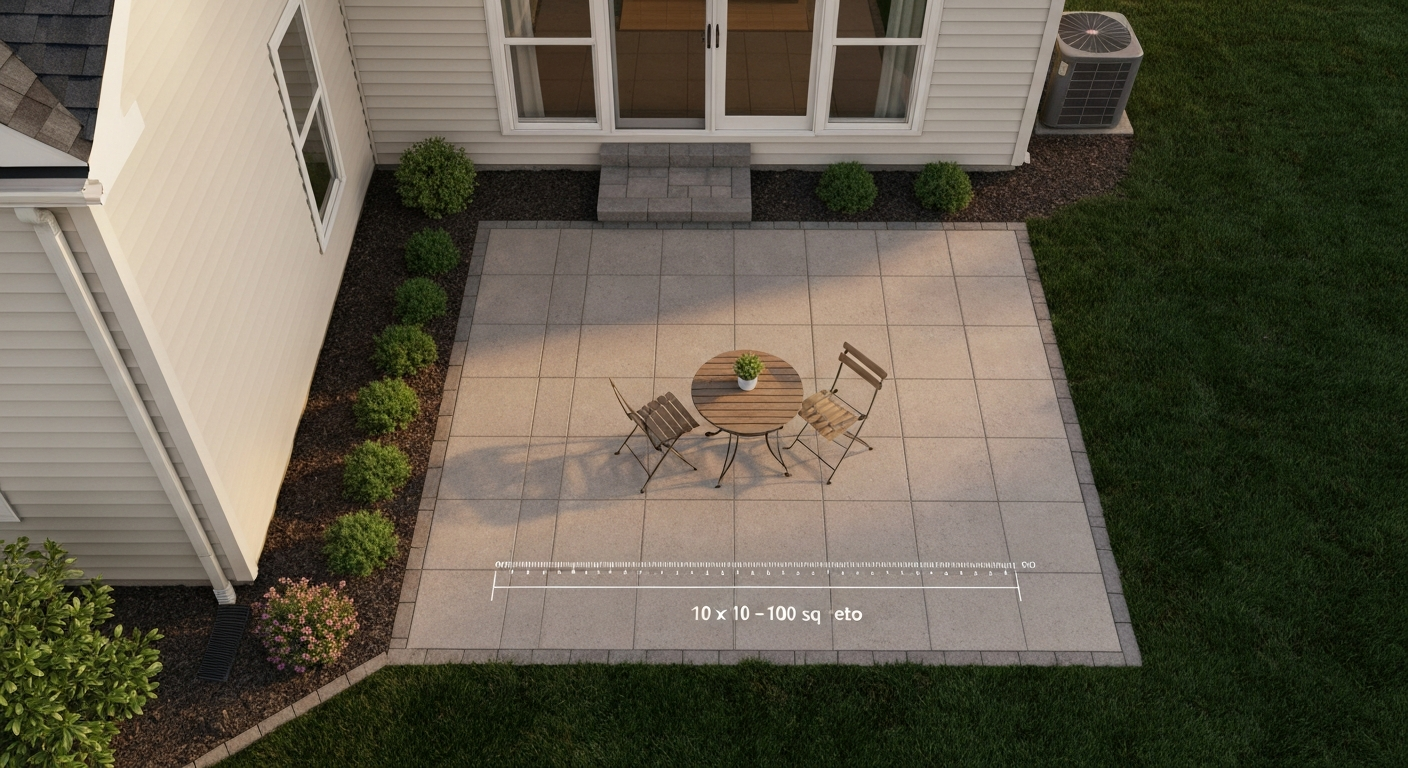
At-a-Glance: 10x10 Patio Cost by Material
Use this table as your quick reference before diving into the details. All prices reflect professionally installed totals for a 100 sq ft patio with standard site access and a 4-inch base or slab depth.
| Material | Cost Per Sq Ft (Installed) | 10x10 Total (Installed) | DIY Savings Potential |
|---|---|---|---|
| Plain Concrete | $6.50–$15 | $650–$1,500 | Moderate ($400–$700 saved) |
| Stamped Concrete | $8–$28 | $800–$2,800 | Low (skill-intensive) |
| Concrete Pavers | $10–$20 | $1,000–$2,000 | Moderate ($300–$600 saved) |
| Brick Pavers | $14–$28 | $1,200–$2,800 | Moderate ($400–$800 saved) |
| Flagstone / Natural Stone | $15–$30 | $1,500–$3,000 | Low-Moderate (heavy labor) |
Cost Per Square Foot by Material (What You're Really Paying For)
The per-sq-ft price isn't just material cost. It bundles excavation, base prep, the actual surface material, labor, and often a basic sealer coat on the day of completion. Here's how each material stacks up.
Plain Concrete
Plain poured concrete runs $6.50–$15 per sq ft installed. At 4-inch thickness, a 10x10 slab uses about 1.23 cubic yards of ready-mix concrete (100 sq ft x 4 in = 33.33 cu ft / 27 = 1.23 yd³). Ready-mix delivered nationally averages around $125–$195 per yard in 2026, so material cost for the concrete itself is roughly $155–$240. The rest of the budget covers crushed stone base, labor, forms, control joints, and finishing. Labor typically represents 40–60% of the total installed cost on a plain slab.
Stamped Concrete
Stamped concrete runs $8–$28 per sq ft installed, with most mid-range projects landing around $12–$25 per sq ft once you include pattern stamps, release agent, integral color, and the extra labor needed to work the surface before it sets. Manufacturer catalogs (e.g., ADMIX) list integral color and powdered pigments and note typical pigment/load and small‑pour labor/product costs of about $40–$200 per truckload Manufacturer catalogs (e.g., ADMIX) list integral color and powdered pigments and note typical pigment/load and small‑pour labor/product costs of about $40–$200 per truckload.. The decorative steps are time-sensitive and labor-intensive, which is why labor can represent 60%+ of the total cost on stamped work. For a 10x10, that translates to $800–$2,800 depending on pattern complexity and color choices.
Concrete Pavers
Concrete interlocking pavers typically cost $3–$8 per sq ft for materials alone. Installed (with compacted gravel base, bedding sand, pavers, edging, and polymeric sand in the joints), the range is $10–$20 per sq ft, so roughly $1,000–$2,000 for a 10x10. Retail 50‑lb bags of polymeric sand commonly cost $25–$75 per bag and installed joint sand (product plus labor) is often estimated at about $0.25–$0.75 per sq ft, see Paver Material Calculator - Gravel, Sand, Pavers, Bags & Cost. Pavers are more DIY-friendly than poured concrete because mistakes are fixable: you can pull up and relay individual units without starting over.
Brick Pavers
Brick pavers (clay-fired units) sit a step above concrete pavers in material cost at around $3–$8+ per sq ft material-only, and $14–$28 per sq ft installed. The premium comes from both the material and the more demanding base preparation. A 10x10 brick patio typically runs $1,200–$2,800 installed.
Flagstone and Natural Stone
Flagstone is the most expensive common option at $15–$30 per sq ft installed. Natural stone material alone can run $7–$16+ per sq ft depending on the stone type (bluestone, travertine, slate, limestone). Installation is labor-heavy because each piece is irregular and needs to be fitted individually. Dry-laid flagstone (set in compacted gravel) costs less than mortar-set (thin-set) installation, which adds both materials and skill requirements.
10x10 Concrete Patio: Detailed Cost Breakdown
Here's what a plain 10x10 concrete patio estimate actually looks like line by line. These numbers reflect a contractor-installed job with standard site access in a mid-cost U.S. market.
| Line Item | Quantity / Notes | Estimated Cost |
|---|---|---|
| Excavation & grading (4" depth) | 100 sq ft, hand or small machine | $80–$200 |
| Crushed stone / gravel base (4") | ~1.25 yd³ delivered | $60–$120 |
| Ready-mix concrete (4" slab) | ~1.23 yd³ + short-load fee | $200–$400 |
| Forming, control joints, edging | Labor + lumber forms | $60–$120 |
| Reinforcement (wire mesh or rebar) | 100 sq ft coverage | $25–$60 |
| Finishing labor (broom finish) | Screeding, floating, finishing | $150–$350 |
| Basic sealer (1 coat) | 100 sq ft | $30–$80 |
| Delivery / mobilization | Truck fee, small-load surcharge | $50–$150 |
| Total (installed, plain concrete) | 100 sq ft | $655–$1,480 |
A few things to watch for: short-load fees are real. Most ready-mix trucks carry 8–10 yards minimum, and a 10x10 slab only needs about 1.25 yards. You'll either pay a short-load surcharge of $50–$150 or your contractor will batch multiple small pours together. Also, if your backyard has limited access for a truck or skid-steer, expect labor costs to jump 15–25%.
10x10 Paver Patio: Detailed Cost Breakdown
A paver patio involves more distinct material layers than a concrete slab, which is why the itemized estimate looks more complex. Here's a sample estimate for a 10x10 concrete-paver patio with a standard 6-inch compacted base.
| Line Item | Quantity / Notes | Estimated Cost |
|---|---|---|
| Excavation & grading (8" depth) | 100 sq ft, removal of soil | $100–$250 |
| Crushed stone base (6") | ~1.85 yd³ delivered & compacted | $90–$175 |
| Bedding sand (1" layer) | ~0.3 yd³ coarse sand | $30–$60 |
| Concrete pavers (material) | 105–110 sq ft with 5–10% waste | $315–$880 |
| Plastic or steel edging restraints | ~40 linear feet perimeter | $40–$100 |
| Polymeric sand (jointing) | ~1–2 bags for 100 sq ft | $30–$100 |
| Labor (base, setting, cutting, finishing) | Contractor rate | $400–$700 |
| Delivery / mobilization | Materials delivery | $60–$130 |
| Total (installed, concrete pavers) | 100 sq ft | $1,065–$2,395 |
Waste allowance matters with pavers. Budget 5–10% extra material for cuts at the perimeter. If you're using irregular natural stone or flagstone, that overage climbs to 10–20%. Forgetting this is one of the most common reasons paver project budgets run short mid-job.
Stamped Concrete, Brick, and Flagstone: Per-Sqft Prices and 10x10 Examples
Stamped Concrete
A single-color stamped pattern (like a basic ashlar slate or cobblestone) on a 10x10 slab typically adds $2–$8 per sq ft over plain concrete pricing. A two-color stamped design with a border detail can add $8–$12 per sq ft. At $12–$25 per sq ft all-in, a 10x10 stamped concrete patio runs roughly $1,200–$2,500 for a mid-range pattern. The main hidden cost: resealing every 2–3 years at roughly $1–$3 per sq ft, which is $100–$300 per maintenance cycle.
Brick Pavers
Brick brings a classic, durable look with a longer lifespan than concrete pavers (50+ years for quality clay brick vs. 25–30 years for concrete pavers). At $14–$28 per sq ft installed, a 10x10 brick patio runs $1,400–$2,800. The premium is real, but so is the longevity and the resale appeal. If you're in the mid-Atlantic or Northeast where brick is culturally common, local contractor familiarity also tends to keep pricing competitive.
Flagstone / Natural Stone
Flagstone pricing swings more than any other material because stone type, thickness, and sourcing vary enormously by region. Dry-laid flagstone over a gravel base costs less than mortar-set on a concrete sub-slab. For a 10x10, expect $1,500–$3,000 installed. If you're near a stone quarry or in a region where bluestone or limestone is locally sourced (parts of Pennsylvania, Tennessee, or the Southwest), you may save 20–30% on material costs compared to national averages.
Similar Sizes: What a 10x12 and 10x20 Patio Will Cost
If a 10x10 feels tight, a 10x12 (120 sq ft) adds about $65–$300 more depending on material, while a 10x20 (200 sq ft) roughly doubles the cost. Here's how the numbers scale.
| Material | 10x10 (100 sq ft) | 10x12 (120 sq ft) | 10x20 (200 sq ft) |
|---|---|---|---|
| Plain Concrete | $650–$1,500 | $780–$1,800 | $1,300–$3,000 |
| Stamped Concrete | $800–$2,800 | $960–$3,360 | $1,600–$5,600 |
| Concrete Pavers | $1,000–$2,000 | $1,200–$2,400 | $2,000–$4,000 |
| Brick Pavers | $1,200–$2,800 | $1,440–$3,360 | $2,400–$5,600 |
| Flagstone | $1,500–$3,000 | $1,800–$3,600 | $3,000–$6,000 |
One thing worth noting: mobilization, equipment, and setup costs are largely fixed regardless of project size. Going from 100 to 120 sq ft rarely doubles the mobilization fee. That means the per-sq-ft rate often drops slightly on a 10x12 or 10x20 compared to a strict 10x10, because the contractor is spreading fixed overhead costs across more square footage. For a 10x20 concrete patio specifically, the installed total often comes in more efficiently per sq ft than the 10x10 price would suggest. For a detailed breakdown of pricing, examples, and cost-saving tips for that exact size, see our guide on how much does a 10x20 concrete patio cost.
10x20 Concrete vs. 10x20 Pavers: Which Makes More Sense?
At 200 square feet, the material choice becomes a bigger financial decision. Here's how the two most popular options compare side by side at the larger size. For detailed price breakdowns and itemized costs for that size, see our guide on how much does a 10x20 paver patio cost.
| Factor | 10x20 Plain Concrete | 10x20 Concrete Pavers |
|---|---|---|
| Installed cost range | $1,300–$3,000 | $2,000–$4,000 |
| Upfront cost | Lower | Higher |
| Repair cost (crack/damage) | High (full slab section) | Low (individual units) |
| Frost heave risk (cold climates) | Moderate (cracking possible) | Low (flexible surface) |
| Long-term lifespan | 25–40 years (with sealing) | 30–50 years |
| Maintenance | Seal every 2–5 years | Re-sand joints every 3–7 years |
| DIY-friendly? | Moderate | Yes |
| Aesthetic variety | Limited (plain or stamped) | High (many shapes, colors, patterns) |
The honest trade-off: concrete is cheaper upfront, but a single crack on a 10x20 slab is harder and more expensive to repair than replacing a few damaged pavers. In freeze-thaw climates like the upper Midwest or New England, pavers tend to hold up better over 20+ years because they flex with ground movement rather than cracking. In milder climates with stable soil (parts of the South and Southwest), a plain concrete slab is often the better value long-term.
Full Line-Item Cost Breakdown: Every Cost You Might Encounter
This is where patio budgets most often go wrong. Homeowners see a per-sq-ft price and assume that's all-in. It rarely is. Here's every cost category you should account for before signing a contract.
- Materials (concrete, pavers, stone): The surface material itself. For concrete, this includes ready-mix delivered by truck. For pavers, it covers the paving units but not the base layers.
- Base / subbase (crushed stone, gravel, road base): Typically 4–6 inches of compacted aggregate under a paver patio; 4 inches under a concrete slab. Cost: $60–$175 for a 10x10 depending on depth and material type.
- Bedding layer (sand): A 1-inch coarse sand layer under pavers for leveling. Usually $30–$60 for a 10x10.
- Labor (excavation, forming, installation, finishing): The largest variable. Includes grading, forming/edging setup, placing and finishing the surface, compaction. Labor is 40–60% of total cost on most projects.
- Demolition: If you're replacing an existing patio or driveway section, demo adds $1–$3 per sq ft, or $100–$300 for a 10x10, not including disposal fees.
- Permits: Small residential patios often don't require permits, but some municipalities require them for any hardscape over 100 sq ft or within certain setbacks. Permit fees typically run $50–$300.
- Drainage: If your yard doesn't naturally drain away from the house, adding a channel drain or sloping the slab adds $150–$500 to a small patio project.
- Edging and restraints: Plastic or steel edge restraints for pavers run $40–$100 for a 10x10. Concrete patios often include a formed edge as part of the slab labor.
- Sealing: A basic sealer coat applied the day of installation (or within the first 28 days for concrete) costs $30–$80 for 100 sq ft in materials. Contractor-applied sealers are often included in quotes for stamped concrete but priced separately for plain slabs.
- Delivery and mobilization: Separate from material pricing, delivery fees for aggregate and sand run $50–$100 per load. Ready-mix concrete short-load surcharges add another $50–$150 for small pours under 3 yards.
- Jointing materials (polymeric sand): For paver patios, budget $30–$100 for polymeric sand including installation labor.
- Waste and overage: Add 5–10% to paver material quantities, 10–20% for irregular flagstone, and a 5% buffer on concrete volume for depth variance and spillage.
Contractor Rates and What a Pro Estimate Looks Like
Most patio contractors price by the square foot, not by the hour, because the scope is predictable. Here's what common pricing structures look like in practice.
| Pricing Method | Typical Range | When You'll See It |
|---|---|---|
| Per square foot (all-in) | $6.50–$30/sq ft | Most common for concrete and pavers |
| Per square foot (labor only) | $3–$10/sq ft labor | When you supply materials yourself |
| Hourly rate (crew) | $45–$100/hr per worker | Smaller jobs, repairs, add-ons |
| Mobilization fee | $100–$400 flat | Common on jobs under 150 sq ft |
| Markup on materials | 10–25% over wholesale | Often embedded in per-sq-ft quote |
A well-structured contractor estimate for a 10x10 patio should include a line item for every cost category above, not just a single total number. If a quote only gives you one number, ask for an itemized breakdown. This matters if scope changes: if you add a step, a drain, or upgrade the finish mid-project, you need a baseline to price the change against. Also ask whether the quoted price includes material delivery, haul-away of excavated soil, and the permit if one is required.
DIY vs. Hiring a Pro: Real Cost Comparison
DIY can genuinely save money on a 10x10 patio, but the savings are only worth it if you have the right skills and tools. Here's an honest look at the numbers.
| Task | DIY Cost (10x10) | Hired Cost (10x10) | DIY Savings |
|---|---|---|---|
| Plain concrete slab | $300–$550 (materials) | $650–$1,500 | $350–$950 |
| Concrete pavers | $400–$800 (materials + rental) | $1,000–$2,000 | $400–$800 |
| Stamped concrete | $400–$700 (materials) | $800–$2,800 | Variable (high skill risk) |
| Flagstone (dry-laid) | $600–$1,200 (materials + rental) | $1,500–$3,000 | $600–$1,200 |
Tools You'll Need for DIY
- Plate compactor (rent: $80–$150/day) for gravel base compaction
- Concrete mixer or wheelbarrow and mixing tools for small pours
- Hand tamper for smaller compaction areas
- Circular saw with diamond blade (rent: $50–$100/day) for cutting pavers or flagstone
- Level, string lines, and stakes for grade control
- Bull float and hand trowels for concrete finishing
- Rubber mallet for setting pavers
- Safety gear: gloves, knee pads, eye protection, and dust mask
When DIY Makes Sense (and When It Doesn't)
Dry-laid pavers or flagstone on a gravel base are the most DIY-realistic options. Mistakes are correctable, the timeline is flexible, and the tools are manageable. A plain concrete slab is doable for someone who has worked with concrete before, but it requires a tight timeline (concrete sets fast) and a helper. Stamped concrete is not a realistic DIY project for most homeowners: the stamping window is narrow, the multi-step coloring process requires experience, and a botched stamp job is very difficult to fix without grinding and overlaying. Mortar-set flagstone or brick requires masonry skills. If the project involves significant grading changes, poor soil conditions, or drainage issues, hire a pro regardless of material.
How to Choose the Right Material (Decision Framework)
Run through this checklist before committing to a material. It won't make the decision for you, but it will quickly narrow your realistic options.
- Budget under $1,000 total: Plain concrete DIY or a basic concrete slab from a local contractor is your only realistic option at this range.
- Budget $1,000–$2,000: Plain concrete (pro-installed), basic concrete pavers (pro or DIY), or stamped concrete with a simple single-color pattern.
- Budget $2,000–$3,000: Most paver and brick options, stamped concrete with more complex patterns, or dry-laid flagstone.
- Budget $3,000+: All options including mortar-set flagstone, premium stone, and covered structures.
- Cold climate (freeze-thaw cycles): Favor pavers over poured concrete to reduce cracking risk over time.
- Hot, dry, stable-soil climate: Concrete slabs hold up exceptionally well and offer the best value.
- Resale value and curb appeal priority: Pavers and natural stone consistently outperform plain concrete in appraisals and buyer perception.
- Low maintenance preference: Concrete (especially sealed) requires the least ongoing maintenance. Pavers need periodic re-sanding; flagstone may need re-leveling over years.
- DIY plan: Choose dry-laid pavers or flagstone. Avoid stamped concrete and mortar-set stone unless you have relevant experience.
- Poor drainage or uneven yard: Any material will benefit from professional grading; don't skip drainage planning regardless of surface choice.
Cost to Cover a 10x10 Patio: Roof, Pergola, and Awning Options
Covering your 10x10 patio adds significantly to the total project cost but dramatically extends how much you actually use the space. Here are the three most common options with realistic pricing.
| Cover Type | Installed Cost (10x10) | Key Notes |
|---|---|---|
| Attached pergola (wood) | $1,500–$4,000 | Partial shade, no rain protection; DIY-feasible with a kit |
| Freestanding pergola (vinyl/aluminum) | $2,000–$6,000 | Longer lifespan; minimal maintenance |
| Retractable awning (motorized) | $1,500–$4,500 | Flexible shade; motor adds cost; professional install recommended |
| Manual retractable awning | $500–$2,000 | Budget option; requires manual operation |
| Solid patio roof (attached to house) | $4,000–$12,000+ | Full weather protection; may require permit and structural assessment |
| Aluminum patio cover / solid louvered roof | $3,000–$8,000 | Durable, low-maintenance; mid-range option for full protection |
A few things to check before budgeting a covered patio: an attached solid roof structure almost always requires a building permit and may need a structural engineer to confirm your home's wall can support the load. Pergolas (open lattice structures) often fall below the permit threshold in many municipalities, but it varies. If you're also pricing out covering an existing patio, the cover cost typically exceeds the patio slab cost itself for anything more substantial than a basic awning.
Regional Cost Variation: Why Your Quote Might Look Different
The same 10x10 concrete patio can cost $750 in rural Georgia and $1,800 in San Francisco. Three main factors drive that gap: labor markets, material transportation costs, and local code requirements.
- High-cost regions (West Coast, Northeast, Hawaii): Expect installed prices to run 25–50% above national averages. Labor rates in metro areas like Seattle, Boston, and New York push contractor rates well above national medians.
- Mid-cost regions (Midwest, Mid-Atlantic, Mountain West): Prices generally track within 10–15% of national averages. Chicago, Denver, and Atlanta tend to be reliable benchmarks.
- Low-cost regions (South, rural markets): Labor costs are often 20–30% below national averages. States like Alabama, Mississippi, and parts of Texas often produce quotes well under mid-range estimates.
- Material proximity: If you're near a concrete batch plant or aggregate quarry, delivery surcharges drop significantly. Short-load fees and material delivery minimums hit small urban jobs harder.
- Local code requirements: Some municipalities require inspections, engineered drainage plans, or specific setback distances for patios over a certain size. These add cost and timeline.
- Seasonal demand: In northern climates, booking a patio contractor in spring or early summer (peak demand) often costs 10–20% more than scheduling in late summer or fall.
The best way to calibrate for your market is to get at least three local quotes from licensed contractors rather than relying solely on national average data. Use national ranges to screen for outliers (quotes that seem suspiciously low or high) rather than as a hard target number.
How to Get Accurate Quotes (Before You Call a Contractor)
Contractors price more accurately when you come prepared. Here's what to have ready and what to ask.
What to Prepare Before Getting Quotes
- Measure the area precisely: length x width plus any irregular shapes. Sketch it on paper with dimensions.
- Take photos of the site: show the current surface, slope, any drainage issues, and access paths for equipment.
- Note the access situation: Is there a gate? Steps? Narrow side yard? Equipment access directly affects labor cost.
- Check your local permit requirements: A quick call to your city or county building department takes 10 minutes and prevents surprises.
- Decide on a surface material before quotes (at least narrow it to two options): Asking for a concrete and paver quote simultaneously is fine, but asking for five options creates confusion and vague estimates.
- Know your drainage situation: Does water pool near the patio area? Is the grade sloped away from the house? Tell the contractor.
- Identify any underground utilities: Call 811 (the free national 'call before you dig' service) at least 3 business days before excavation begins.
Questions to Ask Every Contractor
- Is this quote all-inclusive (demo, base, materials, labor, sealing, cleanup) or does it exclude anything?
- What is your base preparation depth and compaction method?
- Does the quote include haul-away of excavated soil and debris?
- Will you pull the permit if one is required, and is that cost included?
- What is your warranty on workmanship, and how long does it cover settling or cracking?
- Who will actually be on-site doing the work — your crew or subcontractors?
- What is the payment schedule, and do you require a deposit before materials are ordered?
- How long will the project take from start to finish, and what weather conditions would delay it?
- Can you provide references from similar jobs in my neighborhood?
Budgeting Worksheet: Plan Your 10x10 Patio Cost
Use this checklist to build your own budget estimate before talking to a contractor. Fill in the ranges that apply to your material choice and market.
| Budget Line Item | Low Estimate | High Estimate | Your Number |
|---|---|---|---|
| Surface material (concrete, pavers, stone) | $ | $ | |
| Base / subbase (gravel, aggregate) | $ | $ | |
| Bedding sand (pavers only) | $ | $ | |
| Labor (excavation, install, finishing) | $ | $ | |
| Edging / restraints | $ | $ | |
| Jointing material (polymeric sand) | $ | $ | |
| Sealer | $ | $ | |
| Delivery / mobilization fees | $ | $ | |
| Demolition (if replacing existing surface) | $ | $ | |
| Permit (if required) | $ | $ | |
| Drainage (if needed) | $ | $ | |
| Waste / material overage buffer (10%) | $ | $ | |
| Contingency (10–15% of subtotal) | $ | $ | |
| TOTAL | $ | $ |
The contingency line is not optional. On projects this small, a single unexpected issue (hitting a large rock, discovering buried debris, or needing an extra compaction pass) can add $100–$300 to the job. A 10–15% contingency buffer is standard practice on any hardscape project.
Sample Project Scenarios
| Scenario | Material | DIY or Pro | Estimated Total |
|---|---|---|---|
| Budget backyard slab | Plain concrete, broom finish | Pro | $700–$1,100 |
| Weekend DIY paver project | Concrete pavers, 6" base | DIY | $450–$850 |
| Mid-range upgrade | Brick pavers, pro-installed | Pro | $1,400–$2,200 |
| Decorative slab for entertaining | Stamped concrete, one-color | Pro | $1,200–$2,000 |
| Premium natural-stone retreat | Dry-laid flagstone | Pro | $1,600–$2,800 |
| Covered budget patio | Plain concrete + manual awning | Mix | $1,200–$2,500 |
Maintenance Costs and Long-Term Lifecycle Thinking
A patio's true cost isn't just what you pay on installation day. Here's what each material costs to maintain over a 10-year period on a 100 sq ft patio.
| Material | Sealing Frequency | Sealing Cost (10x10) | Typical Repairs | 10-Year Maintenance Estimate |
|---|---|---|---|---|
| Plain Concrete | Every 3–5 years | $50–$150 per application | Crack patching ($100–$400) | $200–$700 |
| Stamped Concrete | Every 2–3 years | $100–$300 per application | Crack patching, color refresh | $500–$1,500 |
| Concrete Pavers | Optional (every 3–5 years) | $50–$150 per application | Re-sanding joints, resetting units | $200–$600 |
| Brick Pavers | Rarely required | Minimal | Re-sanding joints, occasional resetting | $100–$400 |
| Flagstone | Optional (every 3–5 years) | $50–$150 per application | Re-leveling, re-mortaring joints (if mortar-set) | $200–$800 |
Stamped concrete has the highest ongoing maintenance cost of the common options because the sealer is what protects the color and pattern. Let it go too long without resealing and you'll face a much more expensive color refresh or overlay. Brick pavers are actually the lowest-maintenance option over time: they don't need sealing and individual units can be reset or replaced as needed without touching the rest of the surface. That longevity and repairability is a big part of why brick commands a price premium upfront.
Your Next Steps: From Planning to Breaking Ground
Here's a practical sequence to move from 'thinking about a patio' to having one installed without budget surprises.
- Set your budget ceiling first, then choose materials that fit it (not the other way around).
- Measure your space and take photos of the site, access paths, and existing drainage.
- Call 811 to request a utility locate before any digging — it's free and required by law.
- Check with your local building department whether a permit is needed for your patio size and location.
- Narrow your material choice to two options using the decision framework above.
- Request at least three itemized quotes from licensed local contractors.
- Compare quotes line by line, not just total price — scope differences matter more than a $100 price gap.
- Confirm your contractor's warranty terms in writing before signing.
- Schedule the project in the off-peak season (late summer to fall in northern climates) if your timeline allows, to potentially reduce costs.
- Use the budgeting worksheet above to verify the quote covers all line items before signing.
If you're also considering upgrading from a 10x10 to a 10x12 or 10x20, or want to dive deeper into specific material costs like a 10x10 concrete patio or a 10x10 paver patio in detail, those topics are covered in dedicated articles on this site. For a focused cost overview, see our article on how much does a 10 x 10 patio cost. For a deep dive into paver-specific pricing, material choices, and an itemized 10x10 paver patio estimate, see our guide on how much does a 10x10 paver patio cost. Covering your new patio is also worth planning upfront since combining patio and cover quotes from the same contractor often saves mobilization costs. For a detailed breakdown of cover options and costs, see how much does it cost to cover a 10x10 patio.
Assumptions Behind These Price Ranges
Every price range in this article is based on the following assumptions. If your project differs, adjust accordingly.
- Site conditions: Level or near-level grade with standard soil. Significant regrading, rocky soil, or clay that requires special compaction will add cost.
- Access: Standard residential access with enough clearance for a small skid-steer or wheelbarrow delivery. Tight urban lots, stairs, or narrow gates add 15–25% to labor.
- Concrete slab thickness: 4 inches standard. High-load applications (heavy furniture, vehicle overhang) may require 6 inches and rebar, adding $1–$2 per sq ft.
- Paver base depth: 6 inches of compacted aggregate. Cold climates or areas with expansive soils may require 8–12 inches, increasing base material and excavation costs.
- No demolition included unless noted: Removing an existing surface adds $1–$3 per sq ft.
- No drainage work included unless noted: Channel drains or regrading for drainage add $150–$500+.
- No permits included unless noted: Permit fees are local and variable.
- National average pricing: Regional adjustments of plus or minus 30–50% apply based on your market.
- Data current as of mid-2026: Ready-mix concrete, aggregate, and labor costs are subject to change with material markets and regional contractor demand.
FAQ
How much does a 10x10 (100 sq ft) patio cost total and per sq ft for common materials?
Typical installed cost ranges (assumptions: 100 sq ft, 4" slab or standard paver base, average site access, no major grading): - Plain poured concrete (broom finish): $6.50–$15 / sq ft → $650–$1,500 total. - Stamped/decorative concrete: $8–$28 / sq ft → $800–$2,800 total. - Interlocking concrete pavers: $10–$30 / sq ft → $1,000–$3,000 total. - Brick pavers: $14–$28 / sq ft → $1,400–$2,800 total. - Flagstone / natural stone: $15–$30+ / sq ft → $1,500–$3,000+ total. Assumptions cited: national installed ranges aggregated from industry sources (see facts). Local labor, complexity, finishes, drainage and site prep drive where you fall in the range.
What specifically does a 10x10 plain concrete patio cost (materials, labor, and math)?
Quantity and sample math (4" thick): 100 sq ft × 4 in = 33.33 cu ft ≈ 1.23 cubic yards of concrete. Using delivered ready‑mix ~$125–$195/yd³: material cost ≈ $155–$240. Add: base/crusher‑run (est. $100–$300 depending on access), forms & reinforcement ($50–$200), finish labor & placement ($350–$900). Typical total: $650–$1,500 installed. Assumptions: includes small delivery fee; excludes major demo, utility relocation or specialty color/finish.
What does a 10x10 paver patio cost (materials, base, labor)?
Common installed range: $1,000–$3,000 for 100 sq ft. Cost drivers and sample line items: - Paver units (material-only): $3–$16 / sq ft depending on concrete/brick/natural stone → $300–$1,600. - Base stone & compaction (crushed stone): $100–$400. - Bedding sand & polymeric joint sand: $50–$250. - Edge restraint (plastic/metal/curb): $50–$300. - Labor for base prep & laying: $600–$1,200. - Delivery, saw cuts, cleanup: $50–$300. Expect 5–10% material overage for cuts; irregular flagstone requires higher material allowance.
How do 10x12 and 10x20 patios compare cost-wise to a 10x10?
Scale effects: per‑sq‑ft installed costs often decrease slightly as area increases because fixed mobilization and setup costs spread out. Approximate totals: - 10x12 (120 sq ft): multiply per‑sq‑ft range by 120. Example plain concrete: $6.50–$15 → $780–$1,800 total. - 10x20 (200 sq ft): example plain concrete: $1,300–$3,000 total. Pavers and stamped concrete similarly scale; expect per‑sq‑ft to drop up to 5–15% on larger contiguous projects. Account for added excavation, drainage, or steps if grade changes.
How much to cover a 10x10 patio (roof, pergola, or awning)?
Cover options vary widely: - Retractable or fixed awning: $300–$2,000+ (DIY to mid‑quality motorized units) for 10x10 coverage. - Pergola (wood, basic): $800–$4,000+ depending on materials, finish, and labor. - Solid roof/roof extension (ties into house): $2,500–$10,000+ depending on roofing tie‑in, framing, permits and finishing; requires flashing, structural tie‑in and often a contractor. Assumptions: prices include materials + labor; pergolas/solid roofs often require posts, footings, and sometimes electrical for lighting/fan. Check local codes for eave/roof connections and permit requirements.
What line‑item costs should I budget for when planning a 10x10 patio?
Common line items to include in your budget (with rough ranges for 10x10): - Materials (concrete/pavers/stone/brick): $300–$1,600 - Base/subbase (crusher‑run, gravel): $100–$400 - Labor (excavation, install, finishing): $350–$1,200 - Demo/old patio removal: $100–$800 - Drainage (drains, slope correction): $100–$700 - Edging/restraint: $50–$300 - Sealing/finishing (sealant, stains): $50–$300 - Delivery/short‑load fees: $50–$300 - Permits/inspections (if required): $0–$500 Total typical: $650–$3,000+ depending on material/finish. Use this list as a checklist when requesting quotes.
Next Articles
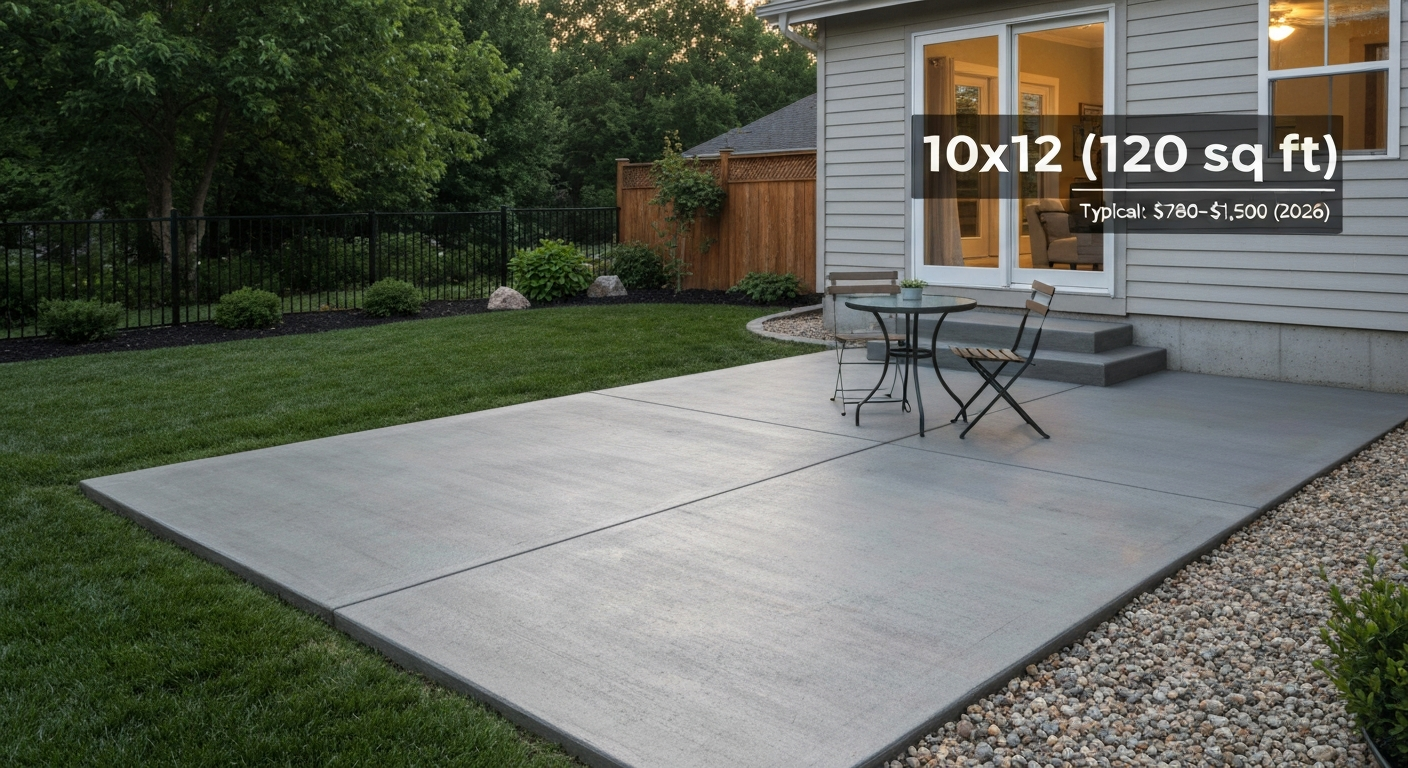
How Much Does a 10x12 Concrete Patio Cost? Instant Estimate
10x12 concrete patio cost: expect $8–$12/sq ft ($960–$1,440), full breakdowns, DIY vs pro, and budgeting tips.

How Much Does a 10 x 10 Patio Cost in 2026?
10x10 patio cost in 2026: installed price ranges for concrete, pavers, stone, brick, plus DIY, site prep, permits factor
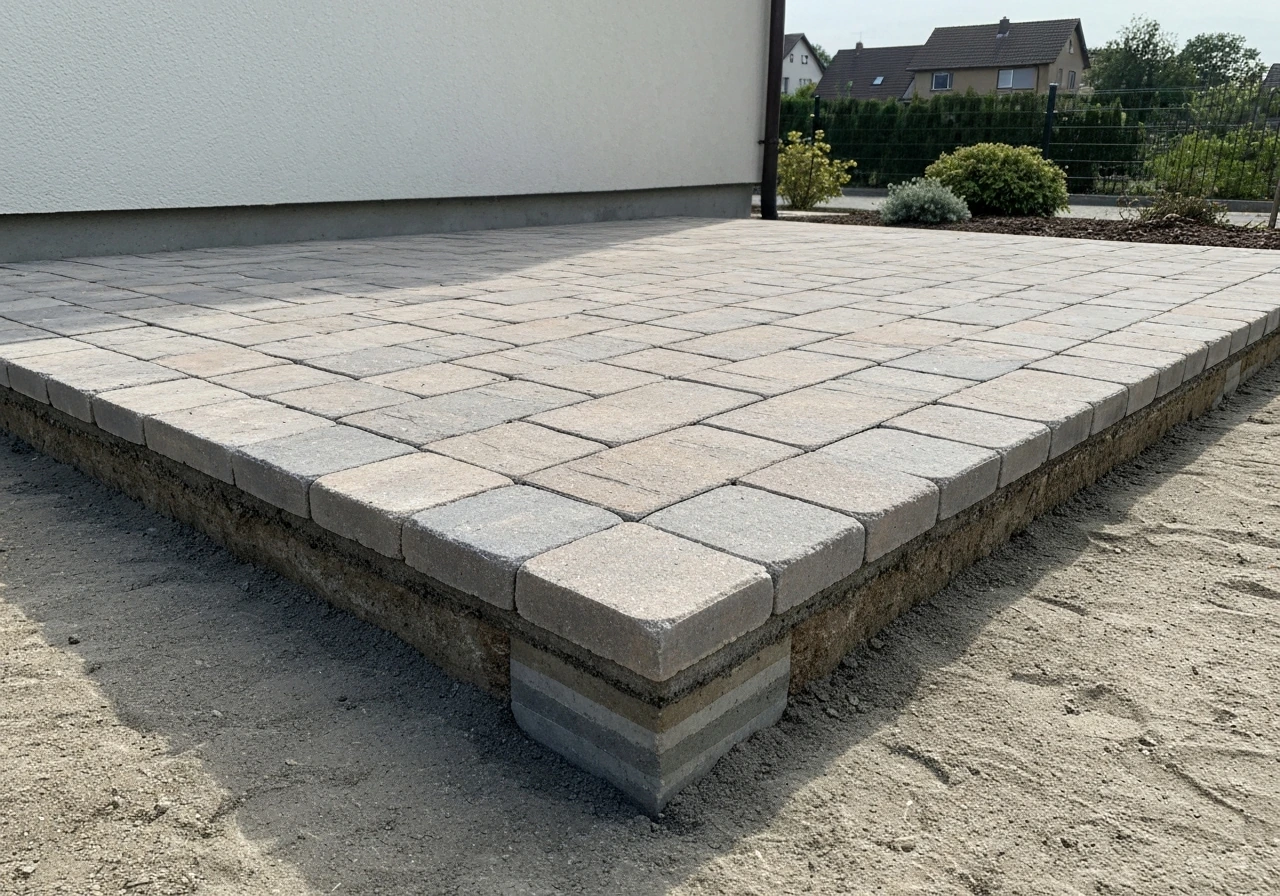
How Much Does a 10x10 Paver Patio Cost? Price Breakdown
Estimate a 10x10 paver patio total cost with material vs install breakdown, add-ons, and DIY vs contractor pricing facto