
A 10x10 concrete patio (100 square feet) typically costs between $600 and $1,200 for a plain, professionally installed slab at the budget end, with most homeowners landing around $800 to $1,500 all-in at the common $8 to $15 per square foot range. If you want decorative finishes like stamped or exposed aggregate, expect $1,200 to $3,000 or more for the same 100 square feet. The most-cited benchmark is roughly $10 per square foot for a standard 3.5 to 4-inch broom-finished slab, which puts your mid-range budget right around $1,000 before any upgrades.
How Much Does a 10x10 Concrete Patio Cost in 2026?

Felix Carver
31 May 2026
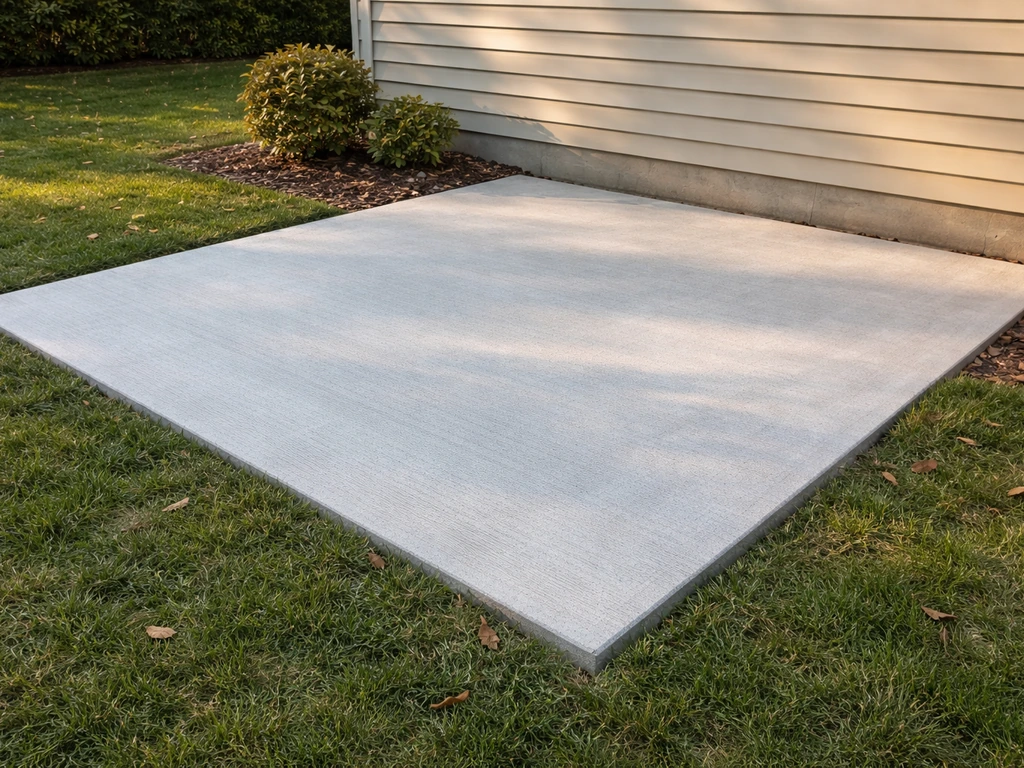
What a 10x10 concrete patio actually costs today
Here are the real numbers pulled from current pricing data. Plain concrete at $4 to $12 per square foot installed gives you a range of $400 to $1,200 for 100 square feet. The $10 per square foot average puts you at $1,000. At the upper end, decorative finishes push installed costs to $20 to $30 per square foot, which means $2,000 to $3,000 for a 10x10. If you're getting quotes and someone comes in at $600, they're probably cutting corners on base prep or thickness. If someone quotes $2,500 for a plain gray slab, ask why.
| Finish Type | Cost per Sq Ft (Installed) | 10x10 Total Estimate |
|---|---|---|
| Plain / broom finish | $6 – $13 | $600 – $1,300 |
| Exposed aggregate | $7 – $12 | $700 – $1,200 |
| Stamped concrete | $8 – $14 | $800 – $1,400 |
| Stained / colored | $9 – $16 | $900 – $1,600 |
| Stamped + colored (decorative) | $15 – $30 | $1,500 – $3,000 |
One thing worth noting: a 10x10 is a small pour. Contractors have fixed mobilization costs (showing up, setting up, ordering a partial concrete truck), so the per-square-foot rate is often higher on small jobs than on larger ones. If you're comparing a 10x10 quote to pricing articles that use 400 or 500 square feet as the baseline, adjust for that reality.
Where the money actually goes: materials, prep, and labor
When a contractor prices a concrete patio, they're not just charging for the concrete itself. The slab is maybe 30 to 40 percent of the total cost. Here's how a typical 10x10 job breaks down at around $1,000 to $1,200 all-in.
| Line Item | Typical Cost for 10x10 | Notes |
|---|---|---|
| Excavation and grading | $100 – $250 | Depth depends on soil and site conditions |
| Gravel sub-base (4 inches) | $50 – $150 | Compacted base layer is not optional |
| Wire mesh or rebar | $30 – $80 | Mesh is common; rebar for heavier loads |
| Concrete (ready-mix delivery) | $150 – $300 | About 1.2 to 1.5 cubic yards at 4 inches thick |
| Finishing labor | $150 – $350 | Screeding, floating, broom finishing, edging |
| Control joints / saw cutting | $30 – $75 | Typically 4 cuts on a 10x10 |
| Sealer (optional but recommended) | $50 – $150 | Extends life; often skipped on budget jobs |
| Mobilization / minimum charge | $100 – $300 | Small jobs often carry a minimum fee |
The sub-base is the part that separates a patio that lasts 20 years from one that cracks in three. A proper gravel base, compacted with a plate compactor (not just tamped by hand), gives the slab a stable foundation that resists frost heave and differential settlement. Pouring over uncompacted fill or topsoil is one of the most common reasons patios fail early. This is not a step to let a contractor skip to hit a lower quote.
Thickness matters too. A standard residential patio runs 3.5 to 4 inches thick. Every extra inch adds roughly $1 to $2 per square foot, so going to 5 or 6 inches (useful if vehicles will occasionally park on it) adds $100 to $200 to a 10x10 job. Reinforcement also matters: wire mesh is standard for patios, but if the soil is unstable or you're near a slope, a contractor might spec rebar instead, which costs more in both material and labor.
Decorative upgrades and how much each one adds
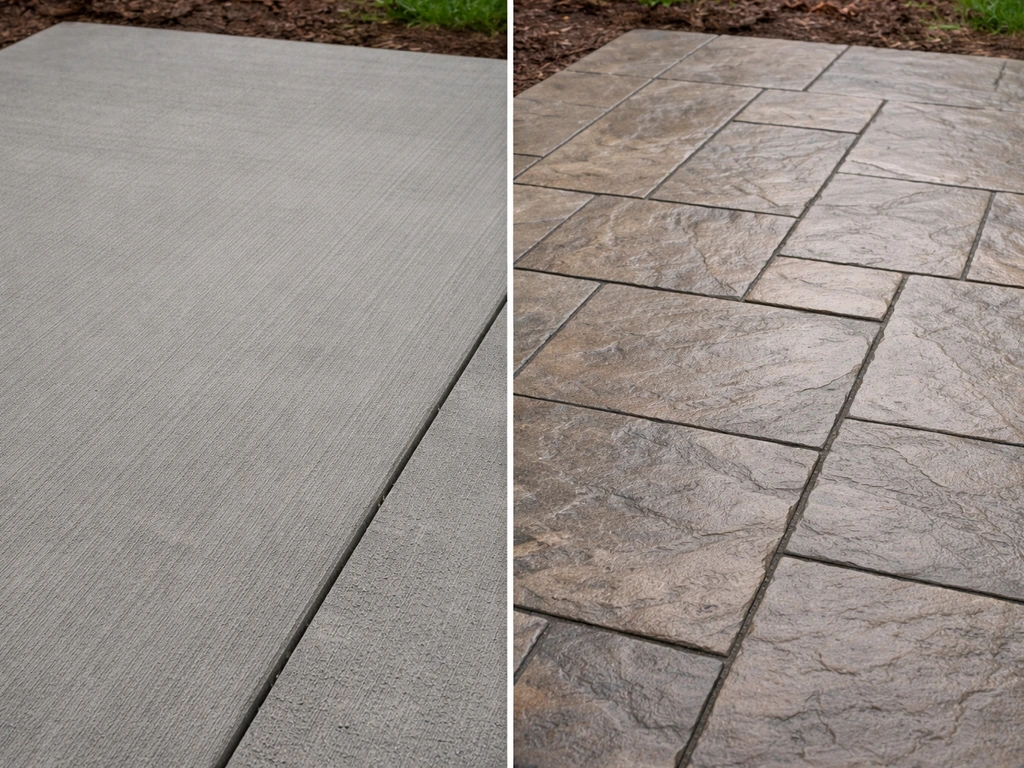
If plain gray concrete doesn't excite you, there are several ways to dress it up, and each one adds a real dollar amount to the quote. Knowing the per-square-foot adder helps you sanity-check a contractor's decorative pricing.
- Stamped concrete: adds roughly $2 to $8 per square foot on top of a plain pour. Popular patterns like flagstone, slate, or cobblestone require texture mats, release agent, and more finishing time. On a 10x10, that's $200 to $800 extra.
- Integral color (color mixed into the concrete): adds $1 to $3 per square foot, or about $100 to $300 for a 10x10. Fades less than surface stain because the pigment runs all the way through.
- Exposed aggregate finish: the finisher washes away the surface paste to reveal the stone. Costs $7 to $12 per square foot installed. On a 10x10, expect $700 to $1,200 total.
- Acid stain or concrete stain: applied after the slab cures. Costs $3 to $15 per square foot for professional application, so $300 to $1,500 on a 10x10 depending on complexity.
- Broom finish (standard): the baseline non-decorative finish. Runs $6 to $13 per square foot all-in.
- Sealer: even on plain concrete, sealing every 2 to 3 years protects against staining and freeze-thaw damage. First application at pour typically costs $50 to $150 for a 10x10 and is worth including.
One thing contractors sometimes bundle and sometimes don't: saw-cut control joints. These are the lines cut into the slab within 4 to 12 hours of finishing to control where cracks form (instead of letting the slab crack randomly). blank" rel="noopener noreferrer">They should be cut at least 1/4 of the slab depth, which on a 4-inch slab means at least 1 inch deep. On a 10x10, you'd typically have 4 to 6 joints. Make sure this is in the quote, not an afterthought.
DIY vs. hiring a contractor: what you actually save and what can go wrong
DIY on a 10x10 concrete patio is genuinely doable for someone who's comfortable with physical labor and willing to do their homework. The material cost for a 10x10 DIY pour typically runs $440 to $1,600 depending on finish and site conditions. Compare that to the $800 to $1,500 professional range for a plain slab, and the savings start to look real but not dramatic, especially once you factor in tool rental.
| Cost Component | DIY | Professional |
|---|---|---|
| Materials (concrete, gravel, mesh) | $300 – $600 | Included in quote |
| Tool rental (plate compactor, screed, float) | $100 – $200 | Included in quote |
| Ready-mix concrete delivery | $150 – $300 | Included in quote |
| Labor cost | $0 (your time) | $300 – $700 |
| Typical total | $440 – $1,100 | $800 – $1,500 |
The catch with DIY concrete is that the work is unforgiving. Concrete has a working window of roughly 30 to 60 minutes in warm weather, and mistakes made in that window are permanent. The most common DIY failures are: pouring over uncompacted fill (leads to cracking and settling), adding too much water to make the mix easier to work (weakens the slab significantly), poor slope and drainage (water pools against the house), rushing or skipping saw-cut joints (random cracking), and inadequate curing after the pour. Getting the slope right matters more than most beginners expect: the slab should pitch away from the house at about 1/8 to 1/4 inch per foot, and that has to be built into the pour, not corrected afterward.
Where contractors earn their cost: they have the crew to place and finish concrete fast enough to do it right, the equipment for proper compaction, and the experience to read weather windows. A bad pour in 90-degree direct sun or with rain threatening will fail, and they know how to avoid that. For a first-time DIYer, a 10x10 is a manageable project, but go in knowing the failure modes before you order the truck.
Why your final cost might be higher (or lower) than the average
Regional labor rates are probably the biggest single variable. Concrete work in the Northeast, California, or Pacific Northwest will run toward the top of the range. In the South and Midwest, labor is often significantly cheaper. A $10 per square foot average is just that: an average across wildly different markets.
Beyond geography, here are the factors that move your specific quote up or down most reliably:
- Demo and removal of an existing patio: adds $2 to $4 per square foot, or roughly $300 to $600 for a 10x10 job. If you have an old slab that needs to come out, get that line item quoted separately so you can see what it adds.
- Soil conditions: soft, clay-heavy, or poorly draining soil requires more base prep and possibly extra gravel. This adds cost and isn't always predictable until the ground is opened up.
- Site access: if a concrete truck can't get close to the pour site, the crew has to use a pump or wheelbarrow the concrete. Pump truck rental adds $300 to $600.
- Slope or grading needs: a flat, level yard makes prep fast. A sloped or uneven site takes longer and may need fill or retaining features.
- Contractor minimums: many concrete contractors won't mobilize for under $800 to $1,000, regardless of the job size. On a 100 square foot job, that minimum matters.
- Time of year: scheduling in spring or fall peak season may cost more. Off-season (late fall, winter in mild climates) sometimes gets you a better price.
How to get a quote you can actually compare
The biggest problem homeowners run into when getting concrete patio quotes is that two quotes at very different prices are often for very different jobs. One contractor's $900 quote might not include gravel base, sealer, or haul-off, while another's $1,400 quote is fully turnkey. You can only compare apples to apples if you specify the same scope to every contractor.
When you call for quotes, give every contractor the same spec sheet and ask them to price against it line by line. Here's exactly what to include:
- Dimensions: 10 feet x 10 feet, 100 square feet total.
- Thickness: 4 inches nominal (or 3.5 inches if that's your preference).
- Reinforcement: 6x6 wire mesh OR #3 rebar on 18-inch centers (specify which you want, or ask them to quote both).
- Sub-base: 4 inches of compacted gravel base after excavation.
- Finish type: broom finish (or whatever decorative option you want, specified clearly).
- Control joints: saw-cut within 12 hours of pour, minimum 1 inch depth, pattern specified.
- Drainage/slope: 1/4 inch per foot pitch away from the structure.
- Sealer: one coat of penetrating sealer applied after 28-day cure (optional, ask them to price it separately).
- Demo/haul-off: include if you have an existing surface to remove, or confirm it's not included.
- Is the price labor-only or does it include materials and concrete delivery?
Get at least three quotes. If one comes in dramatically lower than the others, ask which of those line items they've left out or reduced. A contractor who pushes back on specifying the sub-base or reinforcement is telling you something important about their work.
Concrete vs. pavers vs. other materials: choosing what's right for your budget
Concrete is usually the most affordable hard-surface patio option on a per-square-foot installed basis, which is a big part of why it's popular. But it's worth knowing where the other options land before you commit. If you want a different surface, the next question is how much it costs to cover a 10x10 patio with pavers or other materials how much does it cost to cover a 10x10 patio.
| Patio Type | Installed Cost per Sq Ft | 10x10 Total Estimate | Notes |
|---|---|---|---|
| Plain concrete | $6 – $13 | $600 – $1,300 | Lowest maintenance, most affordable |
| Stamped/decorative concrete | $12 – $30 | $1,200 – $3,000 | Looks premium; harder to repair |
| Concrete pavers | $10 – $35 | $1,000 – $3,500 | Easier repairs; more initial cost |
| Brick pavers | $10 – $25 | $1,000 – $2,500 | Classic look; labor-intensive install |
| Flagstone | $15 – $40 | $1,500 – $4,000 | High-end look; most expensive option |
| Composite deck (144 sq ft) | $15 – $32 | $2,200 – $4,600 | Different use case; requires structure |
Pavers cost more upfront than plain concrete but have one practical advantage: individual pavers can be lifted and replaced if something cracks or settles, where a cracked concrete slab is much harder to repair invisibly. If you're leaning toward a decorative look, a stamped concrete patio and a paver patio can land in similar price territory on a 10x10, so it's worth getting quotes for both.
A 10x10 paver patio cost will depend on the paver material, base preparation, and installation scope, so be sure to compare quotes line by line how much does a 10x10 paver patio cost. A 10x10 paver patio has its own pricing dynamics worth comparing directly. A 10x20 paver patio typically costs more than a 10x10, mainly because you are paying for additional pavers, base prep, and labor how much does a 10x20 paver patio cost.
Decks are a different conversation entirely. A deck adds elevation and works well where grade change is an issue, but for a ground-level outdoor space, a concrete patio will almost always cost less. At $2,200 to $4,600 for a comparable 144 square foot composite deck, you're paying a significant premium for what's essentially a functional difference, not just aesthetics.
The straightforward recommendation for most homeowners on a tight budget: plain or broom-finished concrete gives you the most square footage per dollar, holds up well with basic sealing every few years, and is the easiest to get quoted accurately. If you want something that looks more high-end, compare stamped concrete quotes to paver quotes for the same 10x10 footprint before you decide. The price difference often surprises people.
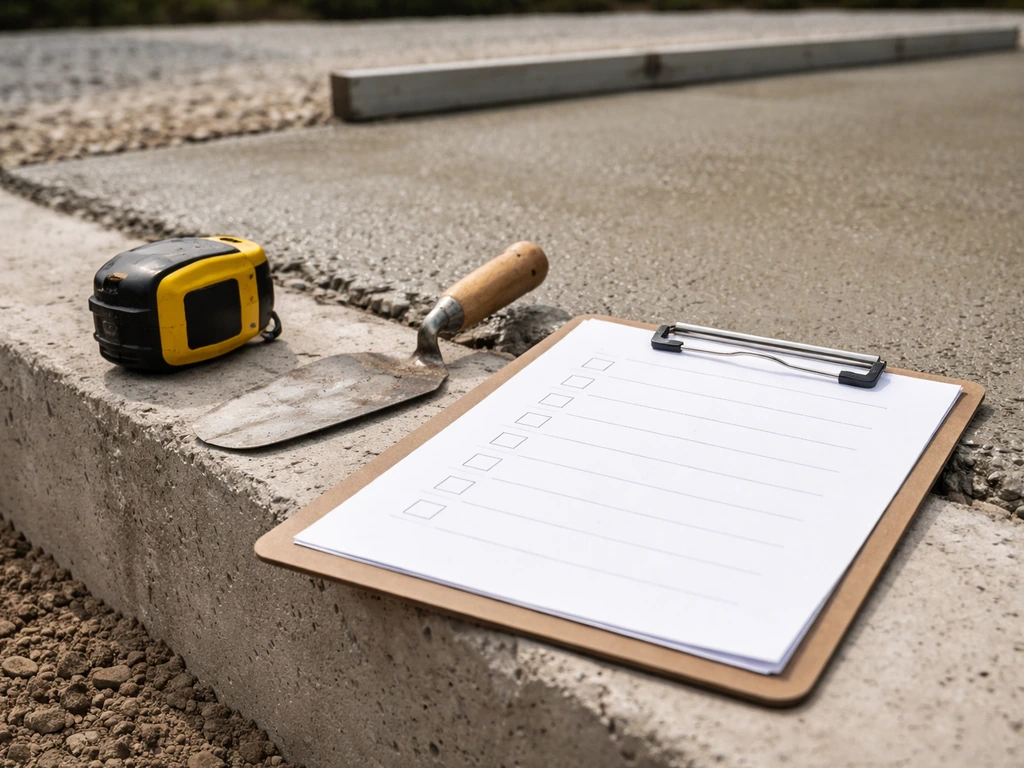
Your budget checklist before you call contractors
Before you start calling for quotes, nail down a realistic budget range and a checklist of what you need. For a basic 10x10 plain concrete patio in most U.S. markets in 2026, budget $900 to $1,400 all-in and be prepared for it to hit $1,500 to $1,800 if demo or difficult soil is involved. For a stamped or decorative finish, your working budget should be $1,500 to $2,500 for this size.
- Decide on thickness: 4 inches is standard for residential patios. Go thicker if vehicles will drive on it.
- Decide on finish before getting quotes so every contractor prices the same thing.
- Account for demo/removal if there's an existing surface: budget $300 to $600 extra.
- Ask about minimum job charges upfront, especially if you're in a high-cost market.
- If you're seriously considering DIY, price out tool rental and concrete delivery first to see what the real savings are.
- Get three quotes with the same written spec. The middle quote is usually closest to market rate.
- Ask each contractor whether the quote includes saw-cut joints, sealer, and cleanup/haul-off, or if those are extra.
A 10x10 is a manageable, well-defined project, and you have enough information now to walk into any contractor conversation without getting surprised. If you're considering expanding the footprint later, pricing a 10x12 or 10x20 concrete patio changes the per-square-foot math in your favor since mobilization and setup costs spread across more area, so it's worth modeling out a slightly larger slab if your space and budget allow. If you're specifically wondering how much does a 10x12 concrete patio cost, you can estimate it by scaling your 10x10 numbers and adjusting for thickness, prep, and any decorative upgrades. If you are considering expanding beyond 10x10, review how much a 10x20 concrete patio costs so you can compare quotes more accurately.
FAQ
What’s usually included in the quoted price, and what is commonly left out?
Many contractors include standard saw-cut joints and basic broom finishing, but they sometimes exclude edge forms, disposal, or a vapor barrier if you are building over specific soils. When you request quotes, ask whether they include haul-off of existing concrete, geotextile or vapor barrier (if applicable), the exact joint plan (number and depth), and whether sealer is included or sold as an add-on.
Why can a 10x10 patio cost more even if the square footage is small?
On a 10x10, site constraints can matter as much as the slab itself. If there is limited truck access, steep driveways, trees that restrict equipment, or you need extra excavation to reach stable soil, expect additional labor and equipment charges that can push the job above the typical per-square-foot range.
How do thickness and reinforcement affect cost for a 10x10 patio?
For a broom-finished slab, typical thickness is 3.5 to 4 inches. If you plan occasional vehicle weight, contractors may recommend 5 or 6 inches and possibly more reinforcement, and that can change both material cost and the base specs. Confirm the thickness and reinforcement in writing before approving a price.
Do stamped, exposed aggregate, and other decorative finishes have different pricing drivers?
Yes, but not all “decorative” items are priced the same. Stamped concrete may require extra labor, release agents, and careful timing, while exposed aggregate often depends on specialized processes and may have a higher waste factor. Ask whether the quote includes the specific finish you want, plus curing and color options.
If my quote mentions joints or sealing, what should I verify about timing and depth?
Control joints and sealing timing are not interchangeable. Joints should be cut within hours after finishing and to at least 1/4 of the slab depth, while sealer is generally applied after proper curing. If a contractor proposes to skip saw-cut joints or delay joints, that’s a red flag even if the price looks better.
How can I make sure the patio will drain correctly toward the yard instead of pooling near the house?
The slope requirement is usually built during the pour by grading the base, not by “fixing it later.” If the contractor promises drainage improvements without describing base grading and final pitch (about 1/8 to 1/4 inch per foot away from the house), ask for clarification or add that requirement to your scope.
Will a 10x10 patio be poured as one slab, and does that change pricing?
Concrete is often poured in one placement for a 10x10, but quotes can differ if contractors expect multiple pours due to obstructions or layout. Confirm whether the plan is one continuous slab and whether they will use proper construction joints or expansion gaps at transitions.
What’s the most common cost-cutting that causes early patio failure?
You can sometimes reduce cost by keeping the design simple, but avoid cutting corners on base prep. If your site has topsoil, organic material, or unstable fill, forcing a lower quote often means reduced excavation or compaction, which tends to show up as early cracking or settling. Ask for the excavation depth and compaction method in the proposal.
How do I compare two quotes that look very different for the same 10x10 patio?
If the contractor quotes a much lower number, ask for a line-by-line scope that includes base depth, material type, compaction requirements, reinforcement type, joint count and depth, finishing method, and whether sealer and edge work are included. If they refuse to specify these items, it’s difficult to compare apples-to-apples.
How much does removing an old patio typically add to the cost?
Demolition and removal can add several hundred to over a thousand dollars depending on thickness, access, disposal fees, and whether the crew needs saw-cutting or heavy equipment. If you have an old slab, request whether the price includes removal, haul-off, and grading to final sub-base level.
What DIY costs usually surprise homeowners on a 10x10 concrete patio?
DIY can lower out-of-pocket material cost, but tool rental, form lumber, joint tools, and curing supplies can erase much of the savings. Also, if you need a concrete truck, you may have a minimum load that raises the effective cost for a small 10x10. Get a clear tally of total concrete volume and delivery minimums.
Will connecting my 10x10 patio to a driveway, walkway, or existing slab change the cost?
Yes. A common example is when the patio ties into an existing slab, step, or garage edge, you may need proper expansion gaps, bonding or transition details, and sometimes additional excavation to maintain drainage. Any interface detail can affect both labor time and required materials.
How do weather conditions and cure plans affect the final price?
Many patios are priced with an assumption of “average” weather and normal cure conditions. If your site has extreme heat, forecasted rain, or nearby structures that create wind exposure, contractors may price additional labor for protection and curing. Ask how they plan for weather windows.
Which approach is better value for a 10x10, stamped concrete or pavers, and how do I compare fairly?
If you’re undecided between stamped concrete and pavers, request quotes that match the same scope: same thickness concept (for concrete), same sub-base requirements, and the same drainage and edge details. Even if the square footage is the same, pavers can include more material layers and different labor, so identical assumptions matter.
Next Articles
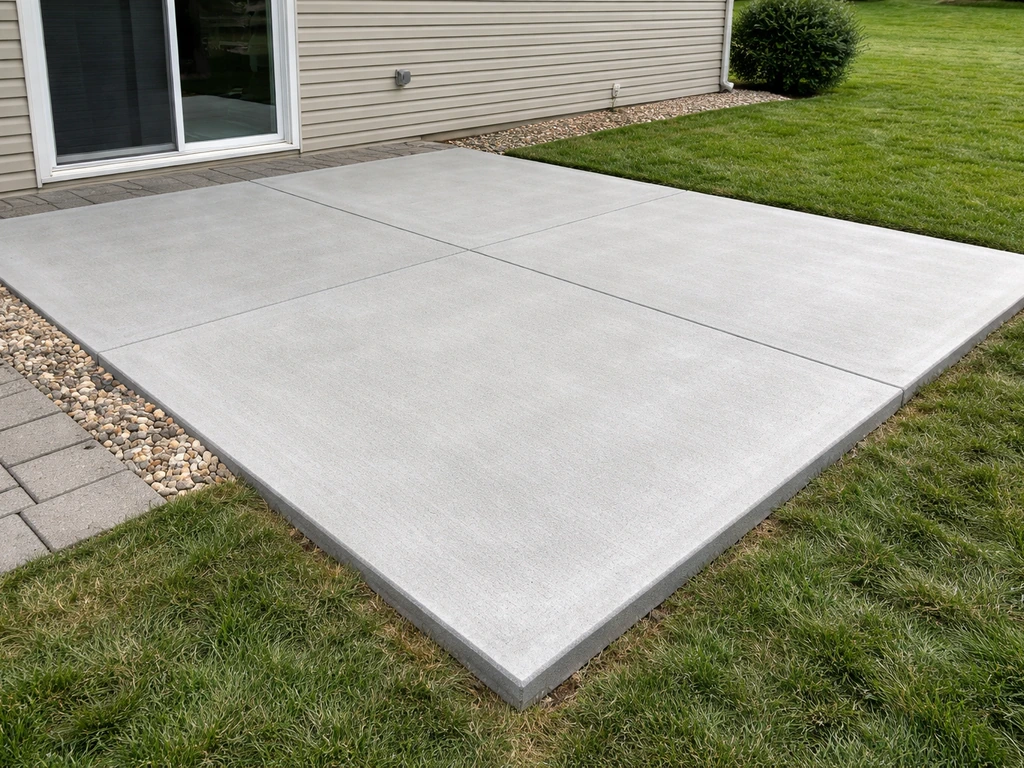
How Much Does a 10x20 Concrete Patio Cost in 2026?
Installed cost range for a 10x20 concrete patio, plus what changes price, DIY vs contractor, and quote checklist.
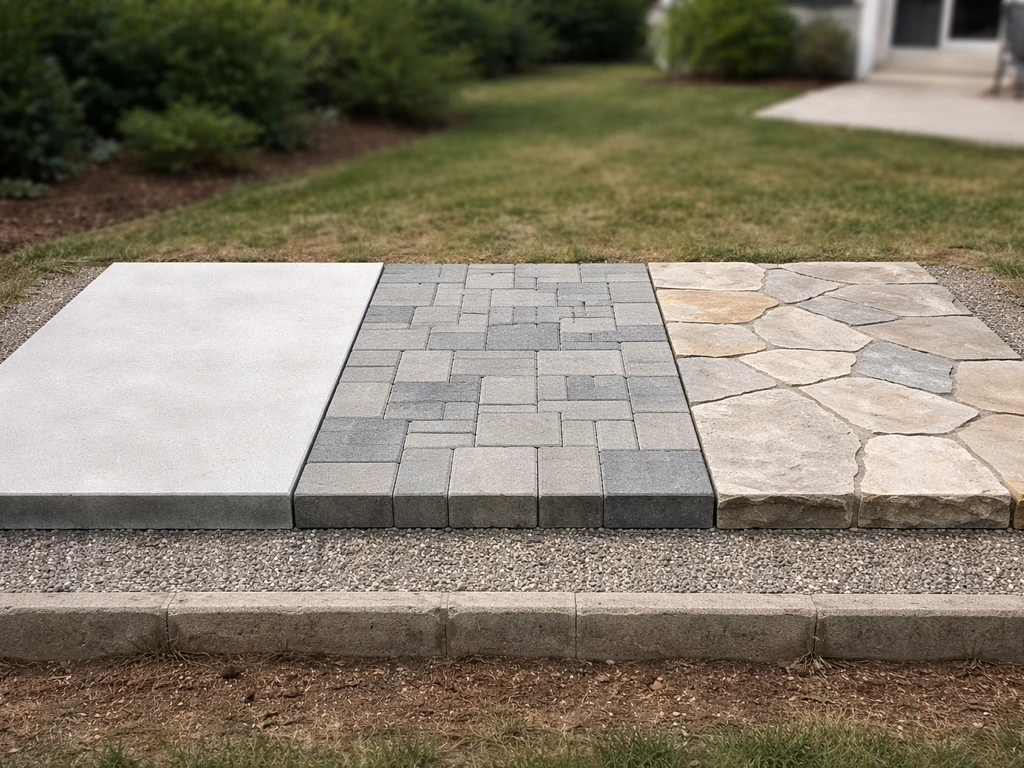
How Much Should I Expect to Pay for a Patio
Patio cost guide with real price ranges by size and material, full line-item budget, DIY vs install, and quote checklist
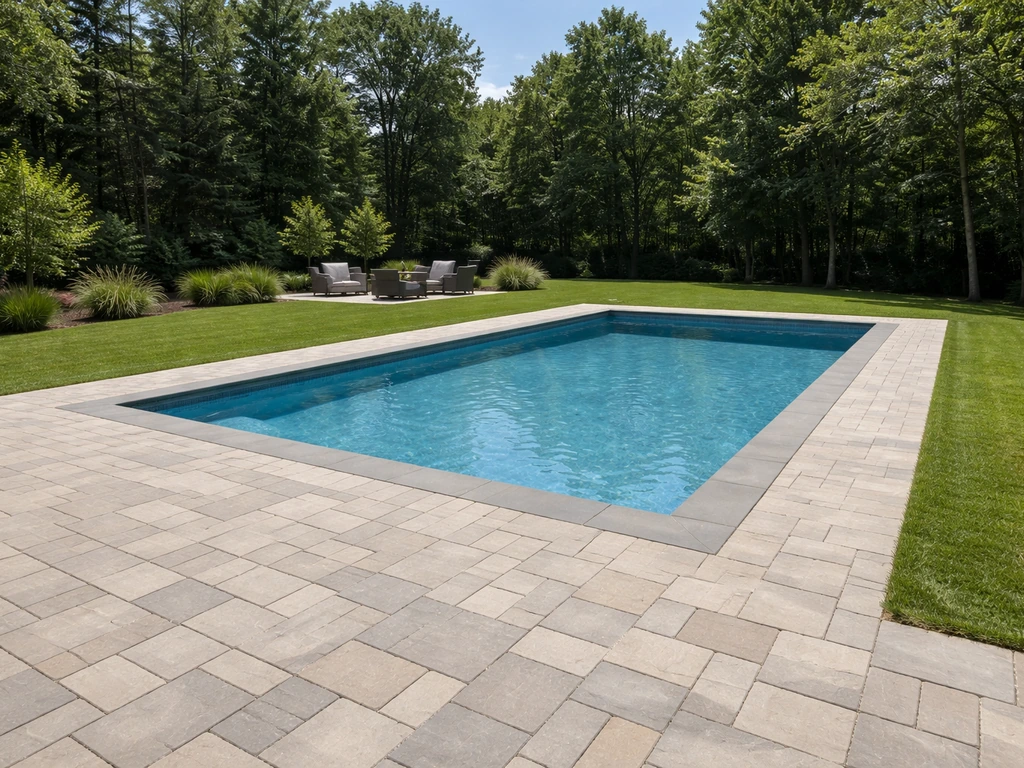
How Much Patio Around Pool: Cost, Size, and Budget Guide
Learn how much patio around a pool costs and how to size square feet, materials, extras, and get real bid line items.