
A gable patio cover typically costs between $30 and $155 per square foot installed, which puts a finished project anywhere from about $3,000 for a basic 10x10 cover up to $62,000 or more for a large, fully finished 20x20 structure with premium materials. Most homeowners building a mid-range gable cover in the 12x12 to 16x20 range land somewhere between $13,000 and $30,000 all-in. That wide range comes down to a handful of real decisions: framing material (wood vs. aluminum), roofing type (asphalt shingle vs. metal vs. polycarbonate), whether you need a slab poured or just footings, and local labor costs.
How much does a gable patio cost: Budget, Sizes & Tips

Felix Carver
19 Jul 2026
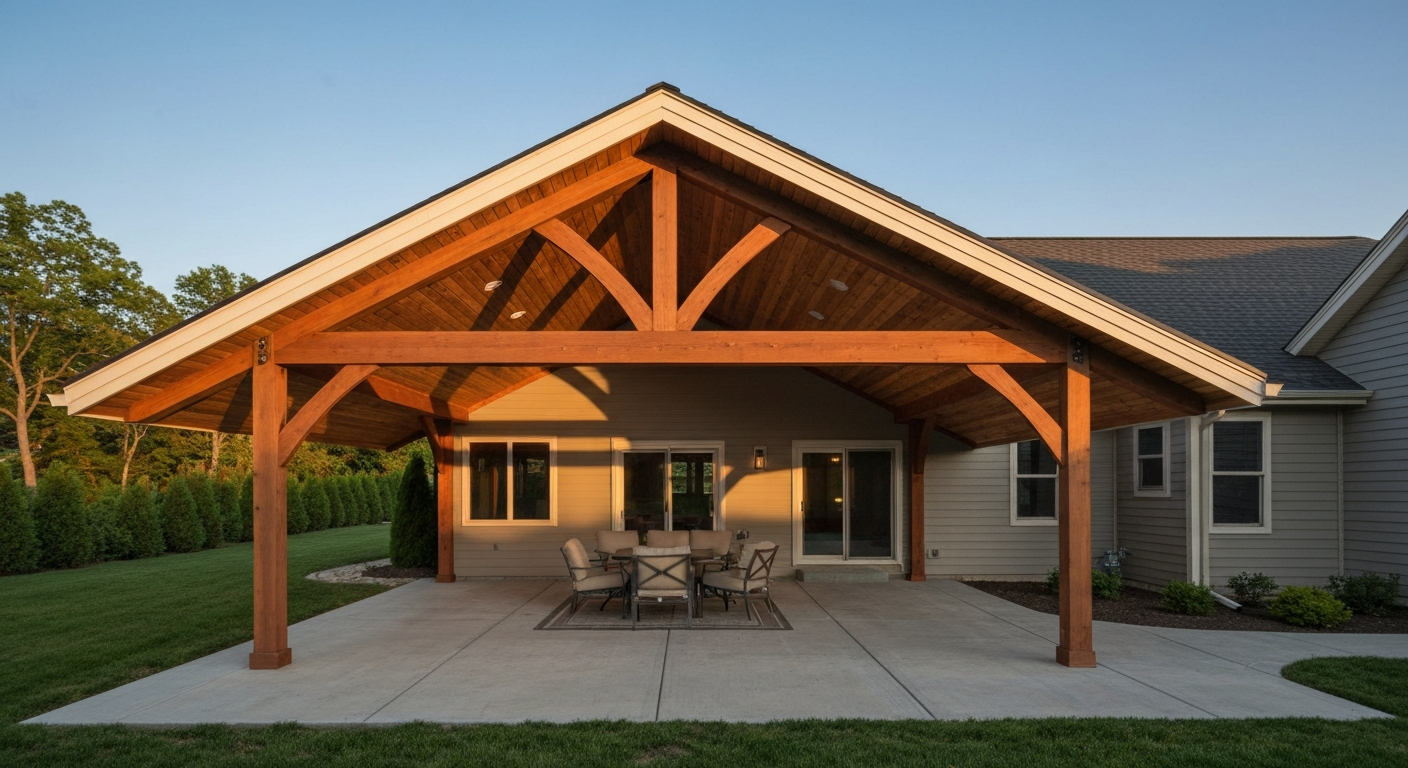
What this guide covers and who it's for
This guide is written for homeowners who are either adding a gable-roofed cover to an existing patio slab or planning a new covered patio from scratch. A gable patio cover is the kind with a peaked, two-slope roof (like the ridge of a house), as opposed to a flat shed-style cover or a hip roof. That peaked design is what makes gable covers popular: the slope sheds rain and snow efficiently, the ridge allows hot air to escape, and the overall look ties in naturally with most house styles. If you're trying to understand what a project like this actually costs before calling contractors, this breakdown will walk you through every line item.
Typical cost ranges at a glance
The per-square-foot range of $30 to $155 sounds huge, and honestly it is, but it reflects genuinely different projects. At the low end ($30 to $65/sq ft), you're looking at a basic pressure-treated wood or steel-frame cover with corrugated metal or asphalt shingle roofing, minimal finishing, and a region with moderate labor costs. That lower band is common in markets like Dallas-Fort Worth, where contractors build straightforward gable covers competitively. At the high end ($70 to $155/sq ft), you're combining premium framing (cedar, composite, or architectural aluminum), standing-seam metal roofing, decorative soffits, electrical rough-in, and a high-cost labor market like coastal California or the Northeast.
Sample costs by project size
| Size | Square Footage | Low End (~ $30/sq ft) | High End (~ $155/sq ft) | Typical Mid-Range |
|---|---|---|---|---|
| 10 x 10 | 100 sq ft | ~ $3,000 | ~ $15,500 | ~ $7,000 – $10,000 |
| 12 x 12 | 144 sq ft | ~ $4,320 | ~ $22,320 | ~ $10,000 – $15,000 |
| 12 x 20 | 240 sq ft | ~ $7,200 | ~ $37,200 | ~ $14,000 – $22,000 |
| 16 x 20 | 320 sq ft | ~ $9,600 | ~ $49,600 | ~ $18,000 – $28,000 |
| 20 x 20 | 400 sq ft | ~ $12,000 | ~ $62,000 | ~ $22,000 – $38,000 |
These ranges are calculated from published national per-square-foot bands and contractor survey data, labeled as typical ranges. Your actual quote will depend on site conditions, local permit requirements, and material choices. Use these numbers as a budgeting starting point before you get firm bids, not as a replacement for them.
Line-item cost breakdown
When you break a gable patio cover down into its actual components, you can see exactly where money goes. Here's how a typical contractor-installed project gets priced out.
Footings and foundation
If you're building on an existing concrete slab, you still need posts anchored somewhere solid. That usually means drilled concrete piers or footings at each post location. Contractor-installed footings run roughly $700 to $1,500 each on most residential projects, and a standard 12x12 or 16x20 cover needs four to six of them. Deep frost footings in cold climates or sites with poor soil can push that number past $3,000 per footing. If you need a new patio slab underneath, add $6.50 to $10.50 per square foot for a standard poured concrete slab. Ready-mix concrete runs about $160 to $195 per cubic yard nationally in 2026.
Framing lumber and structural materials
The structural frame includes posts, beams, rafters, and ridge board. Pressure-treated 6x6 posts (8-foot length) retail in the $24 to $42 each range at big-box stores. Structural connectors, post bases, and Simpson Strong-Tie brackets typically run $15 to $80 each depending on load rating. See Post brackets & building hardware, Home Depot (Simpson Strong‑Tie listings) for current retail examples and SKU pricing showing typical Simpson Strong‑Tie post bases and surface brackets in the $15–$80 each range Post brackets & building hardware — Home Depot (Simpson Strong‑Tie listings). For a 12x12 gable cover, rough framing materials (lumber, hardware, fasteners) commonly run $800 to $2,500 depending on wood species and local lumber prices. Cedar and redwood cost meaningfully more than pressure-treated pine, and aluminum framing systems are priced per linear foot and vary by manufacturer.
Roofing materials and installation
The roofing layer is one of the biggest variables. Asphalt architectural shingles run about $2.50 to $10 per square foot for materials alone, with installed costs (including underlayment, decking, flashing) typically landing around $3.50 to $9.50 per square foot. Metal roofing spans a much wider range: corrugated steel panels can be installed for as little as $7 per square foot, while standing-seam aluminum or steel runs $15 to $34 per square foot installed. Labor accounts for roughly 50 to 70 percent of metal roofing installed cost, especially on smaller patio-cover projects where setup and mobilization costs don't spread across a large area.
Labor
Trade labor rates for carpenters and roofers nationally average in the mid-$20s per hour based on BLS occupational wage data. Electricians run higher. But per-hour rates aren't how most contractors quote patio cover projects. Expect a total labor cost that represents roughly 40 to 60 percent of the whole project quote. On a $15,000 gable cover, that's $6,000 to $9,000 in labor. High-cost markets (coastal California, New York metro) can push labor well above those national averages.
Permits
Most attached gable patio covers require a building permit. Fees vary widely by municipality. Some Texas cities charge as little as $0.30 per square foot (minimum $75). For example, the Building Permit Fee Schedule, City of Alvarado lists patio‑cover permits at $0.30 per square foot with a $75 minimum City of Alvarado lists patio‑cover permits at $0.30/sq ft (minimum $75). Coastal California cities post flat permit fees in the $300 to $500 range for standard patio cover permits. A rough rule of thumb: expect $100 to $500 in permit fees for most residential gable cover projects, though jurisdictions that calculate fees as a percentage of project valuation can charge more on larger builds. Always check with your local building department before starting, and factor in the time cost of plan review (typically two to six weeks in many jurisdictions).
Finishing: soffits, fascia, paint, and trim
A basic gable cover might leave the rafters exposed. A finished cover adds soffits, fascia boards, possibly a tongue-and-groove ceiling, and paint or stain. This finishing work can add $1,500 to $6,000 or more to the total depending on the level of detail. It's one of the easiest places to control your budget: skip the coffered ceiling on a tight budget, and you can always add it later.
| Cost Component | Typical Range | Notes |
|---|---|---|
| Footings / piers | $700 – $1,500 each | 4–6 needed for most covers; frost depth adds cost |
| New slab (if needed) | $6.50 – $10.50 / sq ft | Only if no existing concrete pad |
| Framing materials (lumber) | $800 – $2,500+ | For a 12x12; scales with size and wood species |
| Post bases / hardware | $15 – $80 each | Code-approved connectors required |
| Asphalt shingle roofing (installed) | $3.50 – $9.50 / sq ft | Includes underlayment, decking, flashing |
| Metal roofing (installed) | $7 – $34 / sq ft | Corrugated low end; standing-seam high end |
| Labor (total project) | 40–60% of project cost | Varies significantly by region |
| Permits | $100 – $500+ | Check local building department |
| Finishing (soffits, fascia, paint) | $1,500 – $6,000+ | Optional but improves longevity and look |
Common add-ons and what they cost
Once the shell is up, most homeowners start thinking about making the space actually livable. Here are the most common upgrades and realistic price ranges for each.
| Add-On | Typical Cost Range | Notes |
|---|---|---|
| Ceiling fans (installed) | $150 – $600 each | Requires electrical rough-in if not already present |
| Recessed or surface lighting | $100 – $400 per fixture installed | Budget for electrical panel capacity |
| Screening / screen walls | $600 – $2,500 | Per side; aluminum-frame screen enclosures cost more |
| Gutters and downspouts | $5 – $15 per linear foot installed | Important for protecting slab and landscaping |
| Propane or electric heaters | $200 – $900 each installed | Infrared ceiling heaters are popular for covered patios |
| Retractable shades / blinds | $300 – $1,500 per panel | Motorized versions add cost |
| Electrical rough-in | $800 – $2,500 | Depends on distance from panel and number of circuits |
| Skylights or light panels | $300 – $1,500 each installed | Polycarbonate or glass; adds natural light |
A common mistake is budgeting only the cover structure and then getting surprised by the electrical, screening, and lighting costs. If you want a fully functional outdoor room, add $2,000 to $8,000 on top of the cover cost itself for add-ons, depending on how many you choose.
Framing material choices: wood, aluminum, and composite
The framing material affects cost, maintenance, and how long the structure lasts. Here's a practical comparison of the main options.
| Material | Typical Installed Cost Premium | Lifespan | Maintenance | Best For |
|---|---|---|---|---|
| Pressure-treated pine | Baseline (lowest cost) | 20–30 years with maintenance | Annual cleaning, re-stain every 2–3 years | Budget builds, DIY-friendly |
| Cedar / redwood | 10–25% more than PT pine | 25–40 years | Annual sealing/staining | Natural look, better rot resistance |
| Aluminum / steel framing | Varies widely; often comparable to cedar | 40–50+ years | Very low; occasional cleaning | Low-maintenance, modern look |
| Composite posts / beams | 15–30% more than PT pine | 30–40+ years | Minimal; no painting/staining needed | HOA-friendly, consistent appearance |
Pressure-treated pine is the most budget-friendly starting point and is what most contractors use for mid-range builds. Cedar looks better out of the box and resists rot naturally, but it needs regular sealing to hold up in wet climates. Aluminum and powder-coated steel framing systems have the best longevity and the lowest ongoing maintenance, which is why they're popular for higher-end outdoor room projects. Composite posts and beams are worth considering if your HOA restricts painted wood or you simply don't want to think about re-staining every few years.
Roofing options: asphalt shingle, metal, and polycarbonate
The roof is what makes or breaks a gable patio cover's performance, and it's where a lot of the budget ends up. Each roofing type has a distinct cost profile, look, and practical trade-off.
Asphalt shingles
Asphalt architectural shingles are the most common choice for gable patio covers that need to match the existing house roof. Installed costs run $3.50 to $9.50 per square foot including decking, underlayment, and flashing. They're widely available, easy to match to existing rooflines, and any local roofing contractor can work with them. The downside is they add significant dead load, so the framing needs to be sized accordingly. Lifespan is typically 20 to 30 years for architectural-grade shingles.
Metal roofing
Metal roofing costs more upfront but lasts longer and requires very little maintenance. Corrugated steel panels are the entry-level option at roughly $7 to $12 per square foot installed. Standing-seam steel or aluminum runs $15 to $34 per square foot installed, with labor often representing 50 to 70 percent of that cost. For a focused breakdown of metal patio cover pricing, see how much does a metal patio cover cost. Metal is lighter per square foot than a shingled assembly with OSB decking, which can simplify framing. It's also extremely durable (50+ years for quality standing-seam products) and reflects heat well in hot climates. Rain noise is the most common complaint, which can be mitigated with rigid insulation above or a finished ceiling below.
Polycarbonate panels
Polycarbonate roofing panels are the choice when you want natural light under the cover. Twin-wall or multiwall polycarbonate runs about $3 to $10 per square foot for materials; installed costs vary but typically come in below metal. They're lightweight, which reduces framing load, and modern UV-rated panels won't yellow as fast as the older clear plastic greenhouse-style sheets. The trade-off: polycarbonate has a shorter lifespan than metal (typically 15 to 25 years), and it transmits heat, so a south-facing polycarbonate-roof patio in Arizona will be uncomfortably hot in summer without a shade layer.
| Roofing Type | Installed Cost Range | Lifespan | Pros | Cons |
|---|---|---|---|---|
| Asphalt shingles | $3.50 – $9.50 / sq ft | 20–30 years | Matches house roof, widely available, easy repairs | Heavy framing load, shorter lifespan than metal |
| Corrugated steel/metal | $7 – $12 / sq ft | 30–50 years | Durable, lightweight vs. shingles+decking, low maintenance | Rain noise, industrial look not for everyone |
| Standing-seam metal | $15 – $34 / sq ft | 40–70 years | Longest lifespan, premium appearance, watertight | Highest upfront cost, needs experienced installer |
| Polycarbonate panels | $5 – $12 / sq ft installed | 15–25 years | Natural light transmission, lightweight | Shorter lifespan, heat gain in hot climates |
Lifespans and ongoing maintenance costs
The cheapest option up front isn't always the cheapest over 20 years. Here's a realistic look at what each material combination costs to maintain, so you can compare true lifecycle costs.
| Material / Roof Combination | Expected Lifespan | Annual Maintenance Tasks | Estimated Annual Upkeep Cost |
|---|---|---|---|
| Pressure-treated pine + asphalt shingles | 20–25 years | Stain/seal wood every 2–3 yrs, gutter cleaning, shingle inspection | $200 – $600/yr average |
| Cedar + asphalt shingles | 25–35 years | Seal cedar annually, gutter cleaning, shingle inspection | $300 – $700/yr average |
| Cedar + standing-seam metal | 35–50 years | Seal cedar annually, metal inspection/cleaning | $200 – $500/yr average |
| Aluminum frame + standing-seam metal | 40–60+ years | Cleaning only, inspect fasteners annually | $50 – $200/yr average |
| Composite posts + corrugated metal | 30–40 years | Cleaning, gutter maintenance | $100 – $300/yr average |
| Any frame + polycarbonate panels | 15–25 years (panels) | Panel cleaning, UV coating check, panel replacement cycle | $150 – $400/yr average |
The aluminum-frame-plus-metal-roof combination has the highest upfront cost among common configurations but carries the lowest ongoing maintenance burden by far. If you plan to stay in your home for 20-plus years, that math often favors spending more upfront. If you're planning to sell in five to eight years, a clean cedar or pressure-treated wood cover with asphalt shingles that matches the house will photograph well and appraise well without the premium price tag.
Gable vs. other patio cover types
A gable cover is not your only option, and depending on your house style, lot, and budget, one of the alternatives might actually serve you better. Here's how they compare.
| Cover Type | Typical Cost Range | Ventilation | Water Shedding | Style Match | Best For |
|---|---|---|---|---|---|
| Gable (peaked, two-slope) | $30 – $155 / sq ft | Excellent (ridge venting possible) | Excellent | Traditional, craftsman, farmhouse homes | Most residential styles, high rainfall areas |
| Flat / lean-to (shed roof) | $15 – $60 / sq ft | Poor (flat traps heat) | Moderate (needs slope) | Modern, contemporary, minimalist | Tight budgets, modern home styles |
| Hip roof | $40 – $180 / sq ft | Good | Excellent (all sides shed water) | Colonial, Mediterranean, ranch | Windy areas, matching complex rooflines |
| Pergola (open lattice) | $10 – $80 / sq ft | Maximum (open) | Minimal (open structure) | Cottage, garden, transitional | Shade without full cover, lower budgets |
| Solid flat cover (aluminum kit) | $15 – $45 / sq ft | Poor | Good if sloped correctly | Modern, utilitarian | Fast installs, rental properties, minimal budgets |
The flat or lean-to style cover is the least expensive option and the easiest to DIY, but it's also the weakest performer in heavy rain or snow because a flat surface has minimal drainage. A hip roof costs more than a gable and is structurally more complex to frame, but it performs well in high-wind areas because it has no large flat gable ends for wind to catch. Pergolas cost less and let in light and air, but they don't actually keep you dry in rain. If full weather protection is the goal, a gable cover gives you the best combination of drainage, ventilation, and visual appeal for the price. For more on what full covers cost across different styles, the covered patio cost and patio cover cost guides on this site break down those comparisons further. For a broader overview of pricing across styles and sizes, see our guide on how much should a patio cover cost. For a focused breakdown of total project costs and comparisons across cover styles, see our guide on how much does it cost for a covered patio.
DIY vs. hiring a contractor
A simple gable patio cover is within reach for a confident DIYer with framing experience, but it's not a weekend project for a first-timer. Here's where the real savings are (and where the risks are).
- Labor typically represents 40 to 60 percent of a contractor-installed gable cover. On a $15,000 project, that's $6,000 to $9,000 you could theoretically save.
- Permit applications are still required for DIY work in most jurisdictions. You'll still need engineering stamped drawings in some areas.
- Footing work and concrete are hard to DIY well without equipment. Renting a concrete auger and ordering ready-mix concrete is doable, but mistakes in footing depth or placement are expensive to fix.
- Roofing a gable structure involves flashing at the ledger/house connection, which is a common leak point if done wrong. This is worth paying a roofer to do even if you frame it yourself.
- Electrical work for ceiling fans and lighting requires a licensed electrician in most states.
- Framing the gable structure itself (posts, beams, rafters, ridge) is the most DIY-friendly part if you have framing experience and can read a plan.
A hybrid approach often makes sense: hire a contractor for the footing/foundation work and roofing (especially the ledger flashing), and do the framing and finishing yourself. This can cut total costs by 20 to 35 percent while keeping the highest-risk tasks in professional hands.
Regional cost variation
Where you live has a meaningful effect on what you'll pay. Contractor labor rates, permit fees, and even lumber prices vary by region. In the Dallas-Fort Worth area, for example, contractor pricing benchmarks for complete installed gable covers commonly run in the $30 to $65 per square foot range, which is toward the lower end nationally. In high-cost metros like coastal California, Seattle, or New York, the same structure with the same materials could run $80 to $130 per square foot or more due to higher labor rates and permit costs. The South and Midwest generally come in at the lower end of national ranges; the West Coast, Northeast, and Hawaii at the upper end. When you see a national average quoted in a cost guide, remember it typically reflects the middle of a wide regional spread.
Questions to ask your contractor before signing
- Is this quote all-in, or are footings, permits, and electrical quoted separately?
- What framing species and grade of lumber are you using, and is it pressure-treated where it contacts concrete?
- What underlayment and flashing system are you using at the ledger board where the cover attaches to the house?
- Will this be permitted, and who pulls the permit — you or me?
- Does this quote include cleanup, haul-away of debris, and patching any stucco or siding disturbed at the ledger attachment?
- What is your warranty on workmanship, and how do you handle a call-back if a leak develops in year one?
- Are your subcontractors (roofer, electrician) licensed and insured separately, or are they covered under your general liability?
Your pre-quote budget checklist
Before you start calling contractors, work through these line items with rough numbers so you can evaluate bids intelligently instead of just comparing totals. For a quick estimate tailored to your project, see how much will it cost to cover my patio.
- Measure your patio slab (or desired cover area) in square feet. Multiply by $30 and $100 to get a rough low/mid-range budget bracket.
- Check whether you have an existing slab that can support a cover, or whether you need a new pour (add $6.50 to $10.50/sq ft).
- Count post locations and estimate footing cost: budget $700 to $1,500 per footing for contractor-drilled piers.
- Choose your roofing type. Budget $3.50 to $9.50/sq ft for asphalt shingles or $7 to $34/sq ft for metal.
- Decide on framing material. Pressure-treated pine is baseline; cedar adds roughly 10 to 25 percent to framing costs.
- List your desired add-ons (lighting, fans, screens, gutters) and budget each separately using the add-on table above.
- Call your local building department and ask: do I need a permit for an attached patio cover, and what does it cost?
- Add a 10 to 15 percent contingency on top of your subtotal for unforeseen site conditions, lumber price swings, or design changes mid-project.
How the patio surface underneath affects your budget
The gable cover structure is only part of the equation for many homeowners. If you're building the covered patio from scratch (not just adding a cover to an existing slab), the surface material underneath adds a significant cost layer. A basic poured concrete slab runs $6.50 to $10.50 per square foot. Concrete pavers, natural stone, brick, flagstone, and stamped concrete all come in at different price points and durability profiles. These surface cost comparisons are covered in detail in the patio cost guides on this site for those who are pricing the full project, not just the cover itself. For pricing specific to wood surfaces, see our guide on how much does a wooden patio cost. The combination of a poured slab plus a mid-range gable cover is the most common total-project approach, and stacking both cost ranges gives you a realistic total project budget before you sit down with a contractor.
FAQ
What is the typical national cost range per square foot for adding a gable patio (installed)?
Typical range (national): $30–$155 per sq ft installed. Notes: lower contractor/regional band commonly $30–$65/sq ft (example regional contractor pricing). Higher consumer‑guide band $70–$155/sq ft reflects more complex projects, premium materials, or full rebuilt patios. (Sources: national consumer guides and regional contractor examples.)
How much will common gable patio sizes cost (10×10, 12×12, 20×20)?
Example math using the typical ranges above (area × per‑sq‑ft band): - 10×10 (100 sq ft): $3,000–$15,500 (typical range). - 12×12 (144 sq ft): $4,320–$22,320 (typical range). - 20×20 (400 sq ft): $12,000–$62,000 (typical range). These are illustrative examples using the $30–$155/sq ft bands; expect local variation and project specifics to move totals up or down.
Can you provide a typical line‑item cost breakdown for a gable patio project?
Typical line‑items (ranges reflect low‑end contractor to higher‑end consumer guide examples): - Materials (lumber, posts, connectors): $6–$35/sq ft (depends on wood vs metal framing). - Framing & structural hardware (posts, beams, connectors): $500–$6,000 (project scale and engineered connections). - Roofing materials (asphalt shingles): material+install ~$3.50–$9.50/sq ft; (metal roofing installed typically ~$7–$34+/sq ft). - Foundation/footings (piers or slab): slab ~$6.50–$10.50/sq ft; isolated footings/piers ~$700–$1,500 each (typical). - Labor (carpentry/roofing/electric if lighting): large share of cost; trade wages typically mid‑$20s/hr for roofers/carpenters (labor often equals or exceeds material cost on small roofed structures). - Permits & inspections: commonly $100–$500 (municipal examples vary; some jurisdictions use valuation formulas). - Finishes & add‑ons (screens, ceiling fans, lights, gutters): $200–$6,000+ depending on scope (screen kits, wiring, gutters). Each project will vary; label above ranges as typical or regional examples.
How do material choices change cost (wood vs metal framing; asphalt shingle vs metal roof vs composite)?
Material comparisons (typical installed ranges and lifecycle notes): - Wood framing (pressure‑treated posts/beams): lower upfront material cost; typical material portion moderate; expect more routine maintenance (staining/inspection). - Metal/aluminum framing: higher material cost, lower maintenance, faster install for prefabricated kits; can shift material share up but reduce lifetime maintenance. - Asphalt shingles (roof): installed ≈ $3.50–$9.50/sq ft (typical); lower initial cost, life expectancy ~20–30 years for architectural shingles. - Metal roofing (steel/aluminum/standing seam): installed ≈ $7–$34+/sq ft (typical); higher initial cost, life expectancy 30–50+ years, lower maintenance. - Composite (trim, decking add‑ons): material cost varies; long life, low maintenance, increases project total. Label: cost bands are typical national installed ranges; performance/lifespan listed per common industry guidance.
How much does installation by a contractor cost vs DIY savings?
Typical comparison (examples): - Contractor-installed: uses the per‑sq‑ft installed bands ($30–$155/sq ft). Contractors include labor, coordination, code compliance. - DIY: material‑only and tool costs can reduce total by 30–60% on labor‑heavy portions for skilled owners; however DIY still requires purchased materials, fasteners, connectors, and possibly engineered plans/permit compliance. Decision factors: complexity (attached gable to house), roofing work (safety/roof tie‑ins), required permitting, and structural engineering often push homeowner to hire a pro. Label: savings are example ranges; actual savings depend on homeowner skill and local labor rates.
What contractor rates and project pricing should I expect?
Typical guidance: - Hourly trade wages (typical national mid‑$20s/hr for roofers/carpenters; electricians may be higher). - Contractor project rates: small gable patio projects often quoted as per‑sq‑ft installed ($30–$65/sq ft on lower end regionally; up to $70–$155/sq ft for higher‑end or complex installs). - Fixed‑price bids commonly provided; some contractors price by scope plus mark‑ups on materials. Use multiple bids and compare scope line‑items. Label: wage figures reflect national trade averages; per‑sq‑ft bands reflect contractor/regional and national consumer guide examples.
Next Articles
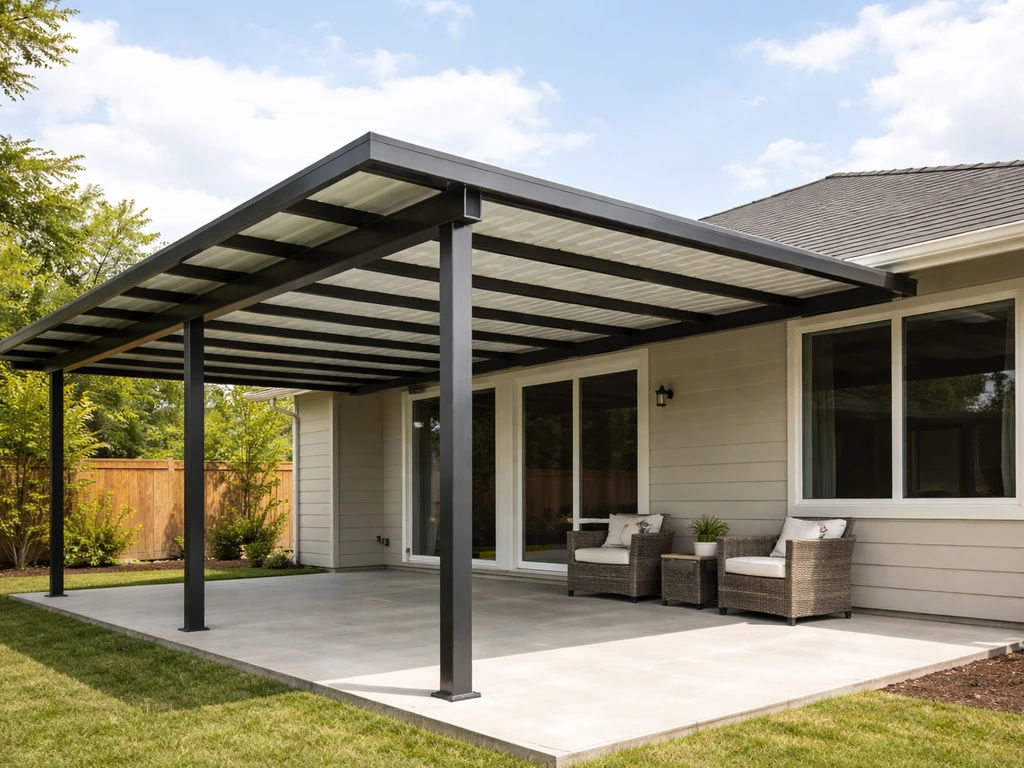
How Much Does a Metal Patio Cover Cost Installed
Installed metal patio cover costs by size, roof style, and materials, plus line items, add-ons, and DIY vs pro budgeting
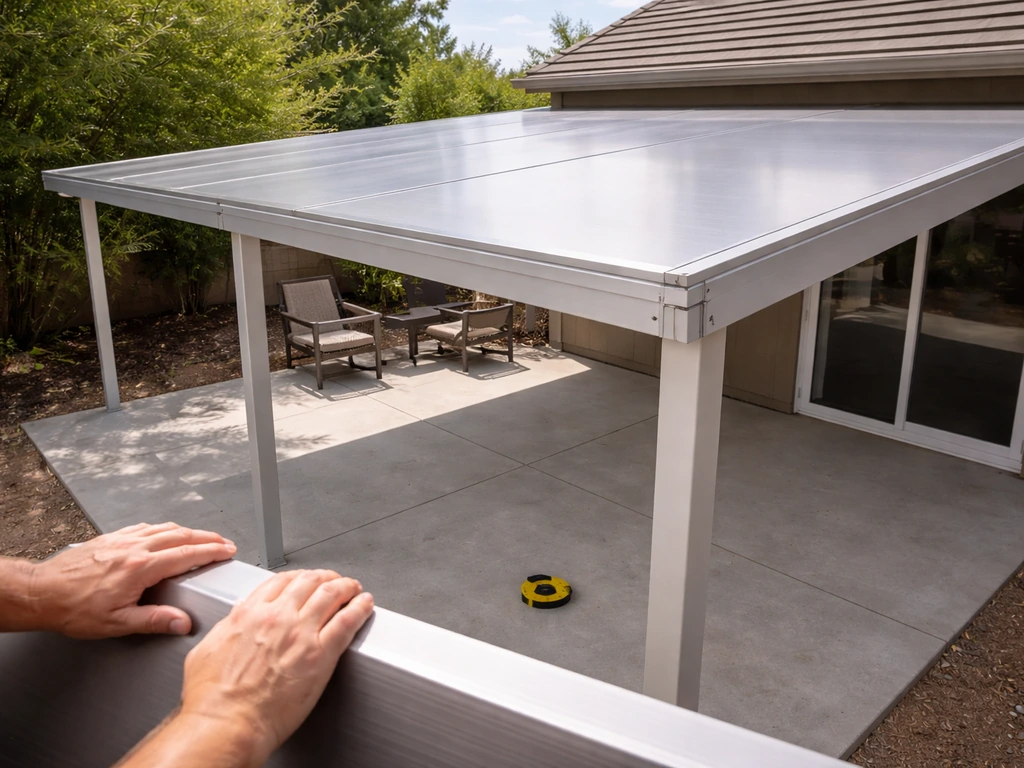
How Much Will It Cost to Cover a Patio? Real Pricing Guide
Patio cover costs by size and material with real price ranges, labor breakdowns, and quote checklist for budgeting today
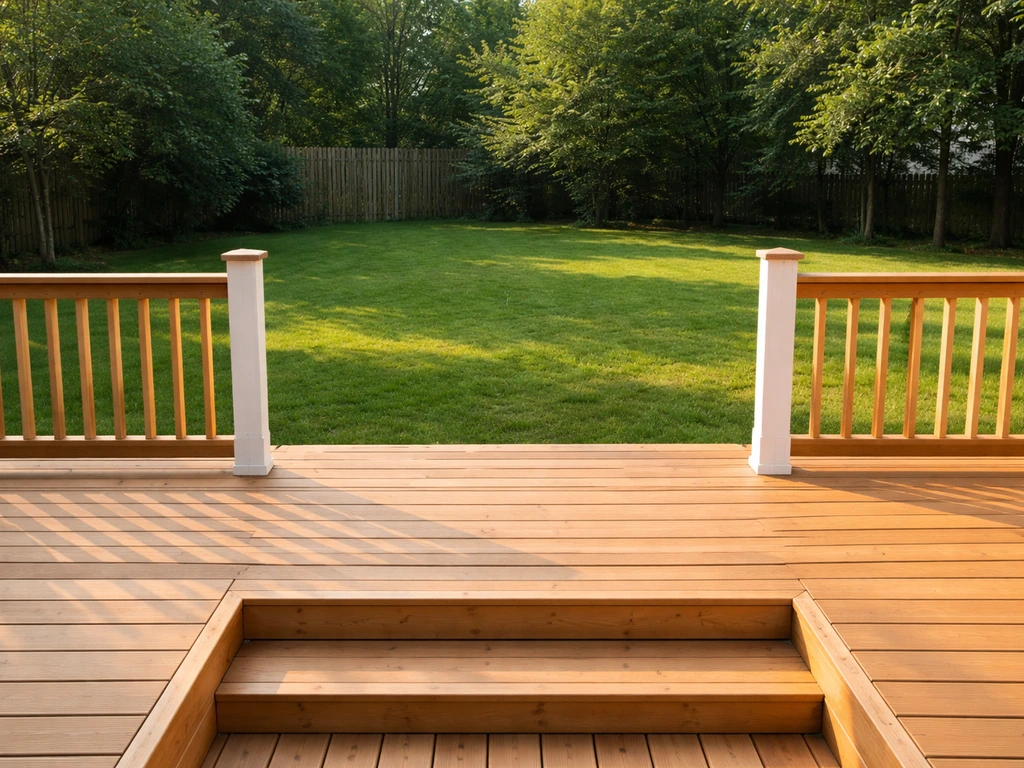
How Much Does a Wooden Patio Cost? 2026 Price Guide
2026 guide to wooden patio costs by size with material vs labor breakdown, extras, DIY vs contractor, and bid checks.