
Covering a patio typically runs $20 to $50 per square foot installed, so a common 12x12 patio (144 sq ft) lands somewhere between $2,900 and $7,200, while a larger 20x20 (400 sq ft) can easily reach $8,000 to $20,000 or more depending on the cover type, roof style, and your local labor market. Those are real installed prices for 2026, not materials-only figures. What pushes you toward the top or bottom of that range comes down to five things: what kind of cover you choose, the roof style, how it attaches to your house, whether you need a permit, and who does the work.
How Much Will It Cost to Cover a Patio? Real Pricing Guide

Felix Carver
24 Jun 2026
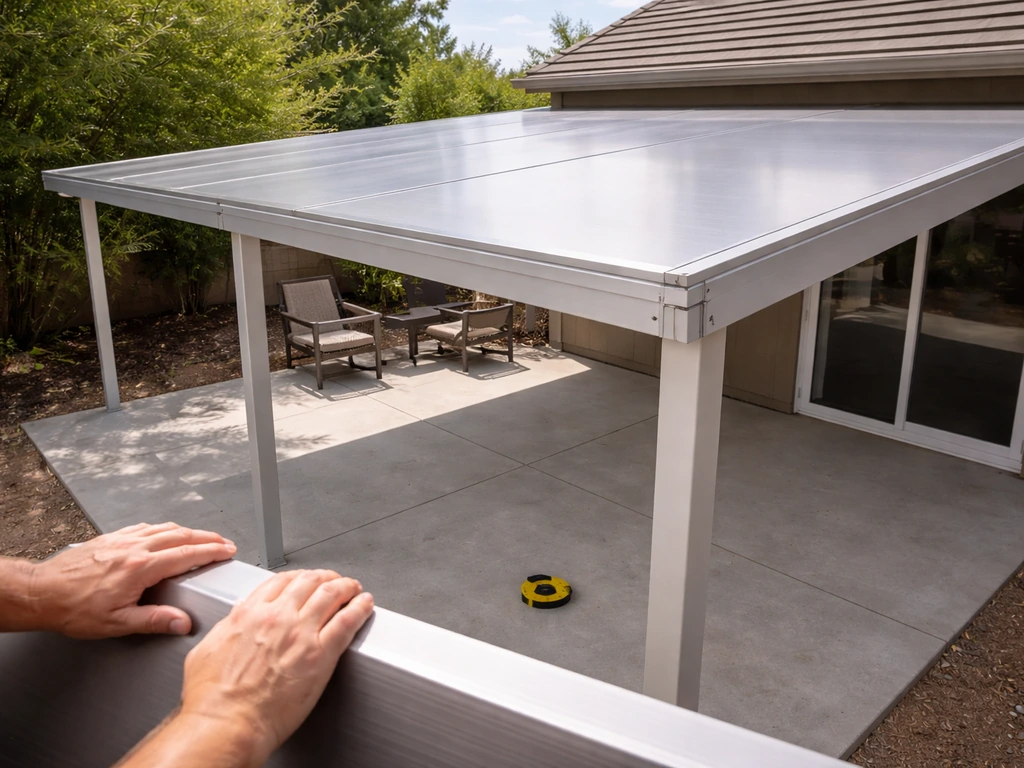
Quick Ballpark Costs by Patio Size
Before getting into what drives these numbers, here are realistic installed price ranges for the most common patio sizes homeowners ask about. These assume a mid-range solid cover (aluminum or wood) with a simple attached roof, standard labor, and no major site complications. Use these as a starting budget, not a final quote.
| Patio Size | Square Footage | Low Estimate | High Estimate | Typical Midpoint |
|---|---|---|---|---|
| 10x10 | 100 sq ft | $2,000 | $5,000 | ~$3,500 |
| 12x12 | 144 sq ft | $2,900 | $7,200 | ~$5,000 |
| 12x16 | 192 sq ft | $3,800 | $9,600 | ~$6,700 |
| 16x16 | 256 sq ft | $5,100 | $12,800 | ~$8,900 |
| 20x20 | 400 sq ft | $8,000 | $20,000 | ~$14,000 |
| 20x30 | 600 sq ft | $12,000 | $30,000 | ~$21,000 |
These ranges assume $20 to $50 per square foot installed, which aligns with Angi and HomeGuide's 2026 data for solid aluminum and basic wood cover systems. Premium options like insulated roof panels push costs to $30 to $65 per square foot, and pergola-style structures typically run $30 to $60 per square foot once you factor in materials and labor together.
What 'Cover' Actually Means: Cover Types, Materials, and Roof Styles
The word 'cover' gets used loosely, and it matters for pricing because you could be talking about something that costs $1,500 or something that costs $25,000. Here's how to sort the options.
The Main Cover Types
- Pergola: An open lattice or beam structure that provides partial shade but no real rain protection. Generally the least expensive covered option, running $30 to $60 per square foot installed. If you want actual weather protection, you need a solid or louvered roof panel added on top.
- Solid patio cover (flat or pitched): Full coverage from rain and sun. Aluminum is the most popular material for this category because it's low-maintenance, doesn't rot, and installs quickly. Costs typically run $20 to $50 per square foot installed.
- Insulated roof panels: These are solid panels with a foam core sandwiched between aluminum skins. They insulate better than standard solid covers and look cleaner. Expect $30 to $65 per square foot installed.
- Louvered covers: Motorized or manual louvers let you adjust shade and airflow. High-end option, often $50 to $100 or more per square foot depending on automation.
- Wood patio covers: Cedar, redwood, or pressure-treated lumber framed covers. Offer a natural look but require more maintenance and cost varies widely depending on wood species and complexity.
- Polycarbonate panels: Translucent plastic sheeting over a metal or wood frame. Lets light in while blocking rain. Budget-friendly option on the lower end of the range.
Roof Styles That Affect Cost
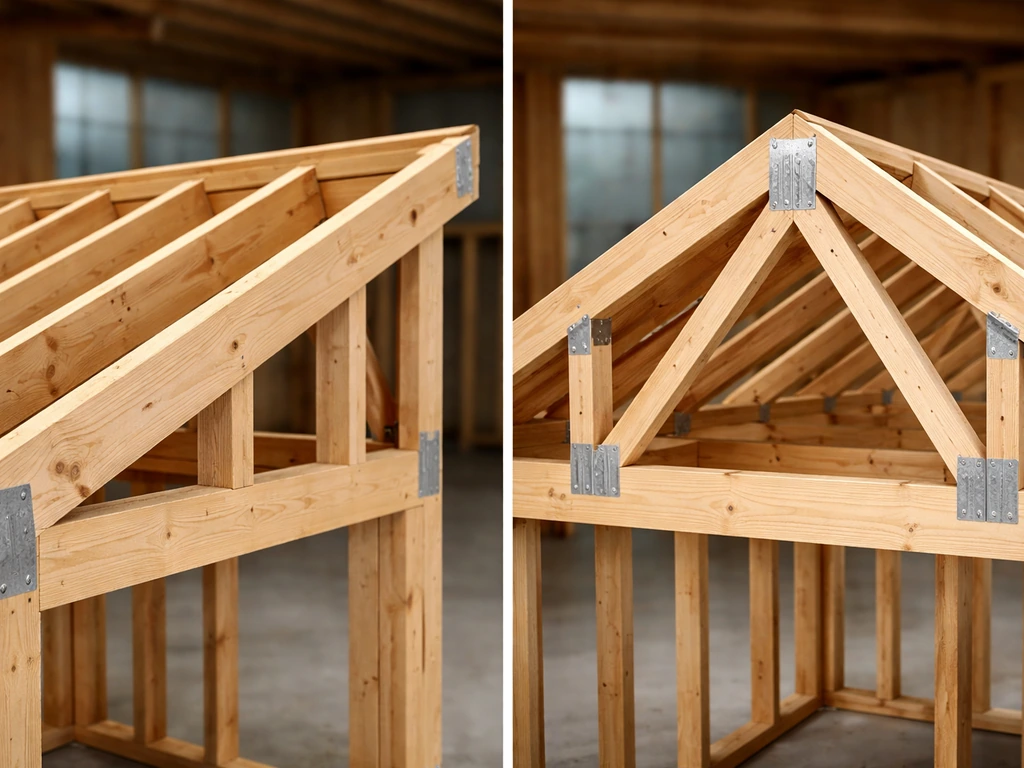
A flat or single-slope (shed-style) roof is the cheapest to build because it's simple and uses fewer materials. A gable roof (peaked in the middle) costs more because it requires additional framing, ridge beams, and more structural complexity. A gable patio cover can add 20 to 40 percent to the cost compared to a flat version of the same size. Gable patio covers typically cost more than flat options, so it helps to know the size and roof style before budgeting. Attached covers (tied into your home's wall or roof line) are more common and typically less expensive than freestanding structures, which need their own footings on all four corners.
Cost Breakdown: Materials, Labor, and Permits
For a typical solid aluminum attached patio cover on a standard residential project, here's roughly how the money gets split.
| Cost Category | Typical Share of Total | Notes |
|---|---|---|
| Materials (cover system) | 40–55% | Panels, posts, beams, hardware, fasteners |
| Labor (installation) | 35–50% | Framing, attachment, finishing |
| Footings/concrete work | 5–15% | Required for posts on freestanding or large attached covers |
| Permits and plan check | 2–8% | Varies widely by city and project size |
| Electrical (lighting/fans) | Optional add-on | $500–$2,500 depending on scope |
Permits: Don't Skip This
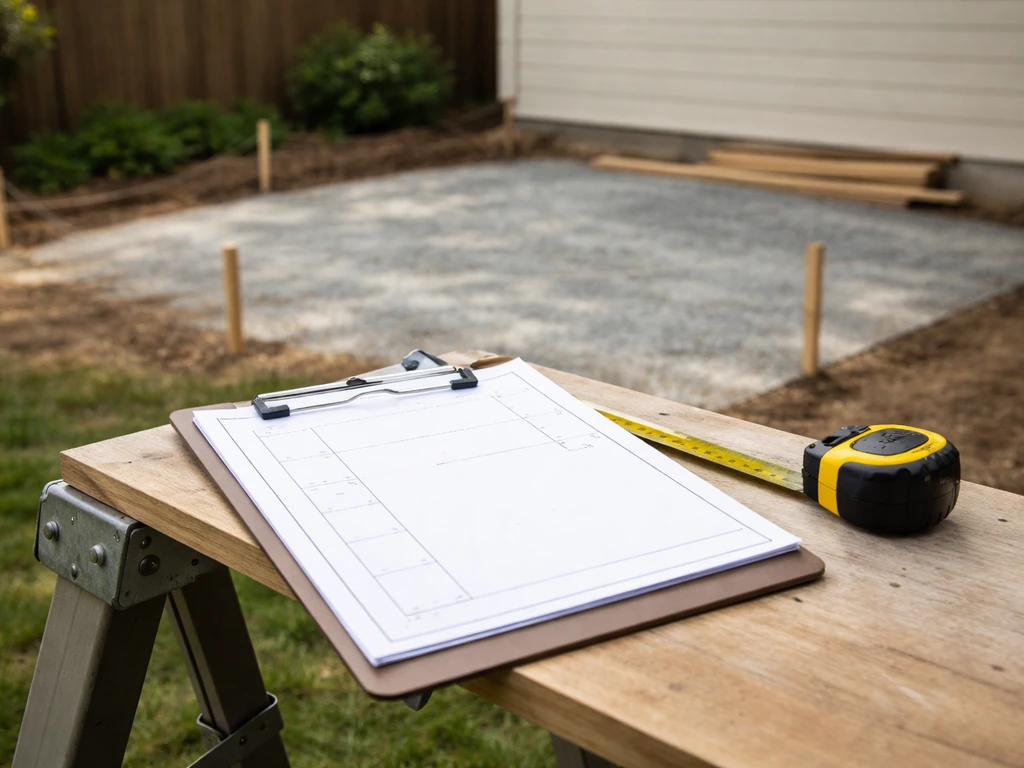
Many homeowners want to skip permits to save money, and it's a gamble that often costs more in the end. Most cities require a permit for patio covers unless the project is small enough to fall under an exemption.
For example, the City of San Diego exempts attached patio covers with 300 square feet or less of projected roof area for single-family homes and duplexes in some cases, but anything larger or more complex requires plan submittals including roof framing plans, foundation details, elevations, connection details, and sometimes full structural calculations.
For example, the City of San Diego exempts attached patio covers with 300 square feet or less of projected roof area for single-family homes and duplexes in some cases; anything larger or more complex typically requires plan submittals including roof framing plans, foundation details, elevations, connection details, and sometimes structural calculations.
Los Angeles's residential code (Appendix H) has specific structural load and footing requirements for patio covers, and the LA Department of Building and Safety requires attached covers to meet conditions around openings, height, and structural design before you can skip the engineering paperwork. Appendix H in the 2020 Los Angeles Residential Code specifies patio cover structural load and footing requirements and related conditions that affect permitting and engineering needs [Appendix H structural load and footing requirements for patio covers](https://codes. iccsafe.
org/content/CACLARC2020P1/appendix-h-patio-covers). Permit fees themselves vary by city but commonly run $200 to $800 for a residential patio cover, and some jurisdictions charge a separate plan-check fee on top of that. Ask your contractor if they pull permits as part of their quote. A contractor who says 'we don't need a permit for this' without checking your local code is a red flag.
DIY vs. Professional Installation: Where the Money Goes
If you're reasonably handy and willing to spend a weekend or two, a DIY patio cover is genuinely feasible for simpler projects like a pre-engineered aluminum kit or a basic pergola. The savings are real: labor typically accounts for 35 to 50 percent of a contractor's quote, so going DIY on a $10,000 job could save you $3,500 to $5,000. Pre-engineered aluminum patio cover kits are available from home improvement stores and specialty suppliers for roughly $1,500 to $6,000 for a typical 12x20 size, depending on quality. You bolt them together following instructions, and most homeowners with basic tool skills can manage the install in a weekend.
That said, DIY has real limits. Freestanding structures, gable roofs, any cover requiring new concrete footings, and anything that needs to be attached directly into your home's framing (especially if your wall framing isn't straightforward) are best left to pros. If you get it wrong, you risk structural failure, water intrusion at the attachment point, or a failed inspection that requires tearing out the work. Also, pulling your own permits as a homeowner is possible in most jurisdictions but means you're taking on liability for code compliance. If you sell your house, an unpermitted or improperly permitted cover can become a real problem.
| Factor | DIY | Professional Install |
|---|---|---|
| Typical cost savings | 35–50% vs. pro quote | None, but includes warranty |
| Best suited for | Pre-engineered kits, simple pergolas | Gable roofs, freestanding, complex sites |
| Permit handling | Homeowner responsible | Contractor typically manages |
| Time investment | 1–3 weekends | 2–5 days for crew |
| Risk of mistakes | Moderate to high | Low (if licensed contractor) |
| Tools needed | Basic + concrete mixer for posts | Full crew and equipment |
How Your Existing Patio Surface Affects the Total Price
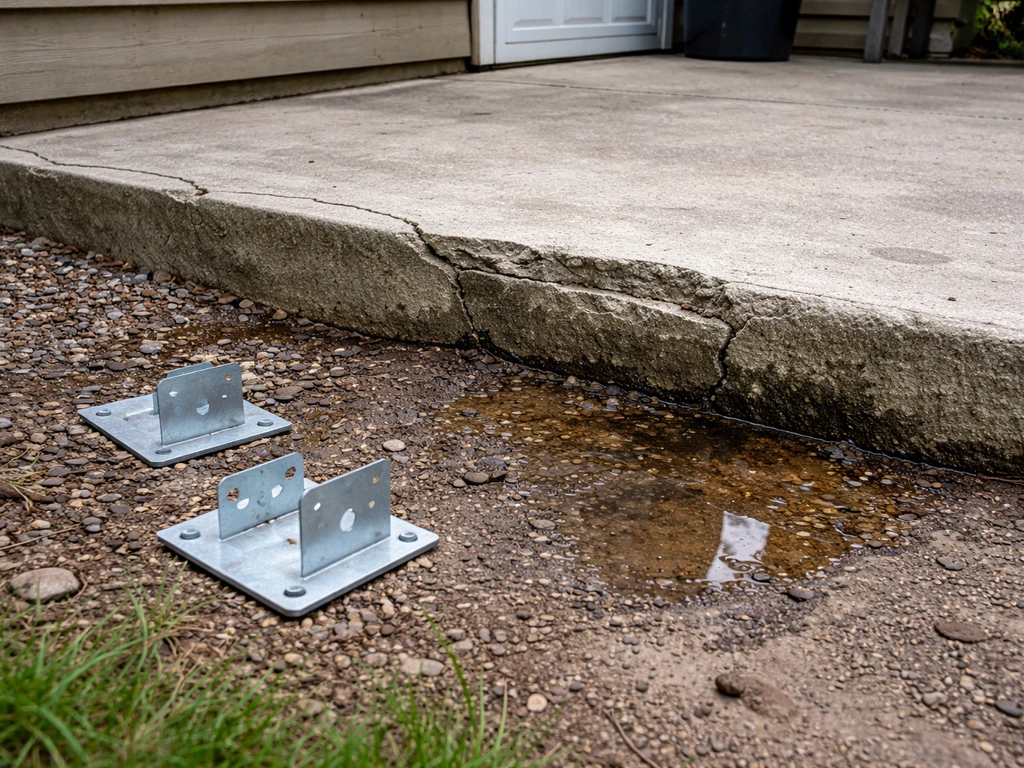
Your existing patio's surface type and condition can meaningfully change what a cover project costs. Here's how.
Post Footings and Surface Type
Most patio cover systems need posts, and those posts need to sit on footings that go into the ground, not just sit on top of your patio surface. If your patio is concrete, the contractor will core-drill through the slab and set the post footings below. If it's pavers, they'll pull up some pavers, dig the footing, and ideally reset the pavers around the post base. Flagstone, brick, and natural stone surfaces require the same approach.
This adds $200 to $600 per post depending on depth requirements and surface complexity. A 20x20 freestanding cover with four corner posts could add $800 to $2,400 just in footing work. Attached covers only need footings at the outer posts (the wall attachment handles the inner side), so the cost is lower.
Surface Condition and Drainage
If your patio slopes the wrong way, adding a roof that channels water toward your house can create drainage problems that need to be addressed. A cracked or heaved concrete slab may need repair before post footings can be properly set. Pavers that have settled unevenly can complicate post placement. None of these are deal-breakers, but they add cost and should be flagged in any contractor walkthrough. If you're planning a new patio surface and a cover at the same time, doing both as a single project often saves money on labor coordination and site work compared to doing them separately.
Regional Cost Variation and Getting Accurate Quotes
Labor rates for patio cover installation vary significantly by region. In high cost-of-living metros like Los Angeles, San Diego, Seattle, or the Bay Area, you'll generally pay 20 to 40 percent more than the national average. In the Southeast, Midwest, and rural areas, costs tend to run at or below the middle of published ranges. Material costs are more uniform nationally, though supply chain fluctuations in aluminum and lumber can shift prices quarter to quarter.
The best way to get an accurate number for your specific project is to get three quotes from licensed contractors, and to ask each one the same set of questions so you can compare apples to apples.
Questions to Ask Every Contractor
- Is the quote for the full installed price, including all hardware, footings, and clean-up?
- Does it include permit fees and plan check costs, or are those billed separately?
- What's the post footing plan for my specific patio surface?
- What roof style are you pricing, and is the attachment point going into my home's structural framing?
- What's the warranty on materials and labor?
- Are you licensed and insured in this state, and can I see your contractor's license number?
- How long from permit approval to completion, and who handles permit submittal?
- What's not included in this quote that I should budget for separately?
Getting quotes from at least three contractors matters more than most homeowners realize. On a $15,000 project, the spread between the lowest and highest legitimate bids is commonly $3,000 to $6,000. That gap is real money, and the cheapest bid isn't always the worst choice if the contractor is properly licensed and you've compared the scope carefully.
Example Budgets for Common Patio Sizes
Here are three realistic budget scenarios based on common patio sizes, using mid-range materials and professional installation. These assume an attached solid aluminum cover with a simple shed-style (single-slope) roof, standard footing work for two outer posts, and a permit.
10x10 Patio Cover (100 sq ft): Budget $3,000 to $5,000
A 10x10 is a small cover, good for a side door landing or compact back patio. At $30 to $50 per square foot installed, expect $3,000 to $5,000 for a solid aluminum attached cover with two posts. A basic DIY aluminum kit for this size runs $1,200 to $2,500 in materials. Permit costs in this range are usually $200 to $400. If you opt for a pergola instead, you can come in at the low end or below.
12x12 Patio Cover (144 sq ft): Budget $4,500 to $8,000
This is probably the most common residential patio size. A standard attached aluminum solid cover runs $4,500 to $7,200, with insulated panels pushing closer to $8,500 to $9,500. A wood cover at this size with a more custom look might run $6,000 to $10,000 depending on lumber and design complexity. Budget $300 to $500 for the permit in most cities.
20x20 Patio Cover (400 sq ft): Budget $10,000 to $22,000
A 20x20 cover is a significant structure and is where costs can vary most. A straightforward attached aluminum cover runs $10,000 to $16,000 installed. A freestanding version adds $2,000 to $4,000 for the additional footings and framing. A gable roof style at this size can add another $3,000 to $6,000. Insulated panels throughout would put you at $14,000 to $22,000 or more. This is also the size where you'll reliably need a permit with full plan submittals and possibly structural calculations, adding $400 to $1,000 in permit costs and potentially $500 to $1,500 for engineering if your city requires stamped drawings.
20x30 Patio Cover (600 sq ft): Budget $15,000 to $35,000+
At 600 square feet, you're in serious outdoor room territory. Aluminum solid covers installed run $18,000 to $30,000 at $30 to $50 per square foot. Insulated panels, custom gable roofing, or a full wood structure with electrical work can push this to $35,000 or beyond. Factor in $600 to $1,500 for permits and plan checks. At this scale, always get a licensed structural contractor or a patio specialty company with proven large-project experience.
A Few Things Worth Knowing Before You Commit
If you're still deciding between a simple patio cover and a more involved structure like a screened enclosure or a full deck addition, the cost comparison changes significantly. A basic deck with a cover is a different budget conversation than just adding a cover to an existing patio. Similarly, if you're choosing between cover materials, a metal patio cover and a wooden one can look similar in photos but diverge in 10-year maintenance costs.
If you're trying to budget specifically for a metal patio cover, the final cost usually tracks square footage, roof style, insulation, and permit or engineering requirements metal patio cover cost. Wood needs periodic sealing or painting; aluminum is essentially maintenance-free. For most homeowners on a straightforward budget, a solid aluminum attached cover hits the best balance of cost, durability, and ease of installation.
The bottom line: get your patio's square footage measured accurately, decide whether you want a simple shade structure or full rain protection, determine whether attached or freestanding works for your layout, and then get three contractor quotes using the question list above. That process alone will narrow your real cost from a wide range to a specific number that actually applies to your house. To get a more precise estimate of how much should a patio cover cost, focus on square footage, cover type, roof style, and site conditions.
FAQ
Can I skip permits if my patio cover is small?
Yes, but only in specific cases. If your patio cover is small, attached, and falls under a local exemption, some cities may not require full plan submittals. Still, you may need a permit for electrical (if adding lights or fans), roof drainage modifications, or structural work. Ask the contractor to confirm the exact permit type, not just whether a permit is “required.”
Does the “square footage” price use my patio size or the roof coverage area?
A common mistake is quoting patio cover pricing based on the patio’s footprint instead of the roof’s projected area. Gable roofs can have more roof surface than the patio base, so the area used for permits and structural calculations may be higher. When you request quotes, ask what square footage they are using for pricing and the permit.
Will I save money if I already have posts or an old frame?
If you already have posts, you may still pay for new footings, ledger attachment work, and roof framing upgrades. Many contractors price as a full system because fastening into existing framing can require verification of size, spacing, corrosion condition, and load capacity. Provide photos and any existing drawings, and ask whether the quote assumes reusing existing posts and hardware or installing new components.
What costs increase if I want the cover to block rain, not just provide shade?
Expect add-ons if you want more than shade. Full rain protection usually means gutters or a roof slope plan to control water, and you might need flashing at the house connection point and upgrades to drainage. If you notice water pooling near the wall now, ask the contractor how the cover will redirect runoff.
What should I ask contractors so my quotes are apples to apples?
To compare bids fairly, request the same line items: cover material (aluminum wood or insulated panels), roof style (flat or gable), attachment method (ledger/roof tie-in), number and size of posts, footing depth assumptions, permit handling, and whether engineering is included. Also ask for a written scope for site cleanup and any paver or concrete patching.
How do door openings, vents, and height constraints affect patio cover cost?
Most patio covers allow some clearance issues to be handled in the design, but you may need adjustments if you have a high door, ceiling vents, utility lines, or roofline obstructions. Measure the height from the patio surface to the highest point you want the roof to reach and share those constraints with each bidder, then ask whether they can meet code-required clearance at attachments.
Is DIY really cheaper, and what are the most common DIY mistakes that raise total cost?
DIY can be cheaper for simple, pre-engineered kits, but the biggest hidden risk is incorrect attachment and footing layout. If you are doing it yourself, confirm the kit’s engineering requirements (some kits still require local stamped drawings), and make sure you understand footing depth, post anchoring, and roof slope so water drains away from the house.
My patio slopes toward my house, does that change the budget?
Yes, if the slope causes runoff to hit the house or landscaping. Contractors may need to regrade, add drains, or revise the roof slope and gutter plan. If your patio is cracked, heaved, or has uneven pavers, budget time and money for sub-surface repairs before footings can be set correctly.
Can I bundle electrical, like lights or a fan, into the patio cover project?
If you plan for future upgrades, costs today can be lower by choosing the right design. For example, it is usually easier and cheaper to run electrical conduit during framing for lighting or ceiling fans than after the cover is complete. Ask whether the quote includes blocking, conduit paths, and weather-rated wiring access points.
When does engineering become necessary, and is it included in the quote?
Engineering needs depend on local rules, size, roof style, and wind or snow exposure. A gable or larger cover is more likely to trigger stamped structural calculations. When requesting quotes, ask whether they include engineering, whether the drawings are stamped, and what happens if the city requires revisions.
Next Articles
How Much Does a Wooden Patio Cost? 2026 Price Guide
2026 guide to wooden patio costs by size with material vs labor breakdown, extras, DIY vs contractor, and bid checks.

How Much Should a Patio Cover Cost? Real Budget Ranges
Budget ranges for patio covers, cost drivers, size examples, DIY vs install, and a checklist to compare contractor quote

How Much Does It Cost for a Covered Patio? 2026 Pricing Guide
2026 pricing ranges and size estimates to cover or build a patio, with cost breakdown, factors, and quote checklist.