
A professionally installed metal patio cover runs about [$20–$60 per square foot](/how-much-should-a-patio-cover-cost) in 2026, which puts a typical 12x12 cover somewhere between $2,900 and $8,600, a 10x20 cover in the $10,000–$22,500 range, and a larger 20x20 cover anywhere from $8,000 to $30,000 or more depending on design complexity. Most homeowners land between $10,000 and $22,500 for a mid-size aluminum cover with standard posts and a solid or lattice roof. Steel frames and custom engineering push that number higher.
How Much Does a Metal Patio Cover Cost Installed

Felix Carver
30 Jun 2026
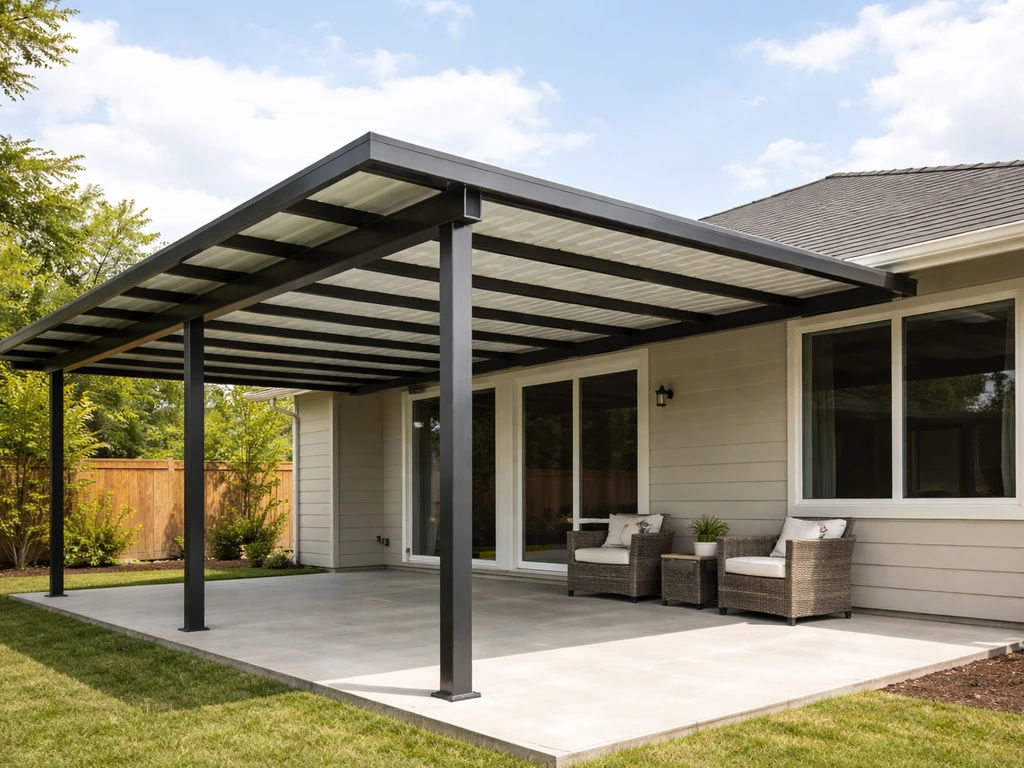
Installed cost ranges by patio cover size
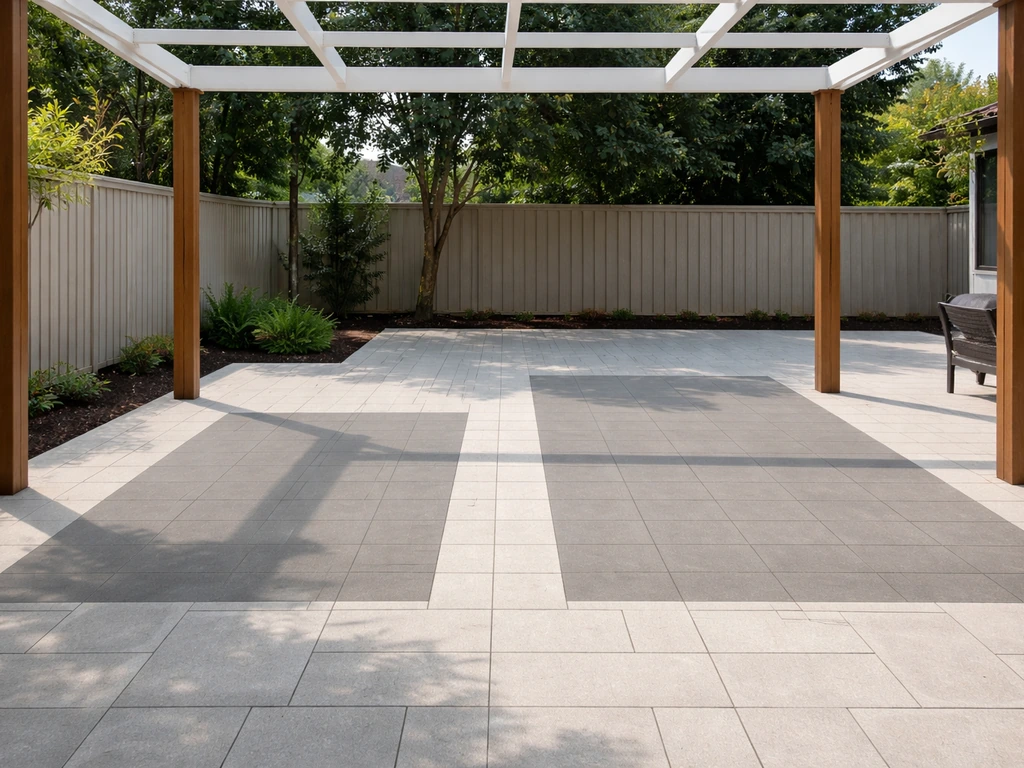
The single biggest factor in your total is square footage, but the price per square foot actually drops as the project gets bigger. A small 10x10 cover might cost $45–$60 per square foot installed because the fixed costs (a permit, concrete footings, delivery) get spread over fewer square feet. A larger 20x20 cover often comes in at $20–$35 per square foot because those fixed costs are diluted. Here's a realistic range by common size:
| Cover Size | Square Footage | Typical Installed Range | Notes |
|---|---|---|---|
| 10x10 | 100 sq ft | $2,900 – $6,000 | Smaller projects have higher per-sq-ft cost |
| 12x12 | 144 sq ft | $4,200 – $8,600 | Very common residential size |
| 10x20 | 200 sq ft | $10,000 – $22,500 | Includes full labor, posts, permit |
| 12x20 | 240 sq ft | $11,000 – $25,000 | Mid-range with gable or solid panel |
| 20x20 | 400 sq ft | $8,000 – $30,000+ | Wide range based on style and engineering |
| 20x40 | 800 sq ft | $16,000 – $48,000+ | Large custom builds; often needs engineer stamp |
These are installed totals, meaning contractor labor, materials, standard footings, and basic hardware are included. They do not include gutters, electrical, side panels, or other add-ons covered later.
What's actually inside the price: a line-by-line breakdown
When a contractor hands you a quote, it usually bundles several cost categories together. Breaking them apart helps you understand where your money is going and where to push back if a bid looks high.
Materials and fabrication
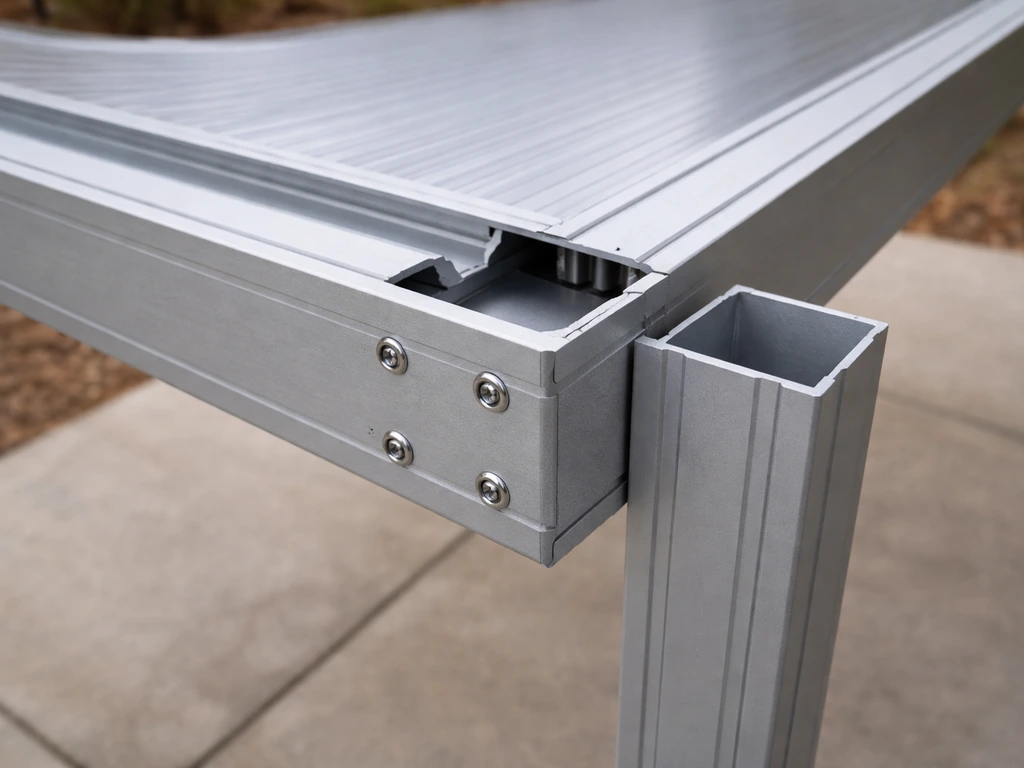
For a standard aluminum patio cover, materials typically account for 40–55% of the total job cost. This includes the beam and rafter extrusions, roof panels or lattice, posts, fascia, caps, and all the connecting hardware (brackets, anchors, screws). Factory-direct or kit-based systems like Alumawood cost less than fully custom fabricated covers. A decent-quality aluminum kit for a 12x20 cover might run $2,500–$5,000 in materials alone before anyone touches a shovel.
Posts and footings
Posts need concrete footings to be structurally sound and to pass inspection. A standard footing involves digging a hole (usually 18–24 inches deep, sometimes more depending on soil and local frost depth), pouring concrete, and setting an anchor bolt or post base. Plan on $150–$400 per footing depending on depth, diameter, and whether a sonotube form is needed. A 12x20 cover with four posts means four footings, adding $600–$1,600 to the total.
Labor and installation
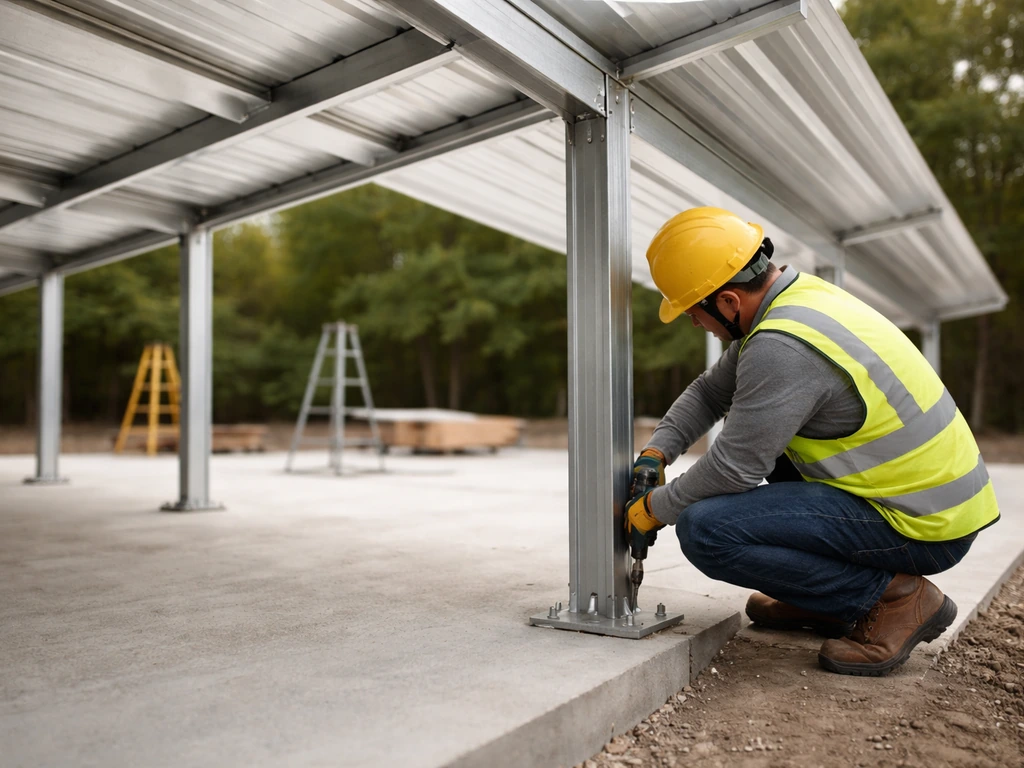
Labor typically runs $8–$25 per square foot depending on the complexity of the design and your region. A straightforward flat or lattice aluminum cover on a simple slab in a low-cost labor market might be on the low end. A gable-roofed cover with a double header, custom ledger attachment, and solid insulated panels in California or the Pacific Northwest pushes toward the high end. Expect labor to be 45–60% of the total on more complex builds.
Permits, inspections, and site prep
Most jurisdictions require a building permit for an attached patio cover, and permit fees typically run $100–$400 for a residential structure. To pin down your total, you will also want to factor in permit fees, footings, and labor for your specific patio size. Some cities like San Diego have a published fee schedule with a specific line item for patio covers on single-family homes. If your project requires stamped engineering drawings (which some cities mandate for larger spans or high wind/snow zones), add $400–$1,200 for the engineer's fee. Site prep (clearing vegetation, grading, or breaking up an old structure) is usually billed separately at $50–$100 per hour.
Demolition and removal
If you're replacing an existing patio cover or pergola, demo and haul-away adds $300–$1,500 depending on size and material. Old wood pergolas with embedded posts are the most labor-intensive to remove. This line item is easy to miss when getting quotes, so always ask whether it's included.
The main factors that push your price up or down
Aluminum vs. steel
Most residential metal patio covers are aluminum, not steel. Aluminum is lighter, corrosion-resistant, and easier to work with, which keeps both material and labor costs lower. Aluminum cover systems typically install at $25–$45 per square foot. Steel is used when you need longer spans, heavier loads, or a more industrial look. Steel costs more to fabricate and paint, and it requires additional rust protection. Expect a steel-framed cover to run 20–40% more than a comparable aluminum build. For most homeowners, aluminum is the right call unless you have a specific structural reason to go with steel.
Roof style
A flat or single-slope roof is the most affordable because it uses fewer components and less labor. A gable roof adds a ridge beam, additional rafters, and more complex attachment work, pushing the price up by 20–35%. Arched or curved roof profiles are the most expensive to fabricate. If you're comparing patio cover options, a simple flat aluminum solid-panel cover will almost always be the most budget-friendly enclosed option, while a gable metal cover sits closer in cost to some wood or composite pergola builds.
Roof panels: solid, lattice, or polycarbonate
The roof panel type affects both cost and function. Solid insulated panels (like a 2-inch insulated aluminum panel) give you the most shade and the best rain protection, and they're typically the most expensive panel option. Open lattice panels are cheaper and let in filtered light but offer minimal rain protection. Polycarbonate panels sit in the middle, letting in light while blocking rain, and they're common on mid-range builds. The cost difference between a lattice cover and a solid insulated cover on the same frame can be $2–$8 per square foot.
Span, post spacing, and engineering requirements
The wider your cover spans between posts, the heavier the beam needs to be. Spans over 12–14 feet typically require a double header or engineered beam, which adds material cost and sometimes requires a stamped engineer's letter. [Fort Collins’ patio cover guide](https://www. fcgov.
com/building/files/patio-cover-guide. pdf) notes that permits and submission requirements can vary, and it may require engineered or stamped structural plans or letters depending on the situation. Wind and snow load requirements also affect beam sizing: a cover in a coastal zone rated for 120 mph wind or one in a mountain region rated for 40 psf snow load needs beefier structure than a cover in a mild climate.
Some patio cover design guidance documents describe how wind and snow load design requirements factor into roof structure sizing and installation specifications Wind and snow load requirements also affect beam sizing. Technical standards for patio cover roof systems can range from 10 to 70 psf depending on combined wind and snow loads.
Finishes and coatings
Most aluminum cover systems come in standard powder-coat colors (white, beige, bronze, brown) at no extra charge. Custom colors or woodgrain finishes (like the Alumawood-style woodgrain extrusions) add $2–$5 per square foot. High-end PVDF or Kynar coatings used in coastal or UV-intense climates can add $3–$8 per square foot to materials.
Add-ons that frequently appear on quotes
Contractors often price the basic structure and leave add-ons as line items. These are easy to miss when comparing bids because one contractor might include gutters while another doesn't. Always ask what's included and what's optional.
- Rain gutters: $8–$15 per linear foot installed. A 20-foot-wide cover needs at least one 20-foot gutter run, so budget $160–$300 minimum.
- Electrical outlet or panel connection: $300–$800 for a single outlet; a full electrical package with wiring, fixtures, and a sub-panel runs $500–$2,000+.
- Ceiling fan rough-in or installation: $200–$600 per fan depending on wiring complexity.
- Recessed lighting: $150–$400 per fixture installed.
- Side privacy panels or screen inserts: $400–$1,500 per panel depending on material (aluminum, polycarbonate, or screen mesh).
- Gates: $300–$800 for a standard aluminum gate.
- Roof extension: adding 2–4 feet to one side typically costs $500–$2,500 depending on how much structure is affected.
- Additional posts: $150–$500 per post including footing, needed when span or local wind rating requires closer spacing.
- HOA approval documentation or stamped plans: $200–$600 if your HOA requires a formal submittal package.
These add-ons can add $2,000–$6,000 or more to a mid-size project. If you want any of them, get them priced upfront rather than added later, when mobilization costs are gone and you lose negotiating leverage.
How your location changes the math
Labor rates vary significantly by region. In the Midwest and parts of the South, contractor labor for a basic aluminum cover install might run $8–$15 per square foot. In California, the Pacific Northwest, or the Northeast, the same labor runs $18–$30 per square foot. That difference alone can swing a 12x20 cover by $4,000–$7,000 on labor alone.
Soil conditions also matter. Expansive clay soils (common in Texas, parts of the Southwest, and the Southeast) require deeper footings or caissons, which adds $200–$600 per footing over standard concrete pours. Rocky ground in mountain regions means drilling rather than digging, which adds equipment cost. Coastal areas may require hot-dipped galvanized hardware or marine-grade coatings on all fasteners, adding $300–$800 to materials.
Wind load requirements are another major regional variable. High-wind zones (Florida, Gulf Coast, parts of the Southwest) may require engineered drawings for any attached structure, adding $400–$1,200 in engineer fees plus potential structural upgrades. Phoenix, for example, treats patio covers as permitted structures with specific post sizing and footing depth requirements. San Clemente requires HOA approval letters before permit issuance on many projects. Check your city's requirements before you budget, not after.
Accessibility to your backyard also affects price. If a crew can't easily get equipment or materials through a gate or side yard, they'll charge a manual handling premium, typically $200–$800 extra on a mid-size job.
DIY vs. hiring a contractor: when each makes sense
If you're willing to do the labor yourself, materials for a basic aluminum patio cover kit can run as low as $1,500–$4,000 for a small to mid-size cover, depending on style and panel type. That's a real saving of $3,000–$10,000 compared to hiring a contractor on a similar project. The catch is that DIY makes sense only under specific conditions.
When DIY saves real money
- You're installing a freestanding or simple attached cover on an existing concrete slab with no footing work needed.
- The span is 12 feet or less and doesn't require engineered drawings.
- You're using a well-documented kit system (Alumawood, Solara, etc.) that includes installation instructions with proper dimensions, overhang specs, and fastener requirements.
- You have at least one helper and basic carpentry/concrete skills.
- Your jurisdiction allows homeowner-permitted work (most do for residential structures under a certain size).
When DIY is risky or not worth it
- Your project requires footings deeper than 18 inches or in challenging soil: renting equipment and doing it correctly is harder than it looks.
- You're in a high-wind or high-snow zone: improper post spacing or incorrect fastener use creates real structural risk under load, and insurance may not cover damage from unpermitted or improperly installed structures.
- The cover attaches to your home's existing structure: ledger attachment to a house wall or roof needs to be watertight and structurally sound, or you're creating a future leak or structural problem.
- Your project is large (20x20 or bigger): the time investment and complexity make contractor pricing increasingly competitive.
- Your city requires a licensed contractor to pull the permit: some jurisdictions won't allow homeowner-pulled permits on covered structures.
The sweet spot for DIY is a small to mid-size freestanding aluminum lattice cover on flat ground in a mild climate with a cooperative permit office. Outside of that, the risk-adjusted savings narrow quickly, and mistakes on footings or attachments are expensive to fix.
How to get accurate quotes and compare bids properly
The biggest mistake homeowners make is getting three quotes without giving each contractor the same spec sheet, then trying to compare wildly different proposals. Here's how to get quotes you can actually compare side by side.
Before you call anyone
- Measure your intended cover footprint (width x depth) and note the existing surface material (concrete slab, pavers, dirt).
- Measure the wall height where it will attach to your house and note any obstructions (windows, doors, gas meters, electrical panels).
- Sketch a rough overhead diagram with dimensions — even a hand drawing on graph paper helps contractors give you accurate numbers without a site visit.
- Decide on your must-haves: roof style (flat, gable), panel type (solid, lattice, polycarbonate), and any add-ons (gutters, lighting, side panels).
- Check your HOA rules and your city's permit requirements before your first call so you know whether stamped plans are required.
Questions to ask every contractor
- What's included in your base price, and what's quoted as an add-on?
- Does your quote include the permit fee, or is that extra?
- How deep will you pour the footings, and what size concrete form are you using?
- What gauge aluminum extrusions are you using, and who manufactures the system?
- What wind and snow load is the structure designed for?
- Will you provide stamped engineering drawings if my city requires them, and is that included in the quote?
- What's your warranty on labor, and what's the manufacturer warranty on the cover system?
- Who handles HOA approval documentation if required?
Comparing bids apples to apples
Ask each contractor to break their quote into the same line items: materials, footings/concrete, labor, permit fees, and any add-ons. A quote that looks $2,000 cheaper might simply be missing gutters, permit fees, or a thinner gauge material. When you get itemized bids, you can see exactly where the difference is coming from. Also check the aluminum system brand or gauge: a quote using 0.050-inch extrusions is meaningfully different from one using 0.040-inch material, even if the footprint looks identical on paper.
Get at least three bids, and be skeptical of any quote that skips a site visit for anything larger than a 10x10 cover. Contractors who quote large jobs from photos alone are often leaving wiggle room that shows up as change orders later.
Your next steps before you commit to a budget
If you're still in the early planning stage, here's a practical checklist to work through before you sign anything or finalize a budget number. Wood patio cover costs vary widely by size and materials, so it helps to compare square-foot pricing and quote line items how much does a wooden patio cost.
- Confirm your city's permit requirements and typical fees (call the building department or check their website).
- Check your HOA rules for attached structures, required approval letters, and any aesthetic restrictions.
- Measure your space and sketch the layout with dimensions and attachment points.
- Decide on your core spec (size, roof style, panel type, aluminum vs. steel) so you can get consistent quotes.
- Get three itemized quotes from licensed contractors with site visits.
- Add a 10–15% contingency to your budget for soil surprises, engineering fees, or permit plan corrections.
- Ask each contractor for references on similar jobs completed in the last 12 months.
- Review permit requirements one more time after you settle on a contractor, since your design may have changed from initial concept.
A metal patio cover is one of the more straightforward outdoor improvement projects when you go in with clear specs and itemized quotes. If you need to budget for one, this article covers typical covered patio cost ranges and what drives them. The price range is genuinely wide, from under $5,000 for a simple small aluminum lattice cover to $30,000+ for a large gable-roofed insulated panel build with electrical and gutters.
But once you pin down your size, roof style, and panel type, the range for your specific project narrows considerably. If you're also weighing a covered patio against a wood pergola, a deck, or a freestanding structure, comparing those costs on the same size basis will help you see whether the metal option is competitive for what you actually need.
FAQ
How much does a metal patio cover cost if I’m only covering one side of my patio (off one ledger or wall)?
Budget the same per-square-foot range, but expect extra engineering and more expensive post or ledger attachment work if the span is longer or the roof attaches to a weaker substrate. Ask your contractor whether the design is beam-supported on posts, ledger-supported to the house, or both, since ledger attachment details can change material and labor line items.
What’s the typical cost difference between aluminum and steel after installation?
In many quotes, steel runs about 20% to 40% more than aluminum for a comparable footprint because fabrication and corrosion protection are higher. To compare apples to apples, request the steel’s coating type and fastener specification (for example, marine-grade or hot-dipped galvanized) and confirm whether the quote includes repainting or coating warranties.
Do I need to add gutters, and how much should I budget if I want rain to drain away from the house?
If you want controlled drainage, budget as an add-on since many base prices exclude gutters. Ask for a gutter and downspout layout on the quote (including splash blocks or drain routing), because guttering cost can vary dramatically depending on roof pitch, fascia detailing, and how far downspouts must connect.
Is there a cheaper way to get a “more enclosed” roof without going full solid insulated panels?
Yes, you can reduce cost by using polycarbonate for partial enclosure or lattice for shading, then adding privacy elements later. Ask your contractor for a hybrid option (solid at the house-facing edge, lattice or poly in the rest) so you can target your goal, better rain blocking or more shade, without paying for insulation everywhere.
How do I estimate the cost impact of upgrading roof pitch or changing from flat to gable?
Expect roughly a 20% to 35% increase for gable compared with flat on similar sizes, but the real cost driver is attachment complexity and extra components like ridge beams and rafters. Ask whether the quote includes the ridge hardware and double header where required, and confirm that the beam sizing matches your local wind and snow requirements.
What should I watch for in quotes that look cheaper than others?
Common issues are missing permit fees, missing post footings details, thinner gauge extrusions, or add-ons omitted (gutters, electrical, side panels). Require an itemized line-by-line breakdown and ask for the aluminum gauge (or steel gauge) in writing, since two similarly sized covers can differ materially even if the footprint matches.
How much extra do I pay for stamped engineering drawings?
Sometimes it’s a small add-on, but in higher wind or snow regions it can be required for larger spans. Ask whether engineering is needed for your specific span length and roof type, and confirm if your bid includes both stamped drawings and any required engineer letter for permit approval.
Will expanding clay soil or rocky ground change the total cost a lot?
It can. Expansive clay may require deeper footings or caissons, adding a few hundred dollars per footing, and rocky ground may require drilling and equipment time. Before signing, ask for the planned foundation method and whether the quote assumes standard digging depth, since that decision affects total cost and schedule.
How do wind and snow load requirements change pricing in real life?
They mainly change the structural sizing of beams, posts, and sometimes the need for engineering, which raises material cost. Ask your contractor to specify the design criteria they’re using (wind mph and snow psf) and whether the quote includes upgrades like additional posts or heavier beams, so you’re not surprised by change orders.
What does accessibility really change cost-wise, and what should I tell the contractor?
If equipment and materials can’t reach your backyard easily through gates or side yards, you’ll often pay a manual handling premium. Be upfront about the tightest route width and whether there’s any slope or obstacles, then ask if the quote includes delivery access or if that cost is excluded.
If I want lights or a ceiling fan under the cover, how is that usually priced?
Most base structure quotes exclude electrical. Ask whether your contractor is including conduit, wiring, junction boxes, and weather-rated fixtures, and confirm who supplies and installs the devices. Electrical adds cost not just for parts, but for permitting and inspections in many areas.
What’s the most cost-effective DIY scenario, and when is DIY likely to backfire?
DIY tends to make sense for small to mid-size freestanding aluminum lattice covers on reasonably flat ground, where permitting is straightforward and footing placement is easy to verify. It backfires when permits require engineered details, the house attachment is complex, or soil is difficult, because incorrect footings or attachments can be expensive to redo after inspection.
If I’m replacing an old pergola, what should I confirm is included in the demo price?
Confirm whether removal includes hauling, disposal, and whether embedded posts require full excavation. Ask if the demo quote accounts for concrete post remnants and whether new footings will be poured after site leveling, since incomplete demo details can create extra charges during installation.
What’s a quick way to sanity-check my total budget for common sizes?
Use the installed range by size as a starting point, then add expected add-ons. For planning, request a quote that totals materials, footings/concrete, labor, permit fees, and any extras as separate line items, so you can see whether you’re paying for structure only or also for drainage, enclosure, and electrical.
Next Articles
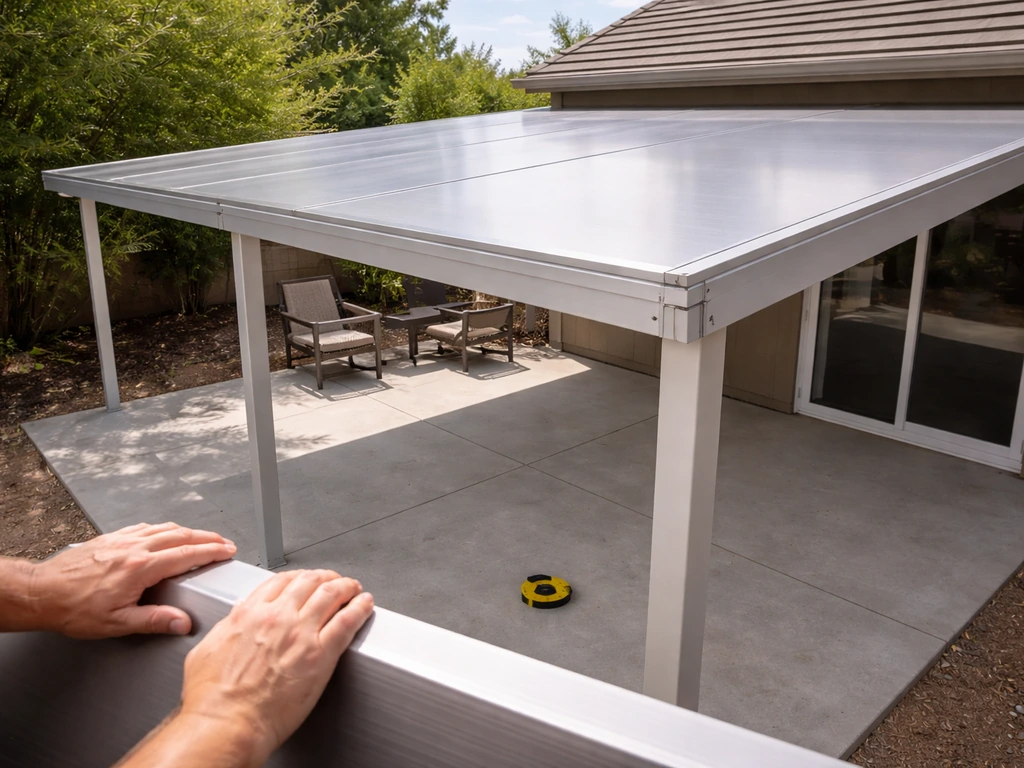
How Much Will It Cost to Cover a Patio? Real Pricing Guide
Patio cover costs by size and material with real price ranges, labor breakdowns, and quote checklist for budgeting today
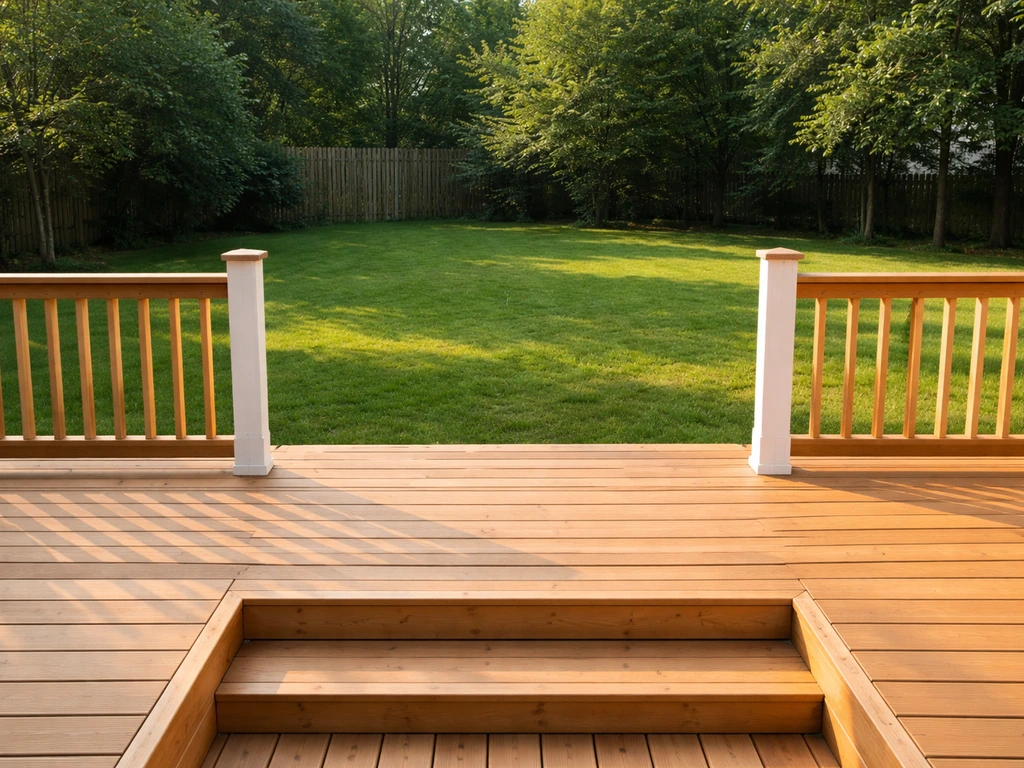
How Much Does a Wooden Patio Cost? 2026 Price Guide
2026 guide to wooden patio costs by size with material vs labor breakdown, extras, DIY vs contractor, and bid checks.

How Much Should a Patio Cover Cost? Real Budget Ranges
Budget ranges for patio covers, cost drivers, size examples, DIY vs install, and a checklist to compare contractor quote