
A garden glass patio (whether that's a glass veranda, a glass-roofed pergola, or a full glass enclosure) typically costs between £1,200 and £2,500 per m² installed in the UK, or roughly US$150–$300 per square foot in the US. Channel Drainage (ACO Drain) Costs UK, Trade2Base (domestic pricing guide) notes that Drainage / surface water control: domestic channel (ACO‑style) linear drains are typically quoted around £40–£120 per linear metre supplied & fitted depending on load class and connection work; a connected soakaway adds several hundred to c.£600–£1,500 (UK installer/driveway guides) Channel Drainage (ACO Drain) Costs UK — Trade2Base (domestic pricing guide). For a mid-size 12×12 ft (roughly 3.6×3.6 m) structure, you're realistically looking at US$21,600–$43,200 in the US or around £15,000–£32,000 in the UK. A compact glass veranda at 3m×2m can come in at £3,500–£4,500, while a premium fully insulated glass garden room can easily clear £22,500. Size, glazing spec, frame material, and site conditions are the four biggest cost levers.
How Much Does a Garden Glass Patio Cost: Real Prices

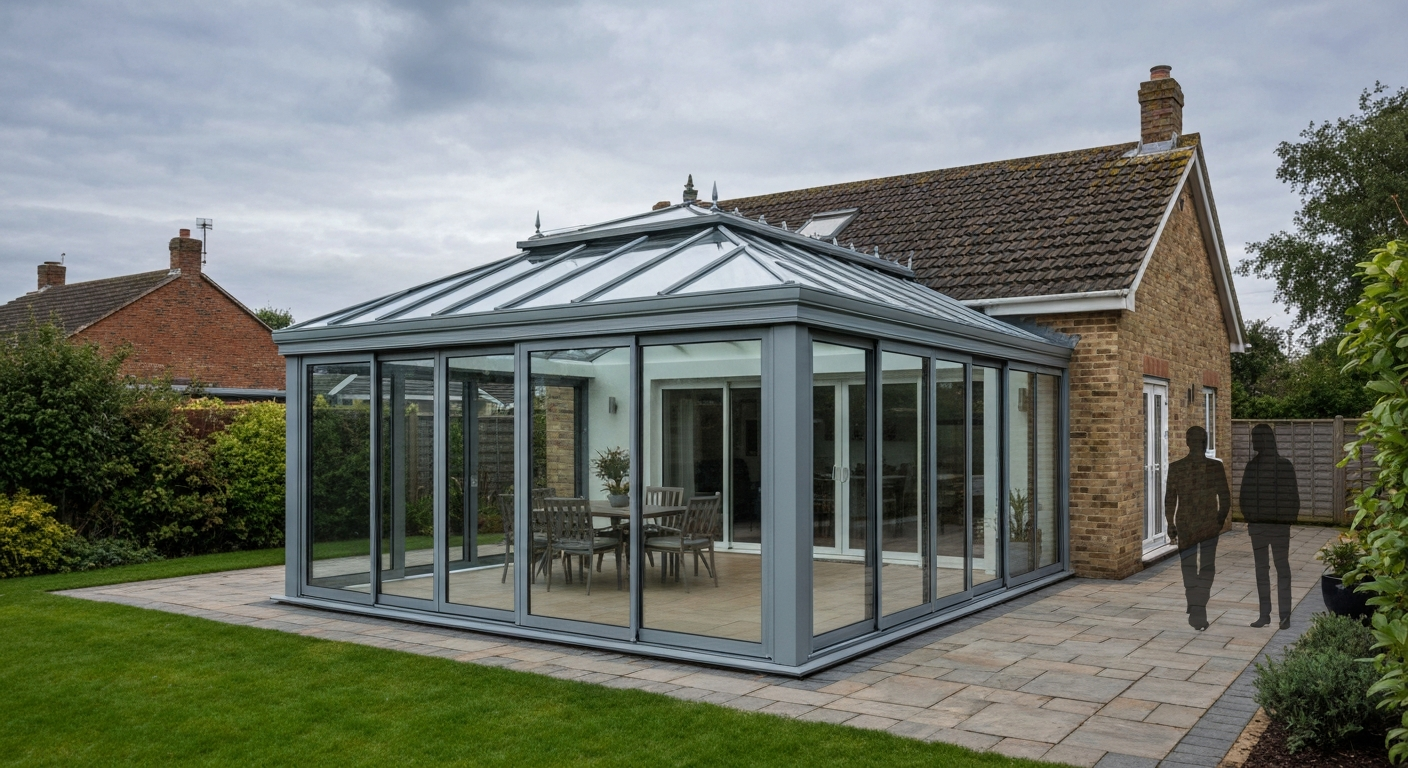
What you can expect to pay: quick cost summary
The term 'garden glass patio' covers a wide spectrum of products, which is partly why pricing feels so confusing at first. At one end you have a simple glass canopy or veranda (a roof over an existing patio), and at the other end you have a fully insulated, four-season glass garden room with underfloor heating and bi-fold doors. The cost difference between these two extremes is enormous. Here's a practical starting point before we go line by line.
| Structure Type | Typical Cost (UK) | Typical Cost (US) | Notes |
|---|---|---|---|
| Glass veranda / canopy (3m×2m) | £3,500–£4,500 | ~US$4,700–$6,000 | Roof cover only, attached to house |
| Glass pergola / garden room (mid-spec) | £12,400–£22,500 | ~US$16,600–$30,100 | Package product, standard glazing |
| Fully insulated glass garden room | £1,200–£2,500/m² | ~US$150–$300/ft² | Four-season use, price per area |
| Structural glass façade wall only | £900–£2,500/m² | ~US$120–$335/ft² | Glass wall installation, no roof |
| Structural roof lantern / overhead glazing | £1,800–£4,000/m² | ~US$240–$535/ft² | Complex engineered solution |
All UK figures above are based on 2026 installer market data. For Ireland, prices track closely to UK rates but VAT at 23% (versus UK's 20%) and slightly higher labour costs in urban areas like Dublin mean you should add roughly 5–10% to UK estimates as a planning buffer. I'll cover UK and Ireland specifics in their own section below. For detailed local pricing and a breakdown specifically for Ireland, see our guide on how much does a patio cost Ireland.
Cost per square foot and example totals for common sizes
Using the US$150–$300/ft² rule of thumb for a fully installed glass enclosure or sunroom, here's how costs scale across the three most commonly searched sizes. These figures assume a contractor-installed structure on a prepared flat site. Site prep, permits, and heating are not included in the base range, I'll add those separately in the line-item section.
| Size | Area | Low (US$150/ft²) | Median (US$225/ft²) | High (US$300/ft²) | Low (UK approx.) | High (UK approx.) |
|---|---|---|---|---|---|---|
| 10×10 ft | 100 ft² / ~9.3 m² | US$15,000 | US$22,500 | US$30,000 | £11,200 | £22,400 |
| 12×12 ft | 144 ft² / ~13.4 m² | US$21,600 | US$32,400 | US$43,200 | £16,100 | £32,200 |
| 20×20 ft | 400 ft² / ~37.2 m² | US$60,000 | US$90,000 | US$120,000 | £44,800 | £89,500 |
The UK figures above use the April–June 2026 exchange rate snapshot of £1 ≈ US$1.34, rounded to the nearest £100. Always verify the live rate when converting for a real budget. For m²-based UK planning, the equivalent unit rate is £1,200–£2,500/m², and most mid-range glass garden rooms fall in the £1,700–£2,200/m² band once foundations, framing, and glazing are combined into a single contractor quote.
Full line-item cost breakdown
This is where most budgets go wrong. Homeowners get a headline price for the glass structure but forget six or seven other cost lines that contractors either quote separately or leave out entirely. Below is every cost category you need to account for.
Materials and glazing
The glass itself is often 20–35% of the total project cost. Laminated safety glass supply runs roughly £186–£312/m², while mid-market toughened/tempered glass installed (single sheets) comes in around £120–£180/m². High-performance insulated glazing units (IGUs), structural laminated glass, or overhead roof glazing are significantly more expensive: complex structural or roof glazing is typically quoted at £1,800–£4,000/m² installed. If you're pricing a lean-to or veranda with a standard polycarbonate or basic toughened roof, you'll be at the lower end. If you want thermally broken double-glazed units throughout a full garden room, you'll be at the high end.
Frames
Frame material is one of the easiest ways to control cost. uPVC is the cheapest option, typically scaling to around £500–£750/m² for facade/framing area. Thermally broken aluminium (the most popular choice for glass garden rooms) runs £850–£1,400+/m². Timber frames tend to sit above uPVC but below premium aluminium, though hardwood or engineered timber can close that gap quickly. For a mid-range 20 m² glass room, moving from uPVC to aluminium framing alone can add £7,000–£13,000 to the quote.
Foundation and slab
Your foundation choice depends on ground conditions, structure weight, and whether you want underfloor heating. Ground screws are the quickest and cheapest option at around £30–£50/m², and they're common for lighter timber or aluminium garden rooms. Screw piles run £50–£80/m² and suit softer or sloping ground. A full concrete slab costs £80–£150/m² including materials and labour, with total slab costs typically landing between £900 and £4,500 depending on size, excavation, reinforcement, and access. Concrete Slab Cost UK (2026 Guide), ConcreteChoice reports typical concrete slab unit rates around £80–£150/m² and small slab totals commonly range from about £900 up to £4,500 depending on excavation, reinforcement, insulation and access Concrete Slab Cost UK (2026 Guide) — ConcreteChoice. For a 20 m² slab, budget £1,600–£3,000 as a working estimate.
Site prep and excavation
Site clearing, excavation, and spoil removal is one of the most commonly underestimated line items. In the US, consumer guides flag site prep and excavation at US$500–$5,600 for enclosure conversions, depending on access, ground slope, and volume of material removed. In the UK, a straightforward flat garden with good vehicle access might add just a few hundred pounds, while a difficult rear garden requiring manual dig and skip hire can add £1,000–£3,000 before a single glass panel is installed.
Drainage
Any glazed structure needs surface water managed properly, especially around the perimeter. Channel (ACO-style) linear drains cost roughly £40–£120 per linear metre supplied and fitted. A soakaway to manage outflow adds another £600–£1,500 depending on soil conditions and local authority requirements. For a basic 3m×4m veranda, drainage is often minimal. For a full glass room sitting on a concrete slab, drainage becomes a proper line item in the groundworks quote.
DPM and sub-base protection
A damp proof membrane (DPM) under the slab is cheap on materials (under £1/m² as a roll) but the installed cost including correct detailing, blinding layer, and any specialist gas or radon protection rises to £3–£30/m² depending on spec. Radon-affected areas in the UK and Ireland may require a more robust system, which your structural engineer or building control surveyor should flag.
Labour
Labour typically accounts for 30–45% of the total installed cost of a glass enclosure. In the UK, specialist glazing contractors charge roughly £200–£350 per day per tradesperson, and a small-to-mid glass room takes a crew of two to four people between five and fourteen working days. Groundworks teams are usually separate and charged out at £250–£400 per day. In the US, glazing and sunroom installation labour adds US$50–$150/ft² on top of materials for complex four-season builds.
Permits and building regulations
In the UK, most glass garden rooms under 30 m² at the rear of the property are permitted development and don't require planning permission, but Building Regulations approval is needed if the structure is heated, has electrical installations, or is attached to the house. Fees for a Building Regulations application (Full Plans) typically run £300–£900 depending on your local authority. In the US, permit fees vary widely by municipality but US$500–$2,000 is a common range for residential enclosure work.
Insulation and heating
A basic glass veranda doesn't need insulation. A year-round glass room does. Roof and wall insulation adds £800–£2,500 to a typical 20 m² garden room depending on spec. Underfloor heating (wet system connected to your boiler) adds roughly £1,200–£2,500 for a 20 m² floor; an electric mat UFH system is cheaper to install at £500–£1,200 but more expensive to run. A wall-mounted electric heater or infrared panel is the cheapest initial option (£200–£800 supply and fit) but least effective for genuine four-season use.
Finishing
Don't forget the finishing costs that only appear at the end: internal flooring (tiles, engineered wood, luxury vinyl), electrical fit-out (sockets, lighting circuits, consumer unit extension), decorating, and any blinds or solar shading. These add a realistic £1,500–£5,000+ to a mid-range garden glass room project and are almost never included in the structural quote.
Transparent sample cost tables by size
| Cost Item | 10×10 ft Low | 10×10 ft High | 12×12 ft Low | 12×12 ft High | 20×20 ft Low | 20×20 ft High |
|---|---|---|---|---|---|---|
| Glazing (supply & install) | £3,500 | £7,500 | £5,000 | £10,800 | £14,000 | £30,000 |
| Frames (aluminium mid-spec) | £2,000 | £4,000 | £2,900 | £5,800 | £8,000 | £16,000 |
| Foundation / slab | £900 | £2,000 | £1,100 | £2,400 | £1,800 | £4,500 |
| Site prep & excavation | £400 | £1,500 | £500 | £1,800 | £1,000 | £3,000 |
| Drainage | £300 | £800 | £400 | £1,000 | £700 | £2,000 |
| Labour (glazing team) | £2,500 | £5,000 | £3,500 | £7,000 | £9,000 | £18,000 |
| Insulation & heating | £800 | £2,500 | £1,000 | £3,000 | £2,000 | £5,500 |
| Permits / Building Regs | £300 | £900 | £300 | £900 | £400 | £900 |
| Finishing (flooring, electrics) | £1,000 | £3,000 | £1,200 | £3,500 | £2,500 | £6,000 |
| TOTAL (approx.) | £11,700 | £27,200 | £15,900 | £36,200 | £39,400 | £85,900 |
These are estimates built up from 2026 UK market data and are meant as a budgeting framework, not a fixed quote. Actual costs will vary depending on your site, chosen contractor, spec, and region. The 20×20 ft high-end figure of ~£86,000 aligns with the premium garden room market where insulated glazing, aluminium frames, underfloor heating, and a quality internal fit-out all combine. For pure enclosure work without full insulation, you can land well below these numbers.
Glazing in an existing patio: scope options and what they cost
If you already have a patio slab, glazing it in (adding a glass roof, walls, or full enclosure) is typically cheaper than starting from scratch because the foundation work is already done. For a concise cost guide on how much does it cost to glass in a patio, see our detailed pricing checklist and example totals. The scope options break down into three common approaches, each with a different price impact.
- Glass canopy or veranda only (roof cover, open sides): adds £3,500–£8,000 for a small-to-mid patio; this is the most affordable entry point
- Partial enclosure (glass roof plus one or two glass panels): typically £8,000–£18,000 for a 12–20 m² patio depending on framing spec
- Full glass enclosure (roof and all sides, insulated): £12,000–£35,000 for a 12–20 m² patio, rising to £50,000+ for premium aluminium + IGU spec
The key cost drivers when enclosing an existing patio are: whether the existing slab is level and load-rated for the new structure, whether drainage needs re-routing, how the new walls connect to the house (flashing, DPC continuity), and whether building control requires upgraded insulation. If your existing slab needs breaking up and relaying, add £900–£2,500. If there's a drainage issue, add £600–£2,000. Getting a structural engineer to sign off on the existing base typically costs £300–£600 but can save thousands if it avoids a problem mid-build.
Contractor-installed vs DIY: where the money actually goes
Labour on a glass enclosure project is typically 30–45% of the total cost, so the DIY saving sounds appealing. But the reality is more nuanced. Structural glazing, thermally broken aluminium systems, and insulated glazing units all require specialist installation to maintain their warranties and, critically, to meet Building Regulations for thermal performance (Part L) and structural integrity (Part A). An incorrectly installed IGU seal, for example, will fail in two to three years and cost more to fix than the original labour saving.
Where DIY is genuinely realistic: groundworks and site prep, laying a concrete slab if you have the skills, managing your own drainage connections, painting/finishing, installing internal flooring, and basic electrical final-fix work (by a registered electrician). Doing your own groundworks and slab on a 20 m² project could realistically save £2,000–£4,500. That's worth going after.
Where DIY carries serious hidden risks: structural glazing installation (void manufacturer warranty, potential safety risk), aluminium frame assembly for thermal break systems (tolerances are tight and misalignment causes condensation and water ingress), any electrical or heating work not signed off by a registered tradesperson (invalidates insurance, building control sign-off). A failed DIY glass installation that needs a contractor to redo is almost always more expensive than hiring correctly from the start. If you're set on some self-build involvement, the safest model is a contractor-supplied-and-installed glass structure with you handling groundworks and finishing yourself.
UK and Ireland: regional costs, planning rules, and VAT
UK prices (England, Scotland, Wales) for installed glass garden rooms and verandas run at roughly £1,200–£2,500/m² in 2026, with London and the South East sitting 15–25% above the national average due to higher contractor day rates and access costs. In Scotland and the North of England, prices tend to track 10–15% below the South East median. Northern Ireland pricing is broadly in line with Republic of Ireland costs in many trades.
In Ireland, labour costs in Dublin and the greater Dublin area are comparable to London contractor rates, and VAT at 23% (versus 20% in the UK) adds a meaningful cost uplift. For a €25,000 glass garden room project, the VAT difference alone adds roughly €750 compared to the equivalent UK transaction. Planning rules in Ireland under the Planning and Development Act generally allow garden rooms at the rear without full planning permission if they meet exempted development conditions, but you should always verify with your local authority because permitted development rules differ by county and structure type.
UK planning note: in England, most glass garden rooms and verandas attached to the rear of a house are permitted development under Class E (outbuildings) if the floor area is under 30 m², the structure is single-storey (eaves under 2.5m, ridge under 4m for a dual pitch or 3m for a lean-to), and the property is not in a conservation area or listed building. Attached conservatories have historically required Building Regulations compliance for thermal performance, and this extends to heated glass rooms. If you're in a conservation area, Article 4 Direction may remove permitted development rights entirely, so check with your local planning department before spending a penny on design fees.
Garden glass patio vs traditional patio surfaces: real cost comparison
If the question is whether to build a glass structure or simply lay a garden patio and leave it open to the elements, the cost difference is dramatic. Traditional patio surfaces are a fraction of the price. For current UK pricing on traditional patios, see our guide on how much does a patio cost UK. Here's how the numbers compare for a comparable 20 m² outdoor space. For detailed line‑item prices for laying a traditional patio in the UK, see our guide on how much to patio a garden in the UK.
| Option | Typical Cost (UK, 20 m²) | Typical Cost (US, ~215 ft²) | Usable Seasons | Planning Required? |
|---|---|---|---|---|
| Concrete slab patio | £1,600–£3,000 | US$2,000–$5,000 | 3 (open air) | Usually no |
| Paving slabs / pavers | £2,000–£4,500 | US$3,000–$7,500 | 3 (open air) | Usually no |
| Natural stone patio | £3,500–£7,000 | US$5,000–$12,000 | 3 (open air) | Usually no |
| Brick patio | £2,500–£5,000 | US$3,500–$8,500 | 3 (open air) | Usually no |
| Stamped concrete | £2,000–£4,500 | US$3,000–$8,000 | 3 (open air) | Usually no |
| Glass veranda over patio | £3,500–£8,000 (added) | US$4,700–$11,000 (added) | 3–4 (partial cover) | Check PD rules |
| Full glass enclosure (garden room) | £18,000–£50,000+ | US$25,000–$80,000+ | 4 (year-round) | Building Regs likely |
The practical framing here: a 20 m² natural stone patio might cost £5,000–£7,000 installed. A full glass garden room over the same footprint costs three to eight times more. What you're paying for is year-round usability, weatherproofing, and effectively an additional room. If you mostly want somewhere to sit outside in summer, a well-laid patio in concrete, pavers, or stone is vastly better value. If you want a space you can genuinely use in February, the glass enclosure justifies its cost.
How to price a garden glass patio yourself: step-by-step estimating method
You don't need a quantity surveyor to build a reliable budget estimate. Work through these steps in order and you'll have a number you can actually test against contractor quotes. For a shorter checklist focused on hard‑surfaced patios, see how to price a patio for step‑by‑step guidance.
- Measure the footprint accurately (length × width in metres). This is your m² figure for everything.
- Decide your structure type: canopy/veranda only, partial enclosure, or full glass room. This determines which cost lines apply.
- Price the foundation: check whether your existing base is adequate (get a structural engineer opinion, ~£300–£600) or whether you need a new slab (£80–£150/m²) or ground screws (£30–£50/m²).
- Price the glazing: get at least two quotes for the glass specification you want (standard toughened vs. double-glazed IGU vs. structural). Use £120–£180/m² as a low-end baseline for basic toughened glass supply and install, and £300–£600/m² for IGU with aluminium framing.
- Add frames: uPVC (£500–£750/m² of façade area), aluminium thermally broken (£850–£1,400/m² of façade area).
- Add site prep: walk your site and be honest about whether there's a slope, tree roots, drainage issues, or access problems. Budget £500–£3,000 depending on complexity.
- Add drainage: count the linear metres around the structure perimeter and use £40–£120/linear metre.
- Add insulation and heating if you want year-round use: £800–£2,500 for insulation; £500–£2,500 for underfloor heating.
- Add permits: £300–£900 for UK Building Regulations; check local fees for US municipalities.
- Add finishing: flooring, electrics, blinds. Budget at least £1,500 for a modest finish; £3,000–£6,000 for something you'd be proud of.
- Add a 15% contingency across all items above. Hidden costs on groundworks and glazing are common.
- Total all line items including contingency. This is your realistic budget floor — get three contractor quotes to validate it.
Print or save this list as your project worksheet. Put your own figures in each row, total them up, and take it into every contractor meeting. It immediately separates contractors who are giving you a like-for-like quote from those who are leaving out scope to win on headline price.
Which option is right for you: glass enclosure, glass canopy, or traditional patio?
Here's the honest decision framework I'd walk anyone through before they spend serious money.
| Use Case | Best Option | Budget Range (20 m² UK) | Key Consideration |
|---|---|---|---|
| Summer-only outdoor seating | Traditional patio (pavers/stone) | £2,000–£7,000 | Best value; no heating needed |
| Rain cover for outdoor dining | Glass veranda / canopy | £3,500–£8,000 | Permitted development usually ok |
| Extended season use (spring–autumn) | Glass canopy + side screens | £6,000–£14,000 | Check PD rules; partial enclosure |
| Year-round usable garden room | Full insulated glass enclosure | £18,000–£50,000+ | Building Regs required; adds real value |
| Home office / gym (year-round) | Full glass room (4-season spec) | £22,000–£60,000+ | High spec; adds resale value if done well |
| Listed building / conservation area | Any — but get planning advice first | Cost + planning overhead | Permitted development may not apply |
Climate matters a lot here too. In Ireland and Scotland, where outdoor temperatures are below comfortable for six or more months, a full insulated glass room earns back its cost in genuine daily use if the household uses it. In warmer southern US states or Mediterranean climates, a glass canopy or partial screen may deliver 90% of the benefit at 30% of the cost. Budget and resale should both factor in: a well-specified glass garden room adds measurable value to UK and Irish homes, but an over-specified glass build in a modest property can be hard to recoup at sale.
Upgrades that change the cost (and which are worth it)
Contractors will often present upgrades at the quote stage. Here's what each one actually costs and whether it's worth adding from the start.
| Upgrade | Typical Added Cost (UK) | Worth It? |
|---|---|---|
| Double-glazed IGU vs. single toughened glass | £1,500–£4,000 for 20 m² | Yes, if year-round use planned |
| Thermally broken aluminium vs. uPVC frames | £3,500–£8,000 for 20 m² | Yes for heated rooms; overkill for verandas |
| Bi-fold or sliding glass doors (set of 3 panels) | £2,500–£6,000 per set | High impact; worth it for access/flow |
| Underfloor heating (wet system, 20 m²) | £1,200–£2,500 | Yes if slab is new; expensive to retrofit |
| Underfloor heating (electric mat, 20 m²) | £500–£1,200 | Good compromise; cheaper to install |
| Integrated LED lighting (ceiling + perimeter) | £600–£1,800 | Yes; almost always under-budgeted |
| Solar control / anti-glare glazing coating | £500–£1,500 added to glass cost | Yes in south-facing rooms; prevents overheating |
| Automated roof vents or opening roof panels | £1,000–£3,500 | Nice to have; useful in warm climates |
| Insulated roof vs. full-glass roof | Insulated roof is £500–£1,500 cheaper | Consider if overheating is a concern |
My honest advice: if you're building a heated four-season room, do the thermally broken frames and IGUs from day one. Retrofitting glazing upgrades later is expensive and disruptive. The bi-fold doors and integrated lighting are the upgrades most homeowners wish they'd included from the start. Automated vents sound nice but most people rarely use them, if budget is tight, drop these first.
Permits, planning, and building regulations: check this before budgeting
Getting this wrong can stop a project mid-build or force expensive changes. Here's the checklist to work through before you get a single quote.
- Check whether your property has permitted development rights (Article 4 Directions in conservation areas or on listed buildings remove them)
- For UK: check whether your proposed structure falls within Class E permitted development limits (rear garden, under 30 m², single-storey, correct height limits)
- For Ireland: check exempted development conditions under the Planning and Development Act with your local authority
- If you need planning permission, budget 8–13 weeks for the application process and £200–£600 in application fees (UK) plus architect/design fees if drawings are required
- Building Regulations (UK): required for heated structures, electrical installations, and anything structurally attached to the house — budget £300–£900 for a Full Plans application
- Structural engineer sign-off: needed if modifying the house wall or using the house structure to support the new roof — typically £300–£700
- Check party wall implications if your structure sits near or on a boundary — a Party Wall Award can add months and several hundred pounds if a surveyor is involved
- In the US, check local zoning for setback requirements from property boundaries; violations can require demolition at your expense
- Confirm drainage connection rights — in some cases you'll need approval from the water authority to connect to public drainage
Site prep, project stages, and realistic timelines
One thing homeowners consistently underestimate is how long the pre-construction phase takes. Getting from 'I want a glass garden room' to actually having one installed typically takes four to six months from first enquiry to completion on a straightforward mid-size project. Here's what that schedule looks like.
- Week 1–4: Initial quotes and site surveys from two to three contractors
- Week 4–8: Design and specification agreed; contract signed; planning/building control applications submitted if needed
- Week 8–16: Planning/building control determination period (if required); manufacturer's fabrication lead time for glazing and frames (commonly 6–10 weeks)
- Week 16–18: Groundworks and foundation (site prep, excavation, slab pour, cure time — allow 3–5 working days for slab; 7–14 days cure before loading)
- Week 18–21: Main structure installation (frame, glazing, roof — typically 5–14 working days for a mid-size crew)
- Week 21–24: Finishing trades (electrics, heating, flooring, decorating) — typically 2–4 weeks depending on scope
- Week 24–26: Snagging, building control inspection and sign-off
If you're working without any planning permission requirements and your contractor has current availability, that timeline can compress to eight to twelve weeks from contract to completion. The biggest delays in practice are: waiting for planning/building control, manufacturer lead times on custom glazing orders, and groundworks contractors being unavailable. Planning these dependencies early saves real time.
Maintenance, lifespan, and long-term running costs
A properly specified and installed glass enclosure should last 25–35 years before major structural work is needed. Aluminium frames are essentially maintenance-free; uPVC may need repainting or panel replacement after 20–25 years. The key ongoing costs are cleaning, seal maintenance, and heating.
- Cleaning: glass panels need cleaning four to six times per year; professional gutter and roof glass cleaning costs £60–£150 per visit depending on size and access
- Seal and gasket replacement: silicone seals and gaskets on glazing units typically last 10–15 years; replacement costs £200–£800 depending on extent
- IGU seal failure (misting): if a double-glazed unit fails its hermetic seal, individual panel replacement costs £100–£300 per unit (supply and install); budget for this after 15–20 years
- Heating running costs: an electric infrared panel (500–1,500W) in a 20 m² room costs roughly £0.18–£0.55 per hour to run at 2026 UK electricity rates; underfloor heating off-peak overnight tariffs are more economical
- Roof cleaning and algae treatment: north-facing glass roofs develop algae growth; annual treatment with a proprietary cleaner costs £30–£80 in product, or £80–£200 for a professional visit
- Structural checks: a glazing specialist inspection every five to seven years is good practice for any structure with overhead glazing, particularly after severe storms
Budgeting checklist and financing options
Before you sign a contract, make sure every one of these boxes is checked.
- You have a line-item budget covering all cost categories (not just the glass structure quote)
- You have added a 15% contingency on top of the total estimated cost
- You have at least two to three contractor quotes for the same specification
- You have confirmed planning/permitted development status with your local authority in writing
- You know whether VAT is included in your quotes (UK: standard rated at 20%; Ireland: 23%)
- You have confirmed payment stages with your contractor (avoid paying more than 25–30% upfront; stage payments tied to completion milestones are standard)
- You understand the manufacturer's warranty on frames and glazing and what voids it
On financing: most glass garden rooms are funded through savings, home improvement loans, or remortgaging. In the UK, some suppliers offer 0% finance over 12–24 months on package garden room products, check the total cost of credit carefully. Government grant schemes for energy efficiency improvements (such as the UK ECO4 scheme or Ireland's SEAI home energy grants) can sometimes apply to insulated glazing within a home extension context, but purely decorative garden rooms typically don't qualify. It's worth a call to your local energy authority to check your specific situation before ruling it out.
How to get accurate quotes: what to ask and what to watch for
The single biggest pricing trap with glass enclosures is receiving a quote that prices only the glass structure and nothing else. Here's what to specifically request in every quote and the questions that expose the low-ballers.
- Ask for a fully itemised quote: glazing, frames, foundation/base, site prep, drainage, labour, electrical connection, insulation, finishing, and permits listed separately
- Ask whether VAT is included in the quoted total
- Ask what glazing specification is quoted: toughened single pane, laminated safety glass, or thermally broken double-glazed IGU — these are very different products at very different prices
- Ask what happens if groundworks reveal unexpected conditions (rock, high water table, contaminated ground): who carries that cost risk?
- Ask for the manufacturer warranty on frames and glazing units and whether it's voided by self-installation
- Ask for a reference from a recent comparable project you can call and visit
- Ask what Building Regulations compliance is included and who manages the applications
- Get all scope defined in writing before signing — verbal assurances about what's included are worth nothing if a dispute arises
A low headline quote that excludes groundworks, drainage, electrics, and VAT can look 40–60% cheaper than a comprehensive quote that includes everything. When you add those items back in, the cheap quote often ends up more expensive in total. Always compare quotes on a fully-inclusive like-for-like basis.
Three realistic project scenarios with full line-item costs
Scenario 1: Basic glass veranda, 3m×3m, existing patio
| Item | Cost (UK) |
|---|---|
| Glass canopy / veranda structure (supply & install) | £4,200 |
| Existing slab assessment (structural engineer) | £350 |
| Drainage adjustment (2 linear metres) | £180 |
| Electrics (2 outdoor sockets, 1 light circuit) | £550 |
| Permits / PD confirmation check | £150 |
| Contingency (15%) | £800 |
| TOTAL | ~£6,230 |
Scenario 2: Mid-range glass garden room, 4m×4m (16 m²), aluminium frames, IGU glazing
| Item | Cost (UK) |
|---|---|
| Aluminium frame structure (supply & install) | £7,500 |
| IGU double glazing (supply & install) | £5,200 |
| Concrete slab base (16 m²) | £1,600 |
| Site prep and excavation | £900 |
| Drainage (linear drain, 12 lm + soakaway) | £1,200 |
| Insulation (roof and walls) | £1,400 |
| Electric underfloor heating (mat system) | £900 |
| Electrics (full fit-out) | £1,200 |
| Building Regulations application | £600 |
| Flooring (LVT tiles) | £1,100 |
| Contingency (15%) | £3,165 |
| TOTAL | ~£24,765 |
Scenario 3: Premium glass garden room, 5m×5m (25 m²), thermally broken aluminium, triple glazing, bi-fold doors, UFH
| Item | Cost (UK) |
|---|---|
| Premium aluminium frame structure (supply & install) | £18,000 |
| Triple-glazed IGU throughout (supply & install) | £12,500 |
| Concrete slab with insulated raft (25 m²) | £3,200 |
| Site prep, excavation and levelling | £2,000 |
| Drainage (full perimeter + soakaway) | £2,000 |
| High-spec roof and wall insulation | £2,500 |
| Wet underfloor heating system (25 m²) | £2,200 |
| Full electrical fit-out including consumer unit | £2,500 |
| Bi-fold door set (4-panel, 3.6m wide) | £4,800 |
| Building Regulations application | £800 |
| Premium flooring (large-format porcelain) | £3,500 |
| Integrated LED lighting | £1,400 |
| Contingency (15%) | £8,535 |
| TOTAL | ~£65,435 |
Scenario 3 is a serious investment but represents what a genuinely high-quality, year-round glass room costs when specified properly in the UK in 2026. Projects like this, when well-executed on suitable properties, typically add 5–8% to resale value according to estate agent guidance, which on a £400,000 property is £20,000–£32,000, not a full financial return on the build cost but a meaningful offset.
Refining your estimate with other patio and garden build costs
If you're weighing a glass enclosure against a simpler patio or comparing total garden project costs, exploring the specific cost data for concrete, pavers, natural stone, stamped concrete, brick, and flagstone patios at common sizes gives you a much clearer picture of the trade-offs. Similarly, if a garden deck is on your shortlist alongside a glass structure, comparing deck vs patio costs side by side is worth doing before you commit to a specification. The Patio Cost Calculator covers all of these material types and size combinations with the same line-item detail used in this article, so you can cross-check your estimates and build a complete garden budget before approaching contractors. For a focused calculator on patio installation costs, use the Patio Cost Calculator to estimate how much to patio garden and compare those totals with a glazed enclosure.
Final decision checklist before you hire or start building
- Have you confirmed your planning/permitted development status with your local authority in writing?
- Do you have a full line-item budget (not just a headline glass structure price) with a 15% contingency?
- Have you received at least two to three fully itemised quotes for the same specification?
- Have you checked that all quotes include VAT and groundworks?
- Have you confirmed whether Building Regulations apply to your structure and who will manage the application?
- Have you decided your structure type (veranda, partial enclosure, full glass room) and glazing spec (single, double, triple IGU)?
- Have you assessed whether your existing slab (if applicable) is adequate for the proposed structure?
- Have you planned your heating solution and confirmed it's compatible with your energy supply?
- Have you checked whether your home insurance needs updating to cover the new structure during and after construction?
- Have you agreed a payment schedule tied to construction milestones (not time-based payments) with your contractor?
- If DIY groundworks are planned, have you confirmed you can realistically complete them to the required standard and timeline?
FAQ
How much does a garden glass patio cost overall?
Expect a wide range: in the US budget roughly US$150–$300 per ft² for a sunroom/glass‑enclosed patio (2026 consumer ranges). In the UK typical installed, insulated glass garden rooms run about £1,200–£2,500 per m² (mid‑range ≈£1,700–£2,200/m²). Final price depends on size, glazing spec, frame material, foundation, site work and whether it is 3‑season or fully insulated 4‑season.
What are realistic cost ranges by common patio sizes? (examples)
Use these ballpark totals (materials + labour, excludes local taxes/permits): US rule‑of‑thumb US$150–$300/ft² — 10×10 ft (100 ft²): US$15,000–$30,000; 12×12 ft (144 ft²): US$21,600–$43,200; 20×20 ft (400 ft²): US$60,000–$120,000. Convert with live FX for UK/Euro examples: a UK mid‑range 10 m² glass room at £1,700–£2,200/m² ≈ £17,000–£22,000.
How do material and element costs break down line‑by‑line?
Typical line items and indicative ranges (UK 2026 / general guidance): - Glazing (IGUs / laminated / toughened): supply+install £120–£2,500/m² depending on performance/structural glazing. - Frames (uPVC, timber, aluminium): ~£500–£1,400+/m² façade area. - Roof glazing / lanterns: £1,800–£4,000/m² for complex structural roof glazing. - Foundations / slab: £80–£150/m² (unit) or small slab totals £900–£4,500 depending on groundworks. - Groundworks/site prep (excavation, removal): £ several hundred to several thousand. - Drainage & DPM: channel drains £40–£120/linear metre; soakaway £600–£1,500. - Insulation, heating, electrics, finishes: variable — budget several hundred to several thousand. - Labour & contractor margin: a significant portion of the total — included in per‑m² ranges above. - Permits/inspections: minor fees to several hundred pounds/dollars depending on local authority.
How do contractor installation costs compare to DIY?
Contractor-installed garden glass patios include design, structural calculations, glazing certification, foundation work and warranty — reflected in the per‑m² rates (US$150–$300/ft²; UK £1,200–£2,500/m²). DIY can save on labour but requires specialist skills (glazing, structural fixing, concrete bases, insulation, weatherproofing) and you’ll still pay for materials, engineered glass and likely subcontractors for electrics/plumbing. Realistic DIY savings often 20–40% on labour portion but risk of costly mistakes and no installer warranty.
What extra costs should I budget for when enclosing an existing patio?
Common extra costs: - Base upgrade or new footing if existing paving isn’t structural: £/US$ hundreds to thousands. - Structural fixing and flashing to the house wall and roof tie‑ins. - Drainage changes and fall correction. - Removal/disposal of old materials. - Permits/party‑wall agreements if attaching to a semi/detached property. Typical conversion quotes often still follow the same per‑ft²/m² ranges but watch for unexpected site‑prep or remediation costs.
How much does it cost just to patio a garden surface (concrete, pavers, stone) for comparison?
Surface‑only patio cost ranges (installed, 2026 guidance): - Concrete slab: ~£80–£150/m² or US$4–$10/ft² for basic slab; small slabs £900–£4,500 total depending on access & reinforcement. - Pavers / block paving: typically higher than plain concrete depending on pattern — budget ~£60–£120/m² (varies widely). - Natural stone / flagstone / slate: premium — commonly £60–£200+/m² depending on stone. These surface costs are much lower than a glass enclosure because they exclude glazing, frames, insulation and services.
How much does a garden patio cost? Real-world price ranges, sample budgets, per-material costs & DIY vs contractor tips.
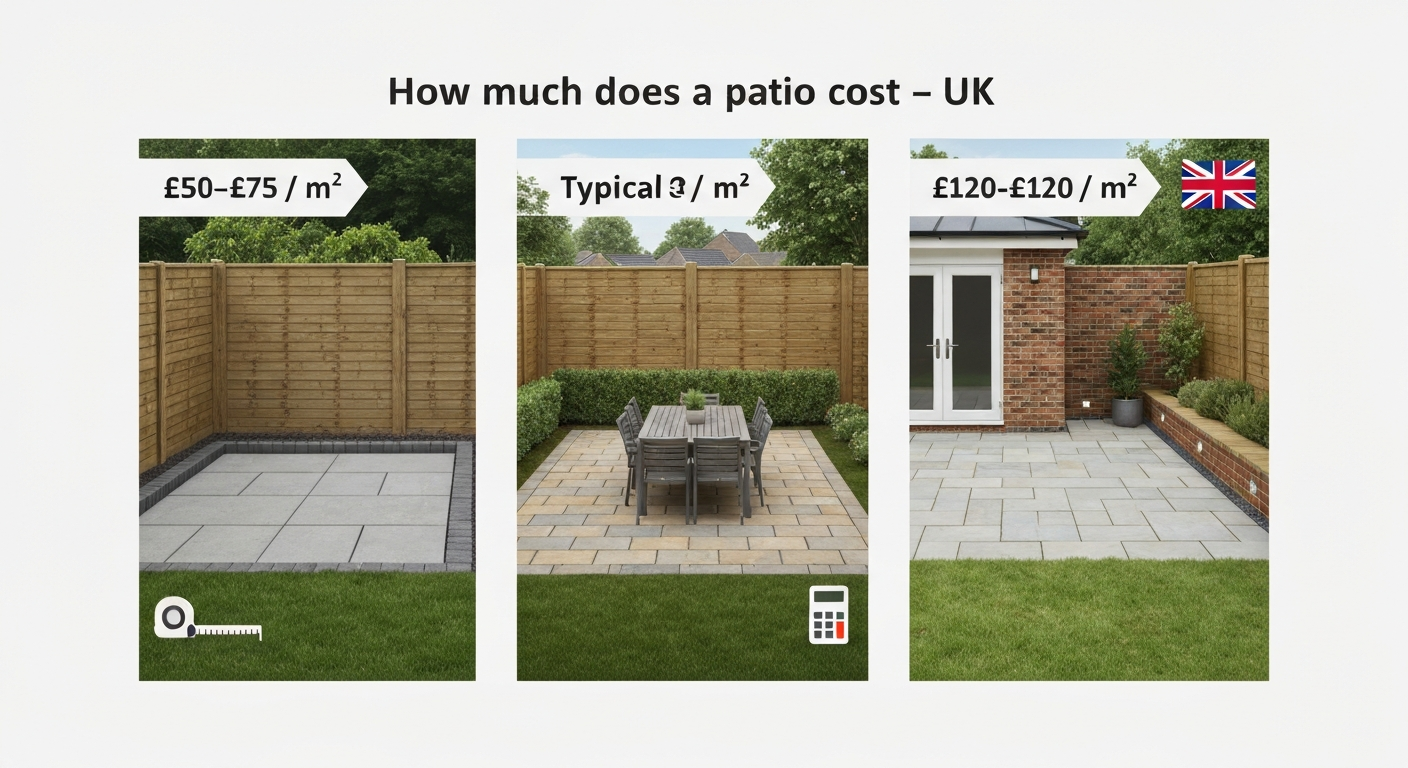
Patio cost UK: clear per m², size examples, material breakdowns, DIY vs pro costs and budget checklist.
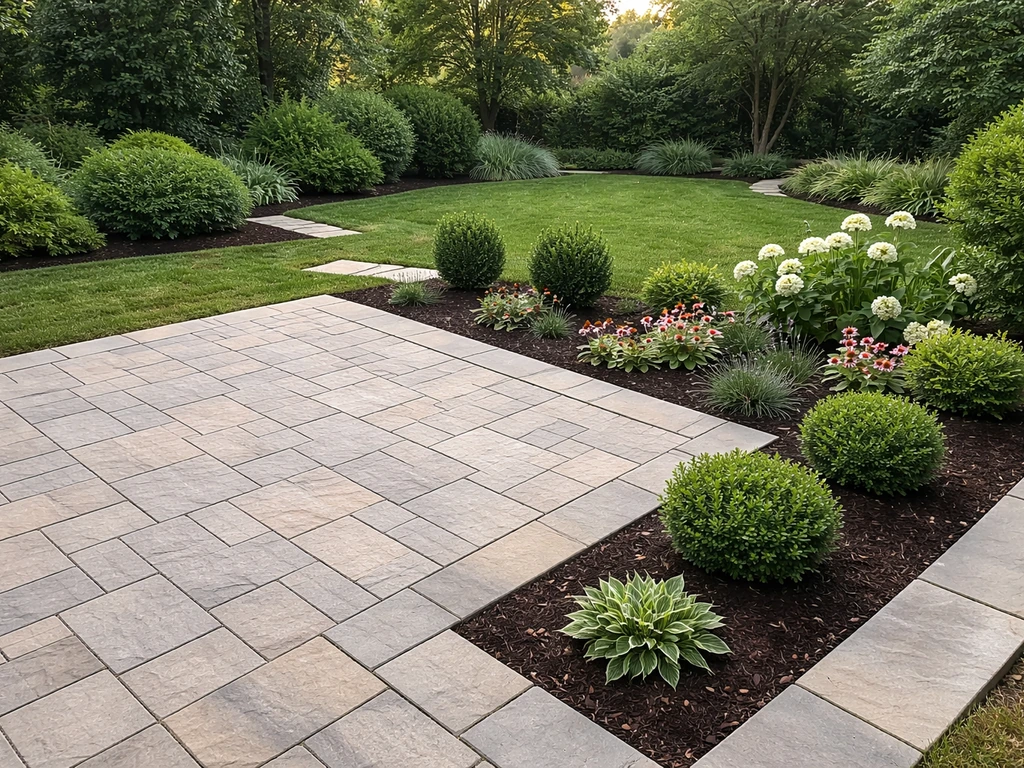
Patio garden costs by size and finish, with itemized breakdown, DIY vs pro tips, and quote-ready budgeting guidance.