
For most UK gardens in 2026, expect to pay somewhere between £90 and £180 per m² for a fully installed patio, all-in. That works out to roughly £2,400 to £9,800 for a typical residential job, with the midpoint sitting around £4,800 for a 25m² patio in Indian sandstone. The spread is wide because material choice, groundwork requirements, and where you live all pull the price in different directions. But those numbers give you a real working budget before you pick up the phone. If you're also trying to budget for a patio garden, knowing what affects price will help you estimate a realistic all-in total before you compare quotes.
How Much to Patio a Garden in the UK? Costs and Breakdown

Felix Carver
4 Jul 2026
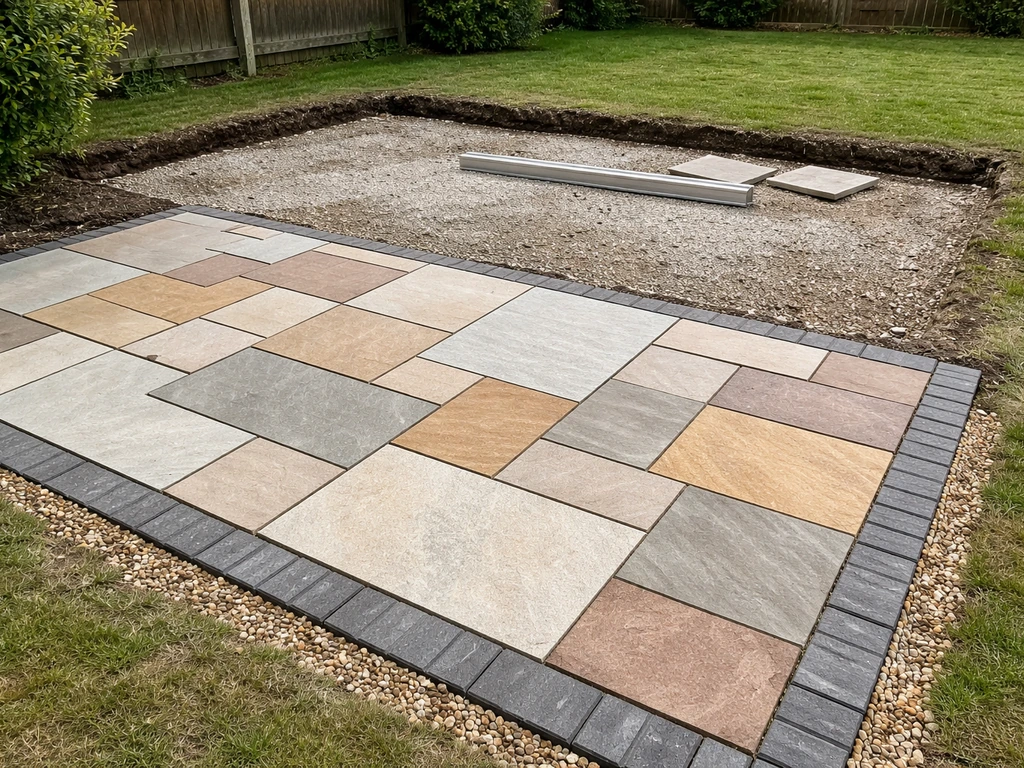
Typical UK patio costs per m² and common size examples
The installed per m² rate is the most useful starting figure. It covers materials, labour, and a standard sub-base, though you still need to check what each contractor actually includes (more on that below). Budget-tier concrete slabs start around £60 per m², while premium finishes like granite or slate can push past £200 per m². If you want a clearer picture of how much does a garden patio cost for your exact size, multiply the installed rate by your total square metres and add any site costs like groundwork or waste removal. Indian sandstone, which is the most popular choice for UK gardens, typically lands between £80 and £150 per m² installed.
Here is how that translates to common garden sizes. Bear in mind these are rough mid-range estimates using Indian sandstone as the benchmark. Prices will shift depending on your chosen material and site conditions.
| Patio size | Approximate m² | Budget estimate (concrete slabs) | Mid-range estimate (Indian sandstone) | Premium estimate (porcelain/granite) |
|---|---|---|---|---|
| 10x10 ft (approx.) | ~9 m² | £540–£720 | £720–£1,350 | £900–£2,000 |
| 12x12 ft (approx.) | ~13 m² | £780–£1,040 | £1,040–£1,950 | £1,300–£2,860 |
| 20x20 ft (approx.) | ~37 m² | £2,220–£2,960 | £2,960–£5,550 | £3,700–£8,140 |
| 25 m² (typical average) | 25 m² | £1,500–£2,000 | £2,000–£3,750 | £2,500–£5,500 |
A small 12m² patio can easily reach £3,500 or more when you add removal of an old surface and disposal of spoil. Small jobs carry disproportionate costs because travel, setup, and skip hire are largely fixed regardless of size. Don't assume a tiny patio is automatically cheap.
Where the money actually goes: materials, labour, and groundwork
Most people focus on the cost of the slabs and are then surprised when the quote comes in much higher. The truth is that paving materials are often only a third to half of the total bill. Groundwork and labour are where the real money goes, and these costs are largely unavoidable regardless of which slab you choose.
Labour
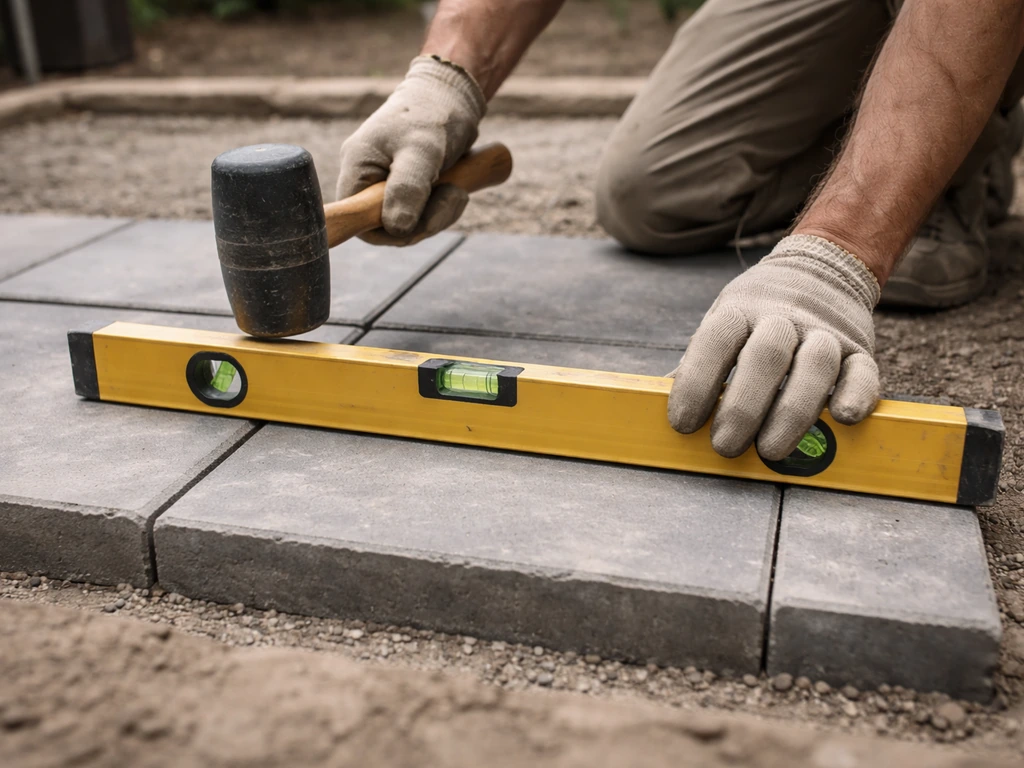
Landscapers charge roughly £30 to £50 per m² just for laying (excluding the groundwork prep). Day rates typically sit at £200 to £300 per person per day. A crew of two on a standard 25m² patio will usually need two to three days minimum, so labour alone can easily reach £1,000 to £1,500 before any materials are ordered.
Groundwork: the cost that often gets left off cheap quotes
A properly built patio needs excavation to at least 150mm below the finished level, then a compacted MOT Type 1 hardcore sub-base of at least 100mm. Armstrongs Group notes that for patios and footpaths, a typical compacted MOT Type 1 sub-base depth is about 75 to 100mm, and that getting the depth and compaction right is critical for performance blank" rel="noopener noreferrer">compacted MOT Type 1 sub-base of at least 100mm. On top of that goes a sand or mortar laying course, then the slabs. blank" rel="noopener noreferrer">Each square metre of sub-base needs roughly 1 tonne of MOT Type 1. For a 25m² patio that's 25 tonnes of hardcore to source, deliver, spread, and compact in layers using a vibrating plate. That's a significant chunk of work. Skimping on it is exactly why patios sink and wobble within a few years.
Drainage is another groundwork cost that's easy to forget. Building regs and good practice require a fall of at least 1 in 80 (about 12mm per metre) away from the house. Getting the levels right takes skill and adds time. If your garden slopes the wrong way or the ground is uneven, expect the groundwork costs to climb.
Disposal and waste removal
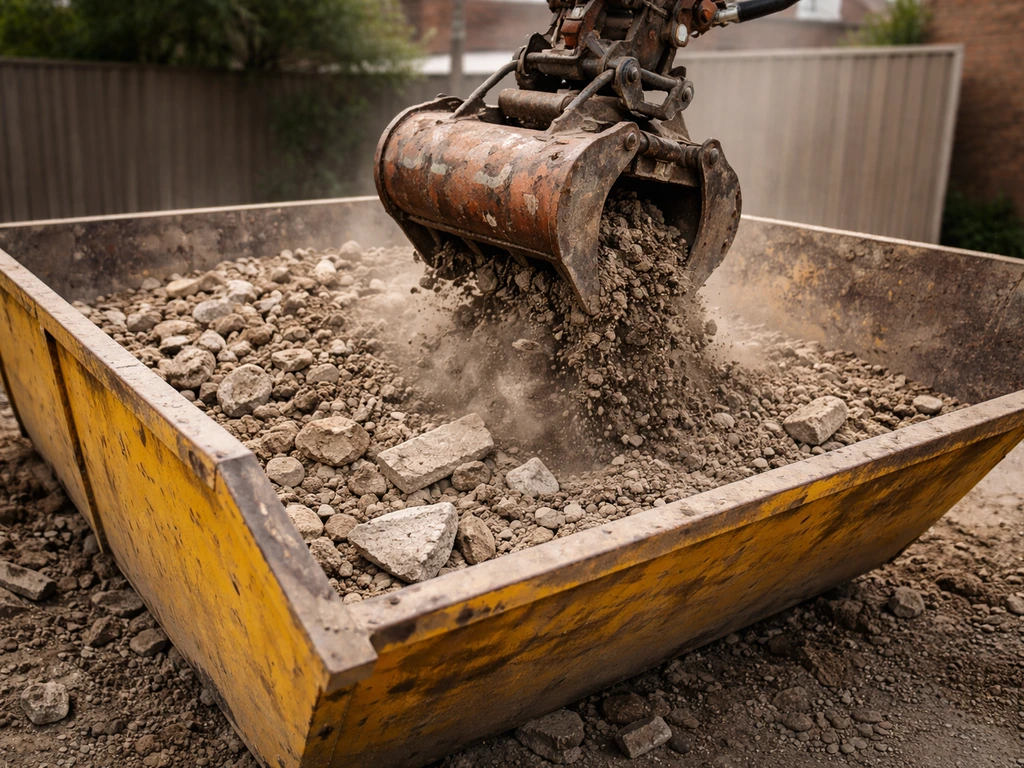
Digging out 150mm across 25m² generates roughly 3.75 cubic metres of spoil, and that has to go somewhere. Skip hire runs from about £60 to £400 depending on size and duration, with most standard 7–14 day hires sitting in the £150 to £250 range. If the skip needs to sit on a public road, add a council permit fee of around £25 to £200. Removing and disposing of an existing patio surface adds £200 to £500 on top for a 20m² area.
Quick cost breakdown by line item
| Cost item | Typical range (25 m² patio) | Notes |
|---|---|---|
| Paving materials (supply) | £500–£3,000+ | Depends heavily on material choice |
| Labour (laying) | £750–£1,250 | £30–£50 per m² |
| Excavation + sub-base prep | £600–£1,200 | Often the most underestimated item |
| MOT Type 1 hardcore (supply) | £300–£500 | ~1 tonne per m², delivered |
| Sand/mortar laying course | £100–£200 | Part of base build-up |
| Waste removal/skip hire | £150–£500 | More if removing old surface |
| Edging and jointing | £100–£300 | Often priced per linear metre |
| Drainage/falls adjustment | £0–£500 | Site-dependent |
Patio material choices and what they cost
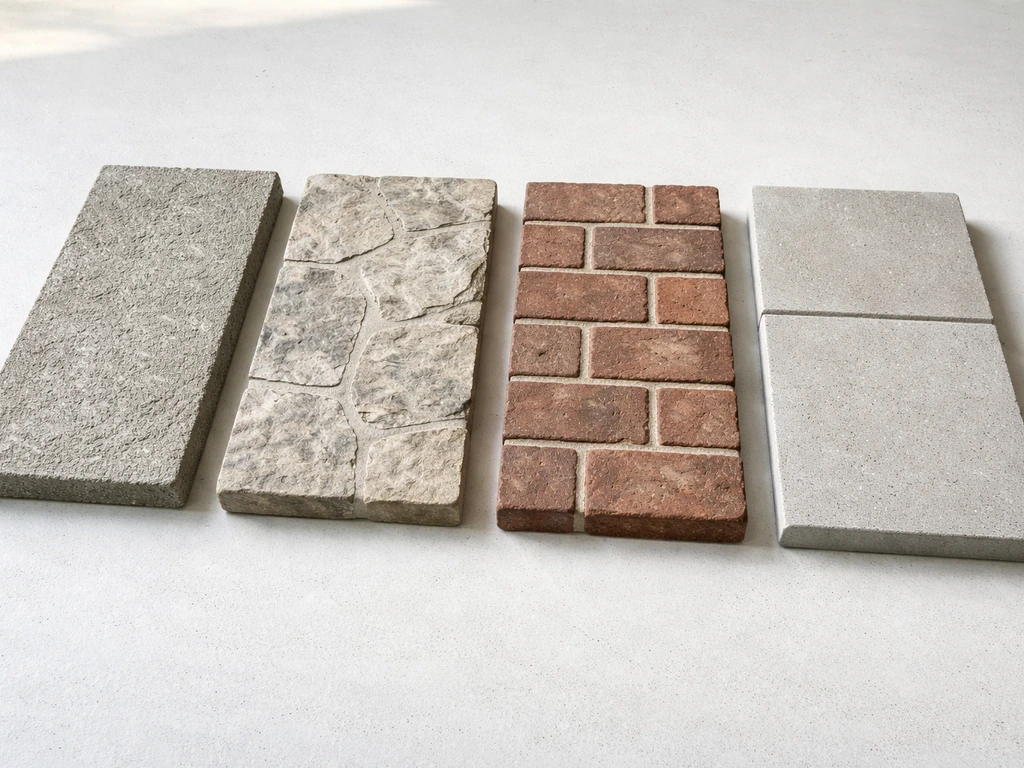
Material choice is the biggest single lever you can pull on your budget. Here's a realistic comparison of the main options, using fully installed (all-in) per m² ranges for 2026.
| Material | Installed cost per m² | Supply-only cost per m² | Durability | Best for |
|---|---|---|---|---|
| Concrete slabs | £60–£120 | £15–£40 | Good | Budget-conscious builds, utilitarian spaces |
| Brick/block paving | £70–£120 | £20–£50 | Very good | Driveways and patios, classic look |
| Indian sandstone | £80–£150 | £20–£50 | Good (needs sealing) | Most popular choice, warm natural look |
| Porcelain | £90–£180 | £20–£35 | Excellent | Low maintenance, modern aesthetic |
| Slate | £90–£180 | £30–£60 | Very good | Contemporary gardens, dark tones |
| Granite | £120–£220 | £40–£80 | Excellent | Premium finish, very hard-wearing |
| Stamped concrete | £80–£150 | N/A (poured in place) | Moderate | Budget decorative option |
| Natural stone setts | £170–£250 | £50–£90 | Excellent | Period properties, feature areas |
Indian sandstone is the sweet spot for most homeowners: it looks good, is widely available, and supply-only prices can be as low as £18 to £31 per m² for calibrated stone. Porcelain has grown hugely in popularity because it needs almost no maintenance and holds up well to frost. The trade-off is that it's harder to cut, so trickier layouts cost more in labour. Concrete slabs are the honest budget choice but look exactly like what they are. Stamped concrete can mimic stone patterns at lower cost but tends to crack and fade over time in the UK climate.
DIY vs hiring a pro: what's realistic and what it actually saves
DIY patio laying is genuinely achievable for the slabbing part, but most homeowners underestimate how much work the groundwork involves before a single slab is laid. Excavating, disposing of spoil, sourcing and compacting hardcore in layers: this is hard physical work that takes longer than you think and where mistakes are costly to fix. If you're pricing glass patio panels specifically, you’ll need to factor in different materials and installation costs on top of the standard patio build.
What most DIYers can handle
- Laying slabs on a pre-prepared base using a dry-mix mortar bed
- Cutting slabs with a hired angle grinder or disc cutter (£40–£80 per day hire)
- Pointing and jointing once slabs are set
- Simple straight-edged layouts without complex cuts
What's usually not worth DIYing
- Excavation to the correct depth across a large area (getting levels right matters)
- Compacting hardcore in proper lifts without a vibrating plate (hire one at minimum: £60–£100 per day)
- Setting correct falls for drainage across the whole patio
- Removing an existing concrete or tarmac surface
- Any job where tree roots, soft ground, or unmarked services might be involved
On a 25m² patio, doing the slabbing yourself and hiring a groundworker just for the base prep is a reasonable middle ground. You might save £700 to £1,200 on labour, but that gap shrinks once you factor in tool hire, sand, mortar, and a skip. If you get the base wrong, fixing a sunken or uneven patio later costs more than the original saving. The Reddit evidence on this is consistent: poorly compacted sub-bases are the number one reason patios fail within a few years.
Hidden costs that blow DIY budgets
- Vibrating plate hire: £60–£100 per day
- Disc cutter hire: £40–£80 per day
- Skip hire: £150–£400
- Extra MOT Type 1 if ground is soft (often underestimated)
- Mortar, jointing compound, and sealant: £100–£300
- Broken slabs during cutting (always order 10% extra material)
- A second attempt at levels after the first go looks wrong
Regional UK price variation: how much does location actually matter?
Location makes a significant difference to your quote. Labour day-rates drive most of the regional gap rather than material costs (stone and hardcore are priced nationally). London and the South East command a 25 to 35% premium over most other parts of England. The same 25m² Indian sandstone patio that costs around £3,400 in Yorkshire or the North could reach £4,800 in London.
| Region | Labour rate per m² (laying only) | Regional premium vs. Midlands |
|---|---|---|
| London / South East | £50–£90 | +25–35% |
| South / South West | £40–£75 | +10–20% |
| Midlands | £35–£70 | Baseline |
| North / Yorkshire | £30–£65 | -5–10% |
| Scotland / Wales | £30–£65 | -5–10% |
Beyond region, several site-specific factors will push your individual quote up or down. Because prices can vary by materials and labour availability, you can use the UK cost range and then adjust it for local Irish rates and conditions how much does a patio cost ireland. Access is a big one: if a crew can't park a van close to the garden or needs to carry materials through the house, expect to add £200 to £500 to the bill. Restricted parking in urban areas can also trigger parking permits or parking fines for the contractor, which often get passed on.
Other factors that affect your quote include: whether you're removing an existing hard surface (add £200 to £500), how uneven or sloped the ground is, whether the soil is soft or has poor bearing capacity (requiring a deeper sub-base), design complexity like curves or intricate laying patterns, and whether steps, walls, or edging are involved. Any one of these can add several hundred pounds to an otherwise standard job.
How to get accurate quotes: measure up, scope it properly, and compare like for like
Getting three quotes that are genuinely comparable is harder than it sounds, because contractors price different scopes. One quote might include sub-base and disposal while another just covers laying on an existing base. You need to pin down the scope before anyone turns up, not after. To get a reliable price for your patio, you should also work out how to price it using the right scope and quantities how to price a patio.
Step 1: measure correctly
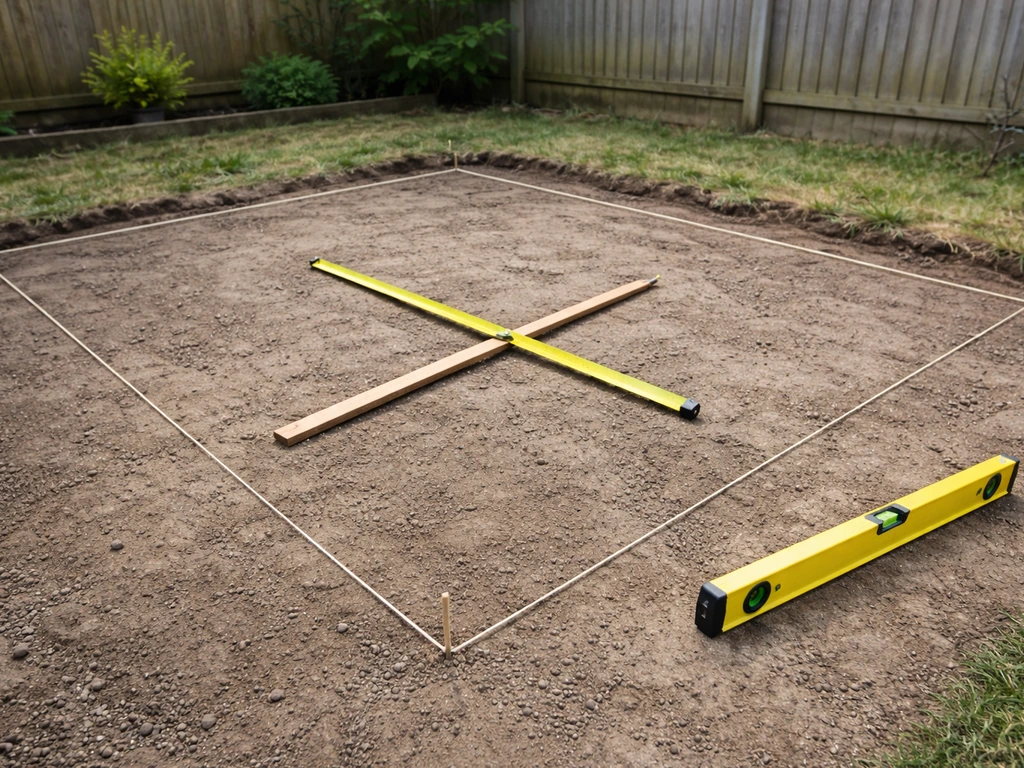
Measure your patio area in metres and calculate the total m². For irregular shapes, break them into rectangles and add them together. Also measure the perimeter if you want edging included, and count any steps or level changes. Write it all down so every contractor is pricing the same job.
Step 2: define the full scope before anyone quotes
- Is there an existing surface to remove and dispose of?
- What is the ground condition (soft, firm, sloped, tree roots nearby)?
- What finished level do you need relative to the house DPC and any doors?
- Which material and slab size have you chosen (or do you want options)?
- Do you want a plain stack bond, or a more complex pattern?
- Are steps, edging, or drainage channels required?
- Who is responsible for waste removal: you or the contractor?
Step 3: insist on an itemised written quote
Always ask for a breakdown that shows each cost line separately. A good quote should include: excavation depth and method, sub-base specification (depth and material, ideally MOT Type 1 at 100mm compacted), laying course type, paving material supply cost, labour for laying, drainage falls confirmation, jointing and pointing, waste removal and skip hire, and any extra items like steps or edging. If a contractor won't itemise the quote, that's a warning sign.
Step 4: compare quotes on the same basis
When you get multiple quotes back, go through them line by line. Check that each one specifies the same excavation depth (150mm minimum), the same sub-base thickness (100mm compacted MOT Type 1 as standard), the same material and quantity, and includes disposal. A quote that's £800 cheaper might simply have left out the skip hire and sub-base. That's not a saving, that's a scope gap that will either get added back as an extra mid-job or result in a patio that fails within a few years.
It's also worth asking whether the contractor is VAT registered, since a cash-in-hand quote from an unregistered trader might look cheaper but offers you no protection if something goes wrong. For a job in the £3,000 to £8,000 range, a proper written contract and a contractor with verifiable reviews is worth the extra few hundred pounds.
A quick note on decks vs. patios
If you are still deciding between a patio and a deck, patios generally win on longevity and long-term maintenance costs. A well-built stone patio can last 20 to 30 years with minimal upkeep, while a timber deck typically needs restaining every two to three years and replacing boards within 10 to 15 years. In terms of upfront cost, composite decking and premium patio materials sit in a similar price bracket. Concrete slabs will almost always undercut timber decking on installed cost for a comparable area.
FAQ
Do I need planning permission or building control for a patio in the UK?
Plan for at least a 1 in 80 fall away from the house (roughly 12mm per metre). If the design needs a larger fall, or your garden is very flat, ask how they will manage drainage and whether they will include channel drains or adjustment to the sub-base, because that can change the quote.
How much should I add to my budget for surprises when pricing a patio?
Use your real site conditions to set a “margin.” If you are quoting on Indian sandstone rates, a safe approach is to add 10 to 20% contingency for unexpected ground conditions, extra excavation, or drainage tweaks, especially if you have soft soil, tree roots, or existing services near the patio area.
Can I reuse my old paving stones if I want to cut costs?
Yes, but it must be done correctly. Ask the contractor to confirm how they will deal with jointing, movement gaps at edges, and whether they will use the correct bedding material under the slabs (sand versus mortar) for your slab type, otherwise you can get rocking and weeds in joint lines.
What happens if my patio borders grass or planting beds, does that change the price?
If the patio sits close to a lawn or soil, you may still need proper edging and restraint. Ask whether they will include kerbs, edging strips, or a blockwork edge to keep the sub-base from washing out, and whether they will specify weed control membranes (if any) rather than assuming it is included.
How can I tell from a quote whether the groundworks are being done properly?
A quote should list the excavation depth and the sub-base spec in thickness, not just “hardcore.” Confirm they will use compacted MOT Type 1 at around 100mm, build in layers, and use a vibrating plate, because skipping layer compaction is a common cause of sinking.
Why does a cheaper patio slab sometimes end up costing nearly the same?
Concrete slabs are often quoted low because the finish is simple, but labour can still be similar. If you need curves, complex patterns, or lots of cutting at edges and around steps, expect the “cheap” slabs to cost more in labour than a contractor initially suggests.
How does difficult access (narrow driveways, steps, long carries) affect cost?
If access is tight, measure the actual route length and whether materials have to be carried through a gate or up steps. Ask the contractor to include access costs and parking assumptions in writing, because inability to position a skip or van can add hundreds.
What are the most common “scope gaps” to look for when comparing patio quotes?
Don’t compare quotes by total price alone. Check that each one includes skip hire and disposal, the same sub-base thickness, the same jointing method, and the same drainage fall. If one quote omits any of these, the “cheaper” option is likely to bill extras later.
Is DIY slabbing a realistic way to save money in the UK?
For a slabbing-only DIY approach, confirm what you are taking responsibility for: sub-base levels, compaction, bedding course, and drainage. Many DIY savings disappear once you price tool hire (vibrating plate, cutter) plus a proper depth build-up, and fixing a failed sub-base later is usually more expensive than hiring a full crew.
What patio material choices impact frost resistance and long-term maintenance most in the UK?
If you want better longevity, ask for frost resistance and slip rating suited to UK weather. Also confirm sealing or jointing choices, for example whether joints will be pointed, and whether they will recommend a maintenance plan if you are using darker stones that can show staining sooner.
Next Articles
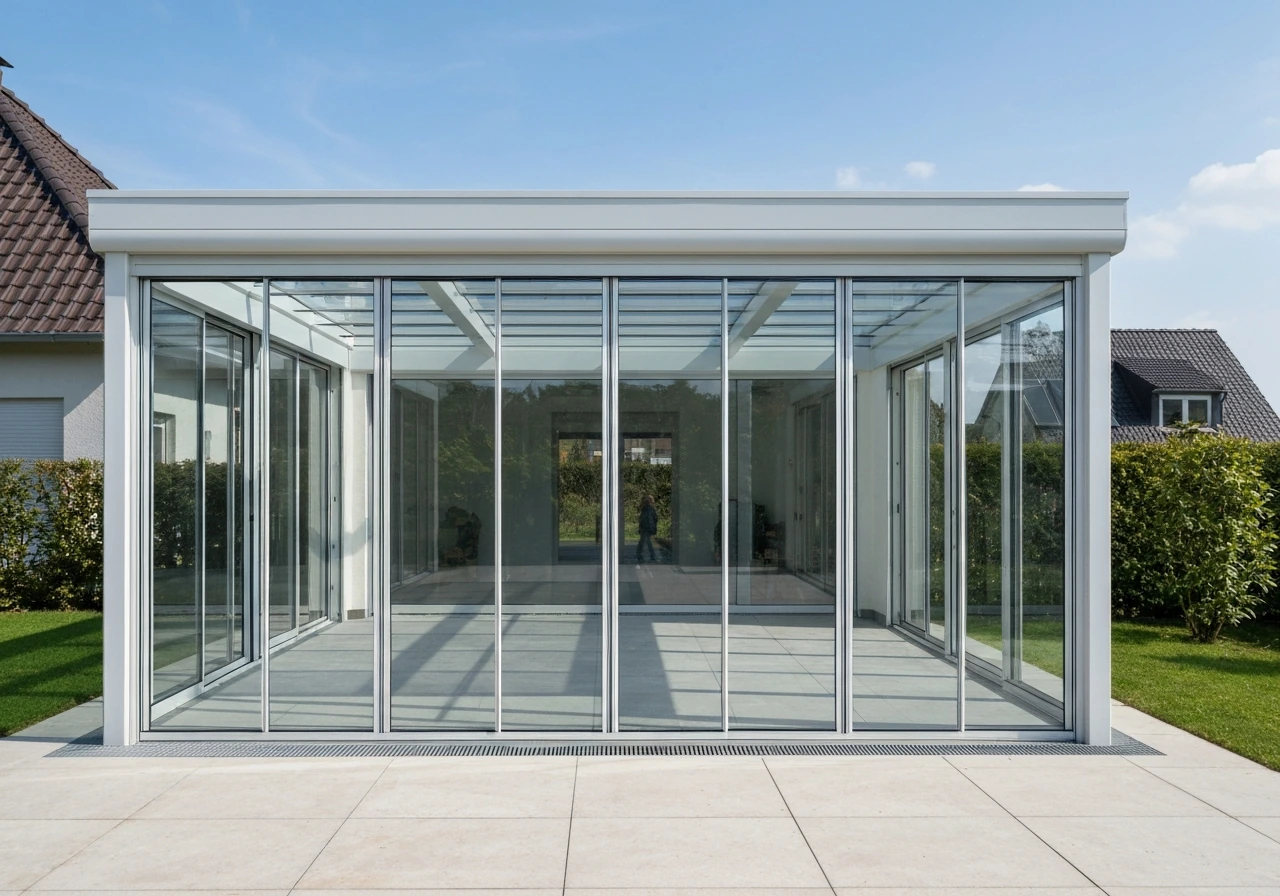
How Much Does It Cost to Glass in a Patio? Prices
Get patio glass cost ranges per sq ft and example totals, plus price drivers and a quote-ready checklist.
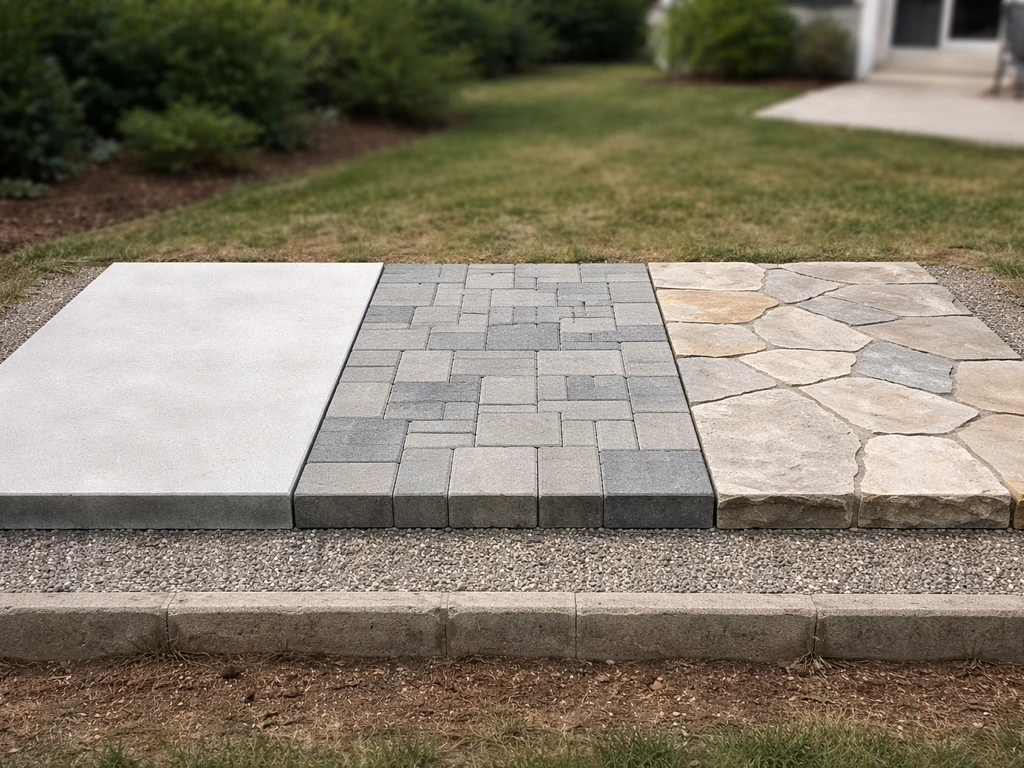
How Much Should I Expect to Pay for a Patio
Patio cost guide with real price ranges by size and material, full line-item budget, DIY vs install, and quote checklist
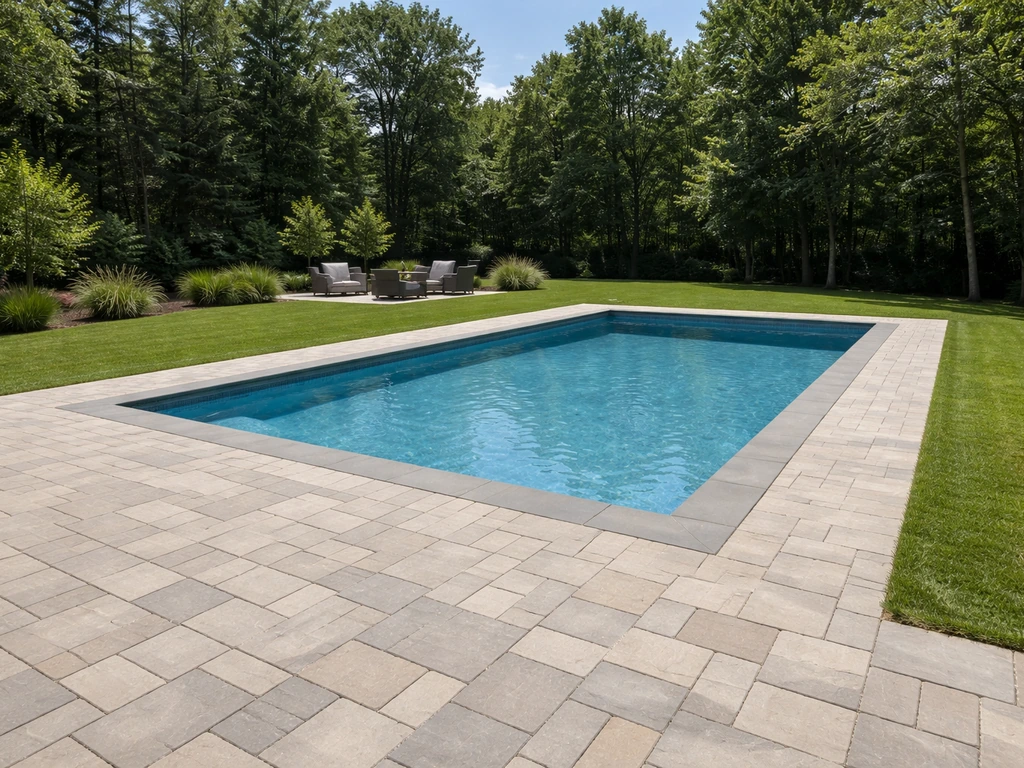
How Much Patio Around Pool: Cost, Size, and Budget Guide
Learn how much patio around a pool costs and how to size square feet, materials, extras, and get real bid line items.