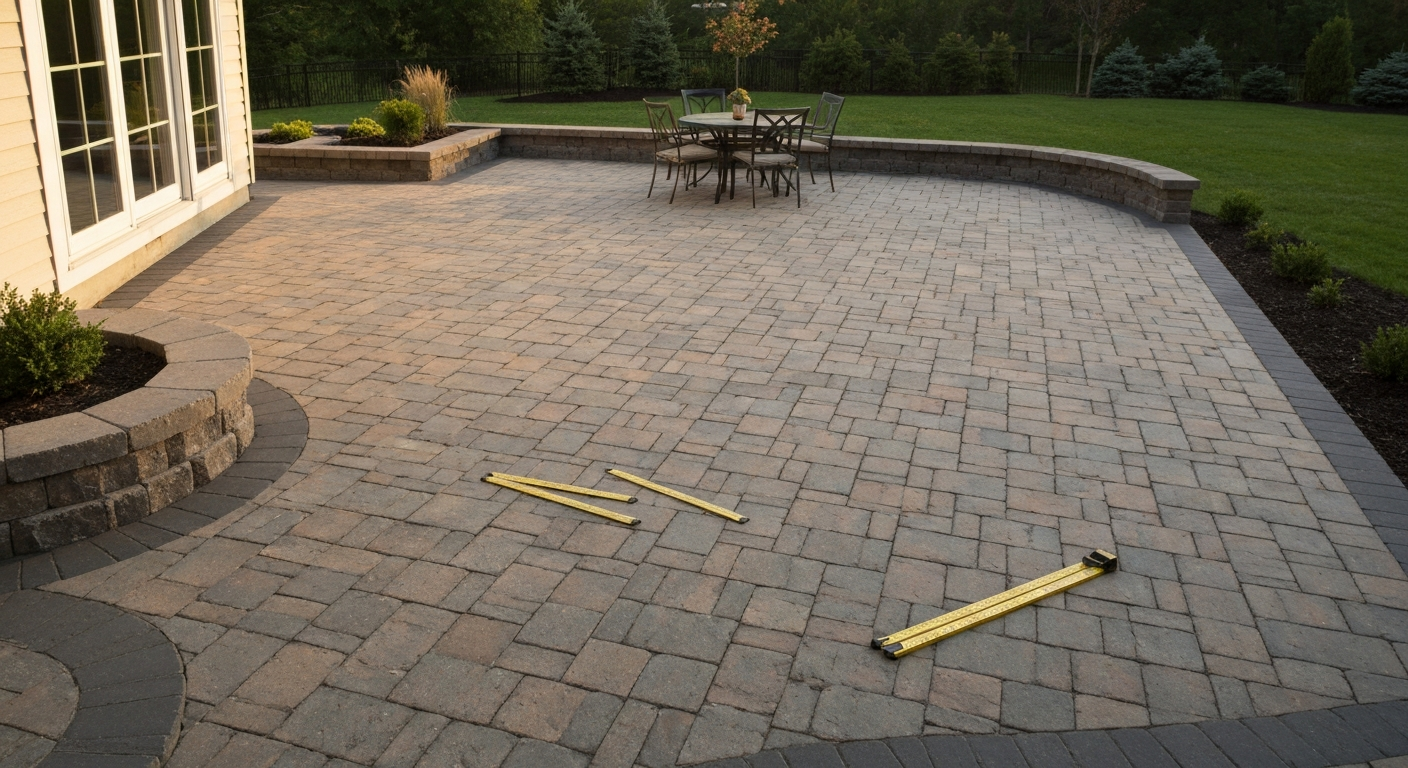
A Unilock patio typically costs $18 to $45 per square foot installed, with most standard residential projects landing in the low-to-mid $20s per square foot. Published market aggregates and hardscape guides (2024–2026) place installed paver patio national averages broadly in the ~$18–$45 per sq ft band, with many typical residential installs clustering in the mid‑$20s per sq ft The ReimagineHome market guide 'Hardscaping Costs in 2025: What a Paver Patio and Retaining Wall Really Take to Build' reports installed paver patio averages of about $18–$45 per square foot, with many typical residential installs clustering in the mid‑$20s per square foot.. On a 200-square-foot patio (roughly 12x16 feet), that works out to $3,600 to $9,000 depending on your site conditions, the specific Unilock product you choose, and where you live. Premium products like Beacon Hill XL in a high-end suburban market can push well past that, contractors in parts of metro Atlanta have quoted $58 to $74 per square foot installed for elaborate pool patio scopes. The material cost alone for Unilock pavers runs roughly $6.85 to $8.48 per square foot at retail, so everything beyond that is base prep, labor, sand, sealing, and contractor overhead.
How Much Does a Unilock Patio Cost? Real Prices & Guide

What drives the price per square foot up or down
The per-square-foot number you see on a quote is really four or five costs stacked together. Unilock paver material is just one layer. Under it, every proper installation requires a compacted aggregate base, Unilock's own specs for Beacon Hill call for a minimum 6 to 8 inches of compacted 3/4-inch crusher-run. That base material alone adds meaningful weight to your budget: bulk crush-and-run runs roughly $24 to $34 per ton nationally, and a standard patio might need 10 to 15 tons of it depending on depth and square footage. Then there's the labor, which scales with crew size, local wage rates, how much grading and excavation your yard requires, and whether the contractor is replacing an existing surface or starting fresh.
At the low end of the installed range (around $18 per square foot), you're typically looking at a smaller, simple flat patio with minimal grading, basic Unilock pavers, and a contractor working efficiently in a competitive market. At the high end ($35 to $45+), you're adding complex patterns, multiple elevations, steps, drainage solutions, or premium Unilock slab products, plus regional labor premiums. The material tier matters less than most homeowners expect, going from a $7 paver to a $10 paver adds maybe $3 per square foot to the total, while a problematic subgrade that requires extra excavation can add $5 to $10 per square foot to the labor line alone.
Cost estimates by common patio sizes
Here are realistic installed cost ranges for three common patio sizes, using the $18 to $45 per square foot band for typical installs and noting that premium-scope projects can go higher. These figures assume a standard residential patio with a proper compacted base, polymeric sand joints, and basic cleanup, no steps, walls, or major grading work included.
| Patio Size | Square Footage | Low Estimate ($18/sq ft) | Mid Estimate ($28/sq ft) | High Estimate ($45/sq ft) |
|---|---|---|---|---|
| 10x10 | 100 sq ft | $1,800 | $2,800 | $4,500 |
| 12x12 | 144 sq ft | $2,592 | $4,032 | $6,480 |
| 20x20 | 400 sq ft | $7,200 | $11,200 | $18,000 |
A 10x10 Unilock patio is on the small side and often costs more per square foot because contractor mobilization, base material delivery, and equipment rental fees don't scale down proportionally with project size. A 20x20 patio (400 square feet) is the sweet spot where you start getting better per-square-foot pricing from contractors since the fixed costs get spread across more area. If you're planning a 20x20 or larger, it's worth getting at least three bids, the spread between contractors at that scale can easily be $3,000 to $5,000.
Full cost breakdown: every line item that goes into a Unilock patio
When you get a contractor quote, it should reflect all of the following cost categories. Some contractors bundle them into a single per-square-foot number; others itemize them. Either way, here's what's actually in the price.
| Cost Category | Typical Range | Notes |
|---|---|---|
| Unilock paver materials | $6.85–$8.48/sq ft (retail) | Varies by product line and finish; buy 10% extra for cuts and waste |
| Aggregate base (crusher-run) | $24–$34/ton bulk | 6–8" compacted depth required per Unilock specs; ~1.5 tons per cubic yard |
| Bedding sand / leveling course | $0.50–$1.50/sq ft | Coarse concrete sand, typically 1" deep |
| Polymeric joint sand | $20–$80 per 50-lb bag | Coverage varies by joint width and unit size; budget 1 bag per 30–50 sq ft as a rough guide |
| Excavation and grading labor | $1–$4/sq ft | Higher for sloped sites, rocky soil, or existing surface demo |
| Installation labor | $8–$18/sq ft | Crew size, region, and complexity are the main variables |
| Paver sealing (first seal) | $1–$3/sq ft | Optional at installation; Unilock recommends waiting for efflorescence to clear first |
| Material delivery | $150–$400+ | Distance-dependent; pallet delivery for pavers plus aggregate haul |
| Spoil/debris disposal | $220–$600+ | 10-yard dumpster rental if demo or excavation spoils need removal |
| Permits and inspections | $200–$1,000+ | Varies widely by municipality; some jurisdictions waive for patios under a certain size |
| Contractor overhead and profit | 15%–35% markup | Applied over direct material and labor costs; standard industry practice |
A few of these catch homeowners off guard. Delivery charges are easy to overlook, Unilock pavers ship on pallets, and if you're several hours from a distributor, freight can add a few hundred dollars before a single paver hits the ground. Permit costs are genuinely unpredictable: many jurisdictions don't require a permit for a ground-level patio under a certain square footage, but some do, and high-fee cities like Seattle can produce permit costs well over $1,000. Always call your local building department before assuming you're exempt.
What to look for on a contractor quote
Before you sign anything, use this checklist to make sure every major cost is accounted for. Contractors who itemize their quotes are much easier to compare than those who hand you a single lump-sum number.
- Paver product name, finish, and color specified by line item (confirm it's Unilock, not a substitute)
- Square footage covered and quantity of pallets or units included
- Base depth specified (should be minimum 6 inches of compacted aggregate for pedestrian patios)
- Bedding sand type and depth called out separately
- Polymeric joint sand brand and quantity listed
- Excavation depth and spoil disposal method (on-site spread vs. hauled away)
- Edge restraint system included and type specified
- Grading and slope direction noted (critical for drainage)
- Delivery charges for pavers and base material listed separately or confirmed included
- Sealing: included, excluded, or quoted as an add-on
- Permit procurement: who pulls it and whether the fee is included
- Warranty on workmanship (separate from Unilock's product warranty)
- Payment schedule tied to milestones, not just calendar dates
- Start date and estimated completion duration
When comparing bids, watch for quotes that are suspiciously low on base depth or skip polymeric sand in favor of regular joint sand. Both are corners that get cut to reduce price on paper but cost you real money in settling and weed problems within a few years.
Unilock paver material costs: product lines, finishes, and price tiers
Unilock makes a wide range of products, and the material cost varies significantly depending on which line you choose. The Beacon Hill series (Smooth, Textured, and Flagstone finishes) is one of their most popular residential products and represents a mid-to-upper tier in their lineup. Retail pricing from independent landscape suppliers and major distributors like SiteOne puts Beacon Hill in the $6.85 to $8.48 per square foot range at retail in 2025-2026. The XL format (Beacon Hill Smooth XL) covers approximately 116.57 square feet per pallet according to Unilock's product resource guide, which is a useful number when estimating pallet quantities and delivery costs.
Their entry-level concrete pavers and smaller-format products sit closer to the $5 to $7 per square foot range, while large-format slab products, specialty textures, and premium series can push toward $10 to $12 or more per square foot at retail. When pricing a project, always factor in a 10% overage for cuts, waste, and pattern matching, that overage is real money, especially on larger patios.
| Product Tier | Example Products | Approx. Retail Material Cost |
|---|---|---|
| Entry-level | Smaller concrete paver formats, basic finishes | $5.00–$7.00/sq ft |
| Mid-range (most popular) | Beacon Hill Smooth, Beacon Hill Textured | $6.85–$8.48/sq ft |
| Premium | Large-format slabs, specialty textures, XL series | $9.00–$12.00+/sq ft |
Finish choice also affects price. Smooth finishes are typically at the lower end of the range for a given product line; textured, tumbled, and flagstone-style finishes carry a small premium. Color choices within a product line are usually the same price, though some specialty blends from Unilock may cost a bit more at certain dealers.
Installation labor: what contractors charge and why
Paver installation labor nationally runs roughly $8 to $18 per square foot, with most standard residential installs falling in the $10 to $14 range. BLS occupational wage data for landscaping and groundskeeping workers shows national mean hourly wages in the $15 to $22 per hour range, but that's the base wage before burden (taxes, insurance, workers comp, equipment, and overhead). A contractor billing out a two- or three-person paver crew typically charges $60 to $120 per hour for the crew total, or prices the job on a per-square-foot basis with those rates baked in.
Contractor markup on top of direct material and labor costs typically runs 15% to 35%, with most residential hardscape contractors using 20% to 30% as a working range. That markup covers their business overhead, insurance, vehicles, tools, admin, and their profit. It's not padding; it's what keeps a legitimate contractor in business. A quote that seems too clean or doesn't leave room for overhead is worth scrutinizing.
Productivity-wise, an experienced two-person paver crew can lay roughly 200 to 400 square feet of pavers per day on a straightforward patio with a good base already prepped. Complex patterns (herringbone, circular features, multiple borders) slow that rate significantly. On larger or more complex jobs, some contractors bring in three to four person crews and complete the same scope in fewer days, which can actually reduce your total labor cost if the crew works efficiently.
Regional labor cost variation
Where you live matters a lot for the labor portion of your quote. The Northeast and Pacific Coast tend to run highest, expect installed prices at the upper end of the $25 to $45 range or beyond in metro Boston, New York, or Seattle. The Midwest and Southeast are generally more competitive, often landing installs in the $18 to $28 range for comparable scope. The premium Atlanta market example mentioned earlier ($58 to $74 per square foot installed) reflects both regional labor costs and the premium scope of a luxury pool patio project, not just Unilock material pricing.
DIY vs. hiring a contractor: honest trade-offs
Going DIY on a Unilock patio can cut your total cost roughly in half since you're eliminating the labor and markup charges that make up $10 to $20 per square foot of a contractor quote. On a 200-square-foot patio, that's potentially $2,000 to $4,000 in savings. But the work is physically demanding, requires rented equipment (a vibratory plate compactor runs $50 to $150 per day to rent), and has a steep learning curve if you've never done base prep and paver installation before. The base is where most DIY patios fail, under-compaction leads to settling, frost heave in cold climates, and pavers that rock or shift within a season or two.
| Factor | DIY | Hire a Contractor |
|---|---|---|
| Total cost (200 sq ft patio) | $2,000–$4,500 (materials + rentals) | $4,000–$9,000 installed |
| Time required | 3–5 weekends for a novice | 3–5 days for a professional crew |
| Base prep quality | Variable; risk of under-compaction | Consistent if contractor follows spec |
| Equipment needed | Plate compactor rental, hand tamper, wet saw | Contractor supplies all equipment |
| Physical demand | Very high — excavation, heavy materials | N/A for homeowner |
| Warranty on work | None (self-insured) | Typically 1–3 years workmanship warranty |
| Risk of mistakes | High for first-timers; costly to fix | Lower, but verify contractor experience |
| Best for | Small patios, budget constraints, experienced DIYers | Any size project, complex sites, time-constrained homeowners |
If you're seriously considering DIY, the most important thing to get right is the base. Rent the plate compactor and don't skip passes, Unilock's installation specs call for compaction to approximately 98% Standard Proctor Density on the subbase. On a small 10x10 or 12x12 patio with a flat, stable subgrade, a capable DIYer can pull this off successfully over a weekend or two. On anything with slopes, drainage challenges, clay soil, or a size over 200 square feet, the risk of a costly mistake climbs significantly. Many homeowners end up DIYing the small stuff and hiring out the larger projects after pricing the labor themselves.
How Unilock compares to other patio materials on cost
Unilock sits in the mid-to-upper tier of the paver market. Compared to other popular patio materials, it's more expensive than standard concrete pavers or poured concrete but competitive with natural stone options. For a direct cost comparison and details on natural stone options, see our guide on how much for stone patio. If you're specifically wondering how much do stone patios cost, check our detailed guide comparing natural stone pricing and installation to pavers. If you're weighing Unilock against alternatives like flagstone, brick, or a wood deck, the installed cost differences are real but so are the differences in maintenance, longevity, and aesthetics. If you're comparing to brick specifically, see our guide on how much do patio bricks cost for typical material and installed price ranges. For a direct comparison on brick pricing and installed costs, see our guide on how much does it cost for a brick patio.
| Material | Approx. Installed Cost Range | Maintenance Level | Lifespan |
|---|---|---|---|
| Unilock pavers (e.g., Beacon Hill) | $18–$45/sq ft | Low (reseal every 3–5 years) | 30+ years |
| Basic concrete pavers | $12–$22/sq ft | Low to moderate | 20–30 years |
| Poured concrete | $8–$18/sq ft | Moderate (can crack) | 20–30 years |
| Stamped concrete | $15–$30/sq ft | Moderate (reseal every 2–3 years) | 15–25 years |
| Brick patio | $18–$35/sq ft | Low to moderate | 30+ years |
| Flagstone patio | $20–$50+/sq ft | Low (occasional re-mortaring) | 30–50+ years |
| Natural stone patio | $25–$60+/sq ft | Low to moderate | 40+ years |
| Wood/composite deck | $25–$65/sq ft | Moderate to high | 15–30 years |
Poured concrete is still the budget leader for flat surfaces, but it's more prone to cracking over time and can't be selectively repaired the way pavers can. If a Unilock paver settles or cracks, you pull up the affected units, regrade, and relay, no grinding, patching, or resurfacing needed. That repairability is a real lifecycle advantage that doesn't show up in the upfront cost comparison. Compared to flagstone or natural stone (which you can read more about in detail if you're considering those alternatives), Unilock offers more consistent sizing and availability, which generally makes installation faster and slightly less labor-intensive. If you want a direct comparison, see How much does a flagstone patio cost? for detailed pricing and trade-offs between flagstone and paver options.
Maintenance and lifecycle costs to factor in
Unilock recommends sealing pavers after installation, but advises waiting until efflorescence (the natural whitish calcium bloom that appears on new concrete products) has dissipated, typically after the first full weathering season. Professional paver cleaning and sealing runs roughly $1 to $3 per square foot depending on your region, prep needed, and sealer type. On a 300-square-foot patio, budget $300 to $900 for a professional clean-and-seal service every 3 to 5 years. Over a 30-year lifespan, that's a relatively modest ongoing cost compared to the resurfacing and patching cycles you'd face with stamped or poured concrete.
Joint sand maintenance is the other ongoing item. Polymeric sand holds up well but can erode in high-rainfall areas or from pressure washing. Replacing joint sand in affected areas is a DIY-friendly task that costs under $100 in materials for most patios. For current bag pricing and coverage estimates, see Polymeric Sand Calculator, HomeCalc (bag price & coverage guidance) Polymeric Sand Calculator — HomeCalc (bag price & coverage guidance). The bigger lifecycle costs to plan for are any releveling of sections that shift due to tree root activity, poor drainage, or frost heave, those repairs typically run $200 to $800 per section depending on scope.
Regional cost variation: what to expect in your market
The national ranges in this article ($18 to $45 per square foot installed) are a starting framework, not a firm quote. Labor costs in your specific metro area are the biggest regional variable. The Northeast, Pacific Northwest, and high cost-of-living suburban markets will consistently price toward the upper end of any range. The Midwest, Southeast, and rural markets tend to price lower. Material costs vary less by region because Unilock has a national distribution network, but freight adds up if you're far from a regional depot. For a project in a major metro, add 10% to 20% to the mid-range estimates. For rural areas, factor in potential delivery surcharges for pallet delivery of pavers.
Budget checklist before you get quotes
Before you call contractors, nail down these numbers and decisions so you can have a productive conversation and compare bids on equal footing.
- Measure your intended patio area precisely and decide on the shape — irregular shapes cost more to install than rectangular ones
- Choose your Unilock product line and finish before getting quotes so all contractors are pricing the same material
- Check with your municipality about permit requirements for patios at your planned size
- Identify whether you have drainage issues, slopes, or existing hardscape that needs demo — these all add cost
- Decide whether you want sealing included at time of installation or will schedule it separately after the first season
- Set a realistic budget range with a 10%–15% contingency for site surprises (rocky subgrade, drainage corrections, etc.)
- Plan to get at least three itemized quotes and use a patio cost calculator to sanity-check the numbers before signing
Questions to ask contractors before you hire
- What base depth are you installing and how do you verify compaction?
- Are you using genuine Unilock product or a comparable substitute, and can I see the product spec sheet?
- What type of edge restraint are you using and is it included in the price?
- Who is pulling the permit if one is required, and is the fee included in your quote?
- How do you handle spoil and excavated material disposal?
- Do you carry general liability and workers compensation insurance — can you provide certificates?
- What is your workmanship warranty and what does it specifically cover?
- Can you provide references from Unilock paver installs you've completed in the last 12 months?
- What is your payment schedule and do you require a deposit before materials are ordered?
FAQ
How much does a Unilock patio cost per square foot (installed)?
Installed Unilock paver patios typically range from about $18 to $45 per sq ft nationwide: - Low/simple installs (DIY or minimal prep, basic Unilock units): ~$12–$20/sq ft. - Typical contractor installs (standard base, edge restraints, professional compaction): ~$22–$30/sq ft. - High‑end or complex installs (premium Unilock lines, large-format units, heavy grading, custom patterns, integrated drainage/steps): ~$35–$60+/sq ft. Use mid‑$20s per sq ft as a realistic typical budget for most homeowners.
What will a Unilock patio cost for common project sizes (10x10, 12x12, 20x20)?
Example installed cost ranges by project size (rounded): - 10x10 (100 sq ft): $1,200–$6,000 (typical contractor: $2,200–$3,000). - 12x12 (144 sq ft): $1,700–$8,640 (typical: $3,200–$4,300). - 20x20 (400 sq ft): $4,800–$24,000 (typical: $8,800–$12,000). These ranges reflect low DIY or minimal‑prep work at the low end and premium, highly engineered installs at the high end.
How do I estimate material‑only cost for Unilock pavers?
Unilock branded pavers (example Beacon Hill) retail about $6.85–$8.50 per sq ft in many U.S. markets (varies by finish and unit size). To estimate: - Calculate area (sq ft). - Add 5–10% waste. - Multiply by per‑sq‑ft retail unit price. Example: 400 sq ft × 1.05 × $7.50 ≈ $3,150 in paver material. Remember pallet coverage (Beacon Hill XL ≈116.6 sq ft/pallet) when ordering whole pallets.
What line‑items should I expect on a contractor quote for a Unilock patio?
Typical quote line‑items: - Site visit / layout / permit coordination - Demo of existing patio/vegetation (if needed) - Excavation and grading - Compacted base: crusher‑run/3/4" DG (6"–8" typical) - Bedding sand layer (if used) - Paver units (by brand/series) - Edge restraints (concrete, plastic, metal) - Polymeric joint sand and jointing - Compaction (plate compactor use) - Drainage materials (pipe, catch basins) - Steps/risers/landings or transitions - Sealing (optional) - Cleanup, haul‑off, dumpster fees - Sales tax - Contractor overhead & profit (markup) - Permits/inspections (if required)
How much is base, materials and labor separately? (itemized per sq ft guidance)
Typical per‑sq‑ft direct cost breakdown for a standard install (mid‑range example, ~$25/sq ft installed): - Paver material: $6–$9/sq ft - Base materials (crusher‑run stone, sand): $3–$6/sq ft (includes delivery) - Labor (installation, compaction, edging): $8–$12/sq ft - Joint sand, edging, small materials: $1–$2/sq ft - Cleanup / disposal allowance: $0.50–$1.50/sq ft - Permits/sealer/other adders: variable. Contractor markup/overhead adds 15%–30% on top of direct costs to produce the final customer price.
What labor rates and crew productivity should I expect?
Labor benchmarks: - Hourly wages for landscape/paver crew laborers: roughly $15–$25/hr (varies regionally). - Burdened contractor labor rate (including payroll taxes, insurance, equipment, supervision): often $40–$85+/hr per craftsman/crew member depending on market and firm size. - Crew productivity: a 2–3 person experienced crew can typically install ~80–160 sq ft of pavers per day (site access, prep complexity and base work strongly affect rate). Use these to check quoted man‑hours versus your project size.
Stone patio costs by size and material, with square-foot estimates, quantity tips, and labor plus prep line items.
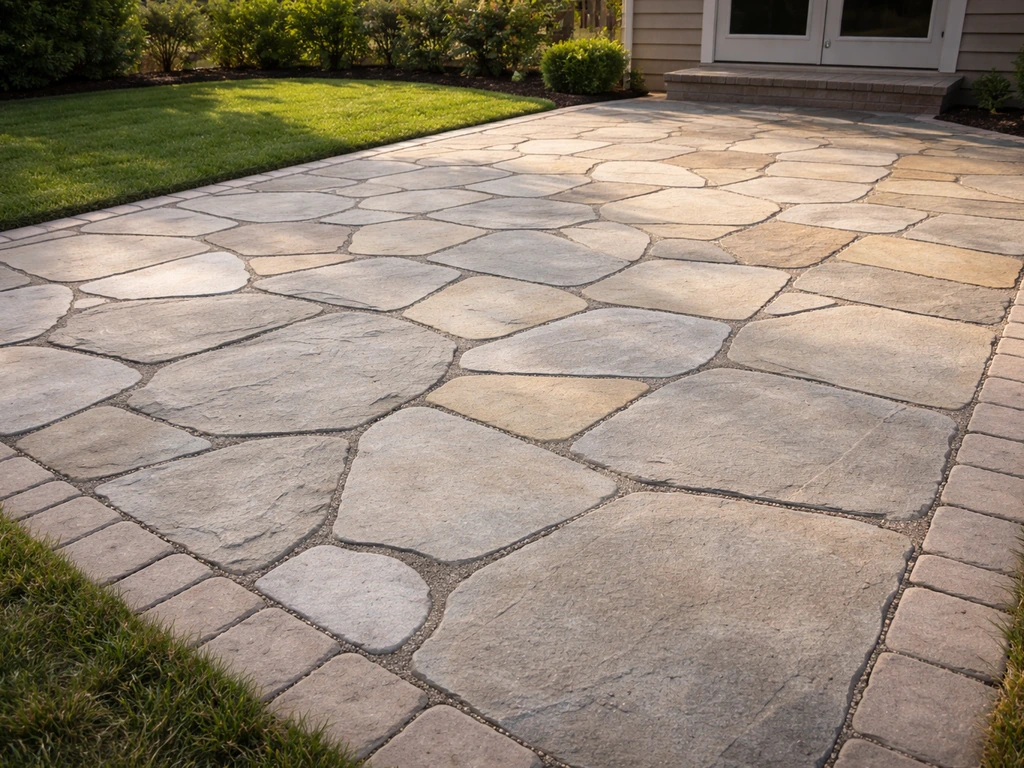
Flagstone patio cost by size, material vs labor, $/sq ft breakdown, installation details, DIY vs pro guidance and quote
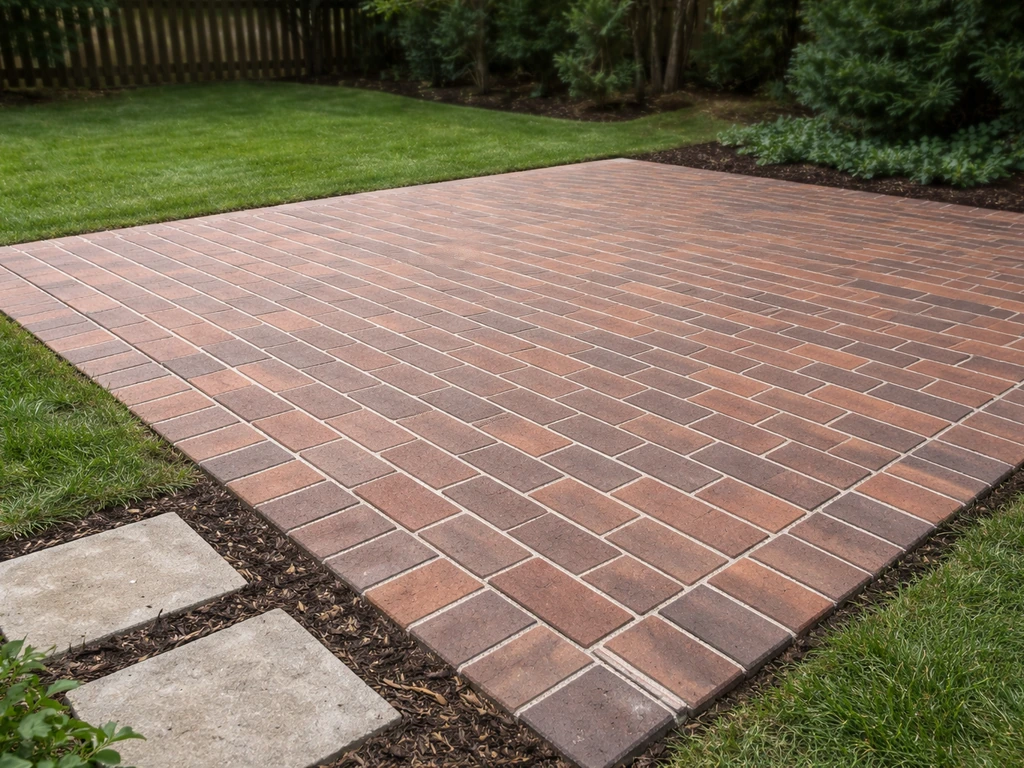
Brick patio cost ranges for 10x10, 12x12, 20x20, including base prep, labor, and extras for fair budgeting in 2026.