
A professionally installed 12x12 concrete patio (144 sq ft) runs between $864 and $2,880 in most parts of the country, which works out to roughly $6 to $20 per square foot. If you want a direct answer, see our guide on how much does a 12x12 concrete patio cost for a clear breakdown of expected prices and options. The sweet spot for a plain broom-finish slab with standard site prep lands around $1,300 to $1,800 all in. Stamped or colored concrete pushes that higher, sometimes to $3,500 or more. Industry pricing guides show broom finish ≈$4–$12/ft², colored integral or acid stain adds ≈$2–$8/ft², and stamped concrete commonly adds $6–$15+/ft² (resulting in installed patio totals often in the $12–$25+/ft² range) blank" rel="noopener noreferrer">Industry pricing guides show broom finish ≈$4–$12/ft², colored integral or acid stain adds ≈$2–$8/ft², and stamped concrete commonly adds $6–$15+/ft² (resulting in installed patio totals often in the $12–$25+/ft² range).. DIY pours can cut the cost to $400 to $700 in materials alone, but the labor is genuinely hard work and the margin for error is real. For a deeper breakdown by region and contractor tips, see our guide on how much does it cost to build a 12x12 patio.
How Much Does a 12x12 Concrete Patio Cost? 2026 Guide

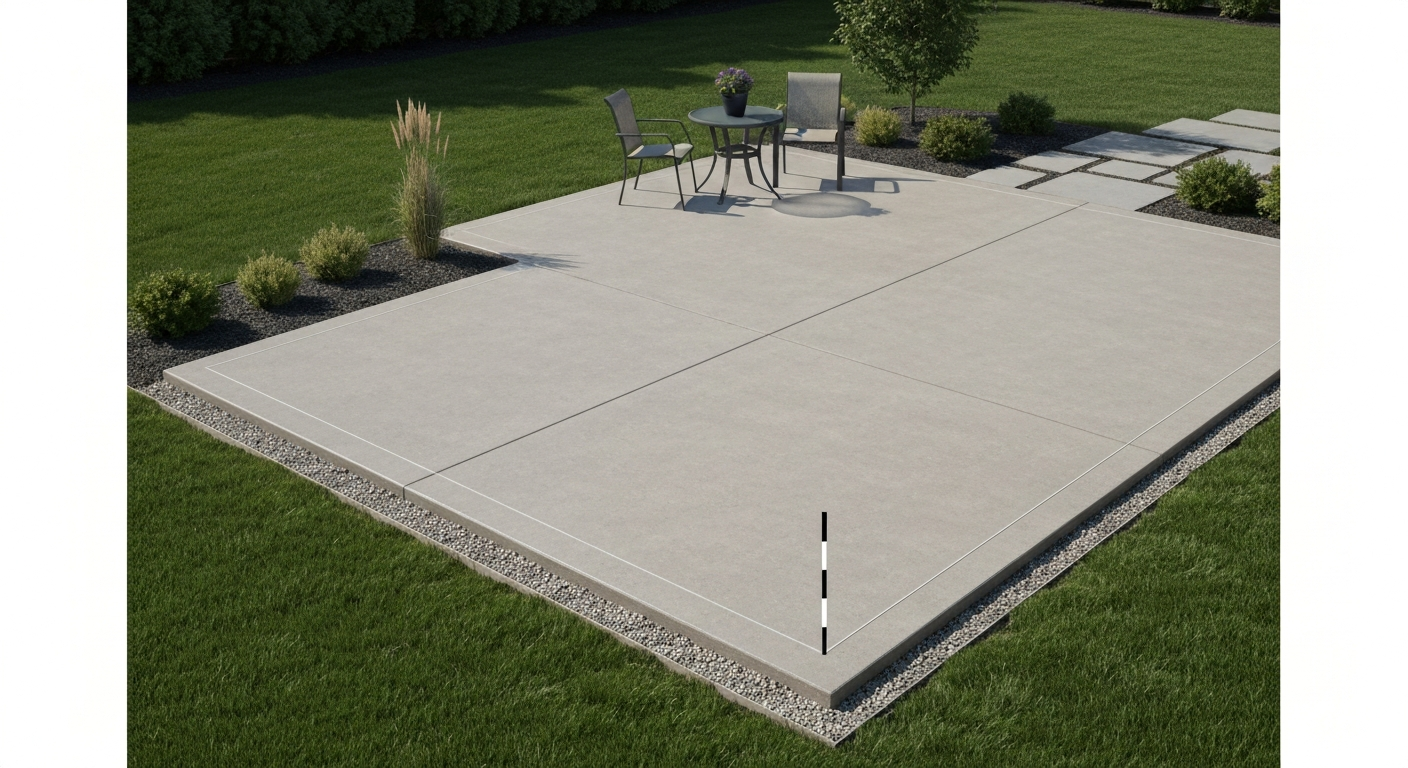
At-a-glance price snapshot
| Scenario | $/sq ft | Total (144 sq ft) | What you get |
|---|---|---|---|
| Low end | $6 – $8 | $864 – $1,152 | Basic broom finish, minimal site prep, competitive labor market |
| Typical / mid-range | $9 – $13 | $1,296 – $1,872 | 4-inch slab, gravel base, wire mesh or rebar, broom finish, standard labor |
| High end | $14 – $20 | $2,016 – $2,880 | Thicker slab, rebar grid, colored or decorative finish, complex site, premium labor market |
| Stamped / premium | $20 – $25+ | $2,880 – $3,600+ | Stamped pattern, integral color, borders, sealer, upscale contractor |
These ranges assume a flat, accessible site with no demo of existing hardscape. If you are removing an old patio, add $300 to $800 for hauling. Difficult access, poor soil, or a sloped yard adds cost at every line item.
What drives the final number: line-item cost breakdown
Breaking the job into its parts makes it much easier to verify a contractor quote or build your own materials budget. Here is what each piece actually costs for a standard 12x12 pour.
Concrete material
A 4-inch slab across 144 sq ft requires about 1.78 cubic yards of concrete before waste. Adding a 10 percent waste allowance brings you to roughly 1.96 cubic yards, so most contractors order 2 full yards. At current ready-mix prices of $125 to $220 per cubic yard for a standard 3,000 to 4,000 psi residential mix, two yards of delivered concrete costs $250 to $440. However, small orders under roughly 5 to 7 yards often trigger a short-load surcharge from the batch plant. That fee can range from $50 to $150 or more depending on your region and the plant's minimum load policy, so budget $300 to $600 for the concrete itself on a 12x12.
If you go the DIY bagged-concrete route instead, a 4-inch pour at 144 sq ft needs about 88 bags of 80-lb concrete mix (48 cubic feet divided by 0.60 cubic feet per bag, plus 10 percent waste). At retail prices of roughly $5 to $12 per 80-lb bag, that is $440 to $1,056 in bags alone, and you still need to rent a mixer and haul 4,400 pounds of material. For anything over about 1.5 cubic yards, ready-mix almost always wins on total cost once you factor in your own time.
Gravel base and subbase
A standard residential patio gets a 3 to 4 inch compacted crushed-stone base underneath the slab. For 144 sq ft at 4 inches deep you need roughly 1.8 tons of crusher-run or compactable gravel. Material cost runs $26 to $40 per ton depending on your region, so material alone is $47 to $72. Delivery of a partial ton or small order often carries a minimum delivery charge of $50 to $150, making this line item realistically $100 to $250 installed when you include spreading and compaction labor.
Reinforcement
Most residential patios use either welded wire mesh (WWF) or a rebar grid. A single sheet of 6x6 welded wire fabric covers roughly 50 sq ft, so a 12x12 needs about three sheets, costing $40 to $100 total in materials. Rebar is a step up: a grid of #3 rebar at 18-inch spacing across 144 sq ft needs approximately 110 linear feet of bar, costing $31 to $46 at $0.28 to $0.42 per linear foot. Installed, rebar grids add $150 to $350 to the job versus wire mesh. Fiber reinforcement is a modern alternative, polypropylene fibers added to the mix cost as little as $7 per cubic yard as a batch-plant adder and control plastic-shrinkage cracking well, though engineers note fibers are not a straight substitution for structural rebar in all situations.
Formwork and stakes
A 12x12 pour has 48 linear feet of perimeter. Form lumber and stakes typically run $1 to $2 per linear foot in materials, so expect $48 to $96 here. Contractors bundle form setup and teardown into their labor rate rather than billing it separately.
Labor
Flatwork labor rates vary considerably by region, but a fair national range for concrete patio installation is $2.50 to $8.00 per square foot of finished slab, covering form setting, pouring, screeding, floating, finishing, and form removal. On a 144 sq ft slab that is $360 to $1,152 in labor. Higher rates apply in the Northeast, California, and major metros; the lower end is realistic in the South and Midwest. A two-person crew can typically pour and finish a 12x12 in one day.
The extras that inflate the quote
The line items below are where bids from different contractors diverge the most. Some bundle these into a per-square-foot price; others list them separately. Know what to look for.
- Finishing and sealer: Basic broom finish is included in standard labor. A penetrating sealer adds $0.50 to $1.50 per sq ft ($72 to $216 for a 12x12). Integral color or acid stain adds $2 to $8 per sq ft ($288 to $1,152). Stamped patterns add $6 to $15 per sq ft on top of the plain pour price.
- Control joint sawing: Proper control joints prevent random cracking. Saw-cutting runs $0.75 to $7.00 per linear foot; a standard 12x12 patio needs about 12 to 16 linear feet of cuts, costing $9 to $112 plus any minimum mobilization fee.
- Edging and borders: Exposed aggregate, tooled edges, or a contrasting border add $2 to $6 per linear foot of perimeter.
- Grading and excavation: If the site needs more than minor grading, hand excavation runs $50 to $150 per hour; machine grading adds $200 to $500 for mobilization plus hourly rates.
- Drainage: A simple slope away from the structure is included in good flatwork. A trench drain or French drain at the patio edge adds $300 to $1,000 depending on length and tie-in.
- Permits: Many municipalities require a permit for poured flatwork attached to a structure. Permit fees typically run $50 to $250 for a residential patio, but some jurisdictions charge more. Always check local requirements before breaking ground.
- Demo and disposal: Removing an existing concrete slab costs $3 to $6 per sq ft for breaking and hauling, adding $432 to $864 for a 12x12 demo job.
- Cleanup and final grade: Hauling concrete washout water and restoring the surrounding landscape is a small but real cost, typically $50 to $150 for a residential pour.
How your region changes the price
The single biggest variable outside the slab itself is where you live. Labor costs in San Francisco or New York City can be 60 to 100 percent higher than in rural Georgia or the Midwest. Ready-mix prices follow a similar pattern: municipal bid tabulations from the Chicago suburbs show delivered concrete at $120 to $190 per cubic yard, while markets in the Mountain West or South can be lower. Fuel surcharges affect aggregate and ready-mix delivery costs, and demand seasonality matters too: quotes in late spring and early summer are often higher than fall or winter bids in cold-weather climates.
| Region | Typical installed $/sq ft | 12x12 total estimate | Notes |
|---|---|---|---|
| Southeast / South Central | $6 – $11 | $864 – $1,584 | Lower labor rates; competitive concrete market |
| Midwest | $8 – $13 | $1,152 – $1,872 | Moderate rates; frost-depth may require thicker slab or deeper base |
| Mountain West / Southwest | $9 – $15 | $1,296 – $2,160 | Mix of markets; remote areas add delivery surcharges |
| Pacific Coast (CA, WA, OR) | $12 – $20 | $1,728 – $2,880 | High labor costs; environmental fees; strict permitting |
| Northeast / Mid-Atlantic | $11 – $20 | $1,584 – $2,880 | High labor and material costs; short construction season |
Climate also drives design decisions that affect cost. In freeze-thaw climates (most of the Midwest and Northeast), you need air-entrained concrete with a minimum 5 to 7 percent air content to resist spalling, which adds a small mix premium. Base depth requirements often increase to 6 inches or more to account for frost heaving. These are legitimate engineering requirements, not upsells.
12x12 vs. 12x20: how does scaling change the math?
A 12x20 patio is 240 sq ft, 67 percent more area than a 12x12. But the per-square-foot installed cost usually drops because mobilization, setup, delivery minimums, and fixed overhead get spread across more square footage. That makes a larger patio a better value per square foot even though the total price is higher.
| Size | Square feet | Typical $/sq ft (installed) | Estimated total cost range |
|---|---|---|---|
| 12x12 | 144 | $9 – $15 | $1,296 – $2,160 |
| 12x20 | 240 | $8 – $13 | $1,920 – $3,120 |
If you were already leaning toward a 12x20, the incremental cost to go from a 12x12 is often only $600 to $1,000 more, a meaningful jump but not proportional to the extra 96 square feet of usable outdoor space you gain. It is worth pricing both sizes when you get contractor quotes.
Comparing 12x12 patio materials side by side
Concrete is not the only option for a 12x12 patio. Pavers, natural stone, brick, and flagstone all compete in this space. Each has a different installed cost, lifespan profile, and maintenance burden. Here is how they stack up honestly.
| Material | Installed cost range (144 sq ft) | $/sq ft | Lifespan | Maintenance | Repairability |
|---|---|---|---|---|---|
| Plain concrete | $864 – $2,880 | $6 – $20 | 25–50 years | Low (seal every 2–3 yrs) | Cracks are permanent unless patched or overlaid |
| Stamped concrete | $2,880 – $3,600+ | $20 – $25+ | 20–40 years | Moderate (reseal annually) | Surface wear and cracks are harder to fix invisibly |
| Concrete pavers | $1,440 – $3,456 | $10 – $24 | 30–50 years | Low to moderate | Individual pavers can be lifted and replaced |
| Brick | $1,728 – $3,456 | $12 – $24 | 25–50 years | Low | Individual bricks replaceable; mortar joints need attention |
| Natural stone (flagstone) | $2,160 – $5,040 | $15 – $35 | 50+ years | Low to moderate | Individual pieces replaceable; irregular fit limits options |
| Gravel / decomposed granite | $288 – $720 | $2 – $5 | 5–10 years (refreshing needed) | Moderate (raking, top-dressing) | Easy to refresh but not a permanent surface |
The most practical comparison for most homeowners is concrete versus pavers. For detailed paver pricing and installed-cost examples, see our guide on how much does a 12x12 paver patio cost. Concrete costs less upfront and is faster to install, but a single crack is a permanent blemish unless you use a decorative overlay. Pavers cost more to install but let you replace a single damaged unit years later without it showing. If the patio is going next to tree roots or in a region with significant frost heave, pavers are worth the premium because they flex and can be reset. If the site is stable and budget is tight, plain concrete is hard to beat on value.
Natural stone flagstone is the premium end of the spectrum and genuinely beautiful, but $15 to $35 per square foot installed means a 12x12 runs $2,160 to $5,040. For a focused breakdown on 12x12 stone patios, see our guide on how much does a 12x12 stone patio cost. Stamped concrete mimics stone at a lower price while keeping a monolithic slab, but it requires annual resealing and the stamped surface can wear or chip over time in high-traffic areas. If you are comparing any of these materials carefully, the paver and stone cost guides on this site break down those numbers the same way this article does for concrete.
DIY vs. hiring a pro: the honest trade-off
Pouring a concrete patio yourself is absolutely doable, contractors poured their first slab at some point. But a 12x12 is harder than it sounds, and there is a reason most homeowners regret doing it wrong more than they regret hiring someone. Here is the real breakdown.
DIY cost and what you actually need
Material cost for a DIY 12x12 concrete patio runs roughly $400 to $700 for a basic broom-finish slab: $300 to $600 for concrete (either bagged or ready-mix with short-load fee), $50 to $150 for gravel base, and $40 to $100 for wire mesh or fiber additive. You also need to rent tools. A concrete mixer rental runs $50 to $150 per day; a plate compactor for the base is $75 to $150 per day; a concrete float and screed board are modest purchases around $30 to $60 total. Figure $150 to $350 in tool rentals and disposables on top of materials. Total DIY cost: $550 to $1,050 for a plain slab. For a concise overview and comparison of these numbers, see our guide on how much does a 12x12 patio cost.
Time and physical reality
Expect a full two-day weekend project at minimum for a first-time pour. Day one is excavation, base prep, form setting, and ordering or staging materials, figure 6 to 10 hours of physical labor. Day two is the pour itself, which for a 12x12 using bagged concrete means mixing and placing roughly 88 bags of 80-pound mix. That is over 7,000 pounds of bagged material you need to open, mix, place, screed, float, and finish in a single session before the concrete starts to set. With a helper, this is manageable but exhausting. Without one, it is genuinely risky because concrete waits for no one once the truck or mixer is running.
Where DIY goes wrong
- Inadequate base prep: Skipping compaction or using the wrong base material leads to settling and cracking within a few years.
- Wrong concrete mix: Using a general-purpose bagged mix that is too wet makes placement easier but dramatically weakens the finished slab.
- Missing control joints: Without saw cuts or tooled joints at the right spacing, the slab will crack — just not where you want it to.
- Poor finishing timing: Float and trowel too early and you bring water to the surface; too late and the surface is unworkable. This is the part that takes the most experience to read correctly.
- No air entrainment in cold climates: Standard bagged mixes are not air-entrained. In a freeze-thaw climate, an untreated slab may spall within 5 to 10 years.
- Permits skipped: Many jurisdictions require a permit even for a detached patio slab. Unpermitted concrete work can complicate home sales and insurance claims.
When to hire a pro
Hire a contractor if: you are in a freeze-thaw climate and need air-entrained concrete (hard to get in bagged mix); the site has any slope requiring positive drainage; you want a stamped or colored finish (extremely hard to DIY successfully); your municipality requires an inspection; or you simply do not have a full weekend and a willing helper. The $700 to $1,400 you save on labor for a 12x12 is real money, but a failed pour means hiring someone to demo and redo it, which costs more than the original job.
Side-by-side cost and time comparison
| Factor | DIY | Professional install |
|---|---|---|
| Materials cost (144 sq ft) | $400 – $700 | $400 – $700 (contractor buys at trade pricing) |
| Labor cost | $0 (your time) | $360 – $1,152 |
| Tool rental | $150 – $350 | $0 (contractor owns tools) |
| Total estimated cost | $550 – $1,050 | $1,000 – $2,000 |
| Time required | 2 full days + planning | 1 day (crew of 2) |
| Skill level needed | Moderate to high | Professional |
| Risk of costly mistakes | High for first-timers | Low (contractor warranty) |
| Permit handling | Homeowner's responsibility | Often handled by contractor |
Patio vs. deck: a quick decision framework
A concrete patio and a wood or composite deck serve similar functions but have very different cost and maintenance profiles. A ground-level concrete patio at $9 to $15 per square foot installed almost always beats a wood deck ($15 to $35 per sq ft) and a composite deck ($25 to $50 per sq ft) on upfront cost. Concrete also requires almost no maintenance beyond occasional resealing. Decks, on the other hand, are far better suited for sloped lots where building up a concrete slab would require expensive grading or retaining walls. Decks also require ventilation underneath in humid climates, which concrete does not. If your yard is flat or close to grade, concrete wins on cost and longevity. If your yard drops away from the back door by more than 18 to 24 inches, a deck is likely the more practical and cost-effective choice.
Budgeting checklist before you call contractors
Walking into a contractor conversation with a clear picture of what you want will get you better, more comparable quotes. Use this checklist to prepare.
- Measure and mark your patio footprint. Confirm the 12x12 dimensions work with your space and intended furniture layout before committing.
- Check your local permit requirements. Call or check online with your municipality. A $100 permit is far cheaper than an unpermitted slab discovered at resale.
- Note site conditions: slope, soil type, existing vegetation or roots, access for a concrete truck (minimum 8-foot clearance is typical).
- Decide on slab thickness. Standard residential patios are 4 inches; go 6 inches if the area will see vehicle traffic or heavy equipment storage.
- Choose a finish before you ask for quotes. Broom finish, exposed aggregate, stamped, and colored concrete all have different labor costs. Get quotes for what you actually want.
- Ask for itemized bids. Request separate line items for concrete, base prep, reinforcement, forming, finishing, and disposal. Lump-sum bids are harder to compare.
- Get at least three quotes. Prices for a 12x12 vary $500 or more between contractors in the same market. Three bids gives you a real range.
- Ask about the mix design. Confirm the PSI rating (3,000 minimum; 4,000 preferred), air entrainment if you are in a cold climate, and whether fiber is included.
- Clarify what is not included. Ask specifically about permit fees, demo of existing hardscape, tree root removal, drainage, and final cleanup.
- Check contractor licensing and insurance. Concrete work is physical and involves delivery trucks and heavy equipment. Confirm general liability and workers comp coverage before work starts.
Sample quote worksheet
| Line item | Estimated range | Your quote |
|---|---|---|
| Concrete (ready-mix, ~2 yd³ + short-load fee) | $300 – $600 | |
| Gravel base (3–4 in compacted, ~1.8 tons) | $100 – $250 | |
| Reinforcement (wire mesh or rebar) | $50 – $350 | |
| Formwork materials and stakes | $48 – $96 | |
| Labor (pour, finish, form set/strip) | $360 – $1,152 | |
| Control joint sawing (12–16 lin ft) | $20 – $150 | |
| Sealer (1 coat penetrating) | $72 – $216 | |
| Permit fee | $50 – $250 | |
| Disposal / washout / cleanup | $50 – $150 | |
| Grading / excavation (if needed) | $0 – $500 | |
| Demo of existing surface (if needed) | $0 – $864 | |
| Total estimate | $1,050 – $3,778+ |
Print this out and fill in the third column from each contractor quote. Totaling each column shows you not just the overall price but where a contractor is cutting corners or padding margins on specific line items. A contractor who charges $800 for 2 yards of concrete should be asked to explain that number.
FAQ
Quick summary: How much does a 12×12 concrete patio cost (total and $/sq ft)?
A 12×12 patio is 144 sq ft. Typical turnkey installed costs (including base, concrete, finishing, reinforcement, edging, basic drainage prep, permits and disposal) range roughly $1,000–$5,000 nationally in 2026. That equals about $7–$35 per sq ft. A simple DIY pour using bagged concrete and basic finish materials can run $300–$900 total ($2–$6/ft²) depending on concrete thickness and whether you buy bags or ready‑mix.
How much concrete (volume and bags) do I need for a 12×12 patio at common slab thicknesses?
Volumes (before waste) for 144 ft²: 3 in (0.25 ft) = 36.0 ft³ = 1.33 yd³; 4 in (0.333 ft) = 48.0 ft³ = 1.78 yd³; 6 in (0.5 ft) = 72.0 ft³ = 2.67 yd³. Bag counts (approx, before waste): 3 in ≈ 60×80‑lb bags; 4 in ≈ 80×80‑lb bags; 6 in ≈ 120×80‑lb bags. Add 5–10% waste when ordering; switch to ready‑mix for pours above ~1–1.5 yd³ because bag mixing becomes labor‑intensive and more expensive.
Detailed cost breakdown: what are typical line items and ranges for a 12×12 installed patio?
Approximate installed cost components (144 sq ft): - Concrete material (ready‑mix delivered): $160–$400 (for 1.3–2.7 yd³ at $125–$220/yd³ plus short‑load fees). - Bagged concrete (DIY) equivalent: $300–$900 depending on bag price and count. - Base (compacted crushed stone 3–4 in): $150–$500 (material + compaction). - Reinforcement (wire mat, minimal rebar clips or fiber): $40–$300 depending on choice and labor. - Formwork (lumber, stakes, release): $25–$150. - Labor for subgrade, forming, pouring, finishing: $600–$2,000 (varies widely by market). - Finishes: broom finish included in base; color/acid stain $300–$1,200; stamped concrete additional $900–$3,600. - Edging / control joints / saw cutting: $50–$300. - Drainage prep (simple slope/grate or downspout tie‑in): $50–$400. - Permits & inspections: $0–$300 (many areas charge permits). - Disposal/haul‑away of excavated material: $50–$300. Summing these yields the $1,000–$5,000 installed range; low end reflects minimal labor markets and DIY, high end reflects stamped/color options or high local labor rates.
How do costs compare for other 12×12 patio materials (pavers, natural stone, stamped concrete, brick, flagstone)?
Approx installed cost ranges for a 12×12 (144 ft²): - Concrete (plain broom finish): $1,000–$3,000 ($7–$21/ft²). - Stamped concrete (patterned/colored): $1,900–$6,600 ($13–$46/ft²). - Concrete pavers (interlocking): $1,500–$6,500 ($10–$45/ft²) depending on paver quality. - Brick pavers (soldier/basket weave): $1,800–$7,200 ($12–$50/ft²). - Natural flagstone (irregular laid on sand/partial mortar): $3,000–$10,000+ ($21–$70+/ft²). - Segmental stone with full mortar set is at the high end. These ranges account for base, material, and labor. Pavers and stone often require deeper base prep and higher labor, pushing installed costs above plain concrete.
What about a 12×20 patio example (240 sq ft)?
240 sq ft totals: volumes—3 in = 60 ft³ (2.22 yd³), 4 in = 80 ft³ (2.96 yd³), 6 in = 120 ft³ (4.44 yd³). Installed turnkey ranges scale roughly but get modest economies of scale: plain concrete patio ~ $1,680–$8,400 ($7–$35/ft²). Ready‑mix becomes more economical here (you’ll likely order ~3 yd³ at minimum); short‑load fees per yard decline relative to total. Labor per sq ft can drop slightly versus a 144 sq ft job because mobilization and minimal fixed costs are spread over more area.
DIY vs professional install: costs and time trade‑offs for a 12×12 patio?
DIY approximate costs: $300–$900 for materials (bagged concrete, base material, reinforcement, forms, basic tools) if you do everything yourself. DIY time: 2–3 full weekend days for a novice (site prep and base), plus one day for forms, pour and finish; longer for curing and edge work. Professional install approximate costs: $1,000–$5,000 turnkey depending on finish and region. Pros save time, reduce risk of poor slope/finish/cracking, and provide warranty; cons are higher cost. Consider hybrid: hire pros for base prep and pour but do demo or finish details to save money. For quality & long life, many homeowners find professional labor worth the higher price.
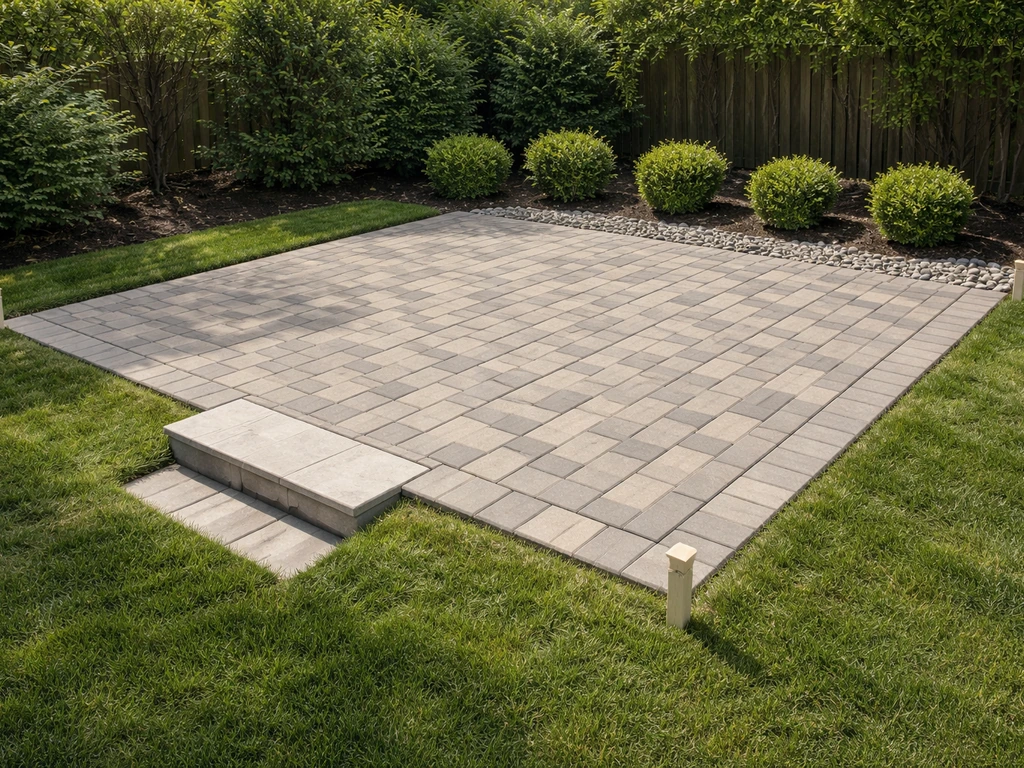
Real cost range for a 12x12 patio, broken down by materials, labor factors, add-ons, and DIY vs pro pricing.
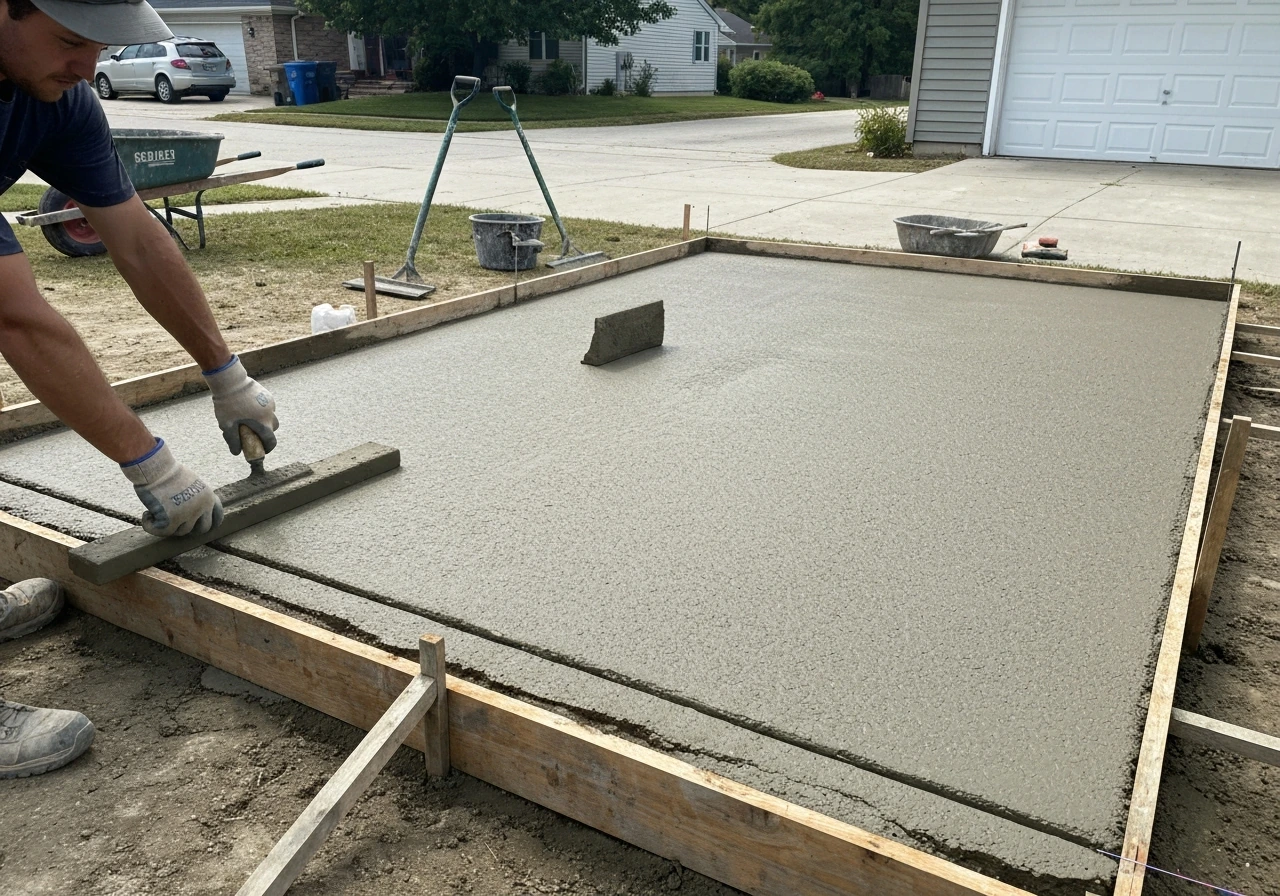
12x20 concrete patio cost estimate with installed price ranges, line-item breakdown, and budgeting factors for 240 sq ft
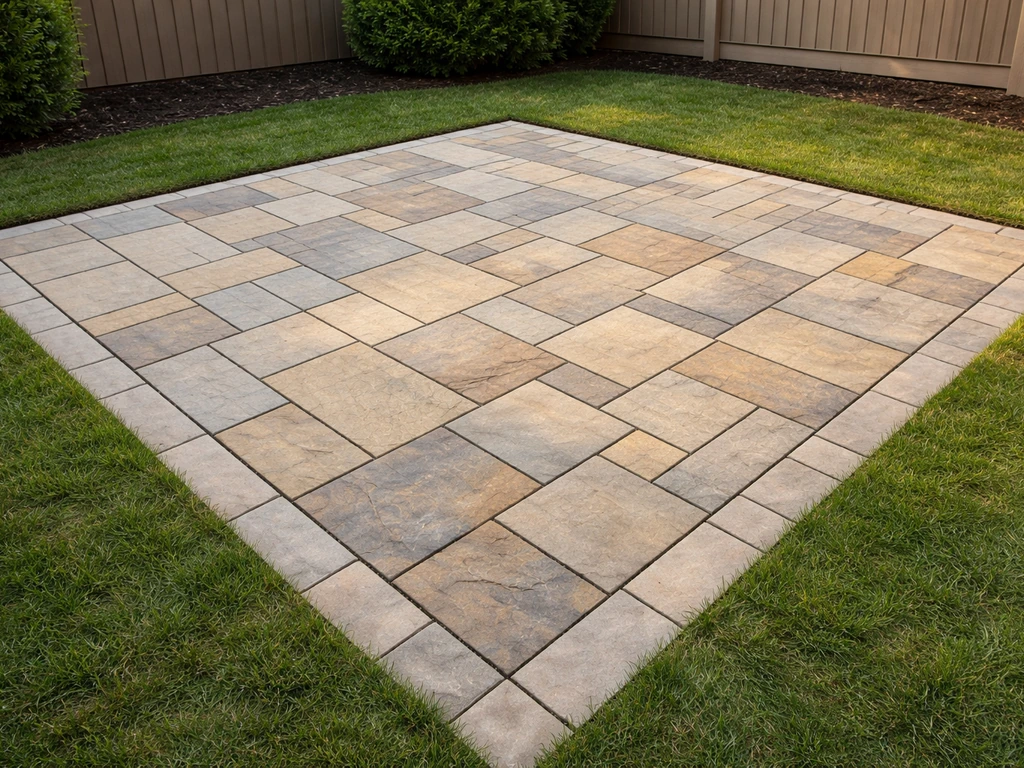
2026 cost ranges to build a 12x12 stone patio, with per-sq-ft pricing, line items, and DIY vs installed budgets.