
Leveling a concrete patio typically costs $3 to $25 per square foot depending on the method, which puts most residential jobs somewhere between $500 and $3,000. For specific per‑square‑foot rates and regional breakdowns, see how much per sq ft for a concrete patio. Procurement Schedule, Polyurethane Injections Unit Prices (Mobility Authority bid document) notes that Public procurement unit prices for polyurethane injection used on pavement projects show per‑pound pricing in publicly bid contracts: example municipal procurement schedules list poly injection unit prices in the ~$4.30–$4.81 per pound range (bulk/contract pricing), illustrating that contractor material cost-per-pound can be materially lower on large buys than retail quotes blank" rel="noopener noreferrer">Procurement Schedule — Polyurethane Injections Unit Prices (Mobility Authority bid document). A 10x10 patio runs $300 to $2,500, a 12x12 lands between $430 and $3,600, and a 20x20 can stretch from $1,200 to $10,000 at the high end if polyurethane foam is used on a badly settled slab. Mudjacking (slabjacking) is the budget-friendly choice at $3 to $6 per square foot, while polyurethane foam lifting costs more ($5 to $25/sq ft) but cures faster and puts less weight on weak subsoils. Full replacement is the priciest route at $6 to $15-plus per square foot installed.
How Much Does It Cost to Level a Concrete Patio: Costs & Guide

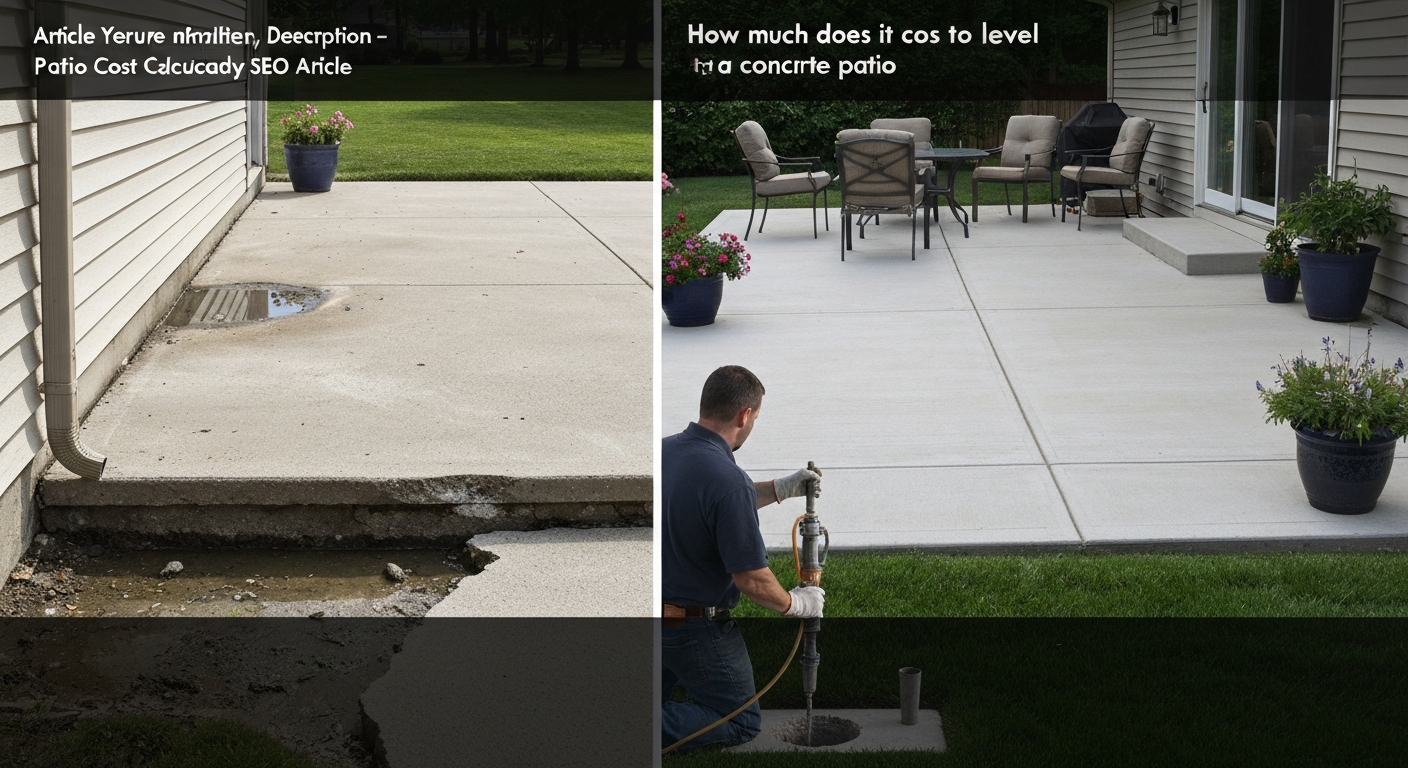
TL;DR: What to Expect Before You Call Anyone
If your patio has sunken an inch or two, feels wobbly underfoot, or has a lip where it meets the house, leveling is almost always cheaper than tearing it out and starting over. The three main methods are mudjacking, polyurethane foam lifting, and partial re-pour. For most homeowners with a slab that has settled but is otherwise structurally sound, mudjacking or poly foam is the right call. Expect to pay a minimum trip fee of $150 or more before any square footage is even factored in. Get at least three quotes, confirm the contractor drills and fills (not just grinds), and ask specifically about any crack repair or edge work that isn't included in the base price.
Cost Snapshot: Real Numbers for Common Patio Sizes
The table below applies the published 2026 per-square-foot ranges to three common patio sizes. These are arithmetic estimates using industry ranges, not quotes. For pricing on pouring a new slab, see how much is a concrete patio slab for per‑square‑foot replacement costs and examples. Your actual number will shift based on method, region, site access, and how much prep or crack repair is needed. For a quick estimate of small patio prices, see how much does a small concrete patio cost.
| Patio Size | Sq Ft | Mudjacking ($3–$6/sq ft) | Poly Foam ($5–$25/sq ft) | Partial Re-Pour ($6–$15+/sq ft) |
|---|---|---|---|---|
| 10x10 | 100 | $300 – $600 | $500 – $2,500 | $600 – $1,500+ |
| 12x12 | 144 | $430 – $865 | $720 – $3,600 | $865 – $2,160+ |
| 20x20 | 400 | $1,200 – $2,400 | $2,000 – $10,000 | $2,400 – $6,000+ |
The national median for a residential concrete-leveling job lands around $1,500, with HomeAdvisor's 2026 data showing a typical range of roughly $660 to $1,870 per project. Jobs below $500 are usually small sections or grout-and-fill work with a self-leveling compound ($1 to $5/sq ft), which is suited more for interior slabs and minor surface dips than a fully sunken outdoor patio. At the other end, large poly-foam jobs on badly settled slabs can push well past $5,000.
How Location Moves the Price
Where you live matters more than most cost guides admit. BLS occupational wage data shows cement masons and concrete finishers in high-cost metros (think coastal Northeast and West Coast cities) earn measurably more per hour than workers in lower-cost non-metro markets. That wage gap flows directly into contractor bids. A mudjacking job priced at $4/sq ft in a mid-sized Midwest market might run $6 to $7/sq ft in a tighter West Coast market once labor and overhead are factored in.
- Higher-cost metros (San Francisco, New York, Seattle, Boston): expect quotes at or above the midpoint of any published range
- Mid-cost metros (Chicago, Dallas, Atlanta, Denver): usually land near the middle of national ranges
- Lower-cost rural and non-metro markets: quotes often toward the lower end, but minimum trip fees still apply and can inflate small jobs
- Southeast markets like Cape Coral-Fort Myers, FL: BLS data shows regional wage variation that typically keeps concrete labor costs below national averages
Canadian Pricing Notes
Canadian homeowners see similar method ranges but quoted in CAD. Calgary contractor guides, for example, publish mudjacking rates of $3 to $6 CAD per square foot and foam lifting at $5 to $25 CAD per square foot, which mirrors U.S. rate structures. The practical difference is currency: with a USD/CAD exchange rate that typically puts the Canadian dollar at a discount, U.S.-sourced cost articles will overstate Canadian costs if you don't convert. Government of Canada Job Bank wage reports (updated November 2025) confirm provincial variation in concrete finisher wages, with higher rates in Alberta and BC contributing to elevated contractor bids in those provinces. GST and HST also add to the final invoice. If you're budgeting a Canadian project, start with local contractor quotes rather than converting U. For a quick local estimate, see our guide on how much does a concrete patio cost in Canada. S. benchmarks and calling it a day.
Why Concrete Patios Sink in the First Place
Understanding what caused the sinking tells you which fix will actually hold. A leveling job that doesn't address the root problem will settle again in a few years, wasting your money. The most common culprits are erosion and washout under the slab (water channels soil away over time), poor compaction of the base during original installation, tree roots disrupting the subgrade, freeze-thaw cycles in colder climates that heave and then drop the slab, and simple consolidation of loose or organic fill over years.
- Soil erosion or washout: creates voids under the slab; poly foam fills these voids well
- Poorly compacted base at installation: the slab settles as fill consolidates under load
- Tree root intrusion: roots push slabs up unevenly, then decay and leave voids
- Freeze-thaw heave: common in USDA hardiness zones 5 and colder; repeated cycles crack and tilt slabs
- Organic fill or improper backfill: decays over time, causing gradual sinking
- Plumbing leaks: an underground pipe leak slowly erodes soil and creates a void directly under the slab
The cause also affects cost. A simple washout void under a 12x12 slab is a straightforward mudjacking job. A slab cracked by root intrusion may need roots cut, crack repair, and reinforcement before lifting, adding material and labor. A plumbing-leak scenario requires the plumber to fix the pipe first, which is a separate cost entirely.
The Three Leveling Methods (And When to Use Each)
Mudjacking / Slabjacking
Mudjacking pumps a slurry of cement, sand, and water under the slab through drilled holes (typically 1.5 to 2 inches in diameter). The slurry fills voids and hydraulic pressure lifts the slab back toward level. It's the oldest and cheapest method, running $3 to $6 per square foot. It works well on large slabs with uniform settlement, driveways, and patios where the main issue is a washed-out base. The downside is that the slurry is heavy, around 90 to 125 pounds per cubic foot, which adds dead load back onto the same weak soil that caused the problem. That's why mudjacking isn't ideal on soils with ongoing erosion or poor load-bearing capacity. Drill holes are also larger than poly foam holes and more visible once patched.
Polyurethane Foam Lifting (Polyjacking)
Polyurethane foam injection drills smaller holes (typically 5/8 inch), injects a two-part foam that expands and cures within 15 to 30 minutes, and costs $5 to $25 per square foot. The foam is dramatically lighter than mudjacking slurry and expands to fill irregular voids, which makes it a better choice for soils that can't support added weight or for precision lifts near a foundation. It also cures fast, so the patio is usable within an hour of work completion. The material cost premium is real: while municipal procurement bids show poly injection material pricing in the $4.30 to $4.81 per pound range on large contracts, smaller residential jobs see effective contractor pricing closer to $6 to $12 per pound, which drives up the per-square-foot cost. How Much Does Polyurethane Concrete Lifting Cost? - Helicon notes municipal procurement shows poly injection near $4–$5 per pound while contractor/retail effective prices commonly run about $6–$12 per pound How Much Does Polyurethane Concrete Lifting Cost? - Helicon notes municipal procurement shows poly injection near $4–$5 per pound while contractor/retail effective prices commonly run about $6–$12 per pound.. For polyjacking, the contractor's material cost is a significant portion of your invoice.
Partial Re-Pour / Excavation and Replacement
When a slab is crumbling, severely cracked beyond repair, or structurally compromised, the only real fix is tearing out the damaged section and pouring new concrete. This costs $6 to $15 or more per square foot installed for standard concrete, and can run considerably higher for decorative or stamped finishes. For pricing on stamped concrete patios, see how much for stamped concrete patio. Ready-mix concrete currently averages around $180 per cubic yard nationally (ConcreteNetwork reports $179.95/yd³ for 2025), but by the time you add saw-cutting, demolition, haul-off, form work, rebar, finishing, and labor, the per-square-foot price climbs fast. A full 20x20 re-pour could easily reach $4,000 to $8,000 or more depending on your region and slab thickness.
Method Comparison: Pros, Cons, and What Fits Your Situation
| Method | Cost Range | Cure Time | Longevity | Best For | Watch Out For |
|---|---|---|---|---|---|
| Mudjacking | $3–$6/sq ft | 24–72 hours | 5–10 years typical | Large slabs, driveways, budget jobs | Adds soil load; larger patch holes; not ideal for ongoing erosion |
| Poly Foam Lifting | $5–$25/sq ft | 15–60 minutes | 10–20+ years | Precision lifts, soils with load limits, near foundations | Higher material cost; pricing varies widely by contractor |
| Partial Re-Pour | $6–$15+/sq ft | 7–28 days full cure | 25–50 years | Severely cracked or crumbling slabs | Most expensive; disruption is significant; color matching is hard |
| Self-Leveling Compound | $1–$5/sq ft | 2–24 hours | 3–8 years (surface) | Minor surface dips, interior use | Not a structural fix; not suited for fully sunken outdoor slabs |
For most homeowners with a patio that has settled 1 to 3 inches but is otherwise intact, mudjacking is the practical budget call and poly foam is the upgrade. Both beat full replacement on cost for a slab that's structurally sound. If you have a stamped concrete patio, the calculus shifts a bit, since color and pattern matching on a partial re-pour is notoriously difficult and expensive. For pricing comparisons on decorative finishes, see how much does stamped patio cost.
Full Cost Breakdown: What You're Actually Paying For
Labor
Labor is the biggest variable. Most concrete-leveling contractors price per square foot and include basic labor in that rate, but be aware that rate often assumes straightforward access and a clean site. Difficult access (narrow gates, raised decks over the patio, tight side yards) can trigger hourly surcharges. Minimum trip or mobilization fees of $150 or more are common, which means a tiny 4x6 sunken section could cost $300+ just to get someone out there even though the per-square-foot math would suggest far less.
Materials
For mudjacking, slurry materials (cement, sand, water) are inexpensive; most of your invoice is equipment and labor. For poly foam, the two-part foam is where costs accumulate, and material represents a larger share of the total. For a partial re-pour, you're paying ready-mix delivery ($125 to $195 per cubic yard depending on region), rebar (#3 rebar runs roughly $5 to $8 per 20-foot stick at retail), and potentially wire mesh or fiber reinforcement on top.
Crack and Edge Repair
Crack sealing is often quoted separately. A concrete crack filler cartridge (Quikrete or Sika) runs $8 to $18 at a big-box store for a 10 to 12-ounce tube, which handles small cracks yourself. Contractor-applied crack routing and sealing is more, typically $3 to $8 per linear foot, and structural crack injection with epoxy can run $20 to $50 per linear foot or more for deep structural cracks. Edge chipping and spall repair adds to the bill as well and is commonly excluded from base leveling quotes.
Access and Site Prep
If a contractor needs to remove furniture, cut back overgrown landscaping, or deal with a gate that won't fit their equipment, expect add-ons. Overhead obstructions (a deck above the patio) can limit drilling angles and slow work. Some contractors charge an hourly rate for access challenges, commonly in the $75 to $150/hour range on top of the base price.
Permits and Disposal
Leveling an existing slab typically doesn't require a permit in most jurisdictions. A partial re-pour or full replacement usually does, and permit costs vary widely by municipality, from $50 to $300 or more for residential concrete work. If you're doing a tear-out, debris hauling and disposal is a real line item. Expect $200 to $500+ for dumpster rental or haul-away of broken concrete on a 12x12 or larger job.
DIY vs. Professional: Honest Pros and Cons
DIY is realistic for minor surface leveling with self-leveling compound and for simple crack sealing. It's not realistic for mudjacking or poly foam injection, which require specialized equipment (pumps, hoses, mixing units) that isn't available at a typical rental center and requires training to operate correctly. Attempting to mudjack without the right equipment usually just makes a mess and doesn't actually lift the slab.
What You Can Realistically DIY
- Applying self-leveling compound for surface dips under 1 inch (best for covered or semi-enclosed slabs, not great for outdoor patios exposed to weather)
- Sealing hairline cracks with polyurethane or epoxy crack-fill cartridges ($8–$18 each at big-box stores)
- Grinding down high spots with a rented walk-behind concrete grinder ($80–$450/day rental depending on model)
- Small spall and edge repair with hydraulic cement or vinyl concrete patcher
- Full partial re-pour if you have concrete experience, a rented mixer ($40–$60/day), and a helper
DIY Cost Estimates for Common Tasks
| Task | DIY Material Cost | Rental Cost (if needed) | Pro Cost for Same Work |
|---|---|---|---|
| Crack sealing (20 linear ft) | $20–$50 in cartridges | None | $60–$160 contractor-applied |
| Surface grinding a high spot (10x10) | $0–$30 in supplies | $80–$200/day grinder rental | $200–$500 contractor |
| Self-leveling compound (100 sq ft, 1/4" lift) | $80–$150 in compound bags | None (mix by hand) | $200–$500 contractor |
| Partial re-pour (10x10 slab, 4" thick) | $200–$400 materials + rebar | $100–$200 mixer + saw rental | $600–$1,500 contractor |
The honest DIY calculation: for crack sealing and minor surface work, DIY saves real money. For a full slab lift, hire a pro. The equipment alone for mudjacking or poly foam isn't rented at Home Depot, and a botched lift that pushes one corner up too high can crack a slab that was otherwise repairable, turning a $600 job into a $2,000 one.
When Leveling Isn't Worth It: Replacement and Other Options
There are situations where leveling is throwing good money after bad. If the slab has widespread cracking (more than 30 to 40 percent of the surface), structural delamination, or has settled so unevenly that it can't be brought back level without sectional work, replacement is the smarter long-term call. Full concrete slab replacement runs $6 to $15 per square foot installed for standard concrete. If you're weighing a decorative upgrade at the same time, stamped concrete runs higher (costs that are worth comparing separately), and pavers or flagstone are another comparison worth making before committing to plain concrete.
If the patio is adjacent to the house and the settlement has pulled it away from the foundation, that gap needs to be addressed regardless of which method you choose. A contractor who just lifts the slab without sealing the gap against the house is leaving a water-infiltration path that will erode the base again within a few years.
Lifespan and Warranties After Leveling
Mudjacking results typically last 5 to 10 years before re-settlement becomes an issue, though well-drained sites with stable soils can see longer results. Polyurethane foam lifting, because the foam doesn't shrink or wash out the way slurry can, tends to hold for 10 to 20-plus years in good conditions. Most reputable poly foam contractors offer 1 to 5-year warranties on their work. Mudjacking warranties tend to be shorter, often 1 to 2 years, and some contractors offer none at all on mudjacking in high-erosion areas. A partial re-pour with properly compacted base and adequate drainage should hold for decades, similar to any new concrete slab. Ask specifically what the warranty covers: some only cover material failure, not re-settlement from soil movement.
How to Get Accurate Quotes (and What to Watch For)
Getting reliable quotes for concrete leveling takes a bit of prep on your end. Here's the process that gets you comparable bids rather than apples-to-oranges confusion.
- Measure your patio accurately and note which sections are sunken (not all contractors will measure honestly if they're pricing by section)
- Note the approximate drop: a 1-inch settlement and a 4-inch settlement are very different jobs
- Photograph all cracks, edges, and the gap at the house wall before contractors arrive
- Ask each contractor to specify method (mudjacking vs poly foam), number of holes to be drilled, and what happens to holes after injection
- Ask for a written itemized quote that separates leveling, crack repair, cleanup, and any permit or mobilization fees
- Ask specifically whether the quote covers re-leveling if the slab settles again within the warranty period
- Get at least three quotes; a low outlier and a high outlier both deserve scrutiny
- Check that the contractor is licensed and insured in your state; concrete leveling work can crack slabs if done carelessly and you need recourse
Red Flags to Watch For
- A contractor who quotes over the phone without seeing the slab in person
- No written contract or itemized breakdown before work starts
- A bid that's dramatically lower than the others with no explanation of what's excluded
- Pressure to decide on the same day as the inspection visit
- No mention of addressing the drainage or soil issue that caused the original settlement
- Warranties that are verbal only or that exclude re-settlement
- A contractor who can't explain which method they're using or why it's appropriate for your specific situation
FAQ
How much does it cost to level a concrete patio per square foot and per job?
National 2026 price ranges commonly reported: mudjacking/slabjacking about $3–$6 per sq ft, polyurethane foam lifting (polyjacking) about $5–$25 per sq ft, and self‑leveling compound or small localized work about $1–$5 per sq ft. Typical residential job totals generally fall in roughly $600–$3,000, with many average jobs near $1,000–$1,500 depending on size, access, and method.
What are quick budgeting examples for common patio sizes?
Use per‑sq‑ft ranges to estimate: 10×10 (100 sq ft) — mudjacking $300–$600; poly $500–$2,500. 12×12 (144 sq ft) — mudjacking $432–$864; poly $720–$3,600. 20×20 (400 sq ft) — mudjacking $1,200–$2,400; poly $2,000–$10,000. These are guideline ranges; get local quotes to refine.
What concrete‑leveling methods are available and when is each appropriate?
Mudjacking/slabjacking: cementitious slurry pumped under slab. Pros: usually lowest cost; suitable for larger lifts on stable soils but adds weight. Polyurethane foam injection (polyjacking): expanding closed‑cell foam injected to lift and stabilize. Pros: lighter, cures fast, fills voids; better where added dead load is a concern. Partial re‑pour / excavation & replacement: remove damaged sections and re‑pour. Use when slab is crumbling, heavily cracked, or drainage/grade must be reworked. Choice depends on soil, slab condition, drainage, desired permanence, and budget.
How do labor, materials, and other line items break down in a leveling estimate?
Common cost components: labor (site prep, drilling, injection/pumping, finishing) — large share of price and varies by local wages; materials — slurry or poly foam and any repair materials; equipment/mobilization or minimum trip fee ($150+ common); access or demolition prep; crack repair, sealing, or partial resurfacing; permits in some jurisdictions. For poly work, material unit costs are a meaningful portion; for mudjacking, slurry material is inexpensive but labor/equipment dominate.
How do contractor pricing structures vary?
Typical structures: per‑square‑foot pricing (common for homeowners), per‑pound pricing for poly on municipal bids, time‑and‑materials for complex access jobs, and minimum trip or mobilization fees for small jobs. Ask contractors which pricing method they use and for line‑item details.
What are the pros and cons of DIY vs hiring a professional?
DIY pros: lower direct cost for very small, simple jobs; control over timing. DIY cons: tools and rentals can add up (saws, drills, mixers, safety gear), technique and void‑filling expertise matters; incomplete fixes risk safety and require redo. Professionals bring experience, proper equipment, material sourcing, warranties, and faster cure times; they cost more but reduce risk of improper lifts or added damage.
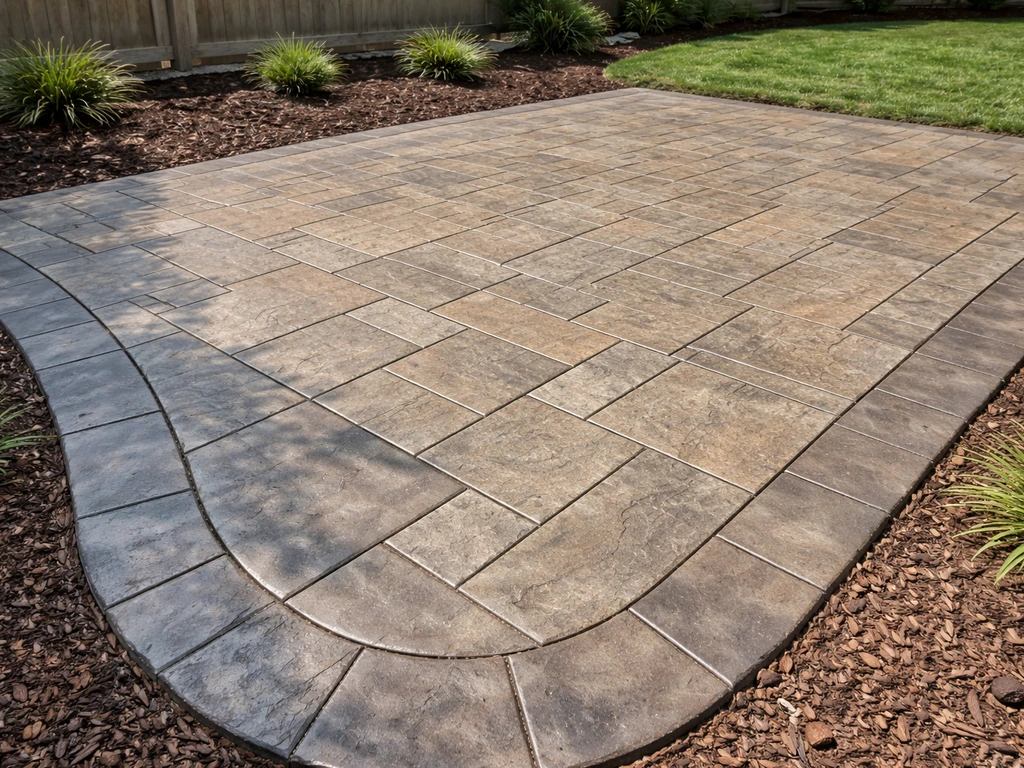
Stamped patio price ranges by size, itemized costs, DIY vs pro, and a quote-check method to estimate your total.
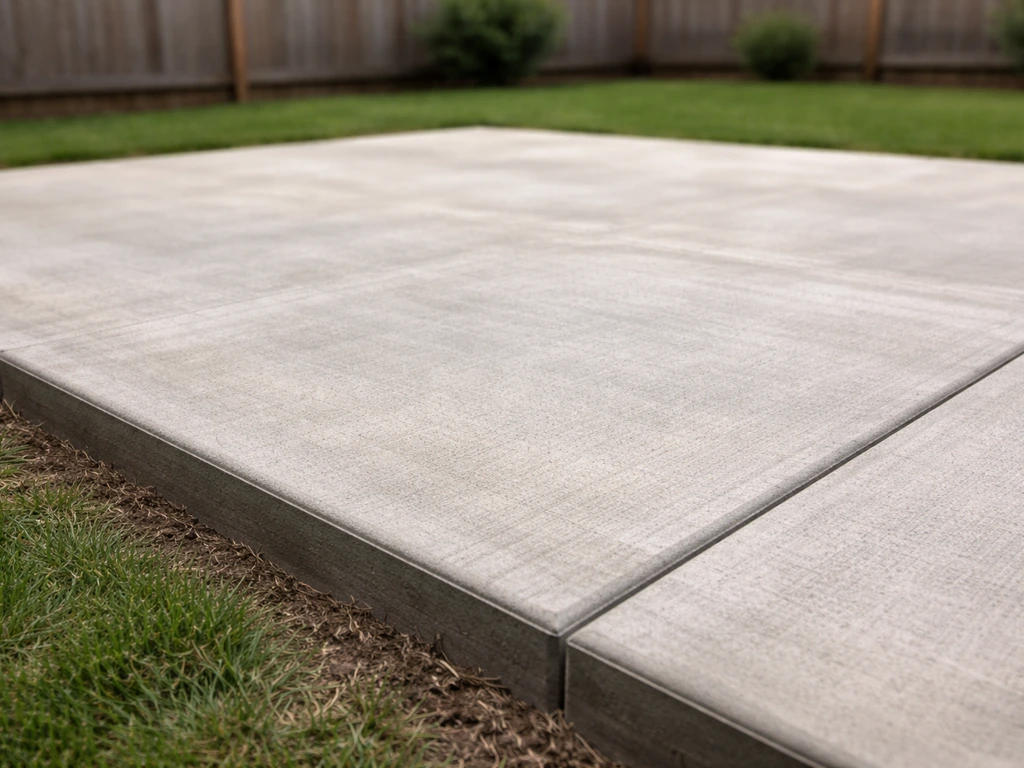
Concrete patio slab costs per sq ft, typical ranges, size estimates, and what affects installed total for budgeting.
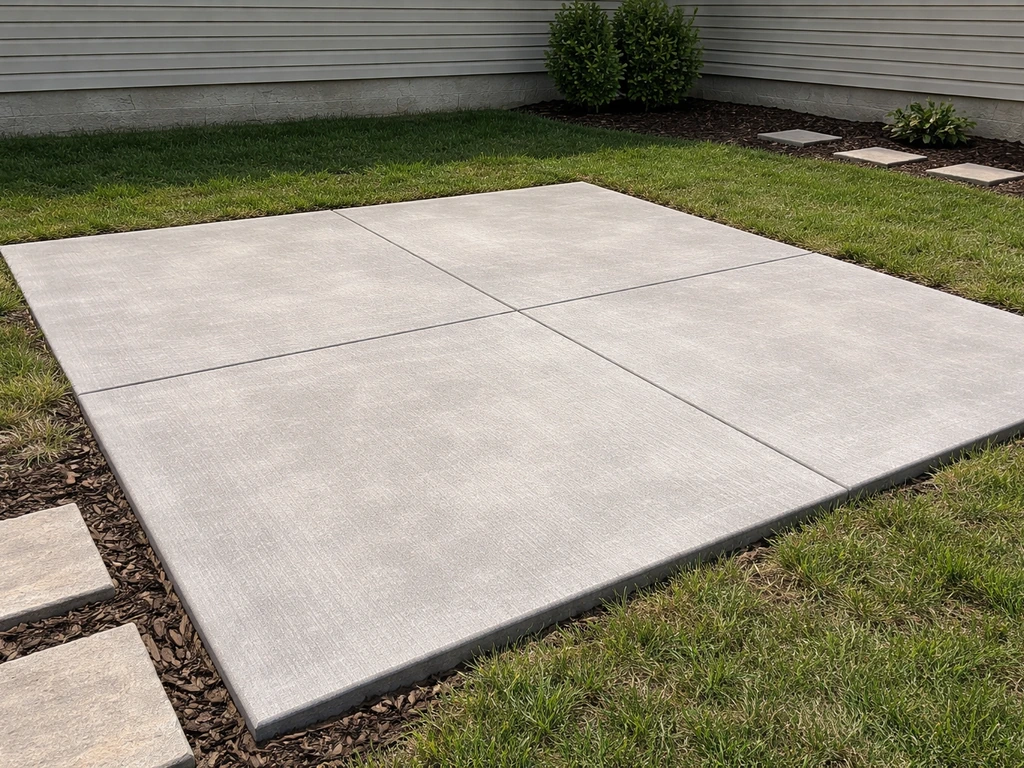
Budgeting guide for a 10x10 or 12x12 concrete patio: installed cost ranges, price drivers, DIY vs contractor, and bid ti