
Regrouting a patio professionally costs roughly $5 to $28 per square foot for tile surfaces, which works out to about $500 to $2,800 for a 10x10 patio and $2,000 to $11,200 for a 20x20 patio. If your patio is concrete pavers with sand joints rather than tiled grout, the cost drops dramatically to about $0.40 to $1.40 per square foot installed, or $40 to $560 for those same sizes. The wide range comes down to what surface you have, how much old grout or joint material needs to be removed, and where you live. This article walks through all of it: per-square-foot costs, sample totals for common patio sizes, material versus labor breakdowns, costs by patio type, DIY versus contractor comparisons, and a practical checklist for getting accurate quotes.
How Much Does It Cost to Regrout a Patio: Realistic Guide

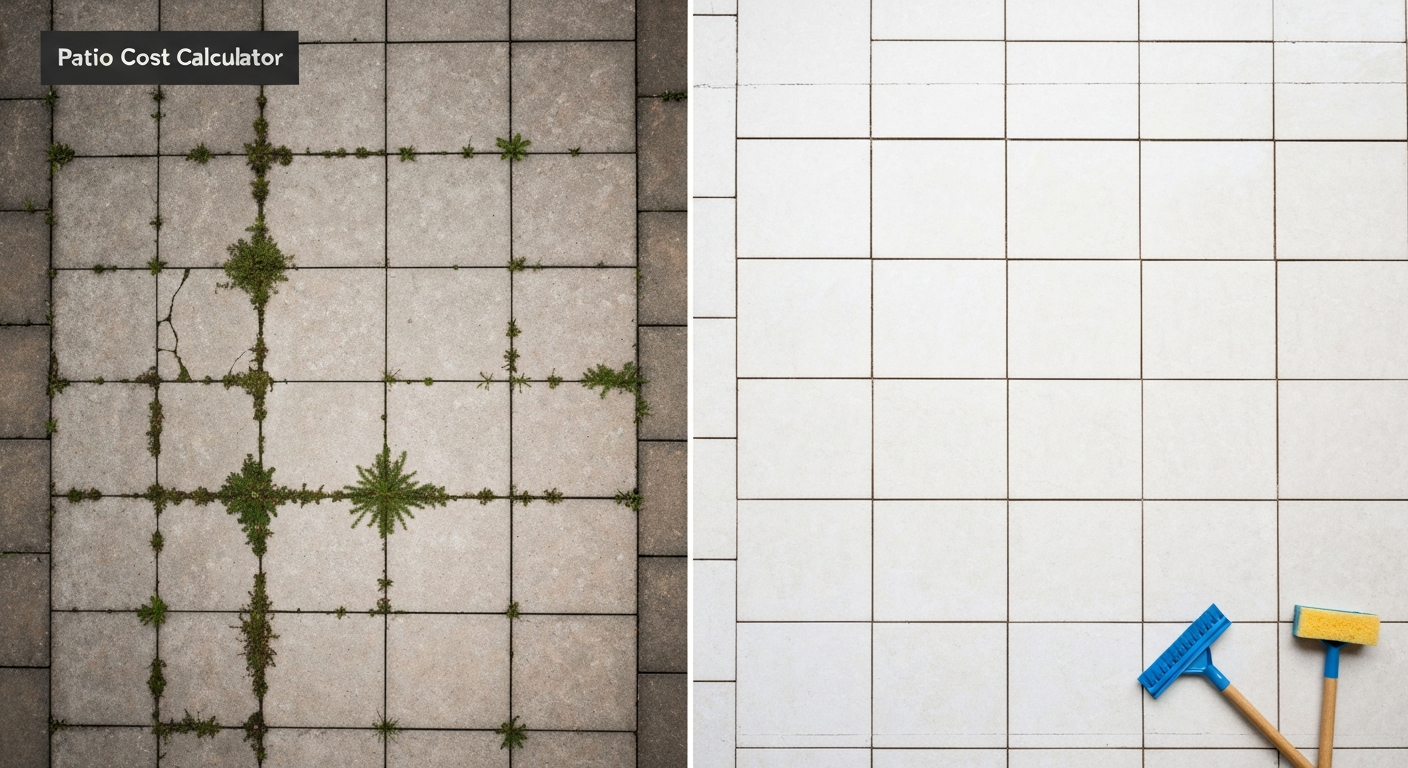
What regrouting (repointing) a patio actually means
The word 'regrouting' gets used loosely, and it covers a few different things depending on your patio surface. For tiled patios (ceramic, porcelain, or natural stone tile), regrouting means removing degraded cement-based grout from the joints between tiles and replacing it with fresh grout. For paver patios (concrete, brick, or natural stone pavers), the joint material is usually polymeric sand or regular mason sand rather than traditional grout, so 'regrouting' often really means refilling those joints. For mortared natural stone or flagstone patios, the correct term is repointing: removing deteriorated mortar to a sound depth and packing in fresh mortar. For pricing details on repointing a patio, see our guide on how much to repoint a patio.
On a tiled patio, the process starts with mechanically removing old grout using an oscillating multi-tool, grout saw, or rotary tool, then vacuuming out the joints, letting everything dry, and applying fresh grout. Sanded grout goes into joints wider than 1/8 inch; unsanded grout for narrower joints. Epoxy grout is more durable but costs more and is harder to work with. For pavers, the process is simpler: sweep out the old sand, blow or wash the joints clean, and compact fresh polymeric sand into the joints before activating it with water. It cures hard enough to resist ants and washout but still flexes with seasonal movement.
How to tell if regrouting is actually the right fix
Regrouting fixes joint and surface-level deterioration. It does not fix a cracked slab underneath, sunken sections, or drainage problems. Before you spend money on regrouting, walk the patio and check these things.
- Grout or joint sand is crumbling, missing in spots, or shows cracks running along the joints
- Tiles or pavers are rocking slightly but are not cracked and the substrate underneath feels solid
- You can see weeds growing up through joints, which signals the joint filler has broken down
- Water is pooling in low spots (can mean a drainage slope issue, not just a grout problem — check carefully)
- Grout is stained or discolored and cleaning has not helped
- Joint sand has washed out after heavy rain and ants are tunneling underneath pavers
- There is minor efflorescence (white salt deposits) on the surface near joints
- No tile or paver is cracked or broken, and the base material feels firm underfoot with no bounce or give
If you find cracked or broken tiles or pavers, sunken sections, or a slab that flexes underfoot, regrouting alone will not solve the problem. Those are signs you may need mudjacking, a partial slab repair, or a more involved restoration. If large sections are settling unevenly, that points toward a deeper fix entirely.
National cost overview: what to expect at every budget level
The most important variable is what kind of joint material your patio uses. Tile grout removal and replacement is labor-intensive, while polymeric sand refill for pavers is comparatively quick. Here are realistic national ranges as of 2026.
| Scenario | Low (per sq ft) | Typical (per sq ft) | High (per sq ft) |
|---|---|---|---|
| Tile patio regrout (professional) | $5 | $12–$18 | $28 |
| Paver joint refill with polymeric sand (professional) | $0.40 | $0.75–$1.00 | $1.40 |
| Mortar repointing — flagstone/brick/natural stone (professional) | $5 | $10–$15 | $25+ |
| DIY tile regrout (materials only) | $1–$2 | $2–$4 | $5+ |
| DIY paver joint refill (materials only) | $0.10 | $0.20–$0.35 | $0.60 |
The low end of tile regrouting ($5/ft²) typically applies to simple, accessible surfaces with large-format tiles and minimal old grout removal needed. The high end ($25–$28/ft²) reflects complex situations: small mosaic tiles with many joints, epoxy grout, difficult access, or a contractor who has to deal with significant prep work like grout haze removal or substrate repairs. Most standard outdoor porcelain tile patios land in the $10–$18 range when professionally done. According to HomeAdvisor's national cost guide, professional tile regrouting commonly ranges from about $10 to $25 per square foot HomeAdvisor lists professional regrouting at roughly $10–$25 per square foot..
Cost tables: per-square-foot and sample totals for common patio sizes
| Patio Size | Square Footage | Tile Regrout Low | Tile Regrout Typical | Tile Regrout High |
|---|---|---|---|---|
| 10x10 | 100 sq ft | $500 | $1,200–$1,800 | $2,800 |
| 12x12 | 144 sq ft | $720 | $1,730–$2,590 | $4,030 |
| 20x20 | 400 sq ft | $2,000 | $4,800–$7,200 | $11,200 |
| Patio Size | Square Footage | Paver Joint Refill Low | Paver Joint Refill Typical | Paver Joint Refill High |
|---|---|---|---|---|
| 10x10 | 100 sq ft | $40 | $75–$100 | $140 |
| 12x12 | 144 sq ft | $58 | $108–$144 | $202 |
| 20x20 | 400 sq ft | $160 | $300–$400 | $560 |
These totals are installed (professional) costs. Paver joint refill is dramatically cheaper because the material cost is low and the work is fast. A contractor can often refill the joints on a 20x20 paver patio in a few hours with a small crew. Tile regrouting on the same-size patio can take a full day or more of careful mechanical removal before any new grout even goes down. Note that these figures do not include sealing, which is often recommended after regrouting or joint refilling and adds roughly $0.80–$3.25 per square foot depending on sealer type.
Material vs. labor: where your money actually goes
Labor is typically 40 to 70 percent of the total cost for tile and paver work. On a tile regrout job, the mechanical grout removal step is pure labor time and it is the most expensive part. A 20x20 tiled patio could easily require 8 to 16 labor-hours just for removal before any new material goes in. With flooring installers and tile setters earning a median wage of around $25/hour (BLS May 2024 data), a contractor charging $55–$85/hour fully burdened (wages plus insurance, overhead, profit) is not out of line.
| Cost Line Item | Typical Range | Notes |
|---|---|---|
| Grout removal labor | $3–$8 per sq ft | Most expensive step on tile jobs; varies by tile size and joint count |
| New grout material (sanded/unsanded) | $1–$3 per sq ft | 25 lb bags run $16–$30 retail; coverage depends on joint width and tile size |
| Polymeric sand material (pavers) | $0.10–$0.35 per sq ft | 40–50 lb bags retail $20–$60; one bag covers 10–75+ sq ft depending on joint geometry |
| Mortar for repointing | $0.50–$2 per sq ft material | 80 lb premixed bags run $7–$15 retail; labor-heavy job |
| Grout application labor | $2–$5 per sq ft | Faster than removal but still requires careful technique and cleanup |
| Sealer (optional) | $0.80–$3.25 per sq ft installed | Recommended after regrouting pavers or natural stone |
| Cleanup and haul-off | $50–$200 flat fee | Depends on job size and contractor policy |
| Minimum job charge (many contractors) | $150–$400 | Most contractors will not mobilize for less regardless of area |
One thing homeowners often miss: if your tiles were set with epoxy grout originally, removal costs more because epoxy grout is significantly harder to cut out than cement-based grout. Similarly, small mosaic tiles (2x2 or smaller) have far more linear feet of joint per square foot of surface, which multiplies labor time. Ask your contractor what grout type is currently in place before accepting a quote, if they do not check, that is a red flag.
Cost differences by patio type
Not every patio surface is regrouted the same way, and the costs reflect that. Here is what to expect for each common patio material.
Concrete pavers
Concrete pavers use polymeric sand or regular mason sand in the joints, not grout. Joint refill is inexpensive: roughly $0.40–$1.40 per square foot installed. The low cost makes this a straightforward maintenance task rather than a major project. Many homeowners do this themselves.
Ceramic and porcelain tile
This is where the $5–$28 per square foot range applies. Standard outdoor porcelain tiles in a 12x12 or 18x18 format are on the lower end because there are fewer joints. Smaller tiles or complex patterns push costs up. Outdoor tile grout is typically sanded cement-based grout in 1/8 to 3/8 inch joints. Expect this to be the most labor-intensive and expensive option.
Natural stone and flagstone
Irregular flagstone and natural stone patios often have wide joints filled with mortar, and the correct repair is repointing rather than regrouting. For specifics on how much to point a patio, see our detailed cost breakdown and tips on repointing costs and expectations. Costs fall in the $5–$25+ per square foot range depending on joint width, stone configuration, and accessibility. blank" rel="noopener noreferrer">Pre-mixed mortar typically retails for about $7–$15 per 80‑lb bag, which factors into material estimates for repointing. Wider joints require more mortar material and more labor to pack properly. Historic or premium stone can push the high end further.
Brick
Brick patios use mortar joints and also call for repointing rather than standard regrouting. Costs are similar to natural stone: $5–$20+ per square foot professionally. Old brick can be fragile, so the removal of deteriorated mortar requires care to avoid damaging the brick faces. Tuckpointing (applying a thin line of contrasting mortar for appearance) is sometimes combined with functional repointing.
Stamped concrete
Stamped concrete does not have true grout joints. The lines are part of the slab. What stamped concrete needs over time is resealing, not regrouting. Sealing a stamped concrete patio costs roughly $0.50–$2.50 per square foot. If the joint lines are painted or highlighted with color hardener that has worn off, a contractor can reapply color and reseal, but this is a different process from regrouting.
Concrete slab
Plain concrete slabs have control joints rather than grout joints. These are sometimes caulked or filled with backer rod and joint sealant, which costs far less than tile regrouting. If the control joints are cracking or the sealant has failed, a contractor can reroute and refill them for roughly $2–$6 per linear foot depending on joint condition and length.
Related repair options and how their costs compare
Regrouting is one option in a range of patio repairs. Depending on what is actually wrong with your patio, one of these other approaches might be the right call, or the necessary next step.
| Repair Option | Typical Cost Range | What It Fixes | What It Does Not Fix |
|---|---|---|---|
| Regrouting (tile) | $5–$28 per sq ft | Deteriorated, cracked, or missing tile grout | Cracked tiles, sunken sections, drainage issues |
| Repointing / pointing (mortar) | $5–$25+ per sq ft | Deteriorated mortar in brick, stone, or flagstone joints | Structural movement, slab failure, drainage |
| Paver joint refill (polymeric sand) | $0.40–$1.40 per sq ft | Washed-out or degraded paver joint sand | Sunken pavers, broken base material |
| Mudjacking / slab leveling | $3–$8 per sq ft (typical) | Sunken, settled concrete slab sections | Surface cracks, grout failure, drainage slope |
| Tiling over existing surface | $7–$22+ per sq ft installed | Worn or ugly surface; adds new tile layer | Structural issues; adds height to surface |
| Patio replacement / redo | $8–$30+ per sq ft (varies by material) | Everything — complete rebuild | Nothing left unfixed if done properly |
| Switch to gravel | $1–$5 per sq ft | Drainage problems; removes failing hard surface | Not a structural solution; changes patio use |
Mudjacking addresses settling and sinking, which regrouting cannot. If sections of your patio have dropped more than half an inch, look into mudjacking costs before committing to a regrout. If you need price details, see our guide on how much does mudjacking a patio cost for typical national and local ranges. Similarly, if you are dealing with a fundamentally deteriorated surface, tiling over the existing patio or exploring a full replacement or redo may actually cost less over a 10-year horizon than repeated patchwork repairs. If you think full replacement might be cheaper long-term, see our guide on how much does it cost to redo a patio for apples-to-apples replacement estimates. A gravel patio, while not suitable for all uses, can be a practical lower-cost solution if the existing surface is beyond saving and budget is the priority. For budgeting, check how much a gravel patio costs to compare savings and long-term tradeoffs.
Regrout vs. repoint vs. mudjack vs. replace: how to decide
Use this step-by-step framework to figure out which repair makes sense before you call anyone.
- Start with the base: walk every section and press down firmly. Any bounce, flex, or hollow sound means the base or slab is compromised. If yes, stop — surface repairs will not hold. You need mudjacking or replacement first.
- Check for settled sections: if any area has dropped more than 3/4 inch relative to adjacent sections, that is a mudjacking or base-repair situation, not a grout job.
- Identify your joint material: tile grout, mortar, or sand? Tile grout that has cracked and crumbled calls for regrouting. Mortar joints in brick or stone that are recessed, soft, or crumbling call for repointing. Paver joints with missing or degraded sand call for polymeric sand refill.
- Assess what percentage of joints are damaged: if more than 50 to 60 percent of joints need work, a full regrout is more cost-effective than spot repairs.
- Look at the surface material itself: if multiple tiles or pavers are cracked or broken (not just the joints), factor in tile or paver replacement costs alongside regrouting. Heavy cracking signals possible substrate movement.
- Think about remaining useful life: if the patio is 20+ years old, materials are significantly worn, and you are facing a major regrout plus tile replacement plus drainage fixes, run the numbers on a full redo or retile. You may not be far off in total cost for a fresh 20-year surface.
- Get at least two quotes that itemize work: a quote that lists only a lump sum tells you nothing about whether regrouting vs. replacement is actually the right call for your specific situation.
DIY vs. hiring a contractor
The potential savings from doing paver joint refill yourself are real and the skill bar is low. Tile regrouting is a different story, it is genuinely skill-dependent and easy to do badly in ways that cost more to fix later.
| Factor | DIY Tile Regrout | DIY Paver Joint Refill | Professional (Both) |
|---|---|---|---|
| Material cost | $1–$5 per sq ft | $0.10–$0.35 per sq ft | Included in installed price |
| Tool rental/purchase | $50–$200 (oscillating tool, grout saw, float) | $20–$60 (plate compactor rental or hand tamper) | Contractor supplied |
| Skill level required | Moderate-high: grout removal, mixing ratios, float technique | Low: sweeping, compacting, activating with water | N/A |
| Time for 100 sq ft | 6–16 hours depending on tile size | 2–4 hours | 1–6 hours professional crew |
| Risk of damage | High if grout removal damages tile edges or glazing | Low | Low if experienced contractor |
| Warranty/guarantee | None | None | Often 1–3 years on workmanship |
For paver joint refill, DIY is very reasonable. Buy polymeric sand at around $20–$60 per 40–50 lb bag, sweep it into joints, compact it, and activate with water. One 50 lb bag covers roughly 10 to 75 square feet depending on joint width, so calculate accordingly. For tile regrouting, be honest about your comfort level. The grout removal step requires a steady hand and the right tool speed, an oscillating multi-tool set too aggressively chips tile edges. If you have never done it before, a small test section on a less visible spot is worth doing before committing to the full patio. Hiring a pro for tile work on anything over a 12x12 is usually the right call if budget allows.
How location affects your cost
Labor rates vary more than materials do. In high-cost-of-living metro areas (New York, San Francisco, Boston, Seattle), expect professional regrouting to run 30 to 50 percent above national averages. In lower-cost regions (rural Midwest, parts of the South and Mountain West), you may find rates 20 to 30 percent below. Material costs are more stable but still shift: polymeric sand, grout, and mortar are largely commodity products, but freight costs affect prices in remote areas, and specialty products for certain climates (freeze-thaw rated grout, high-UV-resistant sealers) add cost in regions with extreme weather.
Climate also affects how often regrouting is needed. In climates with hard freeze-thaw cycles (upper Midwest, Northeast, mountain regions), joint materials degrade faster because water infiltrates micro-cracks, freezes, and expands. Polymeric sand joints on pavers in Chicago or Minneapolis may need attention every 5 to 8 years, while the same installation in Phoenix or Florida might last 10 to 15 years before needing refill. Factor this into your total cost-of-ownership thinking when comparing repair options.
Getting contractor quotes: what to ask and what to check
A good regrouting quote should spell out exactly what work is being done. Vague quotes are how misunderstandings become disputes. Here is the checklist I would use.
- Confirm whether the quote covers full grout removal or just applying new grout over old (applying over old grout is a shortcut that fails faster — ask specifically)
- Ask what grout or joint material they will use and whether it is appropriate for outdoor freeze-thaw conditions in your climate
- Request that material quantities be listed (bags of grout, bags of sand) so you can independently verify coverage math
- Ask whether sealing is included or a separate line item, and what sealer product and type they are recommending
- Confirm who is doing the work: the company owner/foreman or a subcontracted crew you have never met
- Ask about the minimum job charge and whether travel time is included
- Request proof of liability insurance and, in most states, a contractor's license number
- Ask what warranty they offer on materials and workmanship — anything less than one year is below standard for professional work
- Get the quote in writing with a clear scope description, not just a dollar amount
- Ask what happens if they find damaged substrate or broken tiles under the surface — is additional repair quoted separately or included?
- Get at least two itemized quotes before deciding; on jobs over $1,000, three quotes is worth the time
One more thing: be cautious of quotes that are dramatically lower than others. The most common reason is that the contractor plans to skip full grout removal and simply skim new grout or sand over the old. This fails within a year or two. Ask the low bidder specifically how they plan to handle old grout removal, and watch for evasive answers.
How long will it take and how long will it last?
A professional tile regrout on a 10x10 to 12x12 patio typically takes one full day (6 to 8 hours) for an experienced crew. A 20x20 tiled patio can take 1.5 to 2 days. Add at least 24 to 72 hours of cure time before foot traffic, and avoid wet conditions for 48 to 72 hours after grouting. Paver joint refill is much faster: a 20x20 patio can often be done in 3 to 5 hours by two workers, with polymeric sand typically curing firm enough for foot traffic in 24 hours and vehicle traffic in 72 hours.
| Project Type | Typical Completion Time | Cure/Dry Time | Expected Lifespan After Work |
|---|---|---|---|
| Tile regrout (100–200 sq ft) | 1 day | 24–72 hours | 8–15 years with proper sealing and maintenance |
| Tile regrout (400 sq ft) | 1.5–2 days | 24–72 hours | 8–15 years with proper sealing and maintenance |
| Paver joint refill (any size) | 2–5 hours | 24 hours foot traffic, 72 hours vehicle | 5–12 years depending on climate and traffic |
| Mortar repointing — brick/stone | 1–3 days depending on area | 48–72 hours minimum | 10–25 years with quality mortar and drainage |
| Patio retile (over existing) | 2–5 days | 24–48 hours per tile layer | 15–25 years depending on tile quality |
Lifespan estimates assume the underlying base is solid and drainage is adequate. In freeze-thaw climates, quality grout and sealing matter a lot. Epoxy grout lasts longer than cement-based grout (often 20+ years in good conditions) but costs more and is harder to repair if it ever does fail. For most outdoor patios, a quality cement-based sanded grout with a penetrating sealer applied every 2 to 3 years is a reasonable balance of durability and cost.
Budgeting tips and setting a conservative number
Start with the typical mid-range estimate for your surface type and add 15 to 20 percent as a contingency. Patio regrouting projects frequently uncover broken tiles, deteriorated substrate, or drainage issues that add cost. If your patio has not been serviced in 10 or more years, budget closer to 25 percent extra. Here are some practical ways to reduce cost without cutting corners.
- Do the prep work yourself: clean the patio thoroughly, remove furniture and planters, and clear the area the day before the contractor arrives — some contractors will reduce their price if the site is ready
- Bundle with other work: if you need sealing done after regrouting, ask for a combined price — mobilization costs are shared
- Schedule in shoulder season: spring and early fall are often slower for hardscape contractors; you may negotiate better pricing outside peak summer months
- Supply your own materials: some contractors will agree to a labor-only price if you purchase the specified grout or polymeric sand yourself (confirm the exact product and quantity with them first)
- Get multiple quotes: on a $2,000+ job, the spread between lowest and highest reputable quote can easily be $400–$800 — worth the hour it takes to get a third bid
- Address drainage issues at the same time rather than after: fixing a slope problem after regrouting means disturbing the new work; doing it together is always cheaper
Prepping your patio and maintaining it after the work
Before any regrouting work starts, the surface needs to be clean and dry. Power wash the patio at least 48 hours before work begins to give it time to dry fully. Remove all outdoor furniture, planters, and anything else within a few feet of the work area. If your patio has a nearby garden bed, cover it or give the contractor room to work without worrying about tracking grout into plantings.
After regrouting tile, apply a penetrating grout sealer once the grout has fully cured (typically 72 hours minimum, 7 days is better for full cure). Reseal annually or every two years depending on traffic and sun exposure. For paver joint refill, avoid high-pressure washing directly into the joints for the first season, it dislodges the polymeric sand before it fully hardens. A light rinse is fine. Sweep sand back into any shallow spots you notice after the first few rainstorms. If you add a topical paver sealer, apply it after the polymeric sand has cured completely.
Red flags on quotes and workmanship
Beyond the contractor-quote checklist above, keep an eye out for these warning signs during the project itself. If you see new grout being applied over clearly intact old grout without full removal, stop the job and clarify. If the grout mix looks too wet or runny when applied, it will shrink and crack as it cures. After the job, check that grout lines are even and fully filled without voids, and run your finger along them, they should feel smooth and solid, not soft or chalky. For paver joints, press along the surface 24 hours after polymeric sand activation: the sand should feel firm. Any sections that still feel loose and sandy after 48 hours likely did not receive enough water activation or were not compacted properly.
If you have concerns about the quality of a completed job, do not wait. Most workmanship issues are easier to address within the first few weeks than months later. A reputable contractor will return to address legitimate issues if you document them with photos promptly and communicate clearly. If they refuse or go silent, that is when you consider disputing the charge or consulting a second contractor for an assessment before paying the final invoice.
Your practical next steps right now
Before you contact any contractor, take 30 minutes to document your patio. Walk every section and take photos of cracked or missing grout, weeds growing through joints, any sunken spots, and any cracked tiles or pavers. Measure your patio (length times width for a simple rectangle; break irregular shapes into rectangles and add them up). Write down the approximate tile or paver size, the joint width if you can estimate it, and how old the patio is. This information dramatically speeds up the quoting process and helps contractors give you accurate numbers rather than wide guesses. If you're considering full replacement instead, see guidance on how much to replace a patio. If you're also considering replacing or retiling the surface, compare quotes against typical tiling prices, see how much does it cost to tile a patio for ballpark figures.
Once you have measurements and photos, reach out to at least two local hardscape or tile contractors and request itemized written quotes. Use the checklist in this article to vet what they come back with. If the quotes point toward a more significant repair, mudjacking for a settled slab, a full patio redo, or a retile, use the cost comparisons and decision framework here to evaluate whether the scope matches what you actually need before committing. The difference between a $400 paver joint refill and a $4,000 tile regrout starts with knowing exactly what surface you have and what is actually wrong with it.
FAQ
What does "regrout a patio" mean and what work is involved?
Regrouting a patio means removing failed or stained grout (or joint material) between tiles, pavers, or stone and replacing it with fresh grout, polymeric sand, or mortar. Typical steps: inspect and mark damaged joints, remove old grout/joint material to the required depth, clean joints, apply new grout or joint fill (sanded/unsanded grout, epoxy grout, polymeric sand, or mortar), tool and finish joints, cure/clean, and optionally seal. More complex jobs may require tile removal, substrate repair, or resetting displaced units.
Nationwide cost ranges — what should homeowners expect to pay to regrout a patio? (conservative low / typical / high)
Conservative nationwide ranges (installed, professional): Low: ~$0.40–$2.00 per ft² — usually polymeric sand or very simple joint refill on pavers. Typical: ~$5–$15 per ft² — most tile and small stone patio regrouting jobs with moderate complexity. High: ~$16–$28+ per ft² — full grout removal and replacement on large-format tile, epoxy grout, extensive substrate repairs, complex patterns, or historic repointing. These account for labor, materials, and typical overhead.
How do per-square-foot rates translate to sample patio sizes (10×10, 12×12, 20×20)?
Using the conservative low/typical/high bands above: - 10×10 (100 ft²): Low ~$40–$200; Typical ~$500–$1,500; High ~$1,600–$2,800+ - 12×12 (144 ft²): Low ~$58–$288; Typical ~$720–$2,160; High ~$2,304–$4,032+ - 20×20 (400 ft²): Low ~$160–$800; Typical ~$2,000–$6,000; High ~$6,400–$11,200+ Adjust for material choice (pavers vs. tile), access, and regional labor rates.
How do material vs. labor costs typically break down?
Labor commonly represents a large share — often 40–70% of the installed cost. Rough rule-of-thumb breakdowns: - Simple paver joint refill (polymeric sand): materials 20–40%, labor 60–80%. - Tile regrout with moderate removal: materials 30–50%, labor 50–70%. - Repointing/tuckpointing with mortar: materials 25–45%, labor 55–75%. High-end materials (epoxy grout, specialty stone mortars) increase material share, but skilled labor and surface prep remain major cost drivers.
How do costs vary by patio type (concrete slab, pavers, natural stone/flagstone, tile, stamped concrete, brick)?
Typical differences: - Concrete slab: no grout to replace; costs focus on crack repair, sealers or saw-cut joint repair — usually inexpensive per ft² (~$0.50–$3/ft² for sealing/patching). - Pavers: joint fill typically polymeric or mason sand — low installed cost (~$0.40–$1.40/ft² for joint refill), higher if reset or relevel needed. - Natural stone/flagstone: irregular joints may need mortar or sand; costs vary widely (~$3–$20/ft²) depending on joint width and reset work. - Tile (porcelain/ceramic): grout removal and replacement typically ~$5–$28/ft² depending on tile size, grout type (epoxy more expensive), and substrate work. - Brick patios (mortar joints): repointing/tuckpointing similar to masonry — commonly ~$5–$25+/ft² depending on hand labor and historic work. - Stamped concrete: usually sealed rather than regrouted; crack repair or overlay often priced differently (~$1–$8/ft²).
What's the difference between regrout, repointing (tuckpointing), and mudjacking? When choose each?
- Regrout: replacing grout/joint material between tiles or pavers; use when grout is cracked, stained, or missing but units are sound. - Repointing/tuckpointing: removing and replacing mortar in brick or stone masonry joints; choose this when mortar is deteriorated and structural support/movement is a concern. - Mudjacking (slab lifting): pumping grout/flowable material under a sunken concrete slab to lift it; choose when a concrete patio slab has settled but is otherwise sound. Use regrout for cosmetic/joint water intrusion fixes, repoint for mortar/structural joint failure, and mudjacking for settlement/leveling issues.
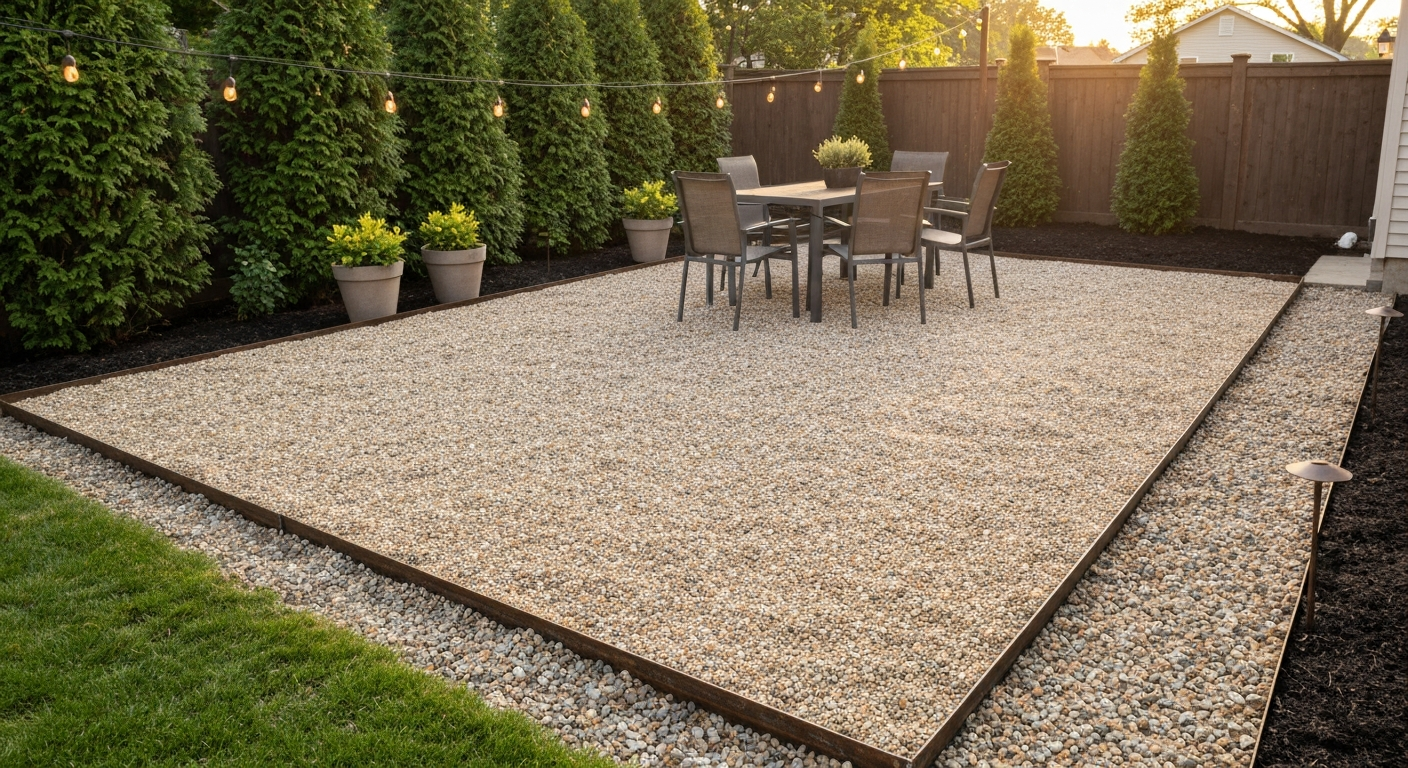
How much does a gravel patio cost: $500–$6,000 total ($2–$12/ft²); DIY vs pro, materials, sizes and repair costs.
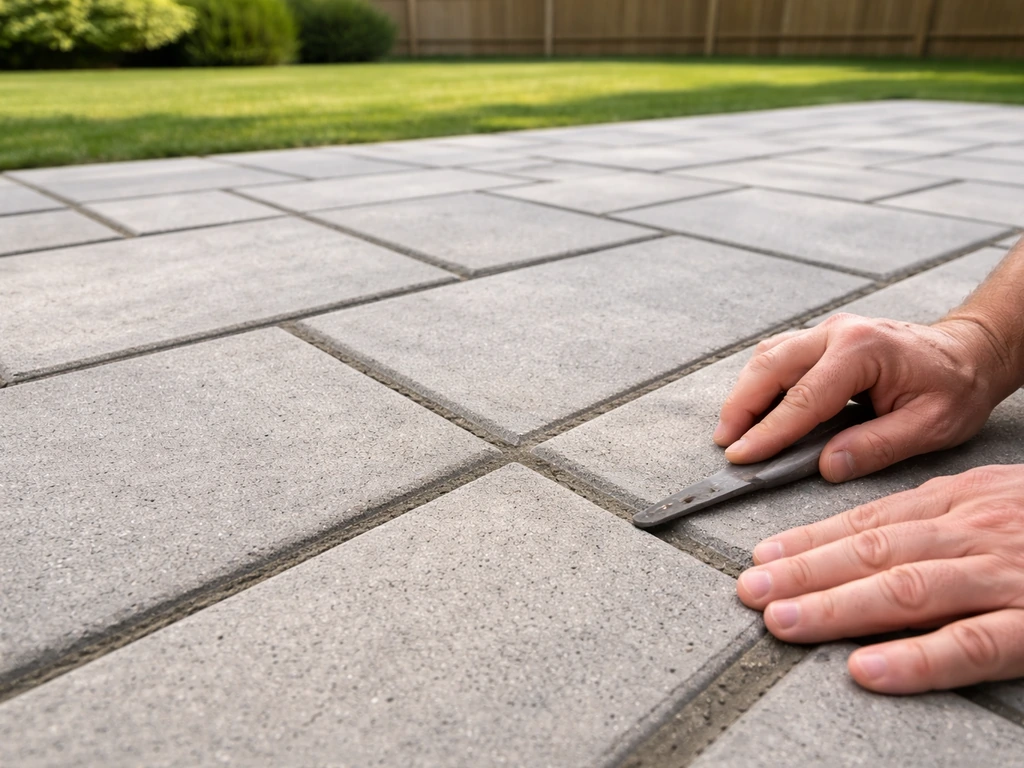
Costs to point a patio by size and surface, with DIY vs pro pricing, materials, scope options, and contractor questions.
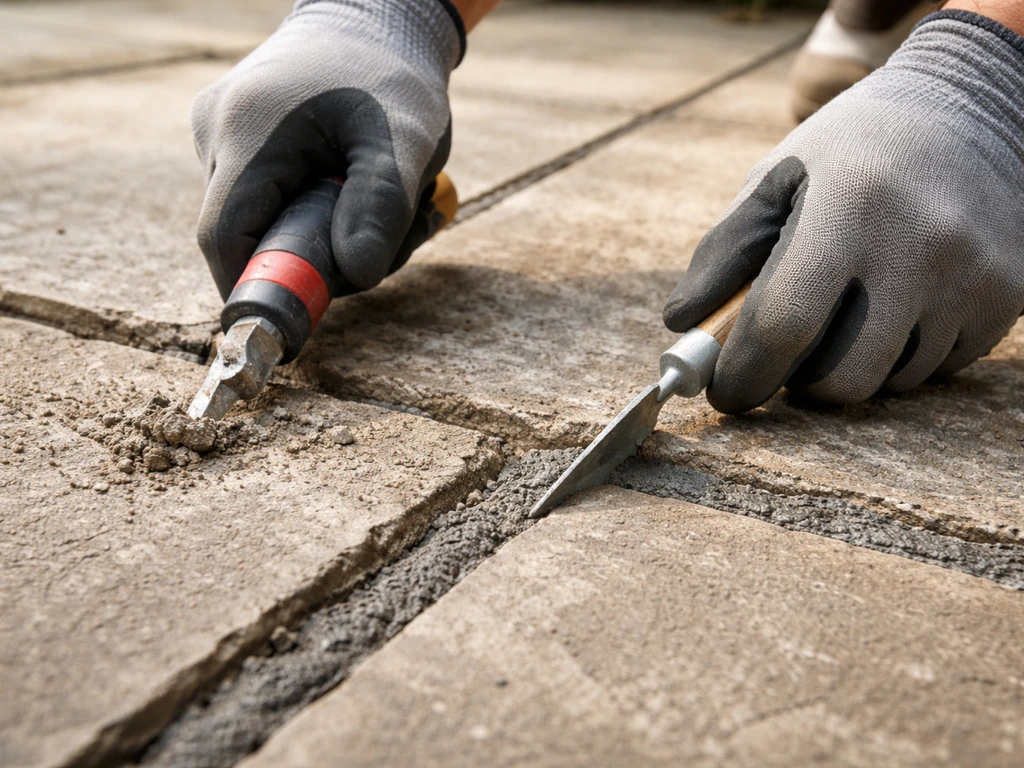
Patio repointing costs by size and material, DIY vs pro pricing, labor vs materials, and a quote comparison checklist.