
Mudjacking a patio typically costs $3 to $6 per square foot, which works out to roughly $300 to $800 for a standard 100 sq. ft. slab. On jobs with more severe settlement, harder access, or thicker slabs, prices can push toward $9 to $20 per square foot. One important catch: most contractors have a blank" rel="noopener noreferrer">minimum charge of $500 to $1,000 plus a mobilization fee, so even a small patio that works out to only $200 on paper will likely run you $500 to $700 at minimum. Keep that floor in mind when you're budgeting.
How Much Does Mudjacking Patio Cost? Pricing Guide

Felix Carver
1 Jun 2026
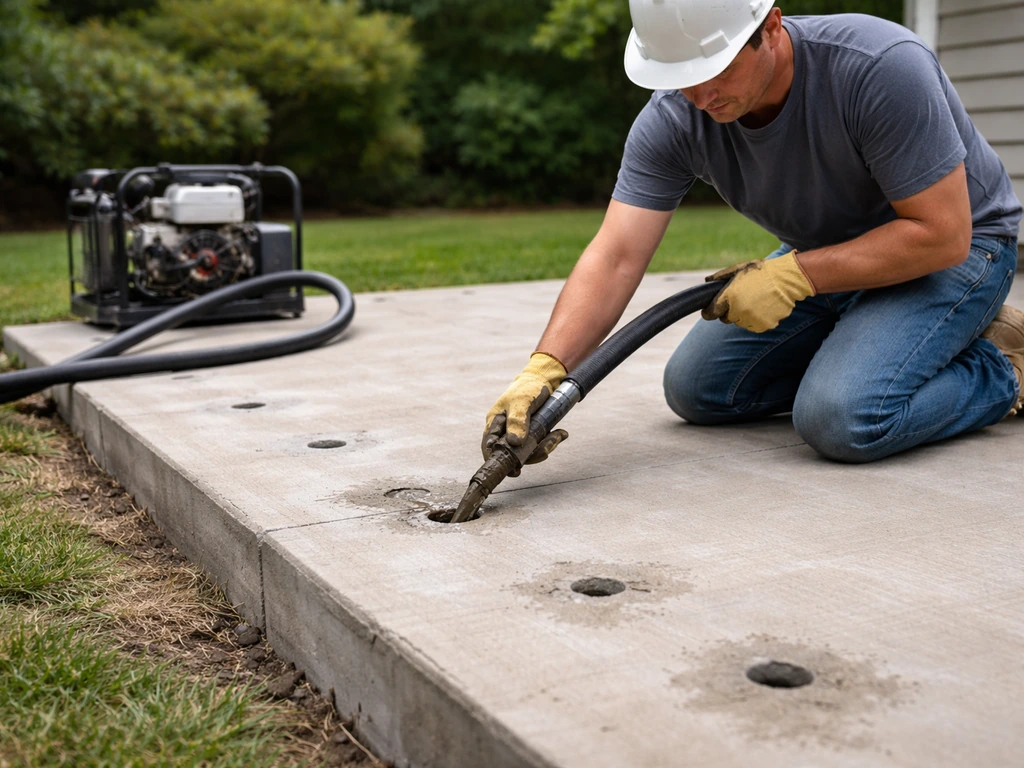
Mudjacking patio pricing ranges
Here's how the numbers break down across common patio sizes, using a realistic mid-range of $4 to $6 per square foot for a straightforward residential job, plus the minimum job floor most contractors enforce.
| Patio Size | Square Footage | Low Estimate ($3/sq ft) | Mid Estimate ($5/sq ft) | High Estimate ($9/sq ft) | Notes |
|---|---|---|---|---|---|
| 10x10 | 100 sq ft | $300 | $500 | $900 | Min charge likely applies; expect $500–$700 floor |
| 12x12 | 144 sq ft | $430 | $720 | $1,300 | Min charge may still apply at low end |
| 16x16 | 256 sq ft | $770 | $1,280 | $2,300 | Min charge usually covered by job size |
| 20x20 | 400 sq ft | $1,200 | $2,000 | $3,600 | Larger lifts or severe settlement push higher |
| 20x30 | 600 sq ft | $1,800 | $3,000 | $5,400 | Multiple mobilization zones possible |
For context, foam injection (polyurethane lifting) runs roughly $2,000 to $2,500 for that same 100 sq. ft. slab, sometimes topping $25 per square foot. That's three to five times the mudjacking rate, which is why most homeowners with a concrete patio default to mudjacking first unless there's a specific reason to go with foam.
What makes your project cost more or less
Square footage is the starting point, but several other variables can move the number significantly in either direction.
Depth of settlement and lift required
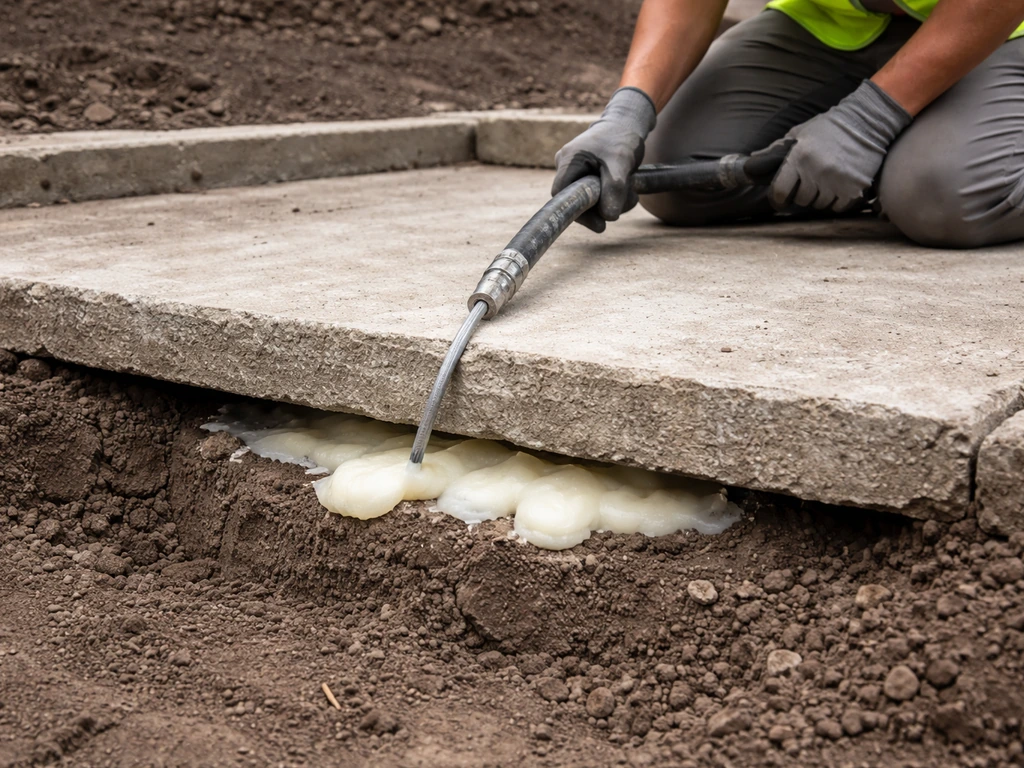
The more a slab has sunk, the more grout you need to pump beneath it, and the more carefully the crew has to work. US Waterproofing explains that the contractor “repair application” concept involves drilling strategic holes and pumping a grout slurry until the cavity is filled. Industry guidance is clear that you shouldn't raise a slab more than about an inch at a single hole in one pass, because doing so risks cracking the slab. That means a slab that needs a 3-inch lift requires multiple injection passes at each hole, adding labor time and material. A small quarter-inch correction on a gently settled patio is a much faster, cheaper job than a 2-inch lift with significant void fill.
Slab condition
Mudjacking works best on structurally intact slabs that have sunk due to soil erosion or washout. If your patio has major cracks running through it, panels that have separated from the house foundation, or sections that flex underfoot, contractors will either price in extra risk or tell you the slab isn't a good candidate. A badly cracked slab can fracture further during lifting if pressure isn't managed perfectly, and most mudjacking companies aren't willing to guarantee results on compromised concrete.
Number of injection holes
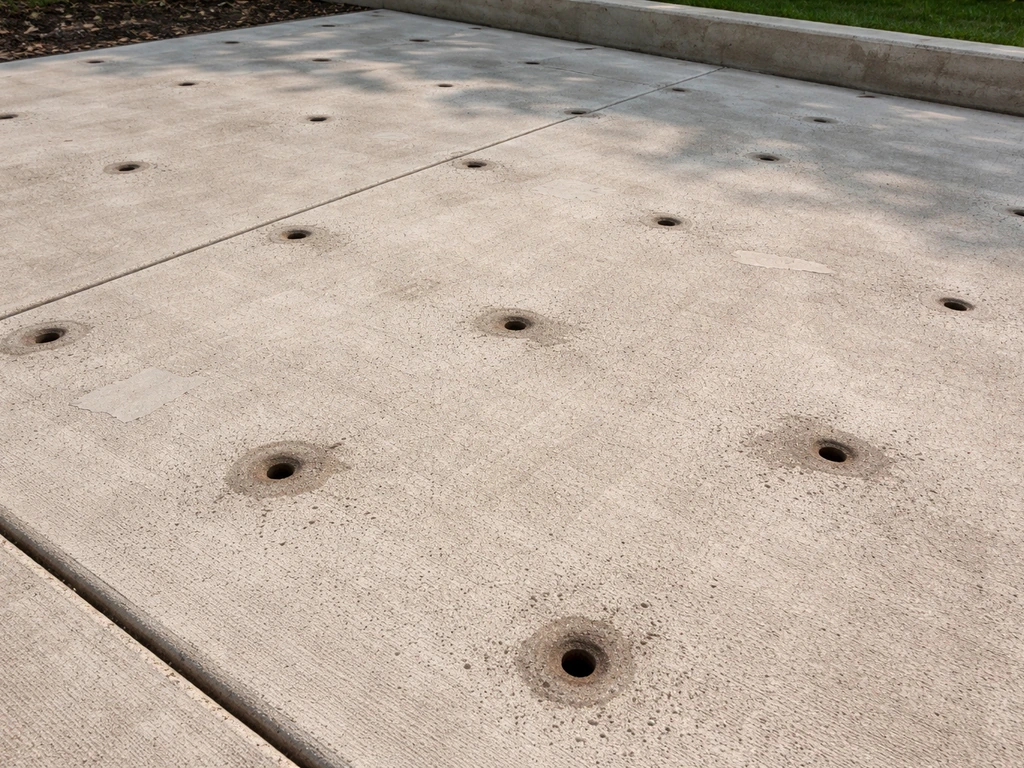
Holes are typically drilled 3 to 8 feet apart, often following a 3 to 4 foot rule of thumb, and should stay at least a foot from any slab edge. The drilling and patching of each hole (usually about 2.5 inches in diameter) is part of your labor cost. A patio with awkward geometry, multiple panels, or extensive voids under the slab will need more holes and more pumping passes, which adds both time and materials.
Access to the work area
The mudjacking rig, which includes a rock drill, grout mixer, and grout pump, is bulky equipment that needs to get close to your patio. If your backyard has a narrow gate, steps down from the house, or tight landscaping, setup takes longer and some contractors charge extra. Easy truck access to a front-facing patio can shave time off the job compared to a walled backyard with limited clearance.
Slab thickness
Thicker residential slabs (5 to 6 inches rather than the more common 4-inch patio pour) take longer to drill through and can require more grout volume to achieve the same lift. This isn't usually a massive cost driver, but it's worth mentioning when you call for quotes so the estimate is accurate.
Mudjacking vs. the alternatives
Before you book a mudjacking crew, it's worth understanding where it fits compared to other options, because it's not always the right call.
| Method | Typical Cost (per sq ft) | Best For | Limitations |
|---|---|---|---|
| Mudjacking (slabjacking) | $3–$20 | Intact slab, moderate settlement, soil voids | Heavier material; can re-settle if water issue isn't fixed |
| Polyurethane foam injection | $5–$25 | Precision lifting, limited access, lightweight result | 2–5x the cost of mudjacking; overkill for many patios |
| Full slab replacement | $6–$12+ per sq ft installed | Extensively cracked or failed slabs | Expensive and disruptive; necessary when slab is beyond repair |
| Grinding/shimming | $1–$3 | Minor trip hazard between panels | Doesn't address void or settlement; cosmetic fix only |
Mudjacking is almost always the most economical choice when the slab is structurally sound and the settlement is soil-related. It loses its advantage when the patio is crumbling, when the soil erosion is ongoing and hasn't been fixed, or when only a small area needs attention (because minimum charges close the price gap with foam injection). If your patio needs a full redo, that's a different conversation entirely and involves weighing full replacement costs against what you paid originally. If you’re wondering how much it costs to redo a patio instead of mudjacking, full replacement pricing will be much higher than lifting or leveling. Repointing, regrouting, or regrading are sometimes confused with mudjacking, but those address surface joints and drainage rather than the underlying settlement. If you’re deciding whether to replace rather than lift, the next step is to compare mudjacking costs with full patio replacement pricing. Regrouting a patio costs differently than mudjacking because you are repairing the surface joints instead of lifting the slab. If the issue is really worn or damaged mortar joints, repointing can be another relevant option to consider before you pay for mudjacking. Repointing patio joints can be an alternative when the main issue is worn or failing mortar at the surface rather than slab settlement.
Where the money actually goes: cost breakdown
Understanding what's inside a mudjacking quote helps you evaluate whether a bid is reasonable and catch anything a contractor might be omitting.
- Labor: The biggest line item. Drilling holes, operating the pump, monitoring lift levels, and controlling injection pressure at each point all require skilled hands. On a 200 sq. ft. patio, expect a crew of two to spend 2 to 4 hours on site.
- Grout/slurry material: The 'mud' is typically a cement, soil, and water mixture, sometimes with sand or fly ash added. Material density runs around 100 to 120 pounds per cubic foot. For smaller jobs, material cost is modest, but large lifts on big patios use a significant volume.
- Equipment and rig mobilization: Getting a rock drill, grout mixer, and pump truck to your property and set up isn't free. This is usually baked into either the per-square-foot rate or a separate mobilization fee of $100 to $300 on top of the job cost. For small patios, this is why minimums exist.
- Hole drilling and patching: Each injection port (typically 2.5 inches in diameter) has to be drilled and then patched with grout once the lift is complete. The patch won't be invisible, but a quality contractor will match texture and color as closely as possible.
- Cleanup and disposal: Excess slurry tracked onto the patio surface, protective sheeting, and general site cleanup are usually included, but confirm this. Some contractors charge extra for cleanup on messy jobs.
- Minimum charge or flat job fee: Many contractors won't roll a truck for less than $500 to $1,000. If your patio math comes out below that, you're paying the minimum, not the per-square-foot rate.
How regional location and contractor type affect your price
The $3 to $20 per square foot range that gets cited in national guides is wide for a reason: mudjacking prices vary a lot by region. In the Midwest and Great Plains, where mudjacking has been common for decades and there are many established contractors, you'll often land in the $3 to $6 band. In the Northeast, Pacific Coast, or in areas where concrete leveling contractors are sparse, $7 to $12 is more typical for a residential patio, and in high cost-of-living markets, quotes can push to $15 or more.
Contractor type matters too. A specialty concrete leveling company that does this full time will often price more competitively than a general concrete contractor who only mudjacks a few times a year. The specialist also tends to have better-calibrated equipment and more predictable results. Foundation repair companies that offer mudjacking as an add-on service sometimes price at a premium because their overhead is built around bigger jobs.
To get a rough local estimate before calling anyone, take the mid-range national rate ($5 to $7 per square foot) and add 20 to 30 percent if you're in a high-cost metro area, or subtract 10 to 15 percent if you're in a lower cost-of-living region with plenty of concrete contractors. Then add the minimum job floor of $500 to $1,000 if your patio is under 150 square feet. That gives you a working budget number before your first call.
DIY mudjacking: is it worth attempting?
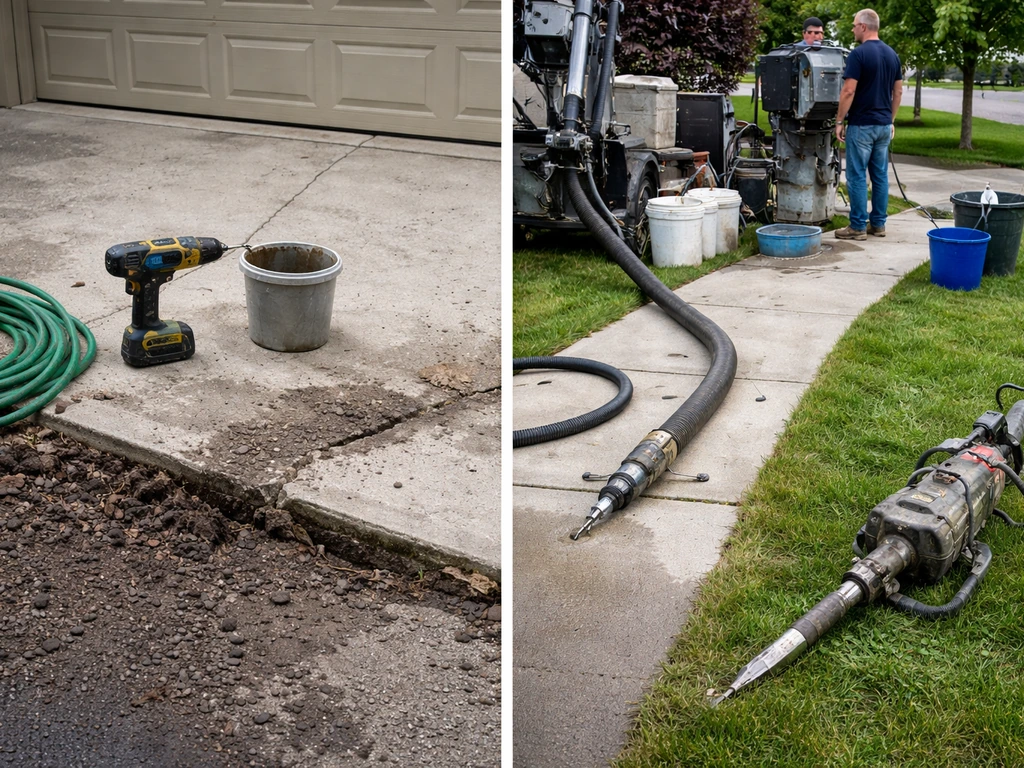
The honest answer is almost always no, and here's why. Mudjacking requires a rock drill, a grout mixer, and a hydraulic grout pump. You can't rent these as easily as a tile saw or a pressure washer, and even if you assemble the tools, operating the pump correctly to achieve a controlled, even lift without cracking the slab takes hands-on experience. The single biggest risk is cracking: if you pump too fast at one hole, or don't monitor the lift evenly across the slab, you can fracture a panel that was otherwise intact, turning a leveling job into a replacement job.
There's also the void-fill quality issue. If you don't pump enough material to fill the cavity properly, the lift won't hold and the slab will re-settle, sometimes faster than before because now you've disturbed the subgrade. A contractor with experience knows how much material to pump and when to stop; a first-timer is essentially guessing.
On the permit side, mudjacking a private backyard patio usually doesn't require a permit, but rules vary by municipality. Some cities restrict any jacking or patching work in or near the public right-of-way, so if your front patio is close to the sidewalk or curb, check with your local building division before any work starts. A licensed contractor should know the local rules; an unlicensed DIY job with no permit coverage means any damage is entirely on you.
One more thing on warranties: most mudjacking contractors don't offer robust guarantees to begin with, and DIY work has zero coverage. Some foam injection contractors offer multi-year warranties (5-year warranties are marketed by some foam-lifting brands), but that's a selling point for foam, not a standard for the industry overall. If you go DIY and the lift fails, you're looking at another round of work or full replacement with no recourse.
How to get an accurate quote (and avoid getting burned)
Getting a useful quote starts before you pick up the phone. Here's what to do to make sure you're comparing apples to apples.
- Measure your patio accurately. Walk off the length and width and calculate square footage. If you have an L-shaped or irregular patio, break it into rectangles and add them up. Having this number ready saves time and prevents vague 'ballpark' quotes.
- Document the problem with photos and a level. Take photos from multiple angles showing any visible gaps between the slab and the house, cracked panels, pooling water, or visible tilt. If you have a 4-foot level or a long straightedge, measure and photograph the gap. That gap size tells a contractor a lot about how much lift is needed.
- Note any drainage or water issues. Settlement caused by water washing soil away will re-settle if the drainage isn't corrected. A good contractor will ask about this; if they don't, bring it up yourself.
- Ask for an on-site inspection before any pricing. Any serious mudjacking contractor should walk the patio and probe or check for voids before giving a final number. A phone quote without a site visit should be treated as a rough range only.
- Ask specifically what the quote includes: number of injection holes, hole patching, cleanup, mobilization, and any minimum charges. Get this in writing.
- Ask about the lift plan: how they'll sequence the holes, how they'll monitor the lift, and what they do if they encounter unexpected voids or cracking during work.
- Ask about warranty terms explicitly. Even if coverage is limited, a contractor who won't discuss it at all is a red flag.
- Get at least three quotes. Mudjacking prices vary enough that the first number you hear could be 50% higher than a competitor's honest rate for the same job.
Red flags to watch for
- A quote given over the phone without seeing the slab, especially a very low one.
- No mention of hole patching or cleanup in the scope of work.
- A contractor who doesn't ask about the cause of settlement or the drainage situation.
- Pressure to book immediately to 'lock in' a price.
- No written estimate or contract before work begins.
- A quote that seems unusually low: prices below $2.50 per square foot for a residential patio should prompt questions about material quality and whether mobilization is included.
- A contractor who says mudjacking will 'permanently fix' the problem without addressing why the soil settled in the first place.
One last thing worth knowing: mudjacking is not a permanent fix if the underlying cause isn't addressed. If water is channeling under your patio from a downspout or improper grading, the slab will re-settle after lifting. A good contractor will point this out and recommend you redirect drainage before or after the work. That's not an upsell; it's the difference between a fix that lasts five to ten years and one that fails in two.
FAQ
Why do I see a low per-square-foot mudjacking rate, but my total quote is higher?
Most bids are priced by square foot plus a minimum job charge. If you need only leveling in one corner, you still usually pay the minimum mobilization floor, which is why a quote that implies a low $/sq. ft. can still land around $500 to $1,000 total.
How does the required lift height affect how much mudjacking patio costs?
It depends on how the contractor will place holes and whether they plan multiple injection passes. If your slab needs more than about a 1-inch lift per injection location, expect extra passes, more drill-and-patch work, and a higher labor component even when the patio size stays the same.
Can mudjacking fix any type of sinking patio, or are there situations where it is not worth it?
Yes, but only in specific cases. Mudjacking generally works best when the slab is structurally intact and settlement is soil-related. If you have major through-cracks, sections separating from the house, or slabs that flex underfoot, you may be quoted extra risk, partial work, or told it is not a suitable candidate.
What should I confirm is included in a mudjacking patio quote?
Ask whether the quote includes drilling and patching each injection hole, the grout material amount/allowance, cleanup, and any releveling of joints near the house. A common omission is patching scope, which can leave you with unfinished concrete repairs even though the slab was lifted.
If my patio is sinking again, does that mean mudjacking will fail?
If ongoing drainage is the root cause, the patio can re-settle after lifting. Before work starts, ask the contractor to identify water sources (downspouts, grading, or irrigation) and confirm whether they will recommend drainage corrections, because mudjacking alone is not a long-term cure when water keeps migrating underneath.
How much does access (gate width, stairs, landscaping) change the cost of mudjacking?
Many crews expect good truck access to set up the rig near the patio. If you have narrow gates, steep steps, or tight landscaping, the bid may include additional labor for staging and carrying equipment, sometimes with an added mobilization or access fee.
What is an easy way to check if a mudjacking quote makes sense for my patio size?
A quick way to sanity-check quotes is to compute an estimated total from the contractor’s stated $/sq. ft. rate and then compare it to the minimum charge they should apply. If the math based on square footage suggests you should be near (but not far above) their minimum, the bid is more likely realistic.
When would foam injection be close in price to mudjacking for a patio?
It can, but usually only when the price gap is narrowed by minimum charges and job complexity. For small patios, the minimum charge can make mudjacking and foam closer in total cost, while for larger, well-defined lifts foam may still be more expensive despite fewer passes.
If permits usually are not required for a backyard patio, can I DIY mudjacking to save money?
In many places, DIY mudjacking is still a practical no-go because the equipment, controlled lift monitoring, and liability risks are significant. Even if a permit is not required for a private backyard patio in your area, unpermitted work does not protect you if the slab cracks or the lift fails.
What warranty terms should I look for in a mudjacking patio agreement?
Most mudjacking contracts do not offer long, broad guarantees, and DIY has no coverage. Ask what warranty period covers, what conditions void it (for example, drainage not corrected), and whether the warranty covers lifting stability versus concrete cracking during work.
Next Articles
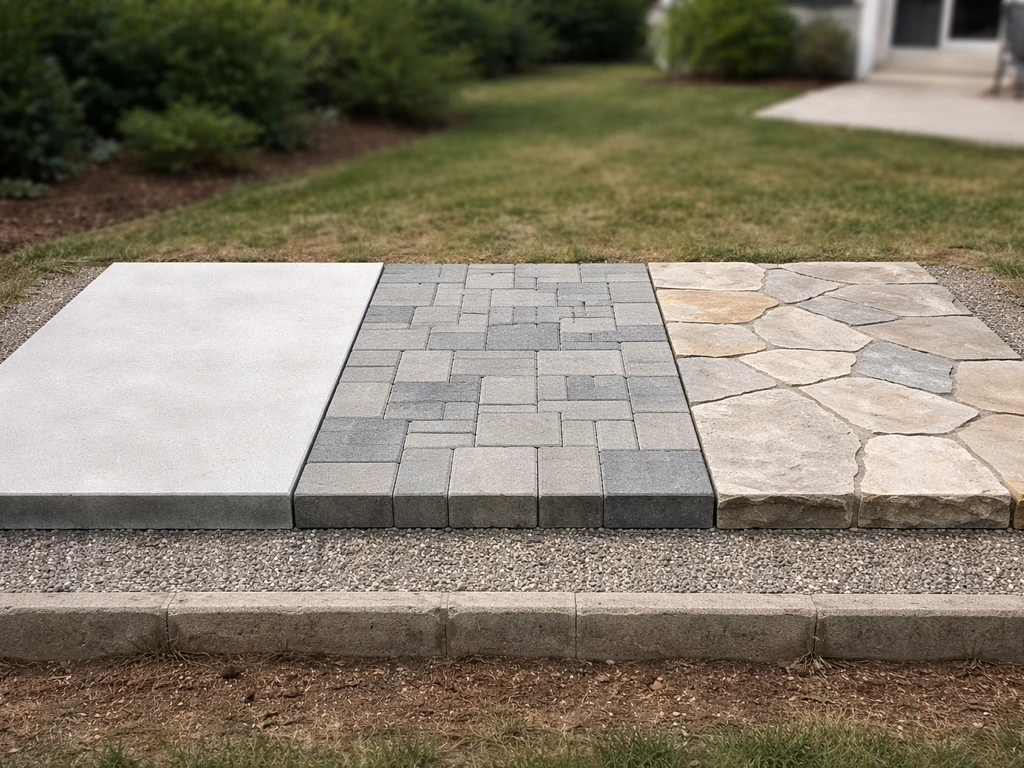
How Much Should I Expect to Pay for a Patio
Patio cost guide with real price ranges by size and material, full line-item budget, DIY vs install, and quote checklist
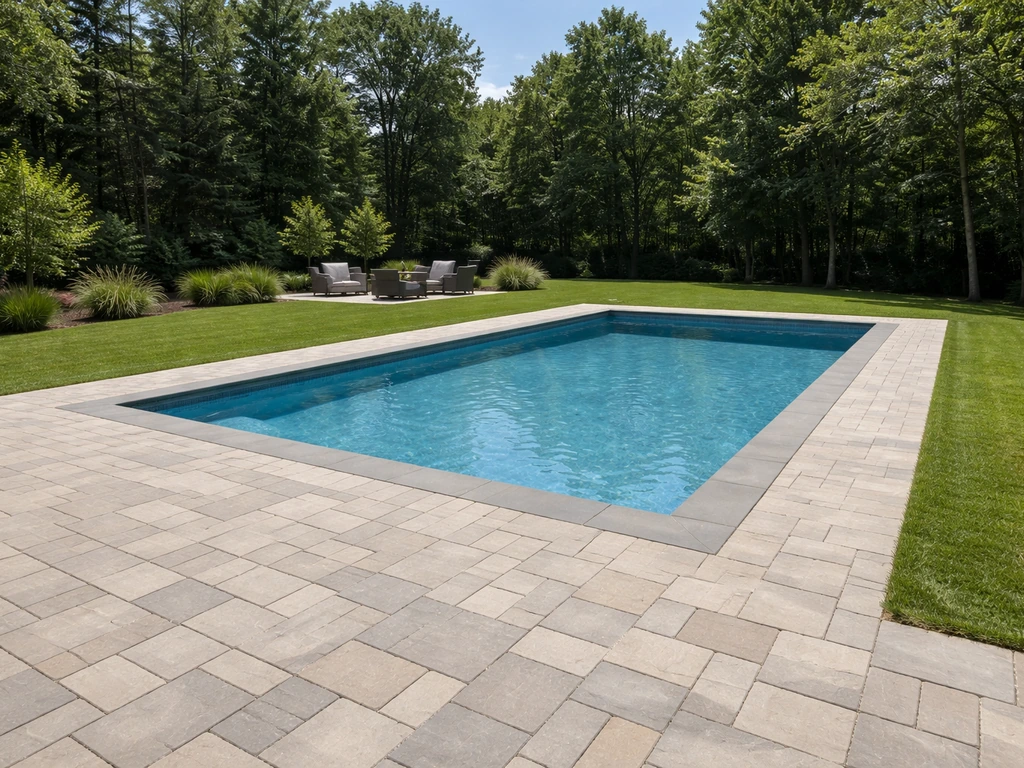
How Much Patio Around Pool: Cost, Size, and Budget Guide
Learn how much patio around a pool costs and how to size square feet, materials, extras, and get real bid line items.
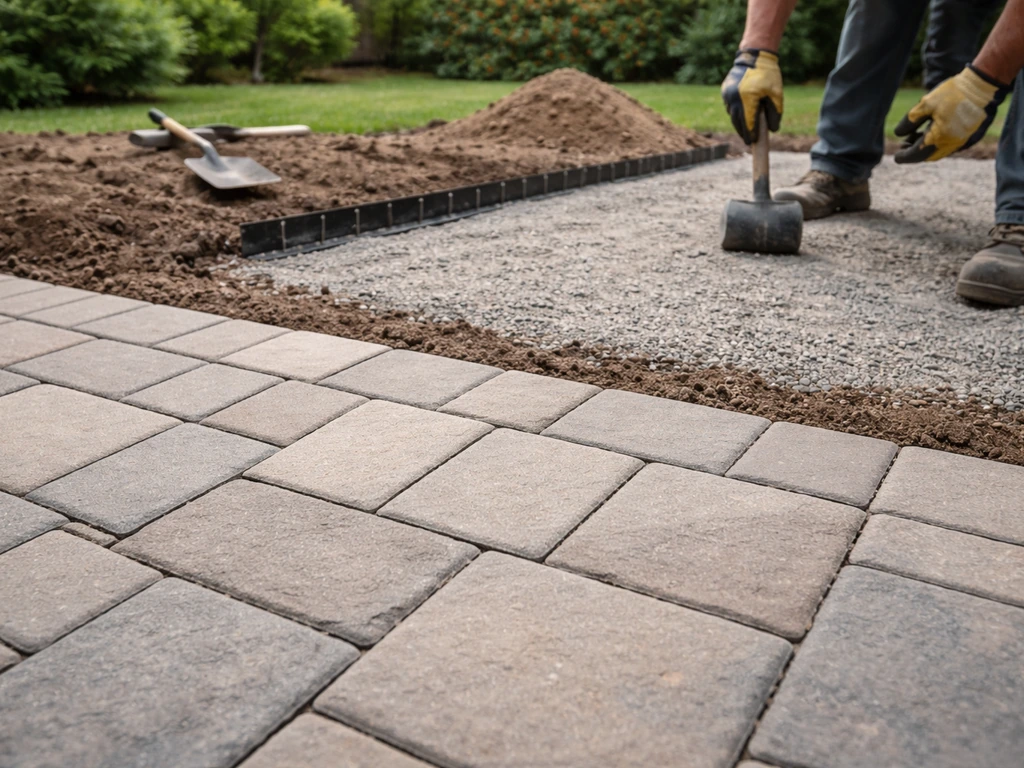
How Much Are Patios? Cost Ranges by Size and Material
Patio cost estimates by size and material with labor, base, add-ons, DIY vs contractor, and quote planning tips.