
Redoing a patio typically costs $3 to $35 per square foot installed, depending on whether you're resurfacing an existing slab or doing a full tear-out and rebuild, and what material you choose. If you want the typical price, this article breaks down how much to replace a patio based on size and whether you need a full tear-out and rebuild how much to replace patio. For a common 12x12 patio (144 sq ft), that translates to roughly $430 to $5,000. A larger 20x20 patio (400 sq ft) runs $1,200 to $14,000 or more. If you want, you can use these same ranges to estimate how much does a gravel patio cost for your exact square footage A larger 20x20 patio. The single biggest factor isn't material choice, it's whether your existing base is solid enough to build on top of, or whether it needs to come out entirely.
How Much Does It Cost to Redo a Patio? Complete Guide

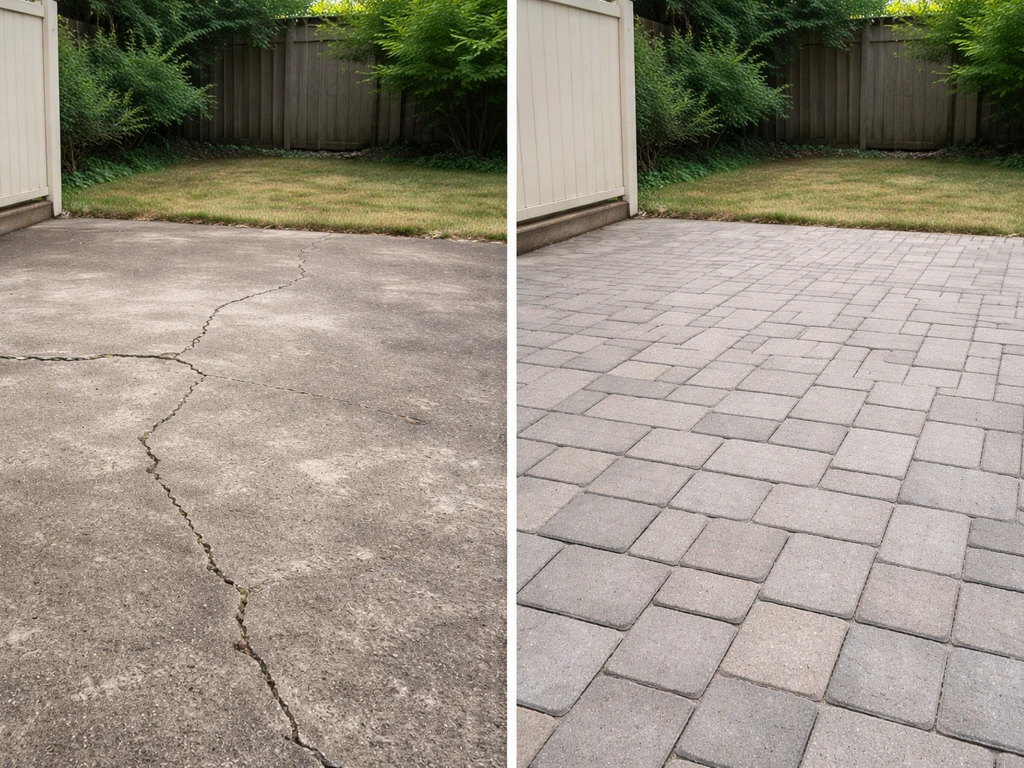
Resurface or full replacement: what does 'redo' actually mean?
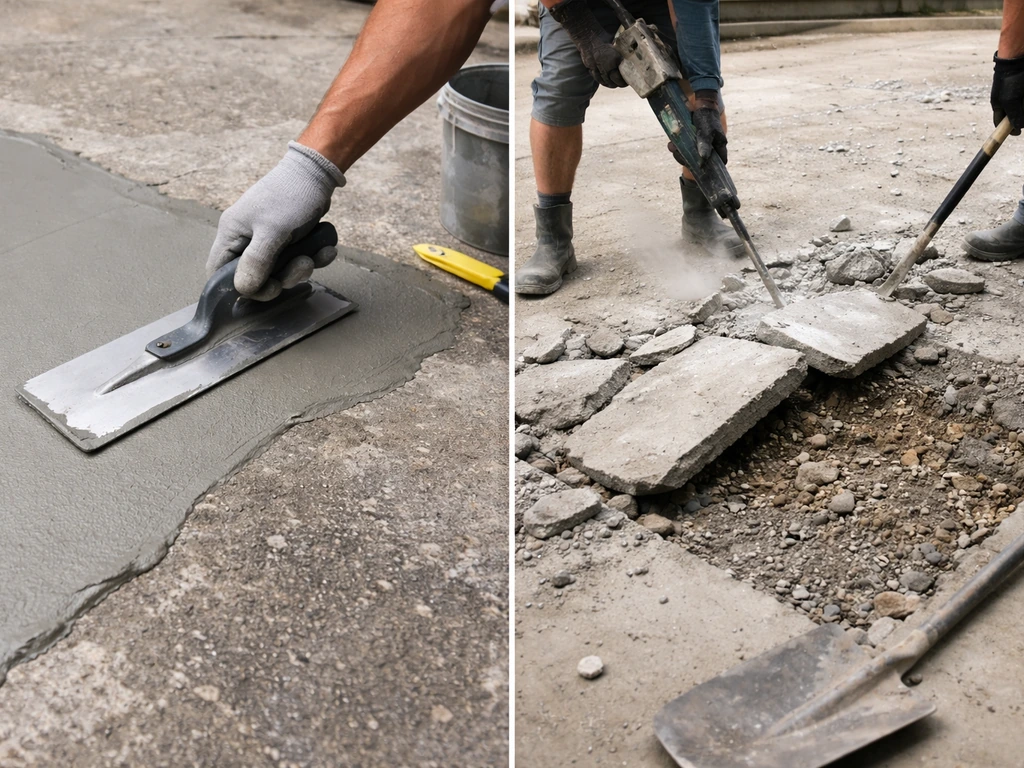
Before you get any quotes, you need to know which job you're actually doing. These are two very different projects with very different price tags.
Resurfacing (also called an overlay) means applying a thin cement-based layer, typically 1/16 inch to 3/4 inch thick, over your existing concrete slab. You keep the base, rebuild the surface. This is the cheaper route and works well when the slab is structurally sound: no heaving, no major cracking, no active settling. The surface just looks worn, stained, or dated. Resurfacing is only a concrete option; you can't overlay pavers, stone, or brick the same way.
Full replacement means demolishing the existing surface down to (or including) the base, hauling the debris, recompacting or rebuilding the subbase, and installing new material. You'd go this route when the slab is heaving, the cracks are structural, the base has shifted, or you want to switch materials entirely, say, going from a cracked concrete slab to a paver patio. It costs more, but it solves the underlying problem rather than hiding it. If your slab is actively moving or has severe damage, resurfacing over it is money wasted.
A few related scenarios sit in between: repointing or regrouting a paver or stone patio, mudjacking a sunken slab back into place, or replacing individual damaged pavers. Regrouting a patio is usually much cheaper than a full resurfacing or tear-out, but the exact price depends on patio size and joint condition repointing or regrouting a paver or stone patio. Repointing a patio, including labor and materials, typically costs much less than a full redo but varies by patio size and how severe the mortar loss is. Mudjacking is often priced as a repair rather than a full patio redo, so it can be cheaper than tear-out and replacement. Those are repair jobs, not full redos, and they cost considerably less. This guide focuses on the bigger decision: resurface vs. full rebuild.
Price ranges by patio material
Here's where costs land by material type in 2026, with installed pricing (materials plus labor combined). These are realistic ranges, not low-ball estimates.
| Material | Resurface / Overlay | Full Install (New) | Notes |
|---|---|---|---|
| Concrete (plain) | $3–$5/sq ft | $4–$8/sq ft | Cheapest option; smooth finish |
| Concrete overlay (decorative) | $6–$10/sq ft | $8–$12/sq ft | Stamped or textured finishes add cost |
| Stamped concrete | $5–$20/sq ft overlay | $10–$20/sq ft new | Higher end for complex patterns/colors |
| Concrete pavers | N/A (replace individually or full redo) | $8–$16/sq ft | Mid-range; very durable and repairable |
| Brick pavers | N/A | $12–$22/sq ft | Classic look; clay brick at higher end |
| Flagstone | N/A | $15–$35/sq ft | Dry-laid cheaper; wet-set on concrete costs more |
| Natural stone (general) | N/A | $12–$30/sq ft | Wide range by stone type and sourcing |
Plain concrete resurfacing is the budget play at $3–$5/sq ft. If you want a decorative overlay, stamped, textured, or colored, budget $6–$20/sq ft depending on the pattern complexity. For a full new install, concrete pavers hit the sweet spot for most homeowners: durable, relatively affordable at $8–$16/sq ft, and individually replaceable if one cracks or settles. Flagstone is beautiful but pricey, and regional quotes can push well past the national average, some homeowners in higher-labor markets report $38–$52/sq ft for irregular flagstone laid on a concrete base.
What you're actually paying for: the cost breakdown
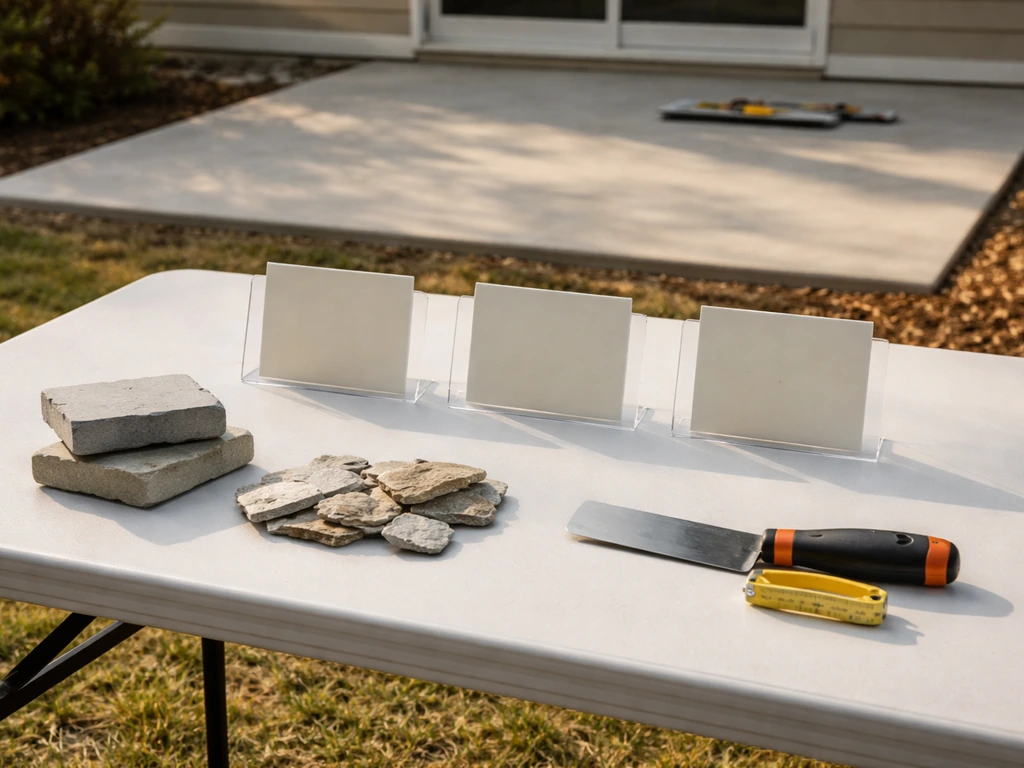
A patio redo isn't just materials and labor. Here's what the line items typically look like on a real contractor bid:
| Line Item | Typical Cost Range | Notes |
|---|---|---|
| Demo and removal | $1–$3/sq ft | Concrete: $1,200–$4,200 for 500–700 sq ft as a benchmark |
| Hauling and disposal | $150–$600+ | Separate from demo labor; depends on concrete volume |
| Base/subbase prep | $1–$3/sq ft | Gravel compaction, grading, drainage fixes |
| Bedding sand (pavers) | $0.50–$1/sq ft | 1-inch sand layer over compacted gravel |
| Materials (surface) | $2–$20/sq ft | Varies heavily by material choice |
| Labor (installation) | $3–$10/sq ft | Higher for intricate patterns, heavy stone, limited access |
| Edge restraints | $1–$2/linear ft | Required for paver systems to prevent spreading |
| Permits | $50–$500+ | Required in many municipalities; varies widely by location |
| Sealing (optional) | $0.50–$2/sq ft | Recommended for concrete, pavers, and stone |
Demo and disposal is the line item that catches people off guard. Removing a 400-square-foot concrete slab (roughly 4 inches thick) generates several cubic yards of concrete debris. Hauling and dump fees can add $200 to $600 or more on top of the demolition labor. Always confirm with your contractor whether disposal is included in their demo price or billed separately.
Base prep is another underestimated cost. A proper paver installation requires 4 inches of compacted gravel plus 1 inch of bedding sand. If your existing base is compromised, drainage is poor, or the ground needs significant regrading, that prep work adds up fast. Skimping here is exactly why patios fail and need to be redone again in a few years.
Estimating by patio size
Once you know your square footage, estimating total cost is straightforward math. Here are realistic totals for common patio sizes using the installed price ranges above. These include labor, materials, and basic base prep, but not major demo/disposal or permits.
| Patio Size | Square Footage | Budget (concrete resurface) | Mid-range (pavers) | High-end (flagstone/stone) |
|---|---|---|---|---|
| 10x10 | 100 sq ft | $300–$500 | $800–$1,600 | $1,500–$3,500 |
| 12x12 | 144 sq ft | $430–$720 | $1,150–$2,300 | $2,160–$5,040 |
| 16x16 | 256 sq ft | $770–$1,280 | $2,050–$4,100 | $3,840–$8,960 |
| 20x20 | 400 sq ft | $1,200–$2,000 | $3,200–$6,400 | $6,000–$14,000 |
| 20x30 | 600 sq ft | $1,800–$3,000 | $4,800–$9,600 | $9,000–$21,000 |
For a full tear-out and rebuild, add $1–$3/sq ft for demo plus $150–$600 for disposal to any of those estimates. A 20x20 paver patio with full demo and disposal could realistically run $4,000 to $8,000 total once everything is accounted for. If you're getting quotes that are dramatically lower, ask specifically what's included, base prep, disposal, and edge restraints are often where low bids cut corners.
DIY vs. hiring a contractor
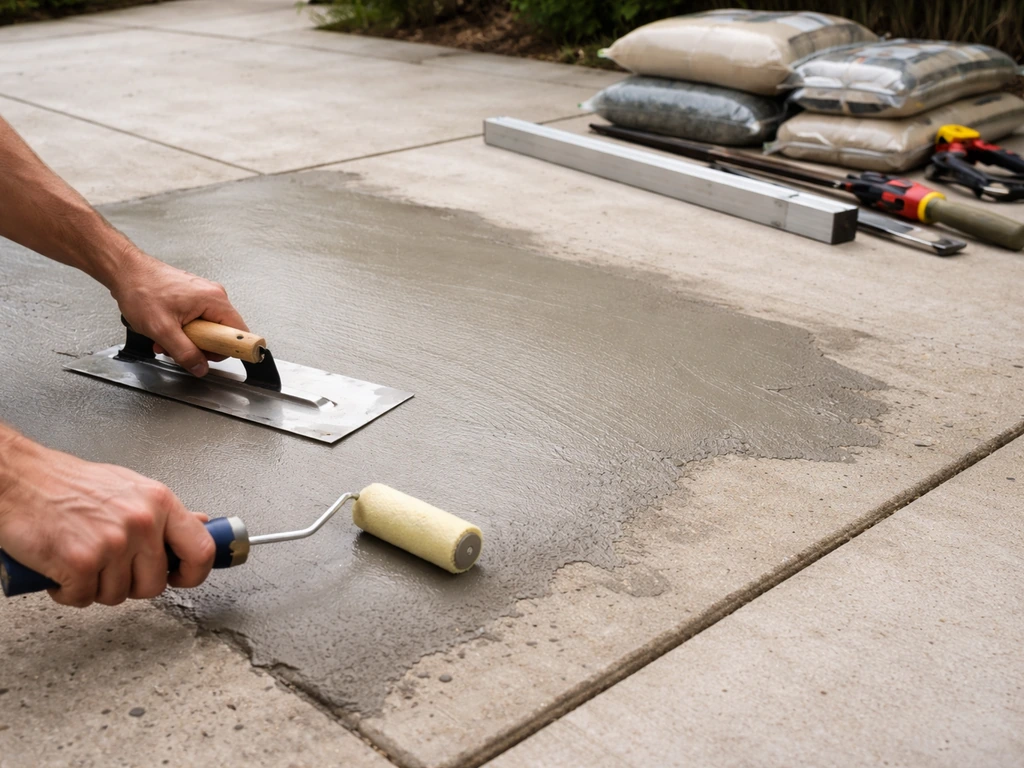
DIY resurfacing of an existing concrete slab is genuinely doable for a handy homeowner. Material costs run about $2–$5/sq ft, compared to $3–$10/sq ft for professional installation. On a 200-square-foot patio, that's a potential savings of $200 to $1,000. The catch: concrete overlay work is unforgiving about timing. The resurfacer starts setting up fast, and you need to work quickly and uniformly across the whole surface. If you miss a section or prep isn't thorough, you'll get delamination, the overlay peels or pops off, and you're back to square one.
Surface preparation is the single biggest success factor, accounting for roughly 80% of whether an overlay holds long-term. That means power washing, removing any old sealer or coatings, grinding down high spots, filling cracks, and applying a bonding agent correctly. Most DIY failures aren't about the product, they're about skipping prep steps or not following the manufacturer's instructions exactly.
DIY for full paver or stone installations is much more demanding. You need compaction equipment (usually rented), experience reading grades for drainage, and a solid understanding of edge restraint systems. It's possible, but the margin for error is real, and a poorly compacted base leads to settling and heaving within a few years. If you're confident with tools and have done similar work, renting equipment and sourcing materials yourself can cut the total cost by 30–50%. If you're learning as you go, the risk of a redo-of-the-redo isn't worth it.
| Factor | DIY | Professional |
|---|---|---|
| Material cost (resurface) | $2–$5/sq ft | $3–$10/sq ft installed |
| Full paver install materials | $4–$10/sq ft | $8–$22/sq ft installed |
| Time (200 sq ft resurface) | Full weekend+ | 1–2 days |
| Equipment needed | Rented grinder, mixer, sprayer | Contractor-supplied |
| Risk of failure | Higher (prep errors) | Lower (experience) |
| Warranty | None | Typically 1–5 years |
What drives the cost up (or down)
Beyond material choice and size, here are the factors that most commonly push a patio redo budget higher than expected:
- Existing slab condition: Severe cracking, heaving, or active settling means full replacement, not resurfacing. Getting this wrong is the most expensive mistake.
- Base problems: Poor drainage, soft soil, or an inadequate original subbase requires excavation and rebuilding from scratch — that adds $1,000 to $3,000+ to most projects.
- Site access: If equipment can't reach your backyard easily, manual labor increases significantly. Narrow gates, steps, or landscaping that needs protection all add cost.
- Design complexity: Simple rectangular shapes are cheapest. Curves, custom borders, multiple colors, or intricate paver patterns add 20–50% to labor costs.
- Regional labor rates: Labor in high-cost metros (Northeast, California, Pacific Northwest) can push installed prices 30–60% above national averages. Rural Midwest and Southeast tend to be cheaper.
- Permits and HOA: Many municipalities require permits for patio work over a certain size. Budget $50–$500 depending on your location, and factor in HOA approval time if applicable.
- Drainage and grading: If water pools on your current patio, just resurfacing or replacing won't fix it. Proper grading or adding a drain adds cost but prevents long-term damage.
- Material availability: Natural stone prices fluctuate with supply and regional sourcing. Locally quarried stone can be cheaper; imported or specialty stone is significantly more.
One thing worth mentioning: if the cost of a quality patio redo is pushing your budget and you're open to alternatives, a wood or composite deck might actually come in at a comparable price per square foot in some regions, especially for elevated or difficult terrain. That said, a well-built paver or concrete patio almost always has a longer lifespan with less maintenance than wood decking.
How to get accurate quotes and compare bids
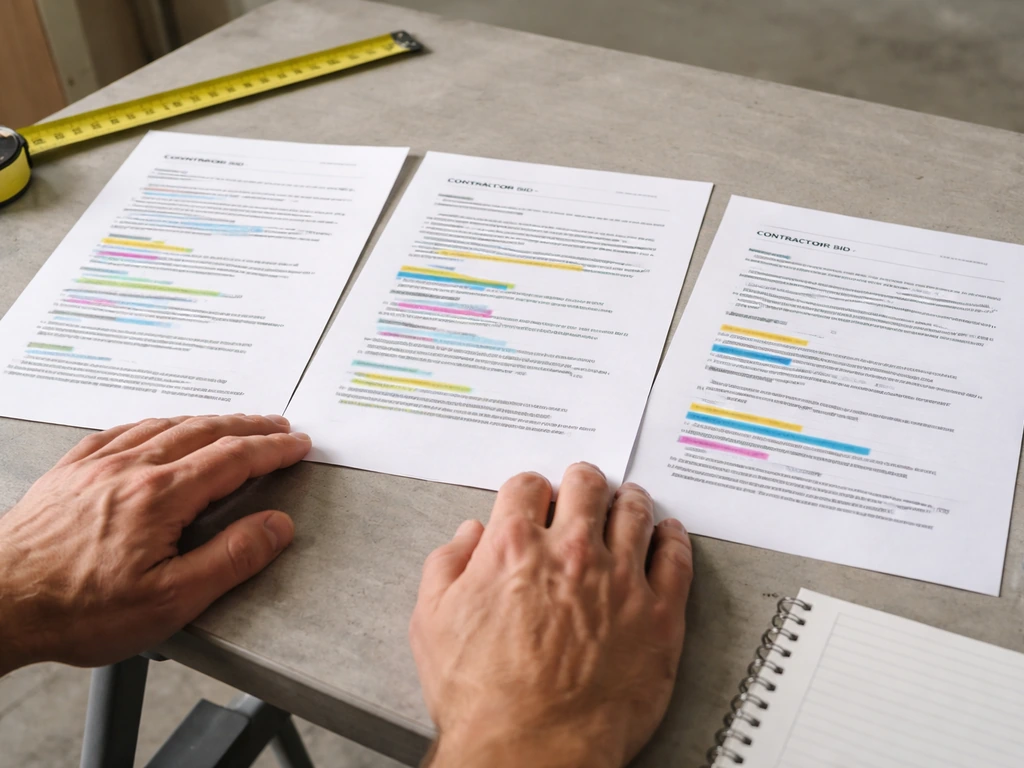
Getting three quotes is the baseline, but you need to make sure you're comparing the same scope of work across all three. Homewyse’s paving contractor hiring guide also recommends specifying that the contract price includes permit, dump, equipment rental fees, and all indirect costs to support accurate bidding. A bid that looks 30% cheaper might simply exclude demo, disposal, base prep, or edge restraints. Here's how to be ready before contractors arrive and how to evaluate what they give you.
Before you call a contractor
- Measure your existing patio accurately (length x width, accounting for irregular shapes)
- Note any visible cracks, heaving, settling, or drainage problems
- Know what material you currently have (concrete slab, pavers, stone)
- Decide on your preferred new material or finish, or ask contractors to price two options
- Check whether your city or HOA requires permits for patio work
- Photograph any problem areas — settling, cracks, water pooling spots
What to ask and check on every bid
- Is demo and disposal included, or is it billed separately?
- What base prep is included? How many inches of gravel? Will it be mechanically compacted?
- Does the price include edge restraints, polymeric sand, or sealing?
- Are permits included? Who pulls them?
- What's the warranty on labor and materials?
- What happens if they discover the base is worse than expected once demo starts?
- Will they use a subcontractor for any part of the work?
Ask each contractor to line-item their bid: demo, haul/disposal, base prep, materials, installation labor, edging, finishing, and any extras. This makes comparison straightforward and shows you exactly where the price differences come from. A contractor who refuses to break out their pricing isn't necessarily untrustworthy, but it makes it harder to evaluate whether you're getting a fair deal.
Also, don't automatically choose the lowest bid. If one quote is significantly below the others, ask what they're leaving out. More often than not, it's the base prep or disposal, the unglamorous stuff that determines whether your new patio lasts 5 years or 25. A mid-range bid from a contractor with good local reviews and a clear written scope is almost always the safer bet.
Quick decision framework
Not sure which route to take? Here's a simple way to think through it. If your concrete slab is structurally sound (no heaving, no major structural cracks, no active settling) and you just want a fresh look, resurfacing at $3–$10/sq ft is the right call. If the base is compromised, the slab is heaving, or you want to switch materials, budget for a full tear-out and rebuild at $8–$35/sq ft depending on material. If you’re comparing overall budgets, the same kind of range applies to how much does it cost to tile a patio, especially when you need a full tear-out and rebuild $8–$35/sq ft. If your paver patio just needs joint sand replaced or a few sunken pavers lifted and reset, that's a repair job, not a full redo, and it'll cost a fraction of either option above.
FAQ
Do I need a permit, and how much can it add to how much it costs to redo a patio?
Add a line item for permits and inspections if your patio redo includes any structural change, drainage rework, or work near property lines. Even when the project is “just a patio,” local rules can require permit fees and site reviews, which can change total cost more than decorative finishes do.
What parts of a patio quote are most likely to be missing and affect the final cost?
If you have a paver or stone patio, confirm whether the quote includes edge restraints (border edging) and joint stabilization. These are common “hidden” costs, and missing or thin edging is a frequent reason patios shift, spread, or need redo work sooner than expected.
When comparing quotes, what should I ask to confirm base prep is actually being done correctly?
Many contractors bundle base prep differently for overlays versus pavers. For resurfacing, ask if they include crack filling, bonding agent, and grinding high spots. For pavers, ask whether they include full removal of failed base layers, compaction passes, and verification of slope.
How do I make sure demolition and disposal are priced fairly when redoing a patio?
Disposal is often either included in demo labor or billed separately as haul fees plus landfill charges. Ask for the exact wording in writing, then confirm how they handle excess soil and any concrete recycling credits (if your area offers them).
Will redoing a patio require drainage changes, and what if my patio already slopes the wrong way?
Check whether your project includes reworking the slope away from the house and adjusting transitions to doors, steps, or existing flooring. A common mistake is rebuilding at the same height without correcting pitch, leading to pooling water and early surface failure.
What should I know about expansion joints when replacing or resurfacing a patio?
If the patio connects to a garage slab, pool deck, or walkway with expansion joints, ask whether they will preserve or rebuild those joints. Cutting corners on joints can cause cracking, heaving, and premature delamination on concrete overlays.
Does overlay thickness change the cost, and when is it better to do a full replacement instead of resurfacing?
Overlay thickness matters. If your existing concrete is rough or has localized low spots, adding a thin layer without leveling or grinding can create adhesion problems or visible telegraphing of existing issues.
Why might two patio bids differ by thousands of dollars for the same square footage?
A low bid can be “technically cheaper” if it skips regrading, limits base depth, or uses fewer compaction passes. Ask for the planned lift thicknesses (for example, gravel depth and bedding sand thickness) and whether they will replace any undermined areas.
How do obstacles like trees, irrigation lines, or uneven yard grading affect the price to redo a patio?
Yes, especially if there is landscaping, utilities (sprinkler lines, power conduits), or an old base that requires more than standard demo. If you have mature trees, ask about root protection methods and whether additional excavation or handwork will be needed.
If my patio puddles or causes water to flow toward the house, what should I budget for beyond the surface?
In many areas, major water-related concerns like poor runoff or ponding trigger additional preparation work rather than changing surface material. Addressing drainage early can be cheaper than repeated repairs after the patio is installed.
What are the most common DIY oversights that end up increasing the total cost later?
DIY resurfacing can fail quickly if timing and prep are off, but DIY also tends to under-budget for tools (grinder, vacuum, crack tools) and materials needed to reach full coverage. For DIY paver work, rental of a plate compactor and a screed level tool can significantly affect your real all-in cost.
If my patio failed before, should I assume it is just a surface problem, or does the base need replacement?
When pricing a “redo of the redo,” ask whether the original base is still sound and whether voids or drainage failures are still present. If the base has shifted, you may need to rebuild the subbase, not just replace the top layer, which changes the cost range dramatically.
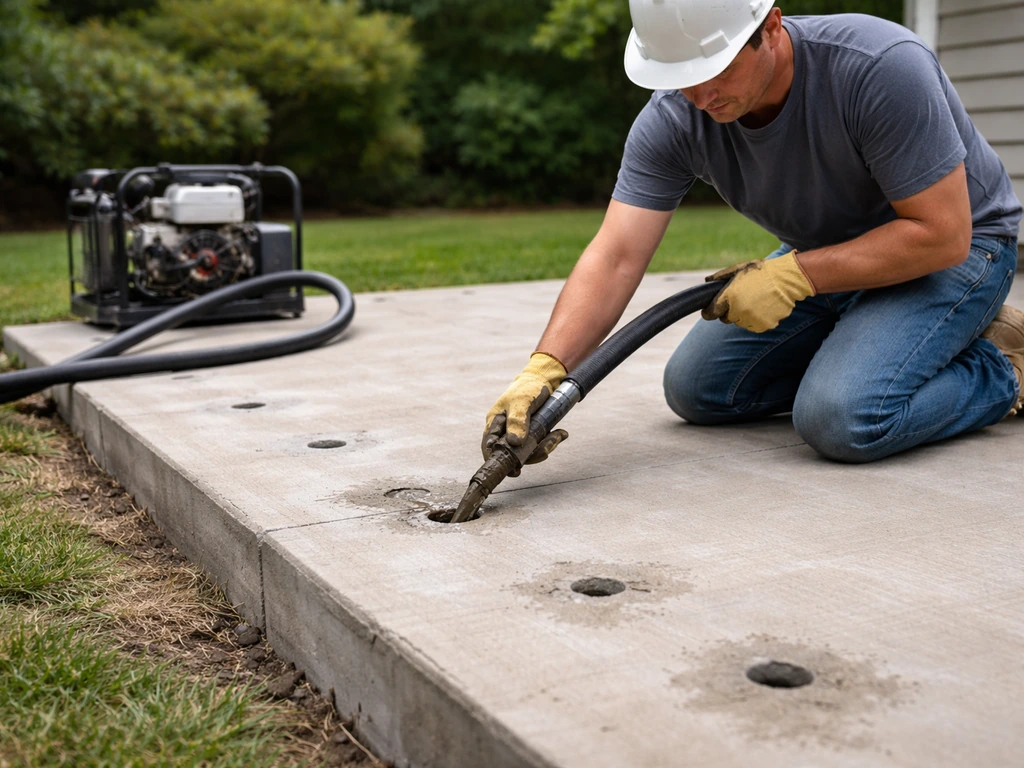
Mudjacking patio costs by size and square foot, plus pricing breakdown, factors, DIY risks, and how to get accurate cont
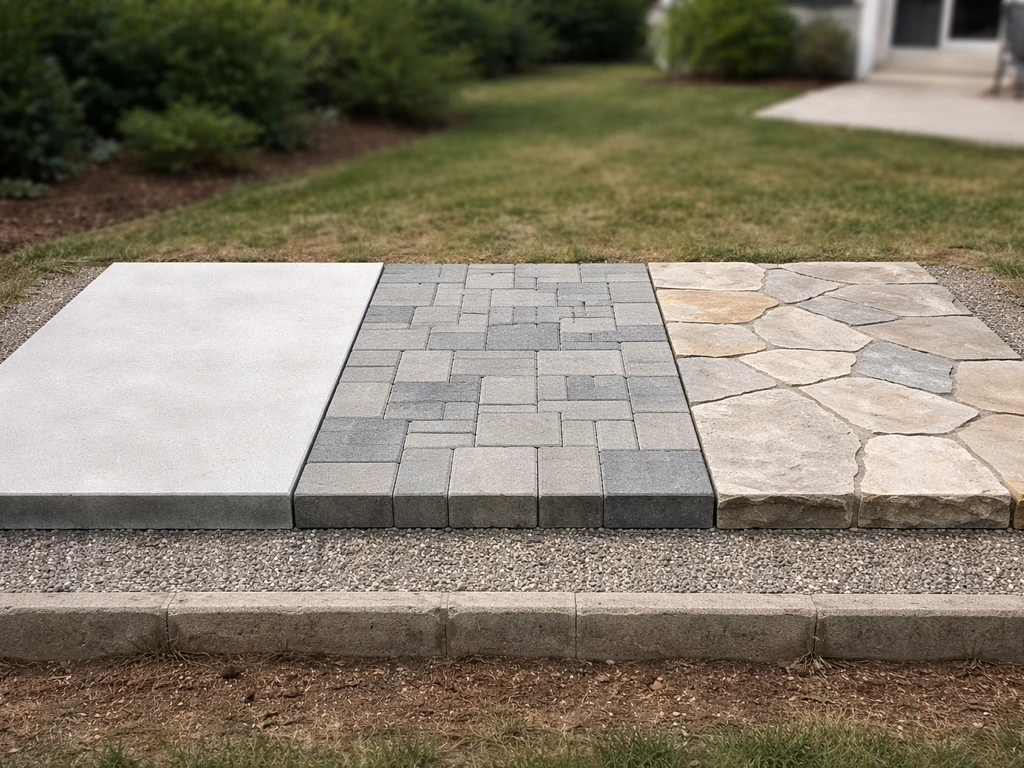
Patio cost guide with real price ranges by size and material, full line-item budget, DIY vs install, and quote checklist
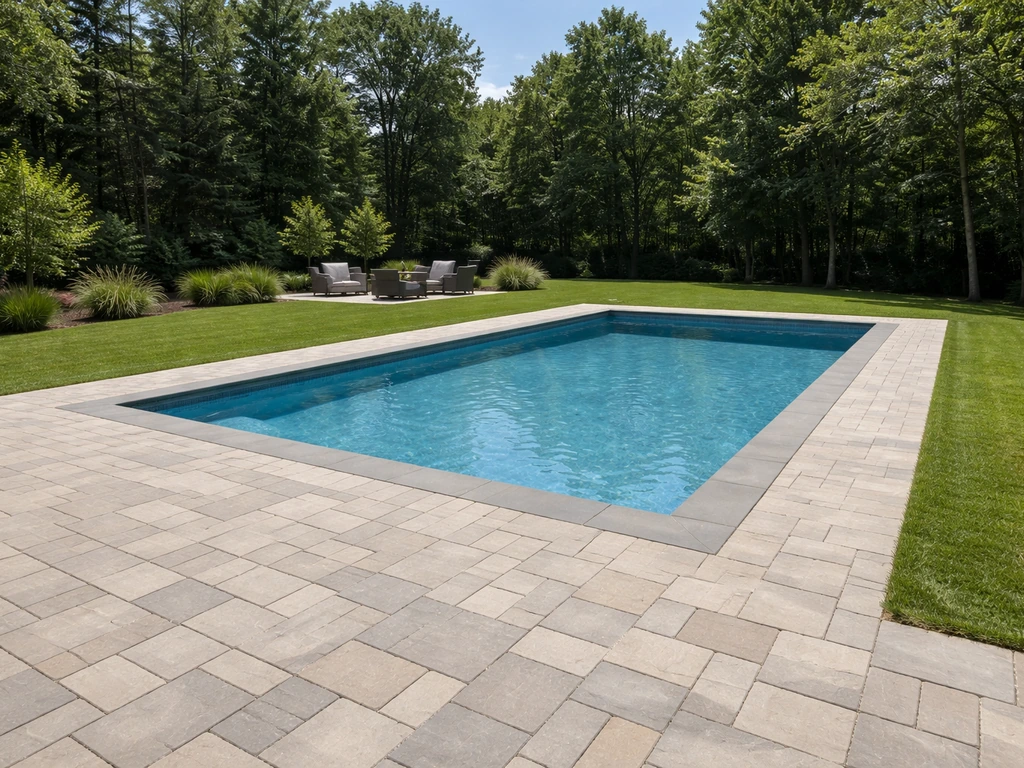
Learn how much patio around a pool costs and how to size square feet, materials, extras, and get real bid line items.