
For most homeowners in 2026, a professionally installed patio costs somewhere between $8 and $30 per square foot depending on material, which works out to roughly $800 to $3,000 for a basic 10x10 concrete pad and $8,000 to $20,000 or more for a large stamped concrete or natural stone project. The single biggest variable is what you're building it with. Concrete sits at the budget end, pavers land in the middle, and natural stone like bluestone or flagstone pushes costs significantly higher. Once you know your material and your square footage, you can get a realistic ballpark before you ever call a contractor. This guide explains the average cost of a patio so you can compare options and plan your budget.
How Much Patio Costs: Pricing by Size and Material

Felix Carver
29 Apr 2026
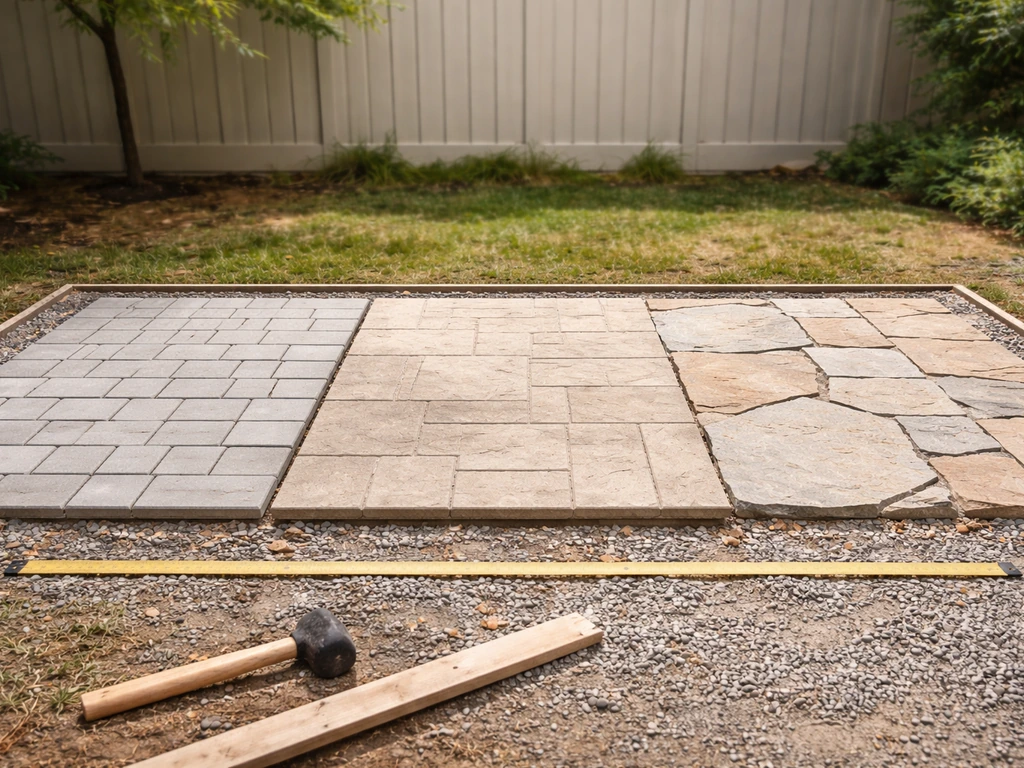
Start here: nail down your material, size, and location first
Before any pricing makes sense, you need to know three things: what material you want, how big the patio will be, and where you live. These three inputs control probably 80% of your final cost. A 200-square-foot poured concrete patio in the Midwest is a completely different budget conversation than a 200-square-foot bluestone patio in the Northeast. If you're not sure on material yet, that's fine, but at least get your size sketched out. Even a rough footprint (like "about 12 by 16 feet") gives you a square footage number to work with.
Location matters in two ways: labor rates vary a lot by region, and site conditions specific to your yard can add cost fast. Urban markets and coastal states (California, New York, Massachusetts) typically run 20 to 40 percent higher than national averages. Rural areas and lower cost-of-living states often come in at the low end of any range you read online. Keep that in mind as you work through any estimates here.
What each material actually costs per square foot
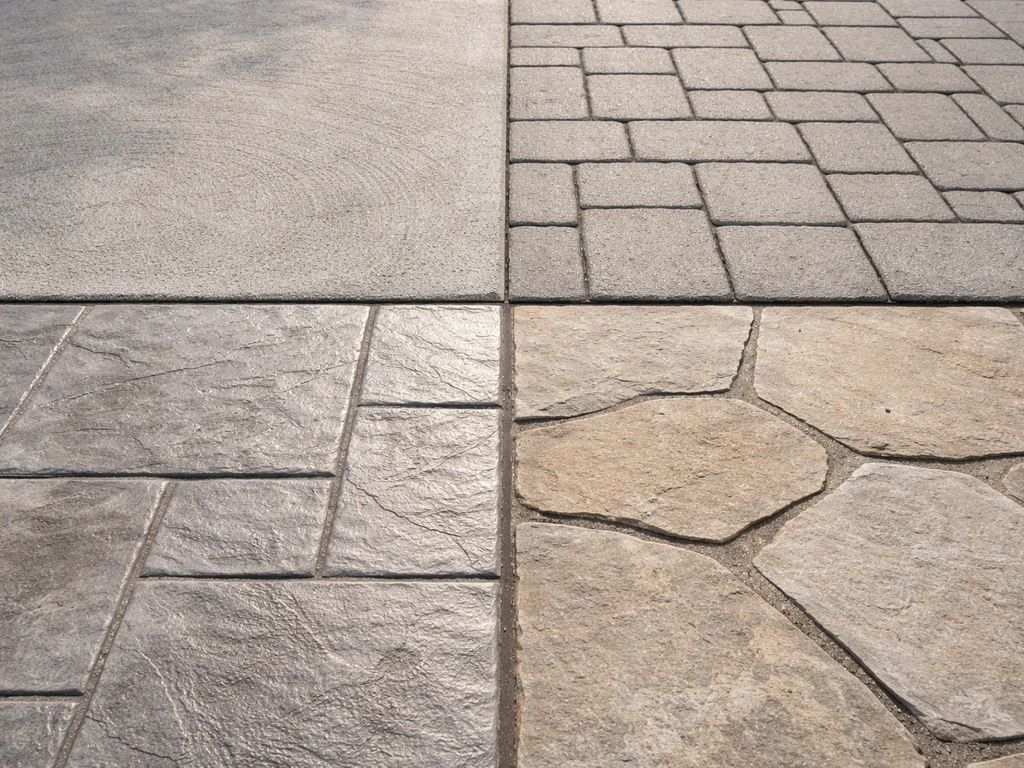
Here's a straightforward breakdown of what you'll pay for each of the main patio materials in 2026, fully installed with labor and materials combined. These are real-world ranges, not best-case scenarios.
| Material | Cost per Sq Ft (Installed) | Best For |
|---|---|---|
| Poured Concrete | $6 – $12 | Budget builds, clean modern look |
| Stamped Concrete | $12 – $22 | Decorative look without stone pricing |
| Concrete Pavers | $8 – $25 | Flexible, repairable, wide style range |
| Brick | $10 – $20 | Classic look, durable, regional availability |
| Flagstone | $15 – $30 | Natural irregular look, premium feel |
| Bluestone | $27 – $42+ | Premium finish, formal or upscale settings |
Poured concrete is the workhorse option. It's the cheapest to install, holds up well in most climates, and is easy to maintain. The downside is it cracks over time, especially in freeze-thaw climates, and repairs are more visible than with pavers. Stamped concrete gives you the look of stone or pavers at a fraction of the natural stone price, but the stamped pattern eventually fades and resealing every two to three years adds to the lifetime cost.
Concrete pavers are a sweet spot for a lot of homeowners. According to Angi's 2026 data, paver installation typically runs $8 to $25 per square foot, and the range is that wide because paver quality and complexity vary enormously. Basic gray concrete pavers are at the low end; tumbled or large-format designer pavers push toward the top. One major advantage: if a paver cracks or settles, you can replace individual pieces without tearing up the whole patio.
Bluestone and high-end flagstone are the premium tier. Angi's 2026 data puts bluestone installation at roughly $2,700 to $4,200 for a typical project (that's the combined materials and labor figure for the project, not per square foot in that range). Natural stone requires more skilled cutting and fitting, the materials themselves cost more to source, and the base prep needs to be precise. It looks incredible, but you're paying for that.
DIY vs. hiring a contractor: where the math actually lands
Labor usually accounts for 50 to 60 percent of total patio installation cost. On a $5,000 paver patio, that's $2,500 to $3,000 in labor alone. So DIY sounds tempting. But the honest answer is: it depends heavily on which material you're working with and how much physical work you're willing to take on.
Where DIY actually makes sense
Concrete pavers are the most DIY-friendly option of the bunch. The materials are widely available at home improvement stores, the installation process is learnable from a weekend of research, and because the pieces are modular, mistakes are fixable. If you have a small patio (under 200 square feet), a flat yard, and can rent a plate compactor for a day, you can realistically save $1,500 to $2,500 on a paver project by doing it yourself. Budget around $4 to $8 per square foot for materials alone, plus $50 to $150 in tool rentals.
Where DIY usually isn't worth it
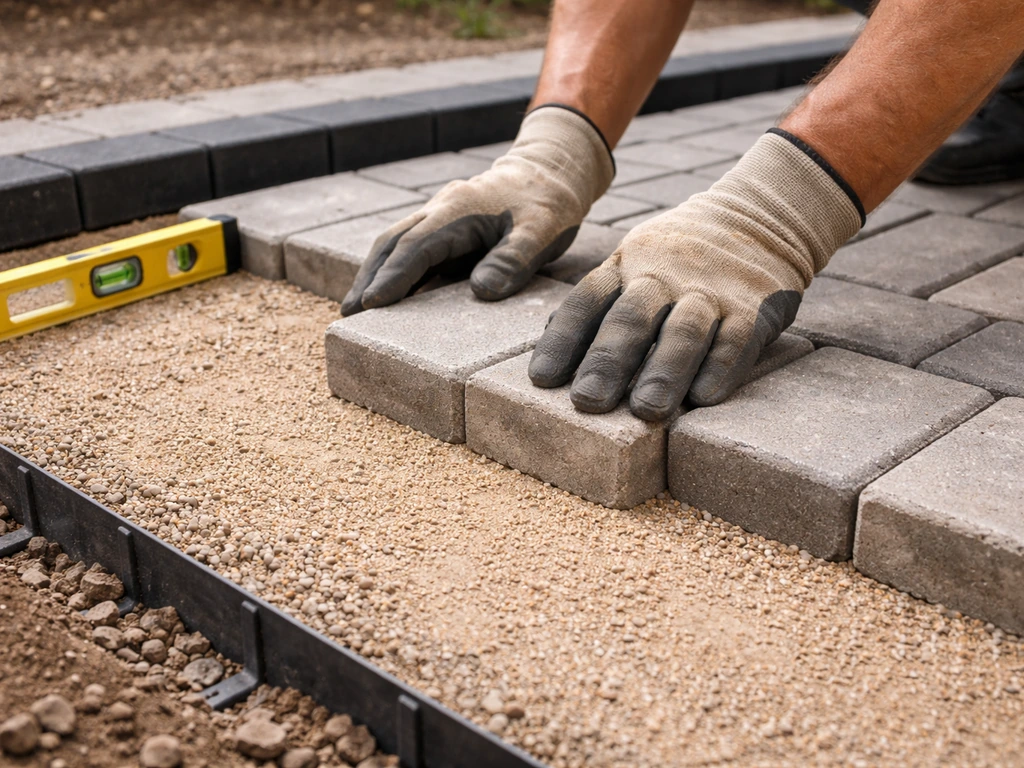
Poured concrete is deceptively hard to DIY. You have a narrow window to work the mix before it sets, finishing flat concrete properly takes real skill, and a bad pour that cracks or heaves is expensive to redo. Stamped concrete is even harder, because you're also pressing patterns into wet concrete under time pressure. Natural stone (flagstone, bluestone) requires precise base prep and cutting stone to fit, which needs specialized tools and experience. For any of these three, hiring a qualified contractor is almost always the right call unless you have direct trade experience.
What actually pushes your price up (or down)
The per-square-foot numbers above assume a relatively straightforward install. Here are the most common factors that cause quotes to land significantly higher than the baseline estimate.
- Site prep and demolition: If you're replacing an existing patio, concrete removal costs $1 to $3 per square foot and haul-away adds more. If the ground is sloped or has tree roots, expect excavation costs to climb.
- Base and gravel work: A proper gravel base (4 to 6 inches for most patios, 8 inches in freeze-thaw climates) adds $1 to $3 per square foot. Skimping here is the most common reason patios fail early.
- Drainage: If your yard doesn't drain naturally away from the house, contractors need to add slope, channel drains, or French drains. Drainage work can add $500 to $2,000+ depending on what's needed.
- Edging and borders: Decorative border courses, soldier rows, or metal/plastic edging restraints add $2 to $5 per linear foot depending on material.
- Leveling and grading: Significant slope correction can add $500 to $1,500 in labor before the patio work even starts.
- Patterns and reinforcement: Complex stamped patterns, rebar reinforcing in concrete, or intricate paver layouts all add labor time and cost. Expect a 15 to 30 percent premium over a basic install.
- Access constraints: If your yard is hard to reach with equipment (narrow gate, steep hill, no side yard), labor costs increase because everything has to be carried or hauled manually.
Real cost examples at common patio sizes
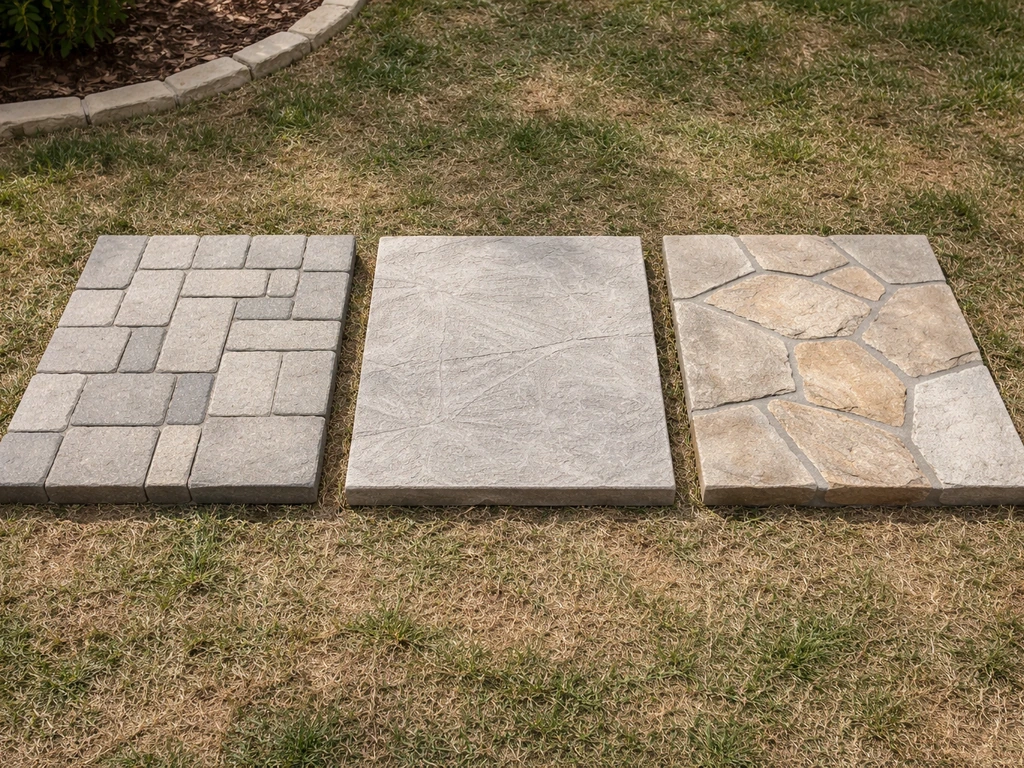
Here's what you can realistically expect to spend at the most common patio sizes, by material. These totals assume a standard install with basic site prep on a relatively level yard, no demolition, and simple layout. Add 15 to 25 percent if your site has any of the complicating factors listed above.
| Patio Size | Sq Ft | Concrete | Pavers | Stamped Concrete | Flagstone |
|---|---|---|---|---|---|
| 10x10 | 100 | $600 – $1,200 | $800 – $2,500 | $1,200 – $2,200 | $1,500 – $3,000 |
| 12x12 | 144 | $865 – $1,730 | $1,150 – $3,600 | $1,730 – $3,170 | $2,160 – $4,320 |
| 12x16 | 192 | $1,150 – $2,300 | $1,535 – $4,800 | $2,300 – $4,225 | $2,880 – $5,760 |
| 16x20 | 320 | $1,920 – $3,840 | $2,560 – $8,000 | $3,840 – $7,040 | $4,800 – $9,600 |
| 20x20 | 400 | $2,400 – $4,800 | $3,200 – $10,000 | $4,800 – $8,800 | $6,000 – $12,000 |
| 20x30 | 600 | $3,600 – $7,200 | $4,800 – $15,000 | $7,200 – $13,200 | $9,000 – $18,000 |
A 10x10 patio is a starting point, not a destination for most families. At 100 square feet, it fits a small bistro table and two chairs, barely. Most homeowners find a 12x16 or 16x20 footprint is the sweet spot for actual usable outdoor space. If you want a tighter answer to <a data-article-id="A2DAE99B-F2AD-43D6-A057-AE60E7A52CFF">how much patios cost</a>, start by estimating your patio’s size and material, then adjust for local labor and site conditions. If you want a tighter answer to how much should i expect to pay for a patio, start by estimating your patio’s size and material, then adjust for local labor and site conditions. If you’re wondering what drives your final total, the biggest variables are material, square footage, and site conditions like drainage and access. If you're planning a full outdoor living area with furniture, a grill station, and space to entertain, you're realistically looking at 300 to 400 square feet, which is why 20x20 is such a common benchmark. The cost there varies dramatically by material, from roughly $2,400 for basic concrete to $12,000 for premium flagstone.
How to get accurate quotes and compare contractors properly
Getting three quotes is the standard advice, and it's good advice, but only if those three quotes are actually comparing the same thing. The most common mistake homeowners make is comparing a detailed quote from one contractor to a vague number from another. Here's how to make bids apples-to-apples.
What to ask every contractor to include in their quote
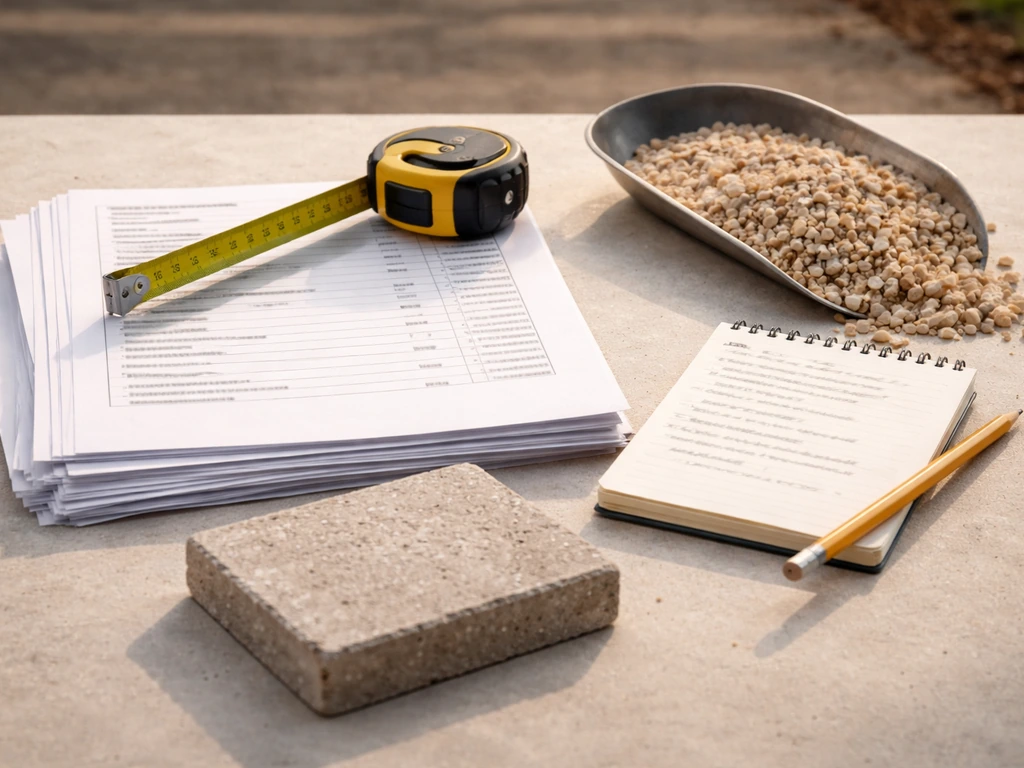
- Exact square footage being covered and the specific material (brand, size, and grade of paver or stone if applicable)
- Base preparation details: depth of gravel base, type of gravel or sand used, and whether geotextile fabric is included
- Site prep and excavation: how much soil is being removed, where it goes, and whether that's included in price or billed separately
- Edge restraints: type, material, and linear footage included
- Drainage plan: how slope and water management are being handled
- Sealing: whether the finished surface will be sealed, and what product is used
- Demolition: if replacing an existing surface, is removal and haul-away included in the price?
- Timeline: estimated start date and project duration
- Warranty: what's covered and for how long on both labor and materials
When you get quotes back, look at the total and then look at what's included in that total. A quote for $4,500 that includes base prep, edge restraints, sealing, and cleanup is a better deal than a $3,800 quote that's just labor and material with a gravel upcharge coming later. Ask every contractor to break out material cost separately from labor. This lets you verify you're being charged a reasonable markup on materials (10 to 20 percent over retail is normal) and gives you a cleaner view of where the money is going.
Be cautious about any quote that's significantly lower than the others without a clear explanation. It usually means something is being left out of scope, lower-grade materials are being substituted, or the contractor is cutting corners on base prep. That last one is the most expensive problem to fix later, because a patio that heaves or settles because of a thin base means tearing the whole thing out.
Building a realistic budget before you sign
A good rule of thumb: take your baseline estimate from the size and material tables above, then add 15 percent as a contingency buffer for surprises. If your site has any complicating factors (slope, poor drainage, demo work, limited access), bump that buffer to 25 percent. A steeper slope or poor drainage can also affect how much settling happens over time, which changes the true patio budget. Contractors often find things during excavation they didn't expect, and having budget room for those moments keeps the project moving instead of creating conflict. If you're comparing a patio against a deck, the material costs are in a similar range for entry-level options, but a deck typically requires more in permits and structural work for anything elevated. For pool owners, the patio area surrounding the pool brings its own pricing considerations based on square footage and slip-resistance requirements. If you are adding a pool, the patio surrounding it can change the scope and cost due to extra area, base work, and safety requirements For pool owners, the patio area surrounding the pool. For many projects, the pool surround functions like a walkway and gathering space, so it often needs a larger footprint than people expect patio area surrounding the pool. Whatever direction you go, knowing your material and your square footage before you start calling contractors puts you in a much stronger position to evaluate quotes fairly and budget accurately.
FAQ
Does the patio cost per square foot include stairs or a raised area?
Yes. If you plan to include stairs, steps up from the yard, or a raised patio section, most contractors price that work outside the simple per-square-foot “pad” rate. Ask for a line item for elevation changes and for the height and rise/run specs, since cost jumps quickly once you need retaining, thicker base layers, or additional edge restraints.
Are permits and inspections included in the patio price estimates?
Not always. Permits, inspections, and sometimes HOA approvals can add to the total, especially if your patio requires drainage changes, is near property lines, or includes electrical hookups (outdoor outlets, lighting). When comparing bids, ask whether permits are included and whether you need a separate electrical permit for any lighting or fan wiring.
How do contractors measure patio square footage, and what gets included?
It depends on what you mean by “patio size.” Contractors may price the flat walking surface (pavers or concrete field) differently from the footprint that includes border treatments, planters, or seat walls. Confirm whether the square footage in each quote counts the border/edges, any built-in features, and whether they measure by the overall outer dimensions or only the main area.
What details should I require in each quote to make sure the scope matches?
If you want a true apples-to-apples comparison, insist each quote lists the base build-up (subgrade prep, gravel depth, compacted subbase, geotextile if used), edge restraints, and finish details (sealer type, thickness, color/salt-and-sand requirements for pavers). Without those specifics, two “$X per square foot” quotes can produce very different lifetime performance.
What happens to patio costs if there’s existing concrete or landscaping that needs demolition?
For pavers, additional removal of old concrete or deep excavation can raise costs, but for poured or stamped concrete the removal of existing slabs can be even more disruptive because demolition and disposal can be major. Ask specifically whether the quote includes demo, hauling, and any required disposal fees, and whether they will replace disturbed soil with engineered fill or just backfill.
Should I budget for sealing or ongoing maintenance beyond the installation cost?
Sealing and maintenance can change long-term budgeting. Concrete slabs may need periodic sealing, stamped concrete typically needs resealing on a tighter schedule, and pavers often require different cleaning products and occasional sand re-leveling. Ask for the expected maintenance interval for your chosen finish, not just the install price.
Can drainage problems around my house increase the patio budget?
Yes, commonly for rain and runoff management. If your patio must be re-graded, if downspouts discharge near it, or if you need a French drain, swales, or improved drainage away from the house, cost can rise. Request a simple drainage plan discussion during quoting and ask who is responsible for addressing water flow toward foundations.
How do limited access, narrow gates, or steep paths affect patio pricing?
Yes, because accessibility affects labor time and equipment. If equipment cannot reach the site, if you need hand-carry materials through gates, or if you have tight setbacks, contractors may add mobilization charges and adjust labor estimates. Tell bidders about gate width, driveway access, and where materials will be staged.
Do I need to buy extra stone material for bluestone or flagstone waste?
It can, especially for natural stone. Bluestone and flagstone often require more sorting and selective cutting, which means waste can be higher than people expect. Ask what their waste factor is and whether they included extra material for breakage and pattern matching.
What reinforcement or mix details change concrete patio costs the most?
If the contractor uses higher-strength mixes, air-entrainment for freeze-thaw areas, or specific reinforcement strategies, the “baseline” concrete price can move. Ask whether fiber reinforcement, rebar, wire mesh, and control joint layout are included, since reinforcement choices impact both cracking risk and cost.
What are the most common DIY mistakes that make patios fail or cost more later?
For pavers, a plate compactor rental can help, but the bigger risk is inadequate base thickness or compaction, which can cause settling. If you DIY, rent or borrow a tamper for edges, keep base thickness consistent across the whole area, and use string lines or laser leveling so the finished surface doesn’t slope incorrectly.
How much extra area or contingency should I plan for beyond the square footage I measure?
To estimate more accurately, measure the area that will actually be paved (including any borders you want) and add 5 to 10 percent for cutting and layout inefficiencies. Then plan a contingency as the article suggests, and separately budget for “site-dependent” items like drainage corrections, thicker base, or demolition if needed.
Next Articles
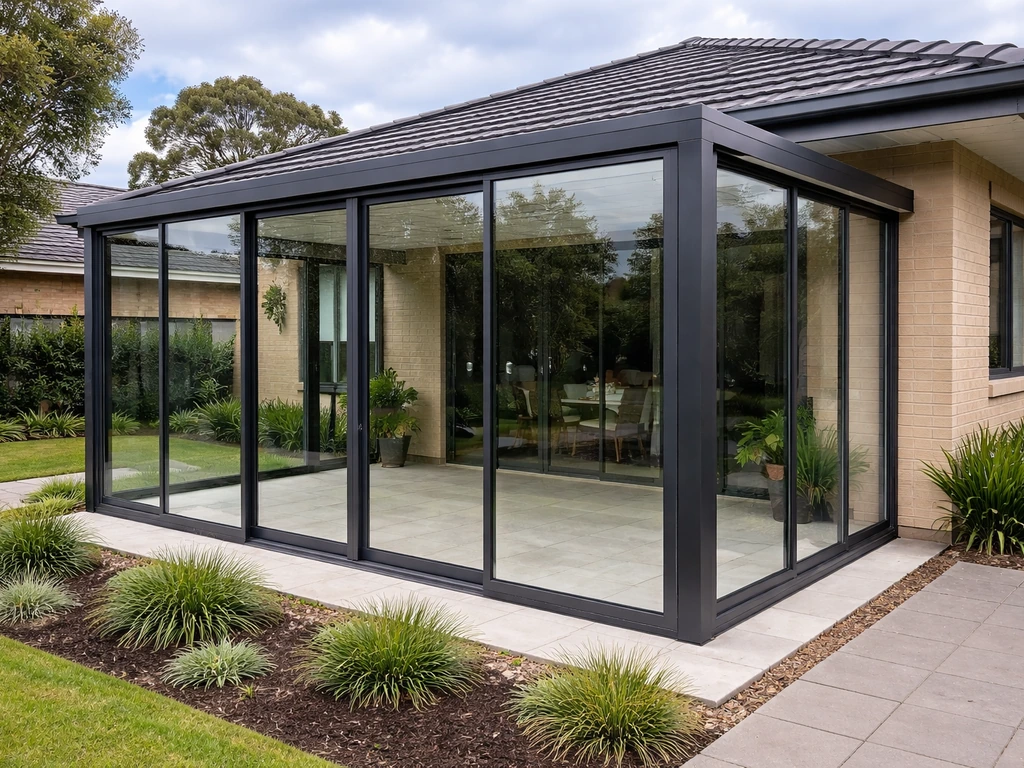
How Much Does It Cost to Enclose a Patio in Australia
Patio enclosure costs in Australia by material and size, with price ranges, cost drivers, and quote checklist for accura
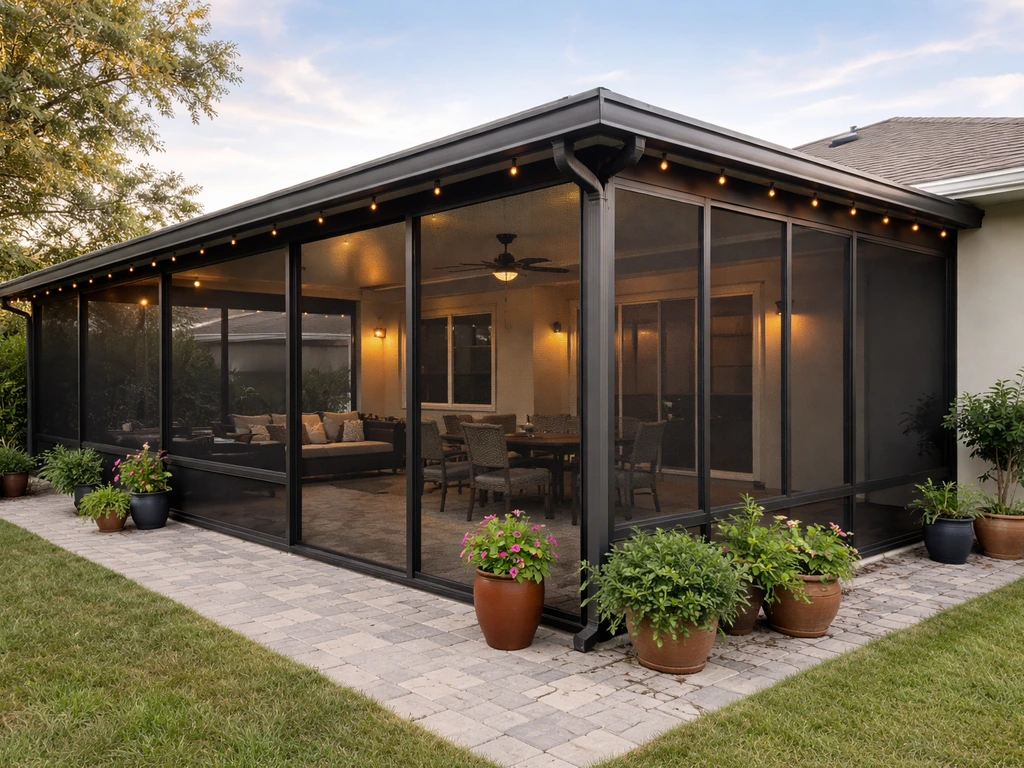
How Much Does It Cost to Close in a Patio? Budget Guide
Estimate the cost to enclose a patio, compare screen vs glass, and budget for sizes like 10x10 to 20x20.
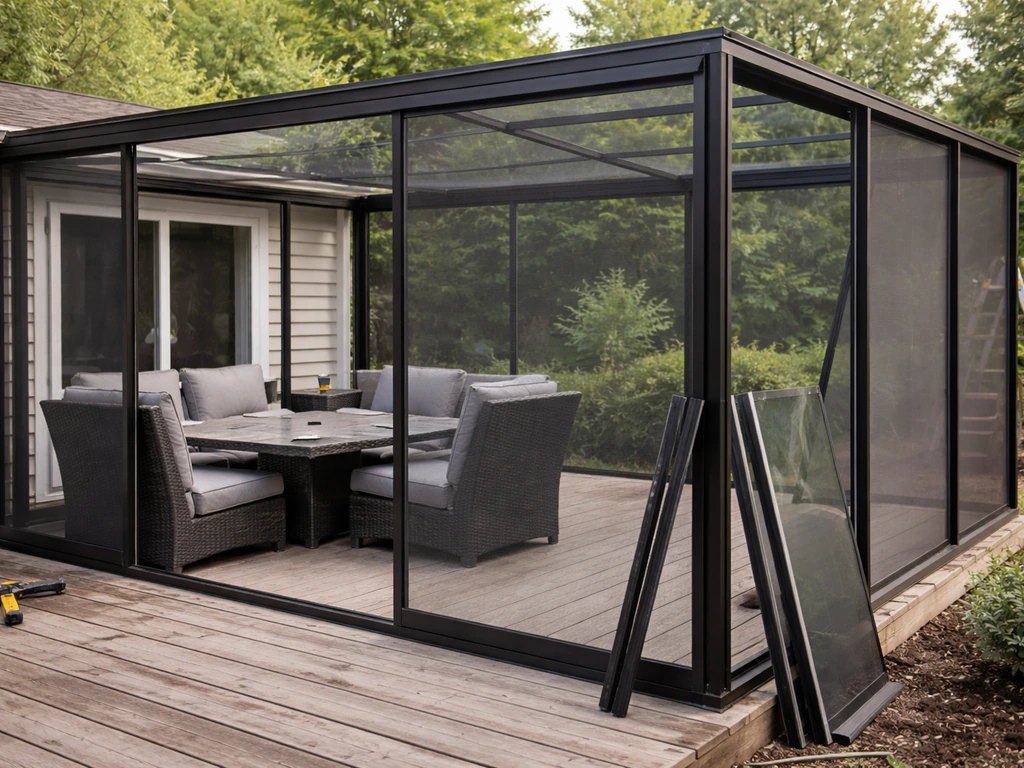
How Much to Enclose a Patio Cost Guide by Size
Ballpark costs to enclose a patio by size, scope, and materials, plus DIY vs contractor and quote checklists.