
Adding a screened-in patio typically costs $1,500 to $10,000+ for screening an existing structure, or $7,000 to $70,000+ for new construction, depending on size, materials, and how much site prep is involved. If you just want screens added to a patio that's already there, budget $10 to $25 per square foot. If you're building the whole thing from scratch, slab, framing, roof, and screens, expect $50 to $175 per square foot for a standard attached enclosure, and up to $400 per square foot for high-end freestanding builds.
How Much to Add a Screened-In Patio Cost Breakdown

Felix Carver
29 Apr 2026
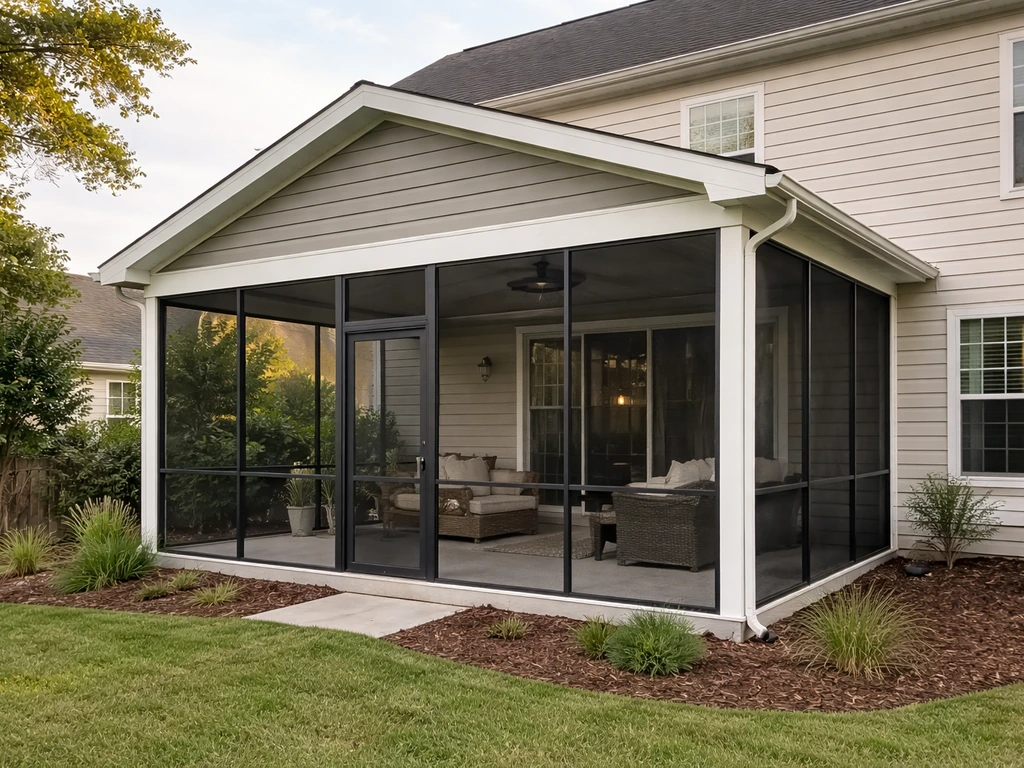
Cost factors that change your screened patio price
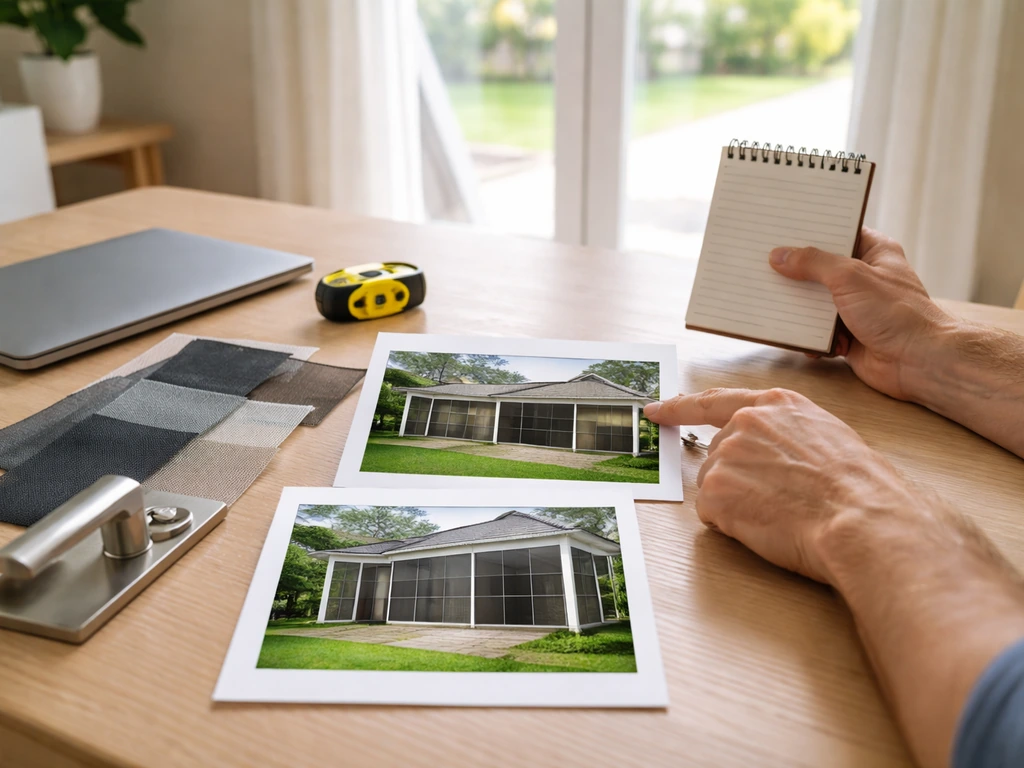
No two screened patio projects land at the same price, and the gap between a $3,000 job and a $30,000 job usually comes down to a handful of decisions. Understanding what actually drives the cost helps you know what's flexible and what's not.
- New build vs. adding to an existing structure: Screening an existing patio or porch is dramatically cheaper than building one from scratch. If you already have a concrete slab and a covered roof, you're mostly paying for framing and screen panels. Starting from bare ground means paying for footings, a slab or deck, framing, a roof system, and then the screens.
- Size of the patio: This is the single biggest cost driver. A 10x10 enclosure (100 sq ft) and a 20x20 (400 sq ft) use four times the materials and significantly more labor. Every square foot adds up fast.
- Roof type: If your existing patio already has a roof, you're set. If not, adding a solid roof adds $20 to $60 per square foot on its own. A simple pergola-style shade structure costs less; a full insulated roof panel system costs more.
- Screen material choice: Standard fiberglass screen is the budget option. Solar screen, pet-resistant, or no-see-um screen can cost 2 to 4 times more per panel.
- Frame material: Aluminum framing is the most common and cost-effective. Wood framing costs more to install but can be painted to match your home. Vinyl falls in the middle.
- Site conditions: Sloped lots, poor drainage, or soft soil can push foundation and grading costs higher before a single screen panel is installed.
- Your location: Labor rates vary significantly by region. A contractor in the Southeast or Midwest will typically charge less than one in the Northeast, California, or the Pacific Northwest.
- Permits and inspections: Most jurisdictions require a permit for a screened enclosure attached to the home. That alone can add $500 to $2,000 to your budget depending on where you live.
Typical screened-in patio cost ranges by size
Here's a straightforward look at what you can expect to spend at common patio sizes. The ranges below split out two scenarios: adding screens to an existing covered patio (the cheaper path) versus building a fully new screened enclosure from the ground up.
| Patio Size | Sq Ft | Screening Existing Patio | New Screened Enclosure Build |
|---|---|---|---|
| 10x10 | 100 | $1,000 – $2,500 | $5,000 – $17,500 |
| 12x12 | 144 | $1,500 – $3,400 | $7,200 – $25,200 |
| 16x16 | 256 | $2,500 – $6,400 | $12,800 – $44,800 |
| 20x20 | 400 | $4,000 – $10,000 | $20,000 – $70,000 |
| 25x25 | 625 | $6,250 – $15,600 | $31,250 – $109,000+ |
Those new-build ranges look wide because they are. The low end assumes basic aluminum framing, standard fiberglass screen, a simple shed or flat roof, and a concrete slab on a level lot. The high end reflects premium screen systems, insulated roof panels, wood or composite trim, decorative flooring like pavers or stamped concrete, and all the extras. Most homeowners land somewhere in the middle, around $80 to $120 per square foot for a solid mid-range new build.
For context, one commonly cited benchmark puts the national average for a screened-in porch new build at around $32,000 to $35,000. That lines up with a 16x20 or 20x20 patio at the mid-range per-square-foot rate.
Screen system choices and what they cost
The screening system is where a lot of homeowners either save money or accidentally spend way more than they planned. You're making three main decisions: the screen material, the frame, and the door setup.
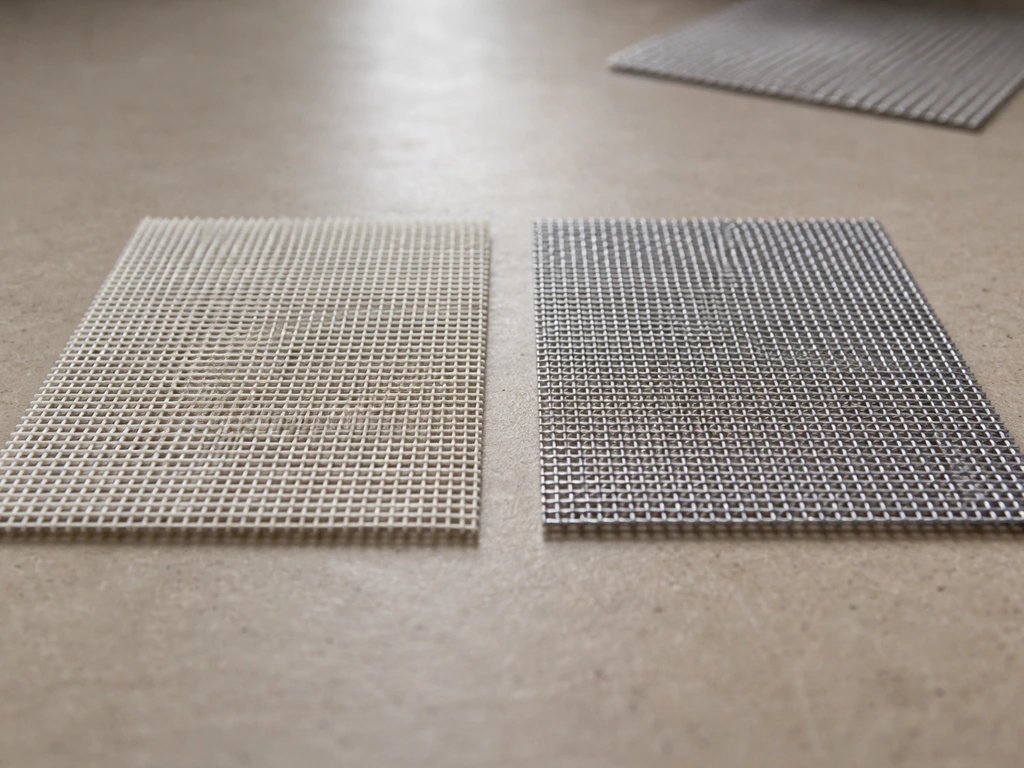
Screen material options
| Screen Type | Cost per Sq Ft (Material) | Best For | Downside |
|---|---|---|---|
| Fiberglass (standard) | $0.30 – $0.80 | Budget builds, temperate climates | Less durable, can sag over time |
| Aluminum screen | $0.70 – $1.50 | Durability, coastal areas | Higher cost, can dent |
| Solar/sun screen | $1.00 – $2.50 | Hot, sunny climates (heat reduction) | Reduces visibility and airflow |
| No-see-um screen | $1.50 – $3.00 | Areas with tiny insects or gnats | More expensive, slightly less airflow |
| Pet-resistant screen | $2.00 – $4.00 | Homes with dogs or cats | Stiffest material, pricier frames needed |
| Retractable screen panels | $200 – $600+ per panel | Flexibility, open-air option | High cost, more maintenance |
For most people in most climates, standard fiberglass is perfectly fine and holds up well for 10 to 15 years with basic care. If you're in Florida or a Gulf Coast state where no-see-ums are a real problem, the upgrade to no-see-um screen is genuinely worth it. Pet owners who want to avoid re-screening in three years should price in the pet-resistant option from the start.
Frame material
Aluminum framing is the industry standard for screened enclosures, and for good reason. It doesn't rot, it resists rust in most climates, and it's lighter and easier to install than wood. Painted or powder-coated aluminum frames run $15 to $35 per linear foot installed. Wood framing (pressure-treated or cedar) costs $25 to $60 per linear foot and requires ongoing maintenance, but it looks more traditional and integrates better with homes that have wood trim throughout. Vinyl framing sits in between on cost but expands and contracts with temperature swings more than aluminum, which can affect screen tension over time.
Screen doors
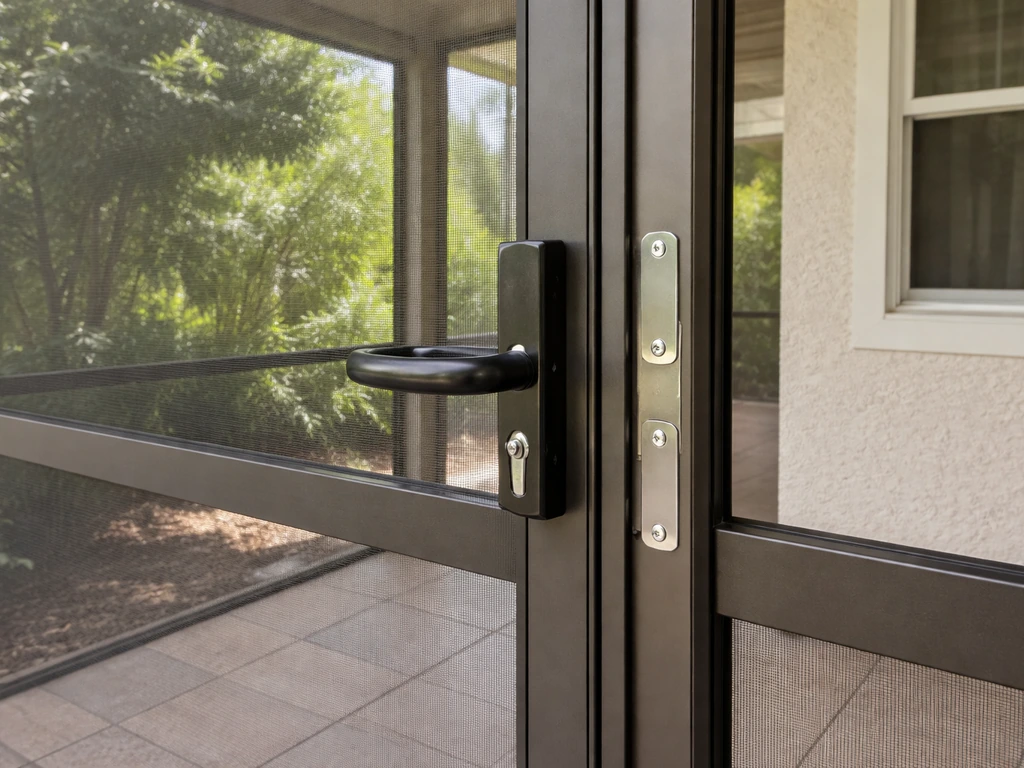
You'll need at least one screen door, and most projects include one or two. A basic single hinged aluminum screen door runs $150 to $400 installed. A wider double door setup (common for patios that open to a yard) costs $400 to $900 installed. Retractable or sliding screen doors are the premium option at $500 to $1,500 per opening. Don't skip on door closers and latches, cheap hardware is one of the most common things homeowners regret after the fact.
DIY vs. hiring a contractor: what's actually realistic
The honest answer is that DIY makes sense for some parts of this project and not others. Pulling permit and doing your own concrete pour or framing work without experience is where projects go sideways and end up costing more to fix than hiring out would have.
Where DIY works well
- Replacing existing screens in an already-built frame: This is a legitimate weekend DIY job. Screen spline and a screen roller tool cost under $30, and screen material runs $0.30 to $0.80 per square foot. You can re-screen a 12x12 patio for $100 to $200 in materials.
- Installing a screen kit on an existing covered patio: Several manufacturers sell complete aluminum screen enclosure kits for existing patios. If the slab and roof are already in place, a handy homeowner with basic carpentry skills can install one of these kits over a weekend. Expect to pay $1,500 to $4,000 for the kit depending on size, saving you $2,000 to $5,000 in labor.
- Painting or staining finished frames: Easy DIY maintenance task that extends the life of wood frames significantly.
Where you should hire a contractor
- Any new foundation, footing, or slab work: Concrete is unforgiving. Improper grading, inadequate thickness, or poor drainage will cause cracking and settling within a few years.
- Roofing and structural framing: Roof attachments to the home must meet local code and be properly flashed to avoid leaks. This is not the place to guess.
- Electrical work: Outlets, ceiling fans, and lighting in an outdoor enclosure require weatherproof fixtures and typically need to be on a GFCI circuit. Most jurisdictions require a licensed electrician.
- Full screened enclosure builds: Coordinating the slab, framing, roof, and screening requires trades working in sequence. Managing that yourself adds significant project management time and risk.
When you hire a contractor, labor typically runs 40 to 60 percent of the total project cost. On a $20,000 screened patio build, that's $8,000 to $12,000 in labor alone. Get at least three bids and make sure each contractor is pricing the same scope, foundation type, roof material, screen type, and door count. Bids that come in dramatically lower than the others usually mean something is missing from the scope, not that you found a deal.
Site prep, foundation, flooring, and extras
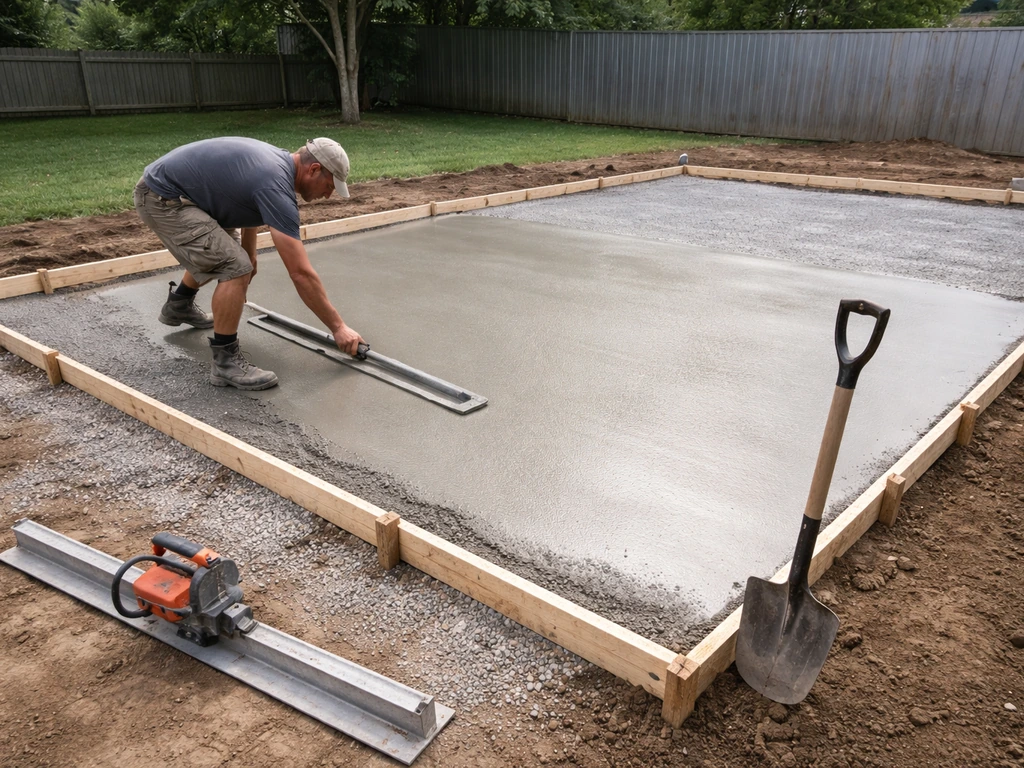
These are the line items that catch homeowners off guard. A screened-in patio isn't just screens and a frame. What's underneath and around it matters a lot for longevity and usability.
Foundation and flooring
If you don't have an existing slab, you'll need one. A standard 4-inch concrete slab costs $6 to $12 per square foot installed, so a 16x20 slab (320 sq ft) runs $1,920 to $3,840 before anything else gets built. If you want something nicer than plain gray concrete, here's how common patio flooring options compare on cost:
| Flooring Type | Installed Cost per Sq Ft | Notes |
|---|---|---|
| Basic concrete slab | $6 – $12 | Most common, functional, durable |
| Stamped concrete | $12 – $25 | Decorative, mimics stone or tile |
| Concrete pavers | $15 – $30 | Easy to repair individual pieces |
| Natural stone (flagstone) | $20 – $45 | High-end look, irregular cuts cost more |
| Brick pavers | $15 – $25 | Classic look, long lifespan |
| Composite decking (if elevated) | $25 – $50 | Good for decks being converted to screened rooms |
For a screened patio that's going to have furniture, a ceiling fan, and regular use, a standard concrete slab is perfectly good. Save the stamped concrete or pavers for areas where aesthetics are a higher priority or where the patio is visible from the street or entertaining areas.
Electrical, lighting, and fans
A ceiling fan with a light kit is one of the best quality-of-life upgrades for a screened patio in warm climates. Running a new electrical circuit from your panel to the enclosure typically costs $400 to $900, depending on how far the panel is from the patio. Each weatherproof ceiling fan (installed by an electrician) adds $150 to $400. Dedicated outdoor outlet circuits cost $200 to $500 each. Budget $1,000 to $2,500 total for a basic electrical package with one fan, one light fixture, and two outlets.
Permits and inspections
Most jurisdictions require a building permit for a screened enclosure attached to the home, especially if it includes a new roof structure. Permit fees typically run $200 to $1,500 depending on your municipality and the assessed value of the project. Some areas also require a separate electrical permit. Skip the permit and you risk issues when you sell the home, trouble with homeowner's insurance if something goes wrong, and potentially having to tear down unpermitted work. It's not worth it.
Other extras to budget for
- Gutters and drainage: If the new roof creates a new drainage path toward the house or yard, gutters are a must. Add $500 to $1,500 for gutters and downspouts.
- Grading and drainage on the slab: Slopes away from the house need to be maintained. If your lot is problematic, add $500 to $2,000 for grading.
- Ceiling finish: Exposed rafters look fine in casual settings, but a finished ceiling (tongue-and-groove wood, beadboard, or aluminum soffit panels) adds $3 to $10 per square foot.
- Trim and paint: Matching your home's exterior adds polish and protects frames. Budget $500 to $2,000 depending on complexity.
- Wind and storm screen upgrades: In hurricane-prone areas, high-wind-rated screen systems with reinforced framing cost 20 to 40 percent more than standard systems but may be required by local code.
Regional pricing and getting accurate local quotes
Where you live matters more than most people realize. Labor rates alone can shift your total project cost by 30 to 50 percent compared to the national average. Here's a general sense of how regional costs shake out:
| Region | Cost Relative to National Average | Notes |
|---|---|---|
| Southeast (FL, GA, AL, SC) | 10–20% below average | High demand keeps contractors competitive; screened enclosures are very common here |
| Midwest (OH, IN, IL, MI) | 10–15% below average | Lower labor rates, but shorter season may affect contractor availability |
| Texas / South Central | At or slightly below average | Competitive market, but material costs have risen with construction demand |
| Northeast (NY, NJ, MA, CT) | 20–40% above average | Higher labor costs and stricter permitting add to totals |
| California / West Coast | 30–50% above average | Among the highest labor and permit costs in the country |
| Mountain West (CO, UT, AZ) | Near or slightly above average | Varies significantly by metro area |
To get an accurate local quote, you need to do a little prep work before calling contractors. Know your patio dimensions, whether you have an existing slab and covered roof, what screen material you want, and whether you need electrical work. Contractors give much tighter bids when you hand them a clear scope rather than asking 'what would something like this cost?'
Get at least three written bids. Ask each contractor to break out labor, materials, permits, and any subcontractor work (like electrical) as separate line items. That makes it easy to compare apples to apples and spot if someone is cutting corners on materials or skipping permit fees. Check contractor licensing and insurance, and ask to see a recent screened enclosure project in your area.
If you're also considering a full patio enclosure with glass or solid walls rather than just screens, the cost jumps significantly compared to a screened-only project. Similarly, if you're deciding between building a screened patio versus a screened deck addition, the structure type changes the cost profile considerably, since elevated deck framing costs more per square foot than a ground-level slab.
Budgeting worksheet and your next steps
Before you call a single contractor, spend 20 minutes working through this quick framework. It gives you a realistic budget range and helps you walk into conversations knowing what you need.
Step 1: Measure and define your project
- Measure the exact dimensions of your patio or the space you want to enclose. Write down length x width and calculate total square footage.
- Identify whether you have an existing concrete slab (yes/no), an existing covered roof (yes/no), and existing framing or posts (yes/no).
- Decide your scenario: A = adding screens only to an existing covered patio, B = building a new screened enclosure from scratch.
- Pick your priority screen material (standard fiberglass, solar, no-see-um, or pet-resistant) and frame preference (aluminum, wood, or vinyl).
- Note any extras you want: ceiling fan, electrical outlets, finished ceiling, gutters, decorative flooring.
Step 2: Build your budget range
Use this simple worksheet to estimate your total cost range before getting quotes:
| Line Item | Your Sq Ft | Low Rate | High Rate | Low Estimate | High Estimate |
|---|---|---|---|---|---|
| Screening existing patio (Scenario A) | ___ | $10/sq ft | $25/sq ft | $___ | $___ |
| New full enclosure build (Scenario B) | ___ | $50/sq ft | $175/sq ft | $___ | $___ |
| New concrete slab (if needed) | ___ | $6/sq ft | $12/sq ft | $___ | $___ |
| Upgraded flooring (pavers, stamped, etc.) | ___ | $12/sq ft | $45/sq ft | $___ | $___ |
| Roof addition (if no existing roof) | ___ | $20/sq ft | $60/sq ft | $___ | $___ |
| Electrical (fan, outlets, lighting) | — | $1,000 | $2,500 | $___ | $___ |
| Screen doors (1–2) | — | $300 | $900 | $___ | $___ |
| Permits and inspections | — | $200 | $1,500 | $___ | $___ |
| Gutters, drainage, grading | — | $500 | $2,000 | $___ | $___ |
| Ceiling finish and trim | ___ | $3/sq ft | $10/sq ft | $___ | $___ |
| TOTAL ESTIMATED RANGE | — | — | — | $___ | $___ |
Step 3: Validate your bids
Once you have contractor bids, compare them against your worksheet ranges. If a bid comes in well below your low estimate, ask the contractor specifically what's included for foundation, roof, screen grade, and permits. If a bid is well above your high estimate, ask for a detailed line-item breakdown and see where the premium is going. Sometimes it's justified (premium materials, experienced crew, strong warranty), and sometimes it's just margin.
Finally, factor in your long-term plans. If you're thinking about eventually replacing just the screens after wear and tear, replacement screen costs are a separate (and manageable) expense over time. If you plan to replace a patio screen later, it helps to estimate screen, frame, and labor costs separately so you can budget accurately replacing just the screens. And if you're weighing a screened patio against a more fully enclosed patio room with windows or a solid roof, the cost difference between those options is substantial and worth a separate evaluation before you commit to a design.
The bottom line: most homeowners can <a data-article-id="98ABED6C-4320-49EA-A07B-70FAAE824B4E">screen in an existing patio</a> for $3,000 to $10,000, or build a brand-new screened enclosure for $15,000 to $50,000, depending on size and finish level. If your goal is to stop the wind and add weather protection, deciding how much it costs to close in a patio helps you compare the screened-in option versus glass or solid walls how much does it cost to close in a patio. How much does it cost to enclose a patio in Australia depends on whether you are enclosing with screens only or switching to glass or solid walls how much does it cost to enclose a patio australia. Knowing your size, your existing site conditions, and your must-have features before you start talking to contractors puts you in a much stronger position to get an accurate bid and avoid expensive surprises mid-project. If you're comparing branded suppliers like Stratco, their current pricing can also affect the total cost of a screened patio enclosure in Australia Stratco patio costs in Australia.
FAQ
If I already have a covered patio, do I still pay new-construction pricing to add a screened-in area?
It depends on what you already have. If the patio already has a solid roof and you only need to add a screen enclosure to the open sides, costs are usually at the low end of the “add screens to an existing covered patio” range. If the roof is missing (or not structurally suitable to carry new framing), you should budget closer to the “new construction” numbers because the project stops being “screens only” once you add posts, beams, or a new slab/footings.
What site issues commonly add cost after the quote for screened patios?
A lot of “too-cheap” bids miss slope, drainage, and foundation details. Ask whether the contractor is verifying footing depth and soil conditions, and whether they will level the slab or address low spots that can cause water pooling inside the screened area. Water intrusion is a common reason enclosures need early repairs, even when screens are in good shape.
Does the cost change a lot if my screened-in patio is built over an existing deck?
If the patio is elevated or part of an existing deck, framing and support typically cost more than a ground-level slab. Expect higher pricing when the scope includes deck stair adjustments, ledger or beam tie-ins, or building a screened enclosure over open air. If you’re comparing “screened deck” vs “screened patio,” ask for an apples-to-apples per-square-foot number that includes the deck-to-enclosure transition.
Should I prioritize cheaper screen material or plan for future re-screening?
Screen replacement is a separate line item later, but hardware and framing choices affect how often you need to re-screen. If you expect pets, windy conditions, or frequent storms, it can be worth paying upfront for higher-durability screen types and better track or spline systems. Also ask whether the quoted screen material includes the installation labor for future troubleshooting, not just the screen mesh.
Will adding a roof over the screened patio require structural work or engineering fees?
Yes. Even if the patio is attached, some areas require additional engineering or structural upgrades when you add a new roof section or larger spans. Ask whether the contractor is responsible for structural drawings, load calculations, and any changes to existing beams or connections. This is especially important if you want a flat roof, a larger footprint, or a roof that ties into the home.
What should I ask about sealing and weatherproofing so the enclosure actually stays dry?
Plan for weatherproofing at transitions. Ask about flashing at the house connection, caulk types, and how the contractor seals gaps where framing meets masonry or siding. Poor sealing is one of the fastest ways to end up with insects, water leaks, and corrosion on fasteners, even when screens themselves are high quality.
What drives the cost difference between hinged, sliding, and retractable screen doors?
Do not treat “per-opening” door pricing as one-size-fits-all. The total cost changes with door width, whether the door must swing or slide, screen type, and whether you add self-closing mechanisms and magnetic catches. Ask for the door rough opening size and the door hardware included, especially closers and latches.
Do permits and inspections cost more if the project includes electricity or a new roof?
A common mistake is assuming permits are included. Ask for a permit line item (and, if applicable, an electrical permit) and confirm who submits the paperwork. Also ask whether the contractor includes any inspection fees and whether they will provide documentation you can keep for resale.
What electrical details should I confirm to avoid change orders for ceiling fans and outlets?
If you’re hiring multiple trades, electrical is often where delays and extra charges happen. Ask whether the contractor will coordinate the electrician and schedule, and confirm whether you need a new outdoor GFCI outlet circuit or only a single fan/light connection. The distance from the panel and whether you need trenching or conduit runs can change labor costs.
Is it better to add outlets and lighting now, or can I cheaply add them later?
Yes, and it’s often worth budgeting for smarter upgrades rather than upgrades later. If you’re adding fans and outlets, consider whether you want wiring routed behind trim for a cleaner finish, plus extra junction boxes for future lighting. Ask what’s included for weather-rated fixtures and whether the contractor installs fan-rated boxes and proper bracing.
Where does DIY usually save money for screened patios, and where does it backfire?
For a straightforward “screens over an existing foundation,” DIY can make sense for minor tasks, like removing existing fixtures and doing prep. It usually does not make sense for structural changes, concrete work, or anything permit-driven. If permits apply in your area, unpermitted DIY work can create inspection failures and increase total cost when a contractor has to redo or correct it.
How do I compare contractor bids so one company isn’t missing key scope items?
When you request bids, make the scope specific enough that you can compare line items. Ask each contractor to list: footing/slab type, roof type and materials (and whether it’s tied to the home), screen grade, frame finish method (painted vs powder-coated), number and type of doors, and electrical scope. If one bid won’t provide a written breakdown, treat it as a red flag.
Next Articles
How Much Does a Stratco Patio Cost in Australia? 2026 Guide
2026 cost ranges for Stratco patios in Australia, installed vs supply, plus quote checklist and hidden extras to expect
How Much Does It Cost to Replace a Patio Screen
Budget patio screen repairs or full replacement with real cost ranges by size, damage, materials, and DIY vs pro labor.
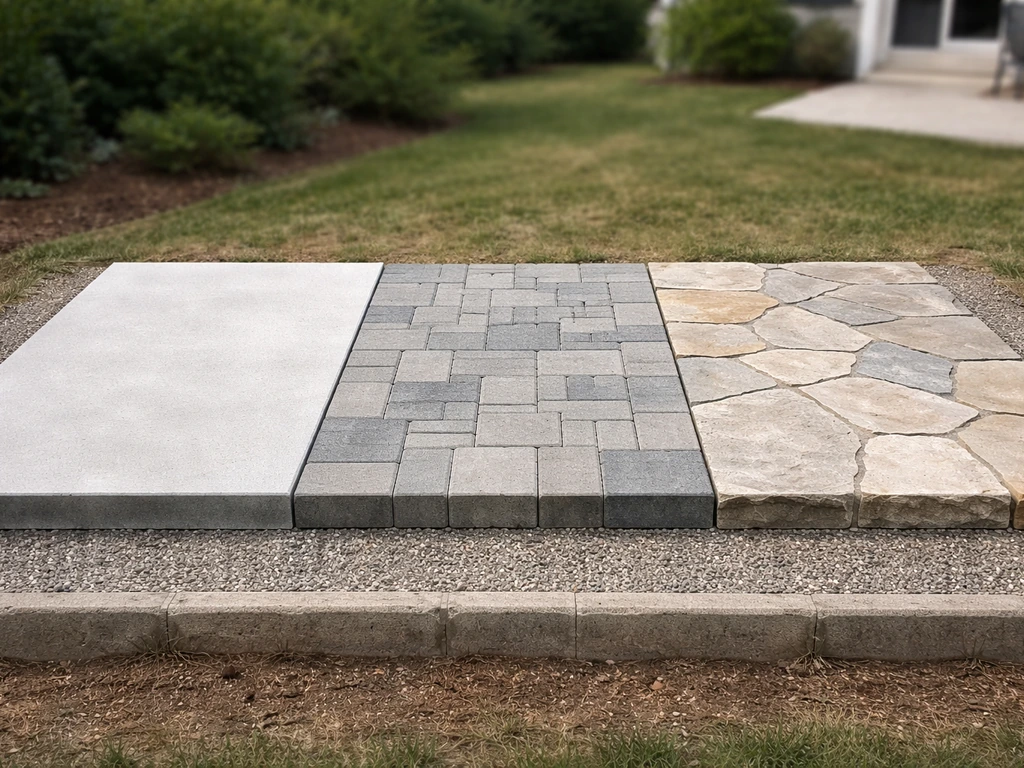
How Much Should I Expect to Pay for a Patio
Patio cost guide with real price ranges by size and material, full line-item budget, DIY vs install, and quote checklist