
A new patio typically costs between $8 and $30 per square foot installed, depending on the material you choose. For most homeowners, a mid-size patio lands somewhere between $2,500 and $12,000 total. Concrete is the most affordable path at $6–$10 per sq ft, pavers and brick run $10–$30, and blank" rel="noopener noreferrer">natural stone like flagstone sits at the top of the range at $15–$42 per sq ft. Stamped concrete splits the difference, giving you a decorative look for roughly $12–$25 per sq ft. Those ranges cover labor, materials, and base prep for a standard residential install.
How Much Does a New Patio Cost? Prices by Type and Size

Felix Carver
27 May 2026
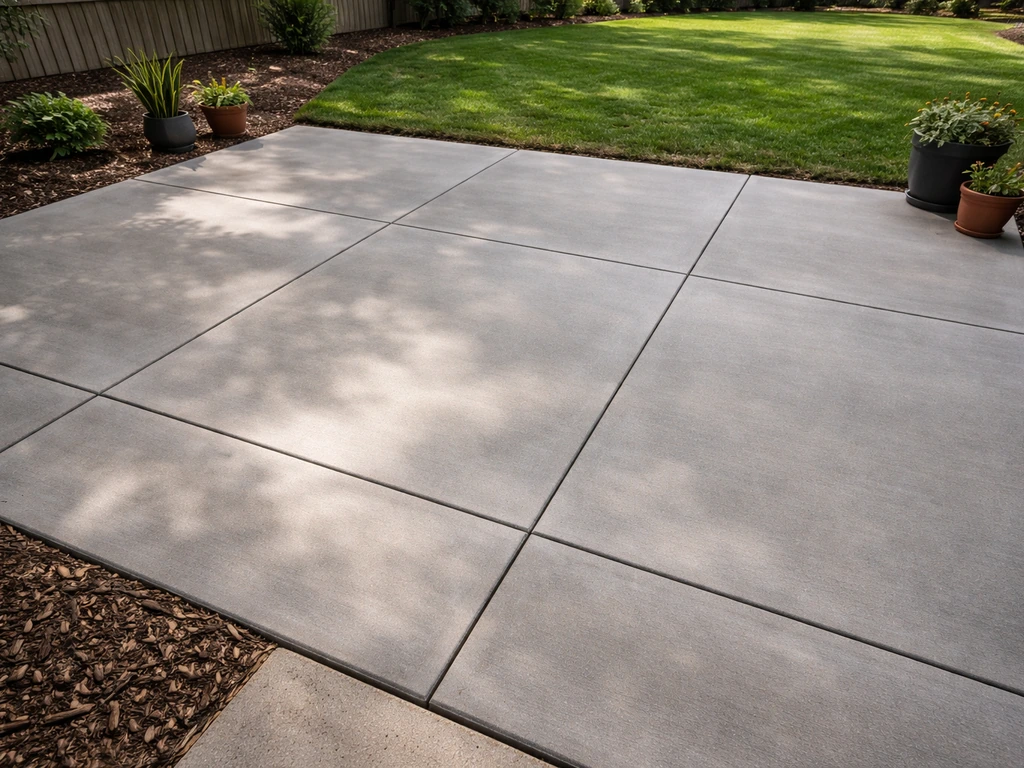
Cost ranges by patio type, quick reference
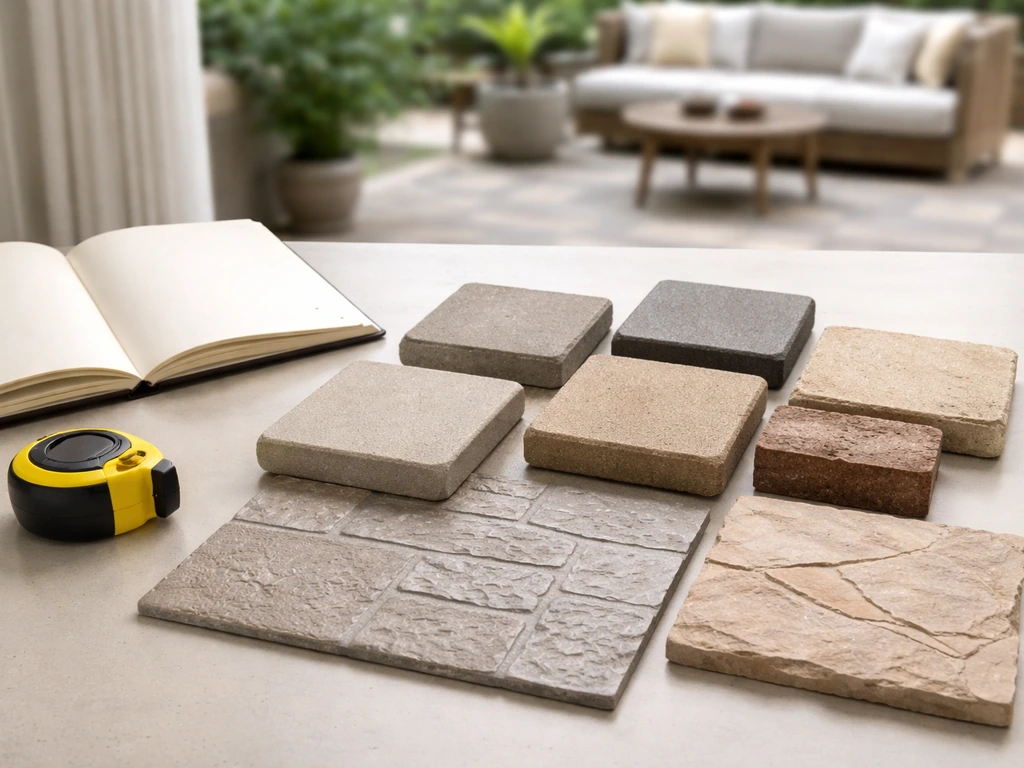
Here are the installed price ranges you should be working with in 2026. These include materials, base prep, and labor. They do not include extras like lighting, built-in seating, or drainage systems.
| Patio Type | Installed Cost per Sq Ft | Notes |
|---|---|---|
| Plain concrete | $6–$10 | Most affordable; broom finish standard |
| Stamped concrete | $12–$25 | Labor premium is the main cost driver |
| Concrete pavers | $10–$17 | Popular mid-range option |
| Brick | $10–$30 | Wide range based on pattern and mortar method |
| Flagstone (dry-laid) | $15–$32 | Natural variation; depends on stone type |
| Flagstone (mortared) | $30–$42+ | More labor-intensive; more durable long term |
| Natural stone (materials only) | $7–$16 | For budget comparison if DIYing |
If someone quotes you significantly below the low end on pavers or flagstone, ask questions. That often means a thinner base, no geotextile fabric on clay soils, or labor being priced without proper compaction. Cutting corners on base prep is where patios fail within a few years.
What size patio actually costs: 10x10, 12x12, and 20x20
Size is the most obvious cost lever, but it does not scale in a perfectly straight line. If you also want a quick estimate for how much does a patio cost, start with the size costs and then apply the material and labor ranges in this article. Mobilization, base prep equipment, and minimum labor charges mean small patios cost more per square foot than large ones. Here is what real numbers look like for the most common sizes homeowners plan for.
| Patio Size | Square Footage | Plain Concrete | Pavers | Stamped Concrete | Flagstone |
|---|---|---|---|---|---|
| 10x10 | 100 sq ft | $600–$1,000 | $1,000–$1,700 | $1,200–$2,500 | $1,500–$3,200+ |
| 12x12 | 144 sq ft | $860–$1,440 | $1,440–$2,450 | $1,730–$3,600 | $2,160–$4,600+ |
| 20x20 | 400 sq ft | $2,400–$4,000 | $4,000–$6,800 | $4,800–$10,000 | $6,000–$16,800+ |
A 20x20 concrete patio is a well-known benchmark. ConcreteNetwork puts that at roughly $3,200–$7,200 installed depending on finish complexity, which lines up with the $6–$18 per sq ft spectrum from plain to elaborate. For a 400 sq ft flagstone patio, expect to land somewhere between $6,000 on the low end for simple dry-laid work and $16,000 or more for a mortared installation with premium stone. These are realistic numbers, not outliers.
Where the money actually goes: materials, labor, base prep, and add-ons
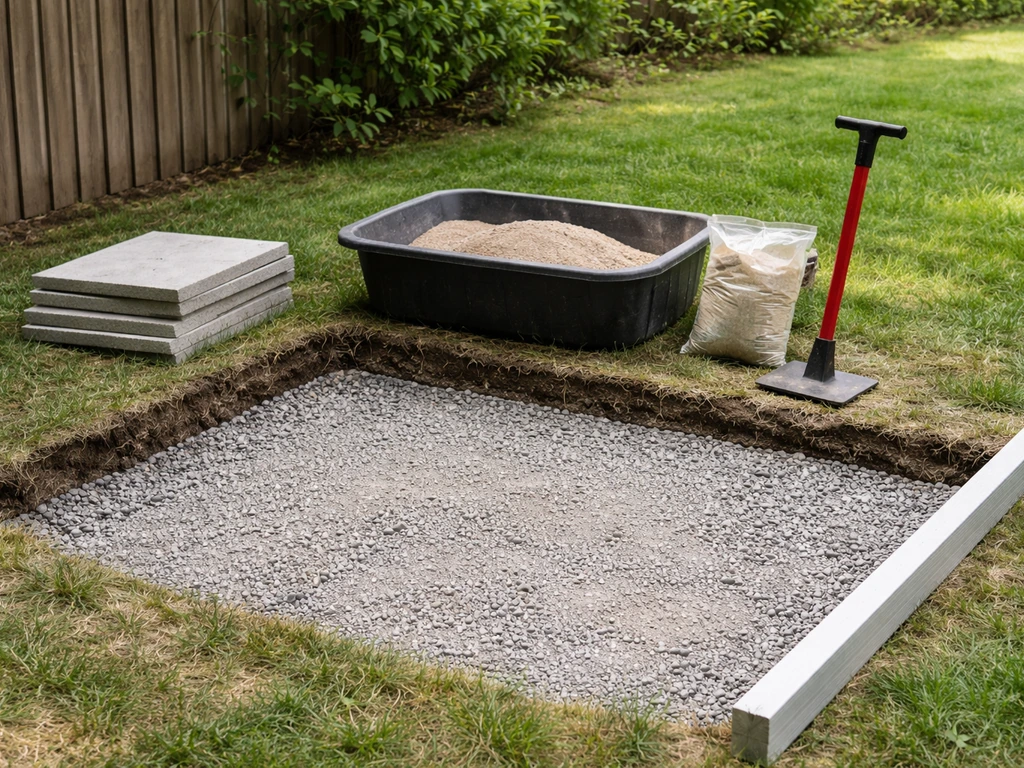
When a contractor gives you an installed price, it is covering several distinct cost layers. Understanding what those are helps you compare quotes fairly and catch when something important is missing.
Base preparation
This is the part most homeowners do not think about until they see the invoice. A properly built patio needs excavation, a compacted aggregate sub-base (typically MOT Type 1 crushed stone in the UK, or compacted gravel in the US), and on clay-heavy soils, a geotextile fabric layer to prevent migration.
ICPI standards call for the soil subgrade to be compacted to at least 98% standard Proctor density before any base material goes down.
For paver work, you also need about an inch of bedding sand on top of the aggregate base. Skip any of this and you will have a sinking, uneven patio within a few seasons. Base prep typically adds $1. 50–$3.
00 per sq ft to a project, sometimes more if the existing grade is poor.
Materials
Concrete pavers run about $4–$6 per sq ft for materials alone. Natural stone paver materials jump to $7–$16 per sq ft depending on type. For concrete slabs, the material cost is relatively low since you are paying mostly for the pour and finishing labor. Flagstone and brick materials are highly variable because stone comes in different thicknesses, sources, and grades, and brick pricing depends on whether you are using reclaimed or new material.
Labor
For paver installation, HomeGuide breaks labor out at $6.25–$10.90 per sq ft, separate from base and material costs of $3.40–$6.20 per sq ft. For concrete work, labor is embedded in the pour price. Stamped concrete carries a significant labor premium because the pattern work, color releases, and sealing all take more time and skill than a standard broom finish. That is why the per-sq-ft cost nearly doubles compared to plain concrete even though the raw material cost difference is modest.
Add-ons homeowners commonly forget
- Permits: many municipalities require them for patios over a certain size, typically $100–$500
- Drainage and grading: if water pools near your foundation, you may need swales or channel drains added
- Control joints: a 4-inch concrete slab needs joints every 8–12 feet; cutting these after the pour is standard but sometimes billed separately
- Sealing: concrete and pavers benefit from periodic sealing; initial sealing at project end adds $0.50–$2.00 per sq ft
- Edging and border patterns: decorative soldier-course borders on paver patios add $3–$7 per linear foot
- Lighting and electrical rough-in: budget $500–$2,000+ if you want in-patio lighting
- Removal of existing hardscape: breaking out and hauling away an old patio adds $1–$3 per sq ft
Concrete vs pavers vs stamped vs brick vs flagstone: what drives the price difference
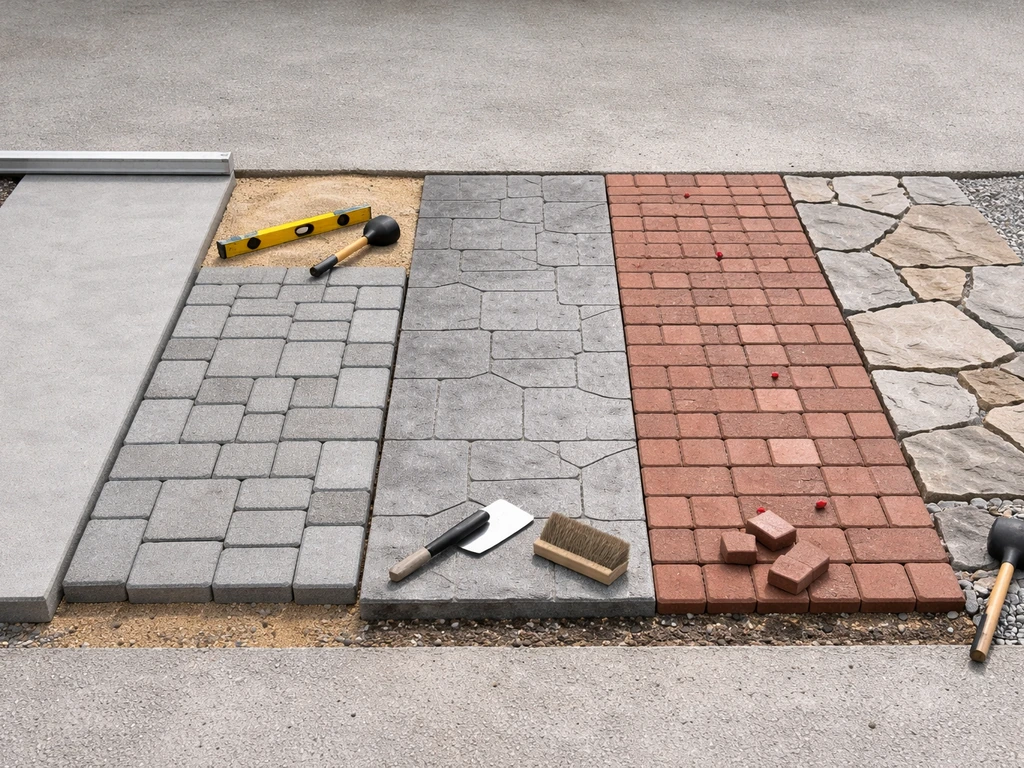
The price spread between patio types is not random. It comes down to three things: how labor-intensive installation is, how expensive the raw material is, and how much skill the job requires.
Plain concrete is cheap because it installs fast. You form it, pour it, finish it, and move on. A broom finish on a standard 4-inch slab with control joints spaced every 8–10 feet is a straightforward job for any experienced crew. Stamped concrete costs twice as much primarily because the stamping, coloring, detailing, and sealing add several hours of skilled labor to every hundred square feet.
Pavers cost more than plain concrete because of the multi-layer installation process. Each paver gets individually set and leveled in the bedding sand, and the base prep requirements are more exacting than a poured slab. That said, pavers have a big long-term advantage: individual damaged pieces can be replaced without touching the rest of the surface. A cracked concrete slab is much harder to repair invisibly.
Brick is in a similar price territory to pavers, but the range is wider ($10–$30 per sq ft) because pattern complexity and whether you use mortar or sand setting dramatically change labor time. Herringbone and basket-weave patterns take longer than running bond.
Flagstone sits at the top of the cost range mainly because of material cost and irregular fitting. Natural stone slabs need to be individually cut or fitted together like a puzzle, which is slow work. Mortared flagstone on a concrete base is the most expensive approach but also the most stable. Dry-laid flagstone over a compacted base is cheaper but can shift in freeze-thaw climates. For more detail on how resin-bound or porcelain surfaces compare, those are separate material categories worth exploring if you want a different aesthetic.
| Patio Type | Main Cost Driver | Long-Term Repair Ease | Best For |
|---|---|---|---|
| Plain concrete | Low material + fast labor | Moderate (patch visible) | Budget-first projects |
| Stamped concrete | Skilled labor + finishing | Difficult (pattern matching) | Decorative look on a mid budget |
| Pavers | Multi-layer base + setting labor | Easy (replace individual units) | Durability + flexibility |
| Brick | Pattern complexity + material | Moderate | Classic aesthetic |
| Flagstone | Material cost + fitting labor | Moderate to difficult | High-end natural look |
DIY vs hiring a contractor: real cost impact and honest risk assessment
Going DIY can cut your total cost roughly in half on a concrete or paver patio since labor typically represents 50–60% of the installed price. On a 144 sq ft (12x12) plain concrete patio, you might pay $860–$1,440 installed, but spend only $400–$600 on materials if you do the work yourself. That is a real saving. The question is whether the job is actually within reach.
Concrete DIY is harder than it looks. You need to form correctly, order the right volume, pour and finish before the concrete sets, and cut control joints at the right time. Mistakes are permanent and expensive to fix. Most first-timers underestimate how physical and time-sensitive the work is.
DIY paver installation is more forgiving for a patient homeowner. You can work at your own pace, and if a section is uneven you can lift and re-set it. The main DIY risk with pavers is skimping on base depth or compaction, which causes settling later. Renting a plate compactor (around $80–$150 per day) is not optional if you want the patio to last.
Flagstone and mortared installs are generally not good DIY candidates unless you have masonry experience. The margin for error is low, the material is expensive, and a sloppy mortar job looks bad immediately.
- Good DIY candidates: dry-laid pavers, simple concrete pours on level ground, simple brick in sand
- Borderline DIY: larger concrete slabs, paver patios on sloped sites, brick with mortar joints
- Hire a pro: stamped concrete, mortared flagstone, any project requiring drainage re-grading, larger than 400 sq ft
One thing people miss: even if you DIY the installation, you may still need to hire out excavation and disposal if you have a lot of material to remove. A machine operator plus a dump truck run can easily cost $500–$1,500, and that comes off your DIY savings.
Regional pricing and how to get quotes that actually mean something
Labor rates vary significantly by region, and material costs move with local supply chains and transportation costs. In high cost-of-living metros like San Francisco, Boston, or Seattle, expect to be at or above the top of every range listed here. In rural Midwest or Southern markets, you may find plain concrete poured for close to $6 per sq ft with competitive bids. The same 20x20 patio that costs $4,000 in rural Ohio might cost $7,000 or more in coastal California.
For UK readers, pricing follows a different model. Installed patio costs typically run £90–£160 per square meter for mainstream materials, with premium work reaching £300+ per m² for high-end natural stone or complex patterns. Block paving comes in lower at roughly £40–£70 per m² fully installed. A larger project of 30–40 m² can easily reach £3,000–£6,000 at mid-range quality.
Getting useful quotes means coming prepared. Before you call contractors, know these things:
- Your exact patio dimensions (measure the space and write it down)
- The material you want, or at minimum the two or three options you are deciding between
- Whether you need the existing surface removed first
- Any drainage concerns, sloped ground, or access limitations the crew should know about
- Your timeline and whether you have any permit requirements in your municipality
When quotes come back, ask each contractor to itemize: base prep and excavation, materials, labor, disposal, and any sealing or finishing. A quote that lumps everything into one number is hard to compare. You also want to confirm what base depth they are specifying. A contractor who builds a 4-inch compacted base instead of a 6-inch base is not giving you the same product at a lower price. You should also ask about warranty on workmanship, which for a paver or concrete patio is typically 1–3 years from reputable installers.
Three quotes is the practical minimum. If one quote is dramatically lower than the other two, that is usually a red flag about what is being skipped, not a bargain.
Patio vs deck: which one actually fits your budget
If you are deciding between a patio and a deck, budget is usually the first tiebreaker. Patios win on cost in almost every scenario. A basic concrete patio runs $6–$10 per sq ft installed. If you are budgeting for a smaller patio build like a 10x10 or 12x12, you can use the same patio cost ranges to estimate how much a patio bra would cost for your space. A pressure-treated wood deck starts around $25–$45 per sq ft installed in 2026, and composite decking bumps that to $40–$75 per sq ft. On a 200 sq ft outdoor living space, that is a difference of $1,200–$2,000 for a concrete patio versus $5,000–$15,000 for a deck. That gap is significant.
Decks make sense when you have a raised first floor and need to bridge the grade difference, when you want above-ground construction for drainage or pest reasons, or when the aesthetic and feel of wood is non-negotiable. Patios make sense for ground-level applications, when budget is a constraint, and when you want minimal long-term maintenance. A concrete or paver patio will not rot, warp, or need re-staining every few years the way a wood deck does.
From a pure value standpoint, a well-built paver or stamped concrete patio adds meaningful curb appeal and can have a positive ROI when you sell, while also costing half to a third of what a deck would for the same footprint. If your yard is flat and you are trying to maximize outdoor living space per dollar, a patio is almost always the right call.
Putting it all together: what to budget and how to move forward
For most homeowners planning a new patio in 2026, a realistic planning budget looks like this: $2,500–$5,000 for a modest 150–200 sq ft patio in concrete or pavers, $5,000–$10,000 for a 300–400 sq ft mid-range paver or stamped concrete project, and $10,000–$20,000 or more if you are going large, using premium stone, or adding significant features. Resin patio pricing is usually driven by the same factors, like material thickness, base prep quality, and labor rates, so compare per-square-foot quotes carefully.
One material that often comes up in quotes is resin patio, and its cost can vary widely based on the system and install complexity. Porcelain patio cost estimates also follow the same cost drivers like material choice, sub-base prep, and labor, so compare quotes item by item. Resin patios usually fall into the same overall budgeting range as other mid-tier patio surfaces, but your exact resin type and thickness can change the final price. These are planning numbers.
Your actual quotes may be lower in affordable regions or higher in expensive ones.
The smartest move before you get quotes is to decide on material type and size, sketch the rough dimensions, and walk the space to note any grading, drainage, or access issues. That puts you in a position to get itemized, comparable quotes instead of ballpark figures. Use the per-sq-ft ranges in this article as a sanity check: if a quote is 30–40% below the low end of the range for your material without a clear explanation, push back and ask what is being left out.
FAQ
How much does a new patio cost if I only need leveling or a small extension instead of a full rebuild?
A small extension often still triggers the same base-prep and compaction requirements as a full patio, so pricing does not scale linearly by square footage. Expect costs to rise per square foot when the job is under about 150 sq ft due to minimum labor, equipment mobilization, and the need to feather into the existing slab or pavers.
Does the patio price include removal of my old patio and hauling away the debris?
Often it does only if the contractor itemizes demolition and disposal. Ask for separate line items for excavation, breaking up concrete (if applicable), hauling, and dump fees, because some quotes include removal and others assume you will handle it. If your base is failing, removal and re-base can add more than the new surface cost.
Why can two quotes for the same patio size differ by thousands of dollars?
Most large gaps come from differences in sub-base thickness, compaction requirements, and whether geotextile is specified on clay or wet soils. Another frequent difference is edge restraints, drainage slope, and finishing level (example, control joints and sealing). Request the exact base depth and slope targets in writing before comparing.
How much does a new patio cost with drainage issues or poor yard grading?
If water must be managed, you may need additional sub-base depth, proper slope design, or a drainage solution such as improved grading or drainage channels. Contractors sometimes price these as extras because the work affects the thickness of the aggregate base and the overall footprint, so ask how they plan to direct runoff away from the house.
What is a typical cost impact if I want a patio with steps, ramps, or an uneven yard transition?
Steps, raised sections, and ramps usually increase labor intensity and require extra materials for retaining and edging. Even if the patio surface area is the same, the installer may need additional base, reinforcement, and possibly different materials for the stair or ramp surface.
Is it worth paying more for sealing or finishing on concrete, and how does it affect cost?
Sealing and finishing are often a meaningful add-on cost, especially for stamped or colored concrete where sealing is part of maintaining the look. Ask what exact product they use, whether it is included in the quoted price, and whether the warranty assumes you will reseal after a specified interval.
What warranty should I expect, and what does it usually cover for patios?
Reputable installers often offer a short workmanship warranty, commonly in the 1 to 3 year range for concrete and pavers. Clarify whether the warranty covers settlement, edge failures, and cracking, and confirm how they handle maintenance issues (like skipped resealing) since that can affect warranty eligibility.
If the contractor quoted a low price for pavers or flagstone, what specific details should I verify?
Ask for specified base depth, aggregate type, compaction method, whether geotextile is included on your soil type, and the thickness and type of bedding sand. Also confirm edge restraints (they prevent lateral movement) and whether all cutting and fitting is included, since unmentioned allowances can raise the final invoice.
How much does a new patio cost when I include built-in features like a fire pit or seating wall?
Built-in features usually require structural considerations, extra excavation, and separate reinforcement or masonry steps depending on the design. Budget more than the feature area alone, because the base and foundation work often expand beyond the footprint of the feature.
What hidden costs can affect the final patio cost at install time?
Common extras include unexpected unlevel base conditions, additional disposal for larger-than-expected demolition, thicker base required for soil stability, and premium access needs like narrow pathways or lifting materials over fences. Ask for an access and contingency statement so you understand what could trigger change orders.
Does DIY reduce the cost as much as people think, especially for pavers?
DIY can cut labor-heavy portions, but you still need the right compaction tools, disposal planning, and accurate material takeoffs. For pavers, renting a plate compactor is usually essential, and mistakes in base depth or compaction can cause settling that costs more to fix than the labor you saved.
How much does a new patio cost in freeze-thaw areas versus mild climates?
Freeze-thaw climates generally increase the importance of correct base construction, drainage slope, and proper freeze-resistant layering. Even if the unit price looks similar, installers may specify different base thicknesses or material choices, so ask whether their design is optimized for your winter conditions.
What’s the fastest way to estimate how much a new patio will cost for my specific size?
Start with your total square footage, then apply the appropriate material range for installed cost per square foot. After that, sanity-check the estimate against the project’s minimums by verifying mobilization and labor minimums, since small patios can cost disproportionately more per sq ft.
Next Articles
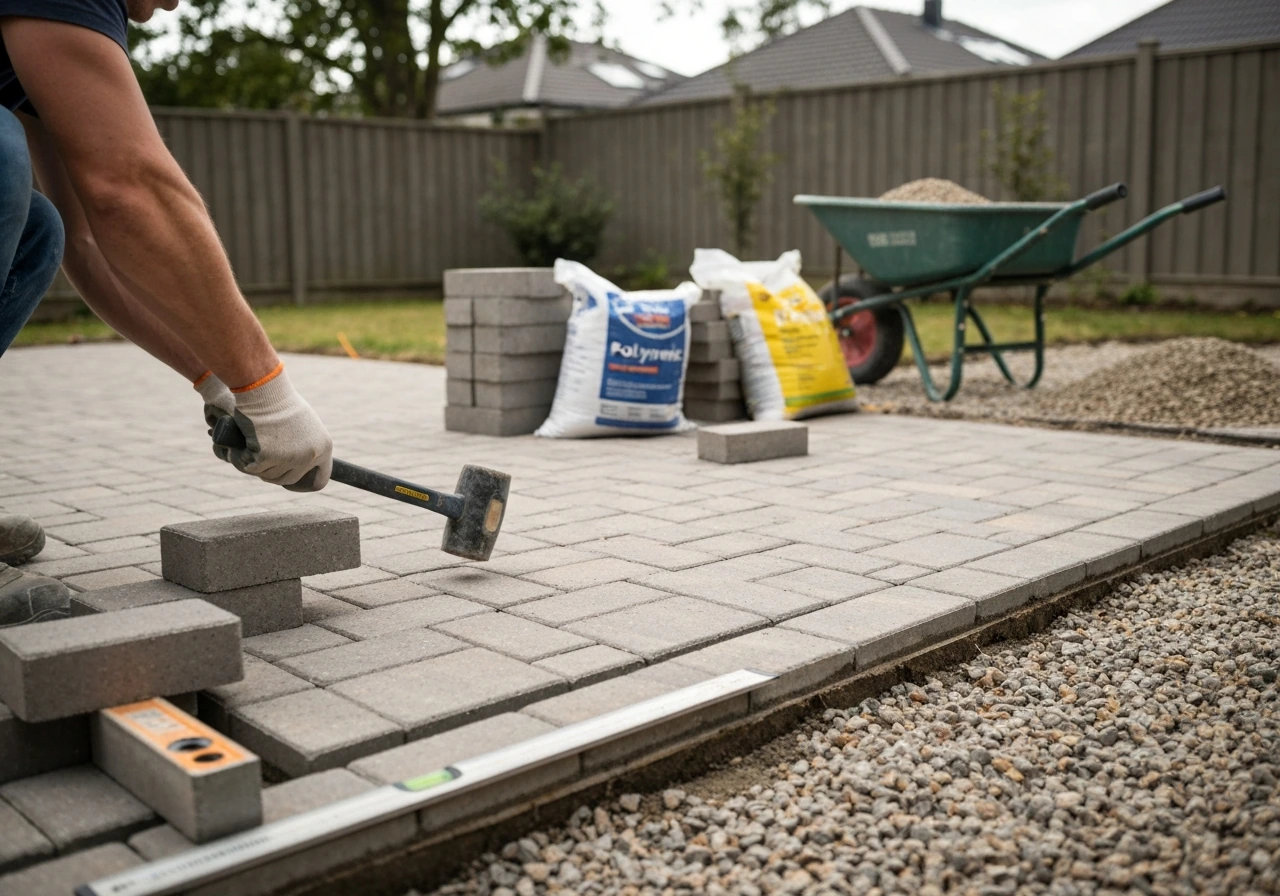
How Much Does a Patio Cost to Install? Pricing by Type
See patio installation costs by type and size, with price ranges, what affects cost, DIY vs pro tips, and quote checklis
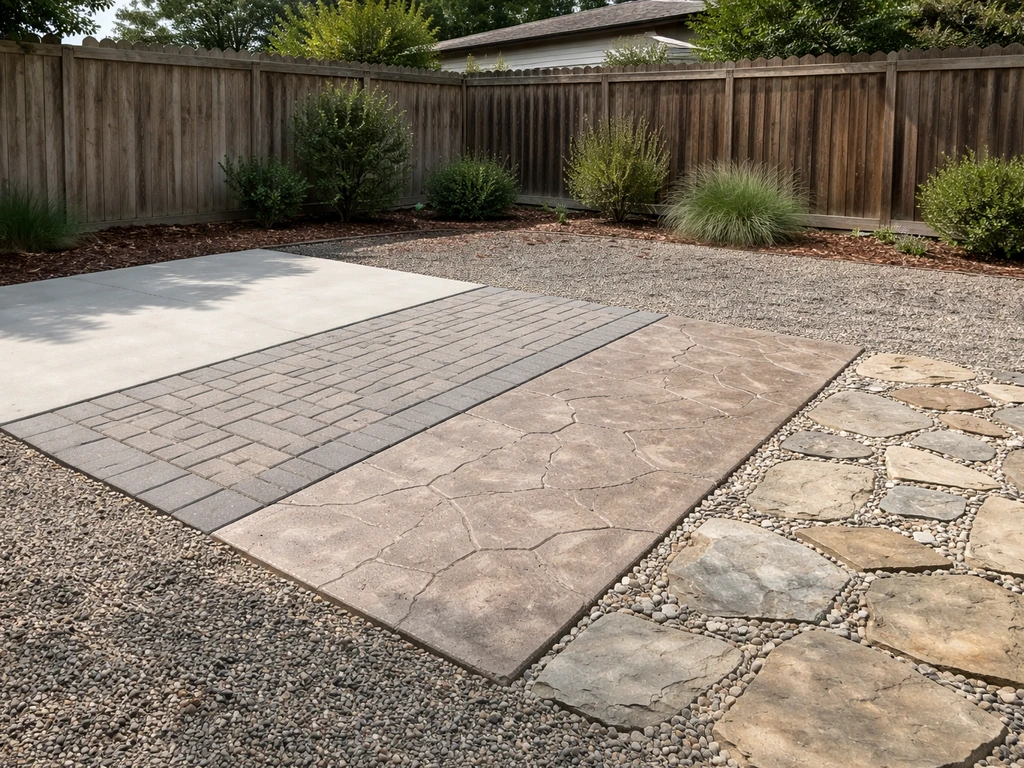
How Much Does a Patio Cost? Prices by Type and Size
Patio cost ranges by type and size, plus DIY vs installed pricing and a step-by-step estimate checklist.
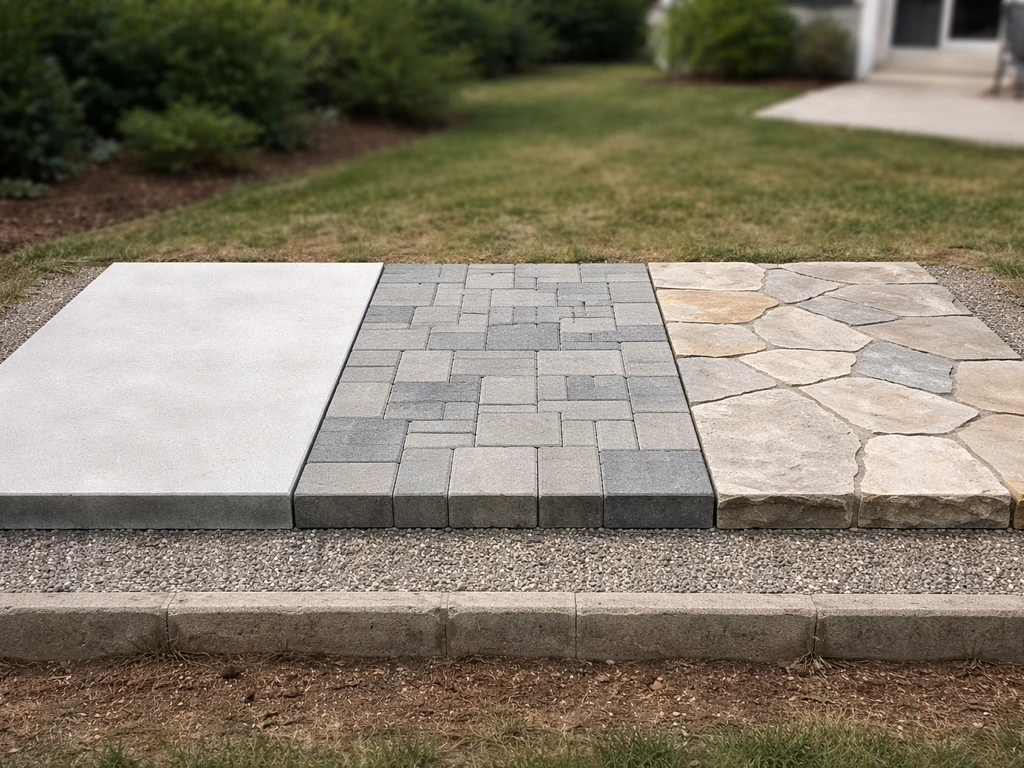
How Much Should I Expect to Pay for a Patio
Patio cost guide with real price ranges by size and material, full line-item budget, DIY vs install, and quote checklist