
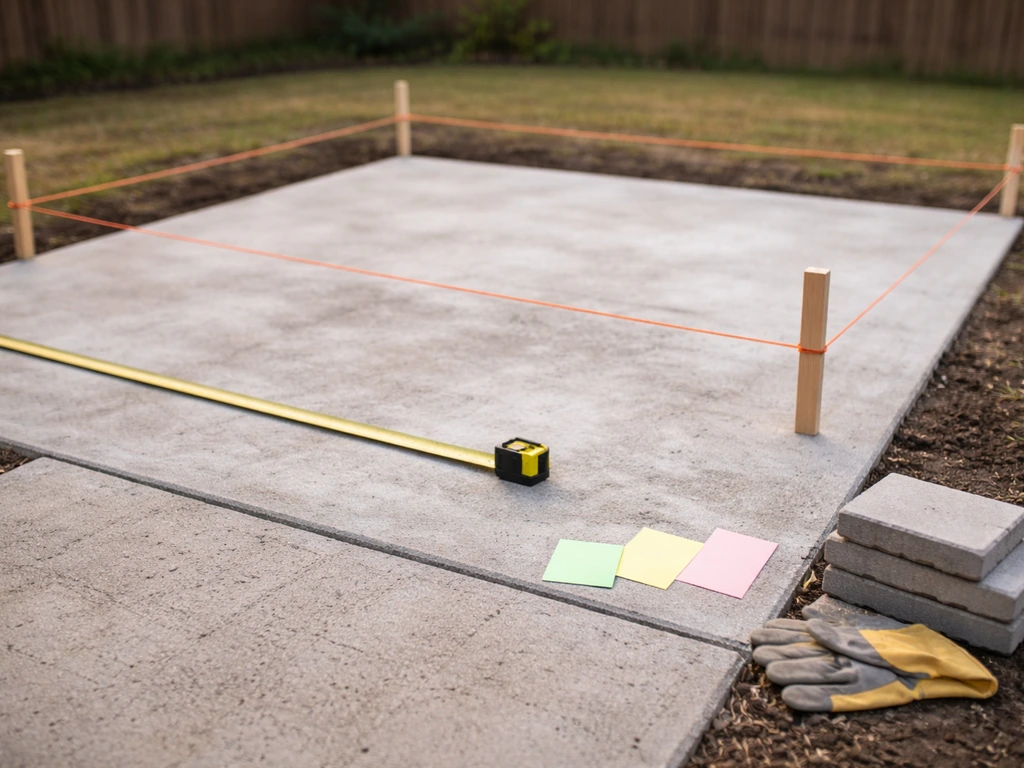
If you searched for 'patio bra cost,' you're most likely looking for pricing on a patio cover or enclosure, since 'Patio Bra' is an actual brand name in the US that sells patio covers and awning-style structures. But there's a good chance you're really trying to figure out what a patio project costs in total, which is exactly what this guide covers. To get a realistic estimate of how much does a patio cost to install, use square footage and factor in materials, labor, and site prep patio project costs. Either way, you're in the right place. A basic patio runs anywhere from $4 to $30 per square foot installed depending on material, and a full 12x12 patio can cost $600 on the low end (plain concrete, DIY) to $6,000 or more (stamped concrete or flagstone, professionally installed). The sections below break all of that down so you can budget accurately before a single contractor shows up.
How Much Does a Patio Bra Cost? Patio Pricing Guide

What 'patio bra' actually means, and what you're probably pricing
'Patio Bra' is a registered business name in the US, listed with the Better Business Bureau as a company that sells patio covers and awning-type structures. Think of it as a branded overhead cover for an outdoor patio space, not a paving material. If you're specifically pricing a Patio Bra cover product, you'll want to contact the company directly for a quote, since their pricing depends on the size of your patio, the cover style, and installation complexity. That kind of product doesn't have a universal published price the way concrete or pavers do.
More likely, though, you ended up here because you're planning a patio and just want to know what the whole thing costs. To estimate how much does a patio cost in your area, start by choosing the material, then multiply your square footage by the installed per-square-foot range. That's the more common search intent, and that's where the real value is. So let's get into it.
What a patio actually costs by size
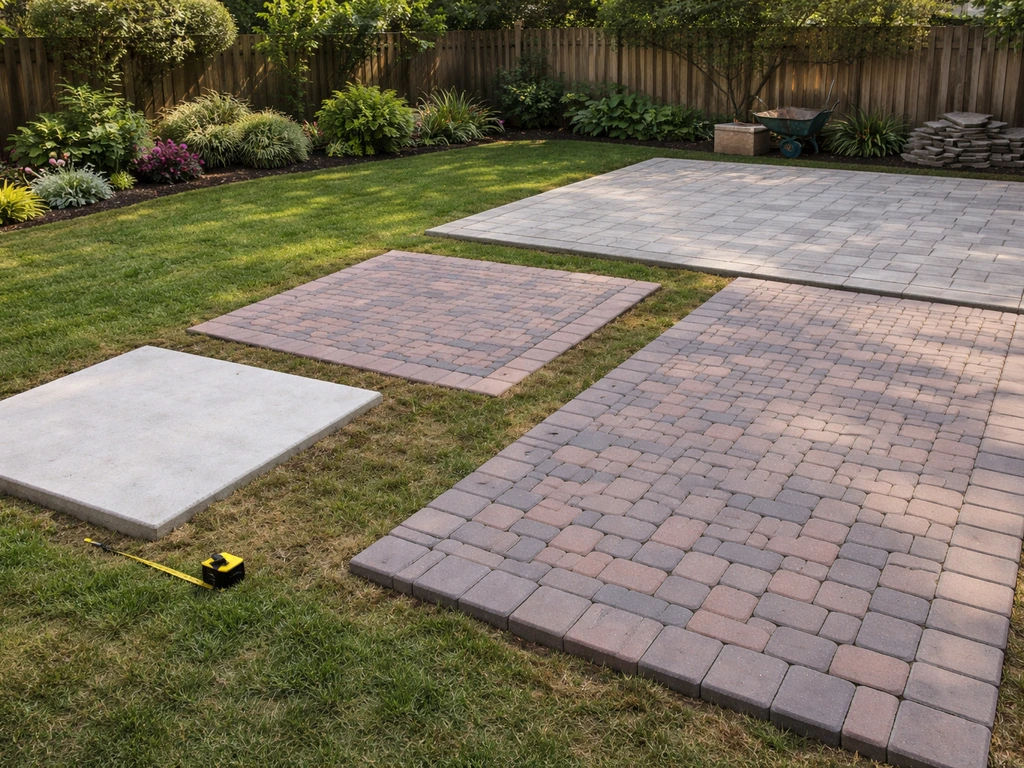
These ranges are all-in for professional installation in the US in 2026, covering materials, labor, base prep, and basic site work. If you want, you can use these size-based ranges to estimate how much does a new patio cost in your area before you request quotes. They don't include retaining walls, drainage upgrades, or permits, which I'll address separately. The ranges are wide on purpose because material choice (plain concrete vs. flagstone, for example) has a massive effect on the final number.
| Patio Size | Square Feet | Low End (plain concrete) | Mid Range (pavers/brick) | High End (flagstone/stamped) |
|---|---|---|---|---|
| 10x10 | 100 sq ft | $600–$1,200 | $1,400–$2,500 | $2,700–$4,500 |
| 12x12 | 144 sq ft | $870–$1,730 | $2,000–$3,600 | $3,900–$6,500 |
| 16x16 | 256 sq ft | $1,500–$3,100 | $3,600–$6,400 | $6,900–$11,500 |
| 20x20 | 400 sq ft | $2,400–$4,800 | $5,600–$10,000 | $10,800–$18,000 |
| 20x30 | 600 sq ft | $3,600–$7,200 | $8,400–$15,000 | $16,200–$27,000 |
A plain concrete slab at $4–$12 per square foot installed is the budget-friendly baseline. Flagstone and stamped concrete push toward $15–$30 per square foot. Forbes Home reports the average flagstone patio cost per square foot as $15 to $27. Porcelain patios have their own pricing rules, so it helps to compare the per-square-foot cost, underlayment needs, and installation details before you budget how much does a porcelain patio cost. Anything bigger than 400 square feet often gets a slight per-square-foot discount from contractors because the mobilization and setup costs are spread across more area.
What actually drives the cost up (or down)
The material is the obvious cost driver, but it's not always the biggest one. Here's what really moves the needle on a patio project:
- Material choice: Plain concrete sits at $4–$12/sq ft installed. Stamped concrete runs $12–$25/sq ft. Flagstone hits $15–$30/sq ft. That's a 6x swing before you've touched anything else.
- Base preparation: A proper paver installation needs roughly 6 inches of compacted gravel base plus 1 inch of bedding sand. Concrete slabs need about 4 inches of compacted sub-base. If your soil is soft, clay-heavy, or the grade is off, the contractor has to dig deeper and haul more material, which adds real money.
- Excavation and demolition: Replacing an existing concrete slab or patio? Add $2–$5 per square foot for demo and removal. On a 20x20 patio, that's a potential $800–$2,000 extra just to tear out what's there.
- Drainage and grading: If your yard slopes toward the house or water pools anywhere near the project area, you may need regrading or drainage solutions. This is a line item contractors often quote separately.
- Retaining walls: If the site has a grade change, retaining walls can run $40–$150 per linear foot installed depending on material and engineering requirements. A small 20-foot wall adds $800–$3,000+ to the project.
- Labor rates and access: Paver installation labor runs $50–$80 per hour or $4–$11 per square foot just for labor. If your yard has tight access, no room for a truck to back up, or the crew has to wheelbarrow everything 100 feet, expect a surcharge.
- Permits: Many municipalities require a permit for patios above a certain size or for any covered structure. Permit fees vary widely by city but are typically $50–$500 for residential projects. Some cities have a specific 'patio cover' permit category.
- Finishing touches: Sealing concrete or pavers, polymeric sand for joints, edging restraints, and lighting rough-in all add cost. Budget $0.50–$2.00/sq ft for sealing alone.
Comparing patio materials side by side
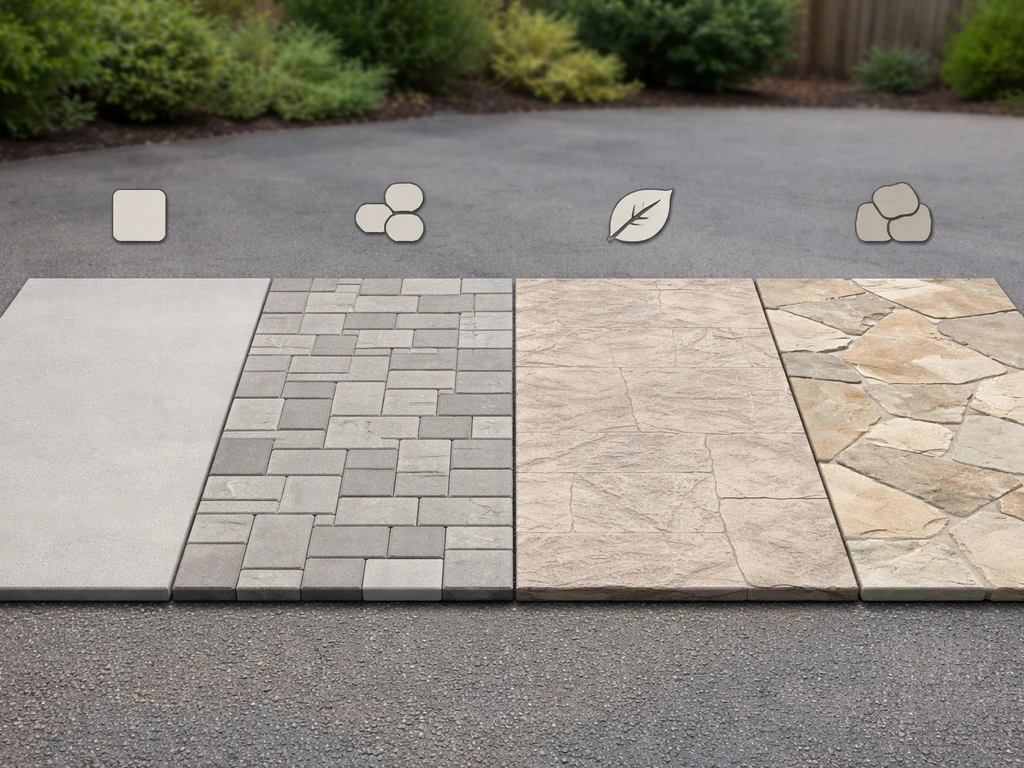
Every material has a trade-off between upfront cost, longevity, maintenance, and appearance. Here's an honest comparison across the most common options: Resin patio flooring has its own pricing factors, including the system type, thickness, color options, and how much prep your surface needs.
| Material | Installed Cost (US, 2026) | Durability | Maintenance | Best For |
|---|---|---|---|---|
| Plain concrete | $4–$12/sq ft | High (20–30 yrs) | Low (seal every 2–3 yrs) | Budget builds, clean modern look |
| Stamped concrete | $12–$25/sq ft | High if sealed | Medium (reseal regularly) | Decorative look at mid price |
| Brick pavers | $14–$28/sq ft | Very high | Low (repairable) | Classic look, easy spot repair |
| Concrete pavers | $10–$17/sq ft | High | Low | Value option with paver benefits |
| Flagstone | $15–$30/sq ft | Very high | Medium (mortar joints) | Natural, high-end aesthetic |
| Natural stone (sandstone/slate) | $15–$30/sq ft | High | Medium | Upscale natural finish |
| Resin bound | $10–$20/sq ft | Medium-high | Low | Permeable surface, modern look |
My honest recommendation: if budget is a primary concern, plain concrete is the most cost-effective durable option. If you want the look of stone without the full flagstone price, concrete pavers in a natural color give you most of that aesthetic for $10–$17/sq ft installed. Stamped concrete splits the difference visually but costs more to maintain long-term. Flagstone and natural stone are worth the premium if you plan to stay in the home and care about curb appeal, but don't spend flagstone money on a rental property or a home you're selling in two years.
DIY vs. hiring a contractor
DIY patio work can save you $4–$11 per square foot in labor, which on a 200-square-foot patio works out to $800–$2,200 in savings. That's real money, and concrete and paver patios are genuinely doable for a motivated homeowner with the right prep. But there are some honest gotchas:
- Base prep is where most DIY patios fail. Skimping on compaction depth or getting the bedding sand layer wrong (you should NOT compact the sand after it's screeded before laying pavers) leads to sinking, lippage, and uneven surfaces within a few years.
- Renting equipment adds back cost. A plate compactor rental runs $80–$150/day. A concrete mixer, hand tamper, and screed tools add up. On small jobs, tool rental can eat a third of your labor savings.
- Concrete flatwork is harder than it looks. You have a limited working window once concrete is poured, and if you get the finish or slope wrong, you're living with it. Hiring out the pour while doing your own base prep and cleanup is a reasonable middle path.
- Permits still apply. Even for DIY projects, many municipalities require permits and inspections. Skipping a permit can create issues when you sell the home.
- A realistic DIY budget for a 12x12 paver patio: $400–$700 in materials (pavers, base gravel, sand, edging), $100–$200 in tool rental, and 2–3 full weekends of work. Compare that to $2,500–$4,000 hired out.
DIY makes the most sense for simple, flat sites with easy access and a rectangular layout. If your yard has any grade change, drainage concerns, or you're using natural stone, the risk of getting it wrong is high enough that professional installation pays for itself in avoided rework.
How location changes your number
Where you live can swing your patio cost by 30–50% compared to the national average. Labor markets drive most of this. Here's how to think about it:
- High-cost metros (NYC, San Francisco, Seattle, Boston): Expect labor to run 30–50% above the national averages listed here. A $15/sq ft flagstone project in the Midwest might be $22–$25/sq ft in these markets.
- Midwest and Southeast: Often at or slightly below the national average. Plain concrete can hit the low end of the $4–$8/sq ft range in lower-cost areas.
- Southwest (Arizona, Nevada, Texas): Competitive market with lots of patio work, which keeps labor reasonable, though materials cost a bit more due to desert shipping. Expect mid-range pricing.
- Rural areas: Material delivery costs more, and fewer contractors means less competition. You might pay more per square foot than in a suburb 30 miles away.
- Seasonality: Spring and early summer are peak season. Scheduling work for late summer or fall can sometimes get you a 10–15% discount as contractor calendars open up.
To estimate your local all-in number, take the per-square-foot range for your chosen material, apply a local labor multiplier (ask local contractors or check your metro's cost-of-living index vs. If you want to see how this kind of budgeting translates into a resin bound patio cost, use your local per-square-foot range and labor multiplier in the same way. the national average), then add 10–15% for site prep, base materials, and finishing. That gives you a working budget number before quotes arrive.
How to get accurate quotes and what to ask for
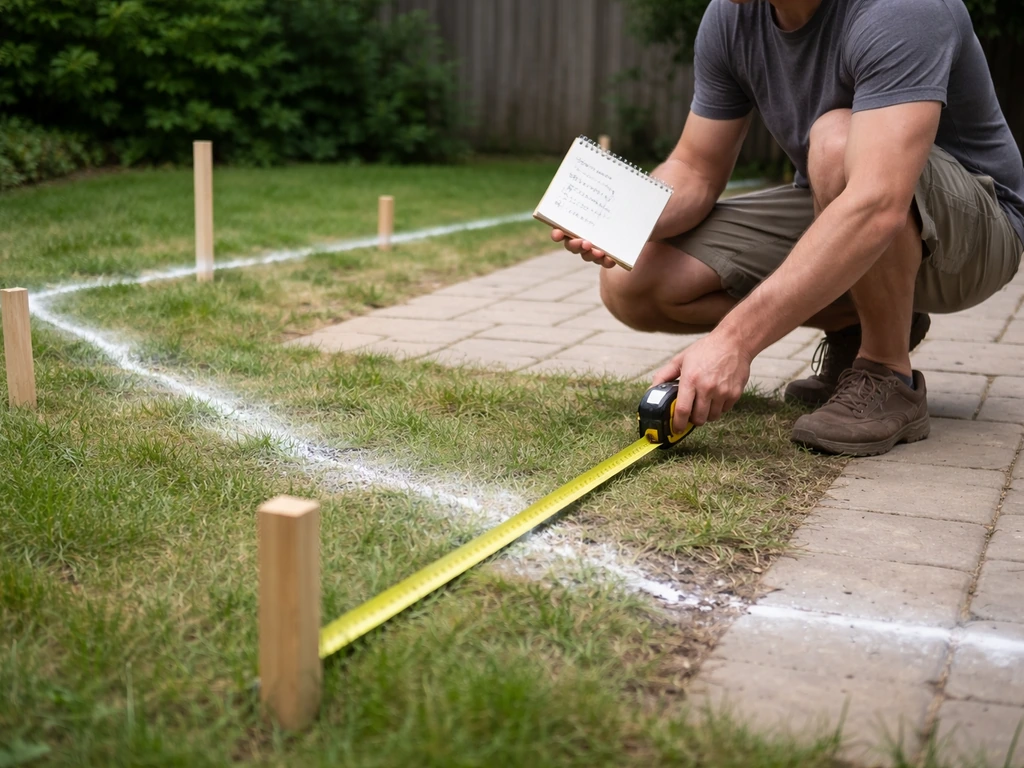
Getting three quotes is the minimum. But getting three accurate, comparable quotes requires you to give every contractor the same scope. Here's exactly how to do that:
- Measure your patio area precisely (length x width) and mark it with stakes or spray paint before anyone shows up. Every contractor should be quoting the same square footage.
- Choose your material before getting quotes, or ask for quotes on two specific materials side by side. Don't let contractors quote 'whatever works' or you'll get numbers that aren't comparable.
- Ask for a fully itemized quote that breaks out: materials (cost per unit), base/sub-base materials, excavation/demo (if applicable), labor (per sq ft or per hour), permits and disposal fees, and any drainage or edging work.
- Ask specifically: 'Does this quote include base prep and compaction?' Many low bids skip or underspec the base, which looks cheap until the patio sinks in year two.
- Ask about drainage: 'How will you handle surface water runoff?' A good contractor will have a plan. No answer is a red flag.
- Ask for references for projects of similar size and material. A contractor who does great concrete work may not have much flagstone experience.
- Confirm the quote includes cleanup and material haul-away. Some quotes leave you with a pile of excavated soil and you're responsible for disposal.
- If one quote is dramatically lower than the others, ask what's different about the scope. It's usually the base depth, the material grade, or they've left out a line item the others included.
Once you have two or three itemized quotes in hand, compare them line by line, not just the bottom line. A $3,000 quote that includes full base prep, proper drainage slope, and haul-away is almost always a better deal than a $2,400 quote that skips those things. The total cost of a patio includes what you pay to fix it in three years if the base was wrong.
If you're also considering adding a covered structure over your patio, like a pergola, awning, or a product like a Patio Bra cover, treat that as a separate quote conversation. Patio cover costs vary widely based on size, material, and whether it needs to be engineered or permitted as a structure. Get the patio surface sorted first, then layer in the cover once you have a surface budget locked down.
FAQ
How much does a Patio Bra cover cost per square foot?
If you mean a Patio Bra cover (the brand), there is usually no single published “per square foot” price. Expect pricing to hinge on dimensions, roof style, and whether the installation requires engineering, permits, or modifications to existing posts or rooflines.
What’s the best way to estimate total patio cost if I only have square footage?
The most accurate way is to calculate surface area in square feet, multiply by the installed per-square-foot range for your chosen material, then add a separate line item for exclusions like permits, drainage work, and retaining walls. If you only use the per-square-foot figure without those extras, your final budget can come up short.
Do permits and drainage upgrades fall inside the per-square-foot ranges?
Yes, and it is often overlooked in early estimates. If your site needs grading, drainage re-routing, soil stabilization, or a new sub-base, those can push the total above the material-based range. Ask contractors to specify exactly what base prep and drainage slope they include.
Why do patio prices vary so much by location?
Labor can swing 30 to 50 percent versus the national average. To account for this, use a local labor multiplier from bids or local market data, then add a buffer for site prep (commonly 10 to 15 percent) before you compare quotes.
When does DIY stop being cost-effective for a patio?
If your patio layout is more complex, DIY risk increases, and the “savings” can disappear into redo work. Complex means irregular shapes, tight access for hauling, major elevation changes, or natural stone with tricky thickness matching.
How can I tell whether two quotes are actually comparable?
A common budgeting mistake is comparing quotes by the bottom line instead of what is included. Look for specific coverage of base prep (depth and compaction), proper drainage slope, edge restraints, and haul-away. If those are missing, the cheaper quote often costs more later.
Do the patio per-square-foot costs include steps, borders, or extensions?
Prices are commonly quoted for the patio surface area only. If you plan steps, borders, a raised hearth, or extended sitting walls, you may pay extra because those are separate line items. Provide a sketch and measure those additions so the scope is clear.
Can you explain why a 12x12 patio might range from $600 to $6,000 or more?
For a 12x12 patio, $600 is consistent with a very low-cost DIY scenario using plain concrete, while the $6,000+ figure aligns with higher-end materials and professional installation. The spread usually comes from material choice, base prep quality, and how much labor and equipment is required.
What site conditions can add cost even if the patio looks “simple”?
If your property has soft soil, frequent freeze-thaw, or poor drainage, the base and subgrade prep matter as much as the surface material. Ask for soil assessment or at least compaction standards, because weak base prep is one of the fastest ways for a patio to crack or settle.
Should I price the patio surface and the patio cover together or separately?
A patio cover should usually be budgeted as a separate project because it involves different materials, installation methods, and sometimes structural engineering. Get the surface scope and pricing locked down first, then treat the cover as an add-on quote with its own permitting assumptions.
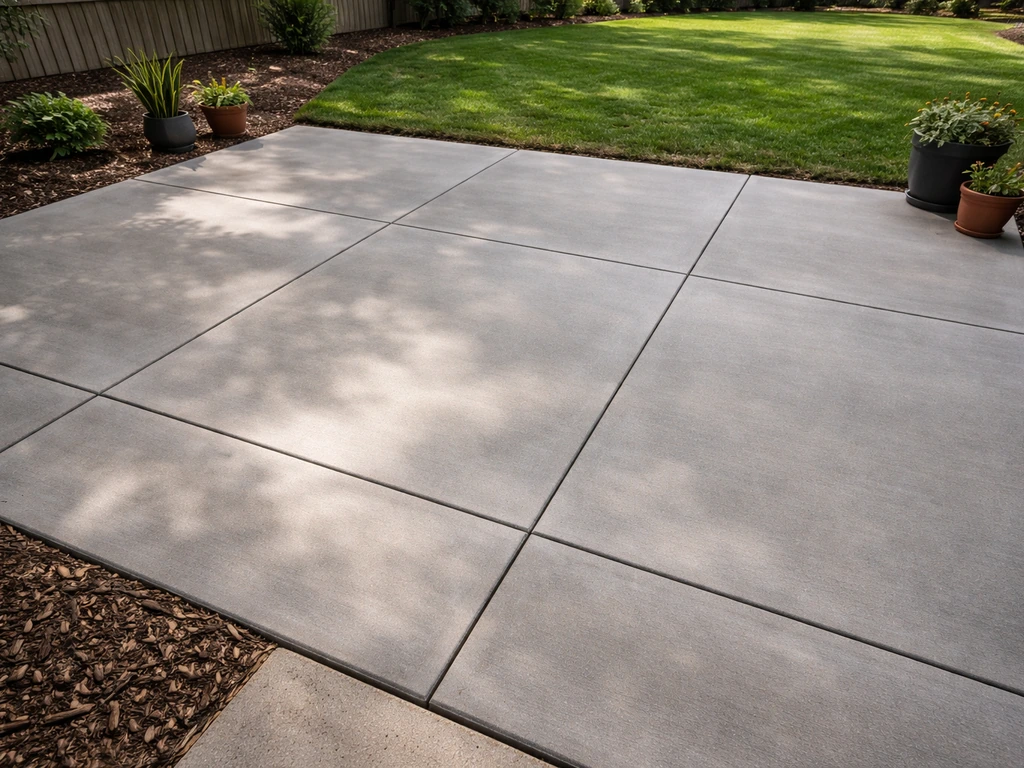
New patio cost by type and size with per sq ft pricing, DIY vs contractor breakdown, add-ons, and quote tips.
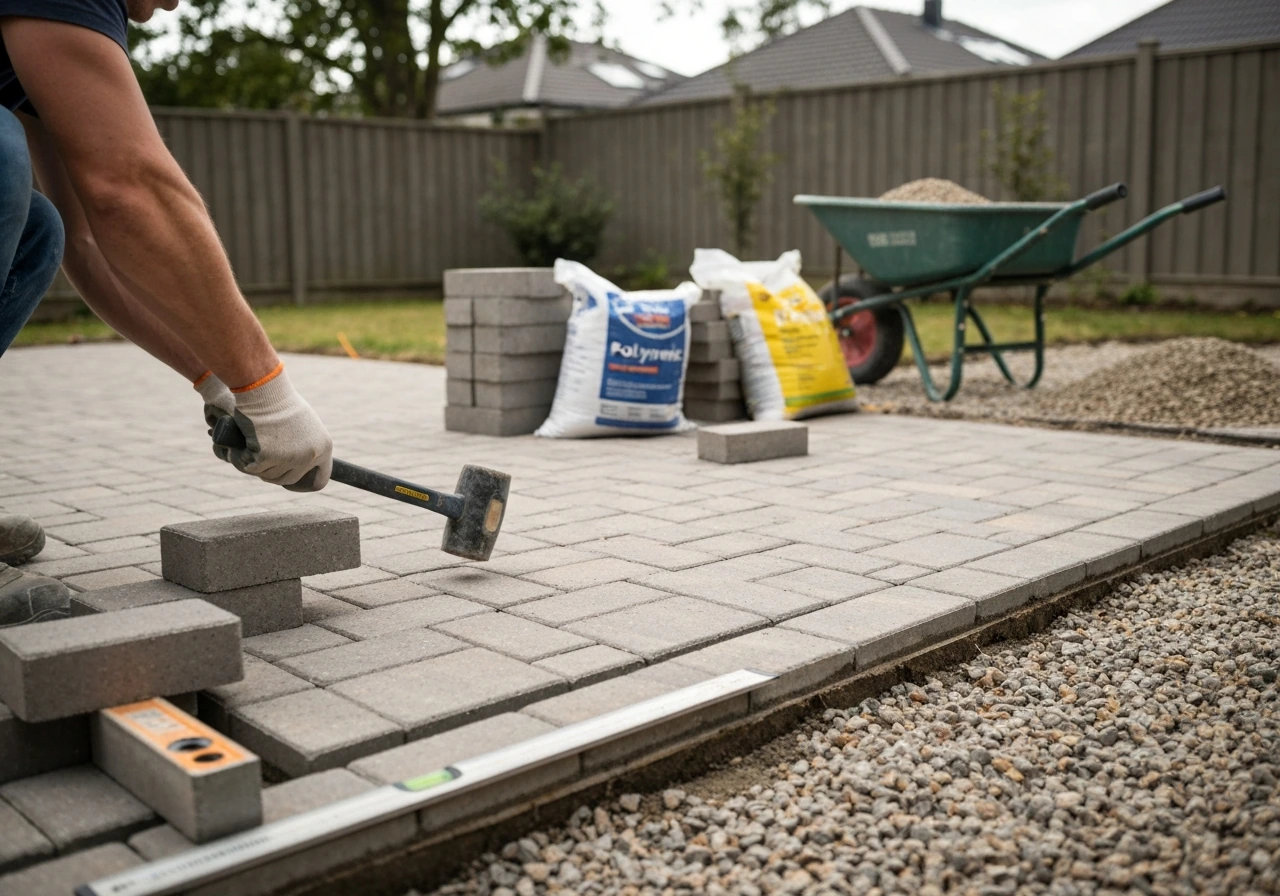
See patio installation costs by type and size, with price ranges, what affects cost, DIY vs pro tips, and quote checklis
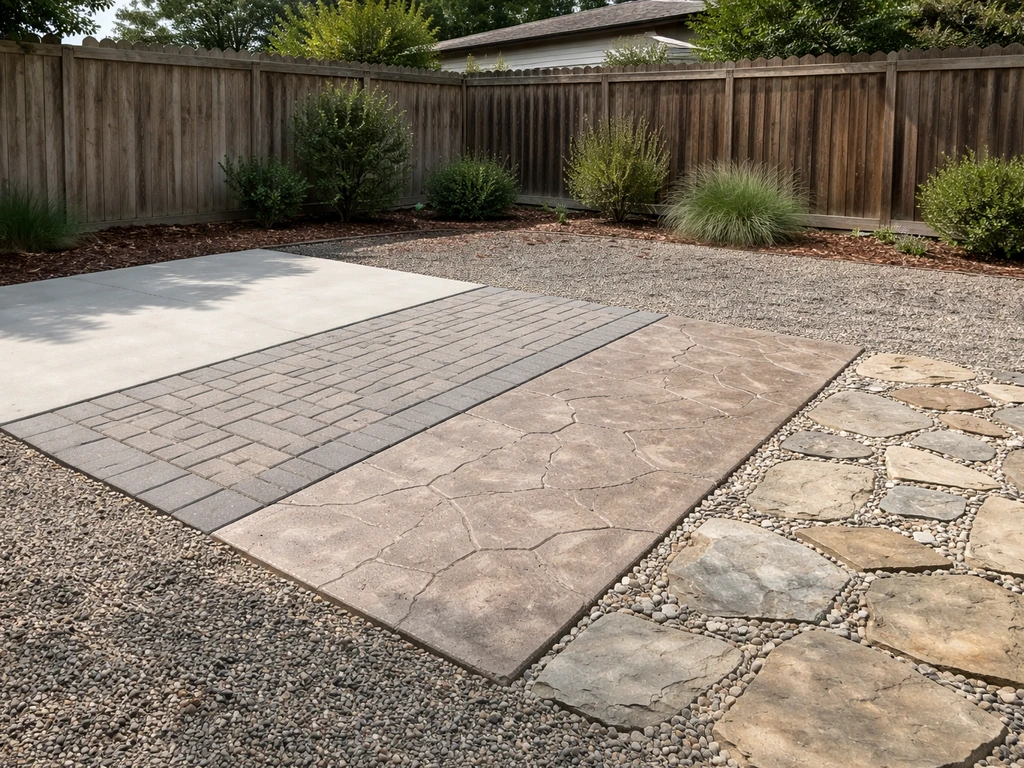
Patio cost ranges by type and size, plus DIY vs installed pricing and a step-by-step estimate checklist.