
A resin bound patio in the UK typically costs between £60 and £100 per m² fully installed in 2026, covering materials, labour, and a basic prepared base. For a standard 20m² patio that puts you somewhere in the £1,200 to £2,000 range before any heavy groundworks. Prices can push past £150/m² if you have a tricky site, poor drainage, or need significant excavation and disposal.
How Much Does a Resin Bound Patio Cost? 2026 Guide

Felix Carver
28 Jun 2026
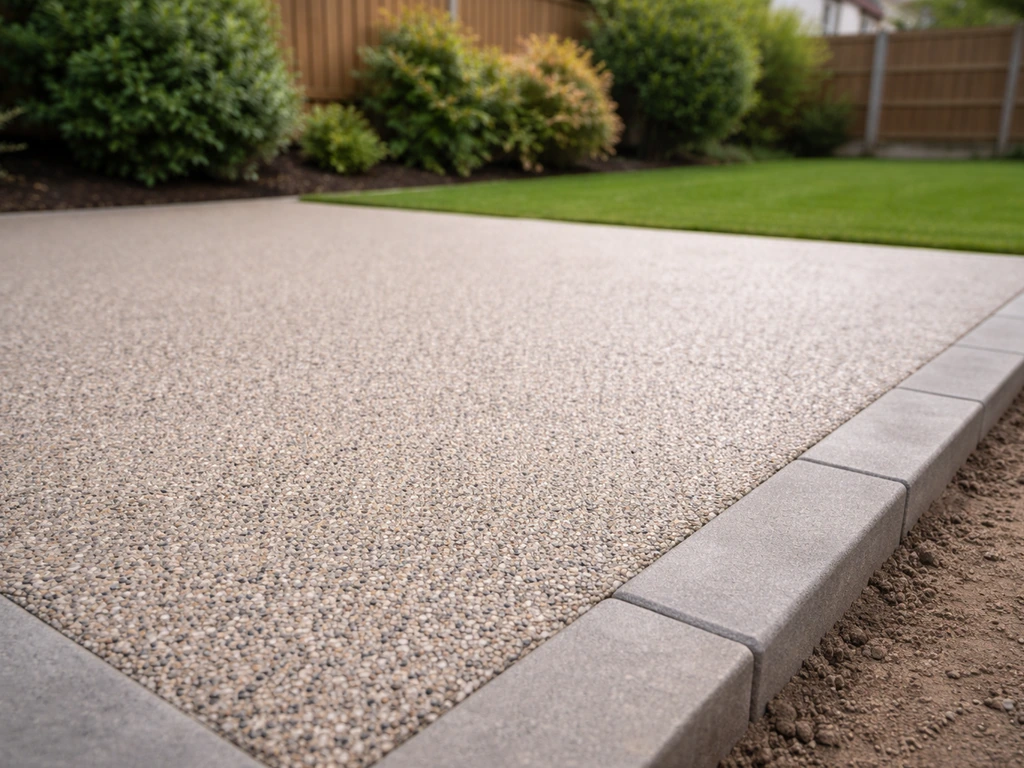
Total cost ranges by patio size
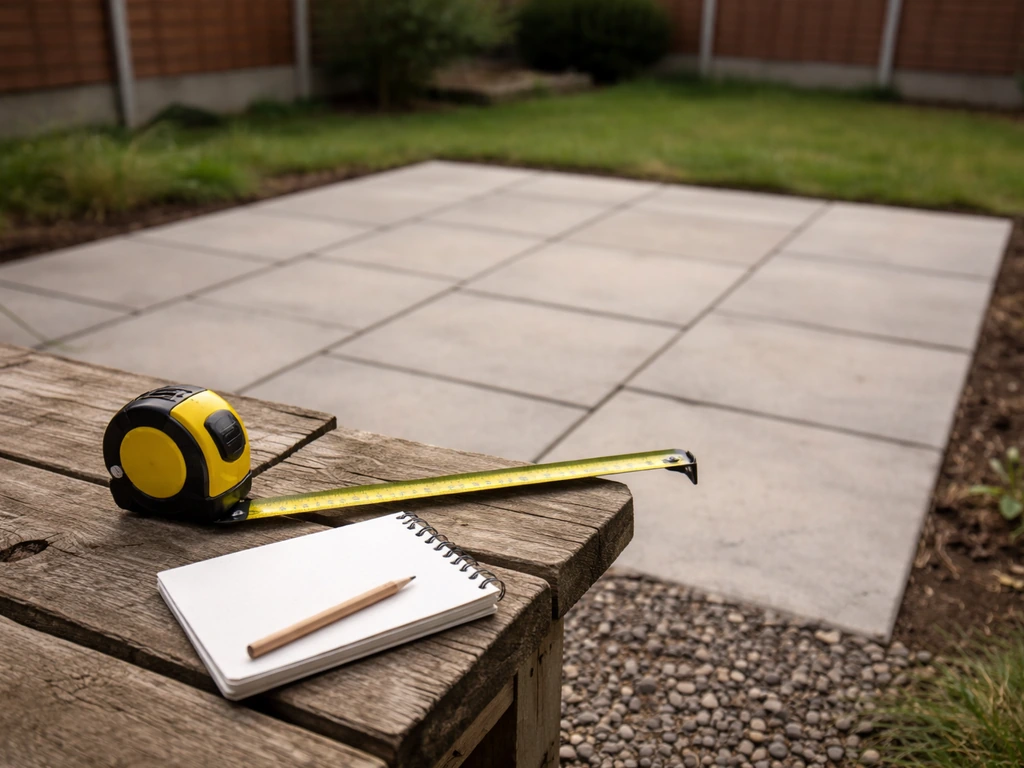
The table below gives realistic installed price ranges for common patio sizes. For a quick ballpark, most UK homeowners pay per-square-metre based on size, site prep, and whether you choose resin bound, so you can estimate how much does resin patio cost before getting quotes. These assume a straightforward, reasonably flat site with an existing adequate base or minimal groundwork needed. If you are starting from scratch with excavation, add £15 to £30 per m² to account for dig-out, disposal, and base materials.
| Patio Size | Approximate m² | Low Estimate (£60/m²) | High Estimate (£100/m²) | With Heavy Groundworks |
|---|---|---|---|---|
| 3m x 3m | 9 m² | £540 | £900 | £675–£1,170 |
| 10ft x 10ft (~3x3m) | 9 m² | £540 | £900 | £675–£1,170 |
| 4m x 4m | 16 m² | £960 | £1,600 | £1,200–£2,080 |
| 12ft x 12ft (~3.7x3.7m) | 13.7 m² | £820 | £1,370 | £1,025–£1,781 |
| 15 m² (example) | 15 m² | £900 | £1,500 | £1,125–£1,950 |
| 20ft x 20ft (~6x6m) | 36 m² | £2,160 | £3,600 | £2,700–£4,680 |
| 20 m² (common mid-size) | 20 m² | £1,200 | £2,000 | £1,500–£2,600 |
| 30 m²+ (larger garden patio) | 30 m² | £1,800 | £3,000 | £2,250–£3,900 |
One thing worth noting: resin bound is a premium surface compared to plain concrete slabs or block paving, so do not expect bargain-basement quotes. If someone is quoting you £30–£40/m² fully installed for resin bound, it is worth questioning what base preparation is actually included, because corners are probably being cut somewhere.
Where the money actually goes: materials, groundworks, and labour
Most quotes blend everything into a per-m² price, which makes it hard to understand what you are actually paying for. If you want to estimate how much a new patio will cost, ask for the per-m² rate to be broken down into materials, groundworks, and labour so you can compare like for like per-m² price. A properly itemised resin bound patio has three distinct cost buckets: groundworks (the base prep), materials (the resin system itself), and labour (installation).
Groundworks and sub-base
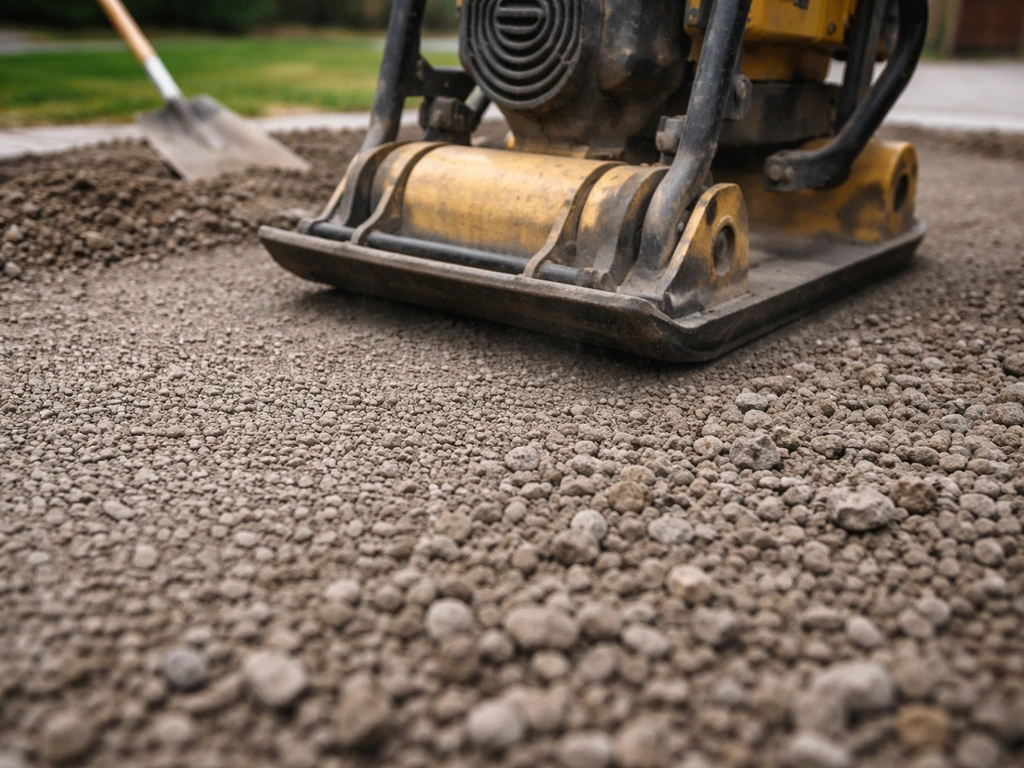
This is the biggest variable in any quote. A resin bound patio needs a properly compacted sub-base, typically 100mm to 150mm of MOT Type 1 granular material for domestic use, with some higher-spec builds specifying up to 150mm. On top of that, you usually need a geotextile membrane to prevent sub-base material migrating into soft ground beneath. The resin bound surface itself then goes on top, either directly onto compacted Type 1 or over an existing concrete or tarmac base if it is sound enough. Excavation, disposal of dig-out material (muckaway), and importing and compacting the sub-base together can add £15 to £30/m² or more to a job, especially if the soil is heavy clay or the site is awkward to access.
Materials: resin and aggregate
The resin bound surface layer is usually installed at 15mm to 18mm depth for foot traffic areas (a patio), and up to 24mm for driveways. At 15mm, you are looking at roughly 4 to 6 m² of coverage per kit depending on the product, with a typical kit containing around 7kg of resin and 100kg of aggregate. Materials-only costs for DIY kits run around £20 to £35 per m² at that thickness, depending on aggregate type and supplier. Professionally supplied materials (usually trade pricing) will be lower per unit but bundled into the overall quote.
Labour
Labour for the actual resin bound laying (mixing, trowelling, finishing) is typically priced at £12 to £20 per m² as a line item, separate from groundworks labour. The surface has to be laid in one continuous pass to avoid seam lines, which means the crew size and day rate matter. Smaller patios are not necessarily cheaper per m² because the fixed mobilisation cost (travelling, equipment, setup) is spread over fewer square metres.
| Cost Component | Typical Range (per m²) | Notes |
|---|---|---|
| Sub-base materials (MOT Type 1) | £5–£10/m² | Based on 100–150mm depth |
| Geotextile membrane | £1–£2/m² | Often overlooked in cheap quotes |
| Excavation and dig-out labour | £8–£15/m² | Varies hugely with depth and access |
| Muckaway / skip disposal | £5–£15/m² | Per load costs; often a surprise |
| Resin bound materials (resin + aggregate) | £20–£35/m² | At 15mm; premium aggregates cost more |
| Edging / restraint border | £10–£20 per linear metre | Aluminium or block edging |
| Laying / installation labour | £12–£20/m² | Surface trowelling and finishing |
| Total (minimal groundworks) | £40–£70/m² | Existing solid base scenario |
| Total (full groundworks) | £70–£120/m² | Fresh excavation from scratch |
What pushes the price up or down
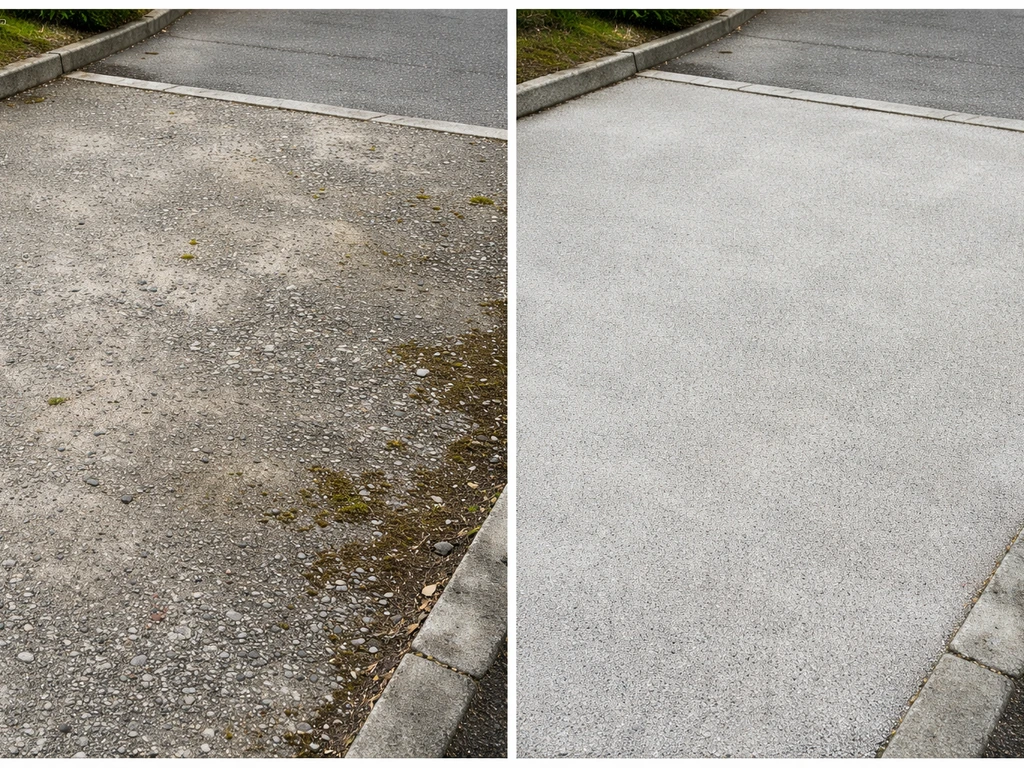
Several factors can move a resin bound quote significantly in either direction. Understanding them helps you spot whether a low quote is genuinely efficient or just missing something important.
- Existing base condition: If you have a solid, flat concrete or tarmac base that can be cleaned and primed, installation costs drop substantially because groundworks are minimal. A soft, cracked, or uneven base means excavation and full sub-base construction.
- Drainage: Resin bound is a permeable surface, which is one of its main selling points for planning compliance in the UK. But the drainage beneath it needs to work too. Poor drainage, clay soils, or a site that naturally holds water may require a drainage channel, a soak-away, or a deeper permeable sub-base, all adding cost.
- Slope and levels: A flat site is the cheapest. Any significant gradient requires careful laying to ensure the correct fall (usually 1:80 minimum) and may need additional groundwork to establish the right levels before laying.
- Shape complexity: A simple rectangle is fastest to form and lay. Irregular curves, tight angles, or awkward shapes around garden features take more time and waste more material.
- Edging and borders: Resin bound needs a restraint edge to stop the surface creeping. Aluminium edging, concrete haunching, or block borders all add to the linear metre cost, and a complex shape has more perimeter relative to area.
- Demolition and disposal: If there is an old patio to break up and remove first, factor in £5 to £15/m² on top for demolition labour and muckaway costs. Ask explicitly whether this is included.
- Access constraints: Tight side gates, steps, or no vehicle access to the back garden can add hours to groundworks and materials delivery. Contractors often price this in as a day-rate premium.
- Aggregate choice and colour: Standard natural gravel aggregates are cheapest. Coloured, blended, or premium aggregates (marble, quartz, or specific decorative mixes) add £5 to £15/m² or more to material costs.
- Site location: More on this below, but London and the South East typically run 20 to 30% higher than the Midlands or North.
Resin bound vs resin bonded: why it matters for your budget
These two surfaces look similar at first glance but are fundamentally different products, and the price difference reflects that. Resin bound mixes the resin and aggregate together thoroughly before laying it as a trowelled, seamless layer. Every stone is fully coated and locked in. Resin bonded, by contrast, broadcasts loose aggregate onto a wet resin primer painted onto the surface. The stones sit on top rather than being bound through, so it is not truly permeable and over time individual stones can become loose.
Resin bound is the premium option. It typically costs £60 to £100/m² installed, lasts 15 to 25 years on a well-prepared base, and remains permeable throughout its life, which matters for UK planning rules and surface water drainage. If you want a quick ballpark, the typical installed cost is about £60 to £100 per m² for resin bound patios, but your total depends on patio size and the scope of groundworks £60 to £100/m² installed. Resin bonded tends to come in at £30 to £50/m² installed, is cheaper partly because it uses less material and can be applied more quickly, but it has a shorter usable life and will not pass as a permeable surface for planning purposes.
| Feature | Resin Bound | Resin Bonded |
|---|---|---|
| Installation method | Mixed and trowelled as a bound layer | Aggregate broadcast onto wet resin primer |
| Permeability | Yes, fully permeable | No, surface water runs off |
| Installed cost (per m²) | £60–£100+ | £30–£50 |
| Longevity | 15–25+ years | 5–10 years typical |
| Stone loss over time | Minimal if well installed | Can loosen, especially on driveways |
| UK planning compliance | Usually passes permitted development rules | Does not count as permeable |
| Best use case | Patios, paths, driveways | Decorative paths and low-traffic areas |
For a patio that you want to last and look good for the long term, resin bound is the right choice. If someone quotes you a very low price and you are not sure which system they are proposing, ask directly. The two are not interchangeable and neither is the price.
How location and contractor type affect what you will be quoted
Regional price variation for resin bound patios is real and meaningful. In London and the South East, £80 to £100/m² (or higher) is routine. To estimate how much a porcelain patio costs, you can use the same £/m² approach, but expect different material and finishing allowances £60 to £100/m². In the Midlands, Yorkshire, and the North West, you are more likely to see £60 to £80/m² for comparable work. Scotland and Wales tend to sit somewhere in between, depending on local competition and access to specialist installers.
Beyond geography, the type of contractor matters. A specialist resin bound installer with their own equipment and trained crew will often come in at a higher day rate than a general paving contractor who occasionally lays resin bound. In practice, the specialist is usually worth the premium because resin bound has almost no margin for error during laying, and a poorly mixed or unevenly trowelled surface will show every mistake.
When comparing quotes, make sure you are comparing the same specification. Ask each contractor to confirm the same items in writing:
- Sub-base depth and material (MOT Type 1, depth specified)
- Whether geotextile membrane is included
- Excavation depth and muckaway disposal (skip costs, number of loads)
- Resin bound system brand and aggregate type
- Application depth (15mm, 18mm, or deeper)
- Edging type and installation
- Whether demolition of any existing surface is included
- Drainage provisions if required
- Guarantee period on materials and workmanship
A quote that skips the geotextile, uses a shallow sub-base, or excludes muckaway will look cheaper on paper but costs you more in the long run when the surface fails. Two quotes at £70/m² and £90/m² can represent very different actual scopes of work.
DIY vs hiring a pro: what is actually realistic
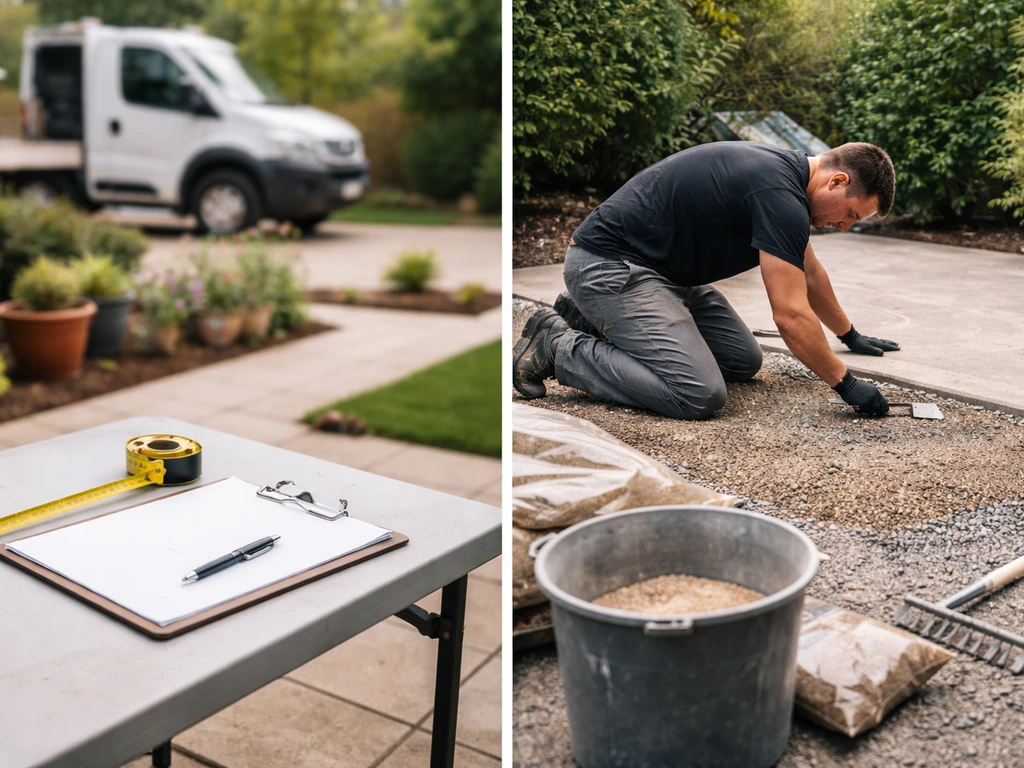
DIY resin bound is technically possible for small areas, and kit suppliers do sell 1 m² packs designed for homeowner use. A single 1 m² kit at 15mm depth typically costs £20 to £35 in materials, which sounds attractive compared to £60 to £100/m² installed. But there are real practical limits.
The surface has to be laid continuously without stopping, because any join lines will show permanently once cured. For a 20 m² patio, that means mixing and trowelling roughly 20 individual kits in a continuous, coordinated pass, in weather that is between 5°C and 25°C (UV-cure resin is temperature sensitive), on a base that is bone dry. Most experienced DIYers underestimate how physically demanding and time-sensitive this is. If you stop mid-way, have an uneven base, or the temperature drops, you will see it in the finished surface every day.
Where DIY makes sense is for genuinely small projects: a garden path section, a step surround, or a sub-5 m² area where the base already exists and is sound. For anything larger, the groundworks alone (excavation, compaction, sub-base) require hired plant and experience to get levels right. Most homeowners who attempt a full DIY resin bound patio on a freshly excavated base end up with drainage problems or surface failures within a few years.
The realistic DIY saving is mainly on labour for the surface application itself, around £12 to £20/m². The groundworks labour cost is much harder to DIY away unless you are very comfortable with a plate compactor and have done it before. For most people, paying a professional for a 20 m² patio saves headaches far in excess of the £240 to £400 in application labour you might save.
How resin bound compares to other patio surfaces on cost
Resin bound sits at the higher end of patio surface costs. If you are wondering, “is resin patio expensive,” that fits with the fact resin bound sits at the higher end of patio surface costs. Here is a realistic comparison against other common options covered across this site, all at fully installed UK 2026 prices:
| Surface Type | Typical Installed Cost (per m²) | Longevity | Key Trade-off |
|---|---|---|---|
| Resin Bound | £60–£100+ | 15–25 years | Premium cost, permeable, low maintenance |
| Resin Bonded | £30–£50 | 5–10 years | Cheaper upfront, stones can loosen |
| Concrete (plain) | £40–£60 | 20–30 years | Cheap, but prone to cracking and staining |
| Stamped/Imprinted Concrete | £60–£90 | 15–25 years | Decorative, not permeable |
| Block Paving / Pavers | £50–£85 | 20–30 years | Repairable, not seamless |
| Natural Stone / Flagstone | £70–£120+ | 30+ years | Premium look, higher material cost |
| Porcelain Tiles | £60–£100+ | 20–30 years | Very durable, slippery if wrong spec |
| Brick | £50–£80 | 20–30 years | Traditional look, mortar maintenance |
Resin bound is genuinely worth the premium over plain concrete or resin bonded if drainage is a priority or you want a contemporary, low-maintenance look that lasts. It is roughly comparable in price to quality natural stone or porcelain but offers the permeability advantage those surfaces do not. If budget is the primary concern, a quality concrete or block paving installation will still give 20 or more years of service at lower cost.
Your quote checklist and next steps
Before you contact a single contractor, do a quick site audit yourself. Measure the area accurately (length x width in metres, deducting any fixed obstacles). Note whether there is an existing solid base, what condition it is in, how accessible the site is, and whether any drainage issues are already visible (puddles, soft spots, standing water). This takes 20 minutes and will save you time on every call or site visit.
When you get quotes, ask for them to be itemised rather than just a per-m² total. The checklist below covers the key items you should expect to see or at least have confirmed verbally:
- Confirmed system type: resin bound, not resin bonded
- Application depth specified (15mm minimum for a patio)
- Sub-base specification: material type, depth, and compaction method
- Geotextile membrane: included or not
- Excavation depth required and whether muckaway/disposal is included in the price
- Edging type, material, and whether it is in the quote
- Drainage provisions: what happens to surface water and whether a channel drain is needed
- Demolition of any existing surface: labour and disposal costs
- Aggregate type and any colour/blend options with associated upcharge
- Guarantee: separate material and workmanship periods
- Payment terms and start timeline
Get at least three quotes for any job over 15 m². For a typical patio set, this also means asking for a breakdown that covers materials, delivery, and any fitting costs so you can judge how much the total will be a patio set. Do not automatically go with the cheapest. If one quote is 30% lower than the other two, ask them to walk you through what is included, because something is almost certainly missing. A resin bound surface that fails because of a poor base will need a full strip-out and reinstall, not a patch repair, so a well-specified job the first time is always cheaper in the long run.
For a quick budget number before you get quotes: take your area in m², multiply by £75 as a mid-range installed price, then add 15 to 20% if you know the site needs full excavation from scratch. To price a patio accurately, contractors usually quote per square metre, then adjust for factors like groundwork, access, and drainage needs. That gives you a working budget to take to a conversation, not a final price, but it is close enough to know whether a quote is in the right ballpark or needs further scrutiny.
FAQ
Can I patch or extend an existing resin bound patio, and will the cost be the same as a full new install?
Yes, but only if your contractor is prepared to meet the same spec everywhere, including sub-base thickness, geotextile, and trowelling depth. Many quotes only apply the resin system to new areas and leave the rest at a different thickness or preparation level, which can cause edges to fail or show visible transitions after curing.
How much more does a resin bound patio cost if I have drainage problems or standing water?
Expect an extra charge if the driveway or patio needs changes to existing drainage, channels, or outfalls, because the prep work includes re-grading and, sometimes, redirecting surface water away from buildings. If you already have standing water, you should ask the installer to explain the proposed fall direction and how they will prevent pooling.
Do I save money if I already have a concrete or tarmac base, and will resin bound go straight on top?
Often, but not always. If the existing base is structurally sound and the surface is clean, a contractor may lay resin bound over it, but they will still require correct levels, sufficient depth, and suitable anchoring. Ask specifically whether they will mill/grind, remove loose tarmac, or do any refurbishment, because skipping this is a common reason prices look low.
What should I ask about sub-base prep to avoid hidden costs and future failures?
You usually cannot safely treat “sub-base failures” as a minor defect. If the sub-base is under-compacted, too thin, or poorly graded, the resin surface can crack or delaminate, and the remedy is commonly strip-out and re-lay. Ask whether they will compact in layers (not just once) and what thickness they will achieve after compaction.
How does site access (narrow gates, steps, or long carries) affect the per-m² cost?
Yes. Resurfacing price can increase if the site needs an access solution, such as removing fences for equipment, using mini-diggers for narrow entrances, or extra labour for carrying materials longer distances. Ask each quote to state the delivery route and whether a skip or muckaway vehicle can be used.
Does the price change for clay soils, poor ground, or ground contamination?
The £60 to £100 per m² range assumes domestic-ready materials and typical conditions. If your ground is heavy clay, waterlogged, or contaminated, the contractor may need additional granular build-up, improved drainage layers, or more disposal. Ask if they will include any ground improvement or whether they are assuming normal soil.
Are quotes based on finished resin depth, or resin thickness only?
Yes, and you should confirm the exact number of layers and finished depth they will achieve, including what happens if they are levelling out an uneven base. A “15mm to 18mm finished depth” statement can still hide extra costs if the quote is based on the resin thickness only, not the preparation needed to reach that depth.
What happens to cost if the job is delayed by weather or curing conditions?
It depends, but you should expect higher pricing if the weather window is constrained because resins are temperature and curing-time sensitive. Ask what temperature range they will use, whether they apply curing protection or accelerators, and how they handle rain delays, because rebook and mobilisation charges can add cost.
How can I compare quotes fairly if they only give a single per-m² total?
If you want the cost to reflect the real scope, ask for line items for (1) groundworks, including excavation depth, disposal, and sub-base type and thickness, (2) geotextile, (3) resin and aggregate materials, (4) labour and finishing, and (5) any traffic management, skips, and skips. This often reveals why one quote is cheaper than the others.
Does resin bound patio cost differ if it is a walkway versus a driveway used by cars?
Yes. If you plan to park on it, use it for a driveway with vehicle loading, or include edging and channeling around thresholds, you may need additional specification compared with a simple patio. Ask whether the quoted resin thickness, sub-base, and edging details are designed for the expected load class.
Next Articles
How Much Does a Patio Bra Cost? Patio Pricing Guide
Patio pricing guide with real cost ranges, DIY vs pro, and all-in budget steps for 10x10 to 20x20 patios.
How Much Does a New Patio Cost? Prices by Type and Size
New patio cost by type and size with per sq ft pricing, DIY vs contractor breakdown, add-ons, and quote tips.
How Much Does a Patio Cost to Install? Pricing by Type
See patio installation costs by type and size, with price ranges, what affects cost, DIY vs pro tips, and quote checklis