
If you searched 'how much does a patio set cost,' you might mean two very different things: outdoor furniture (a table and chairs you buy at a store) or the actual patio surface you build in your backyard. A patio furniture set typically runs $300 to $3,000+ depending on materials and brand. But if you mean the full patio surface, think $800 to $12,000+ for most residential projects, with size, material, and labor being the biggest levers. Most homeowners end up budgeting for both, so this guide covers the patio surface costs in detail and folds in furniture so you get a realistic total.
How Much Does a Patio Set Cost in 2026? Pricing Guide

Felix Carver
28 Jun 2026
Wait, what does 'patio set' actually mean?
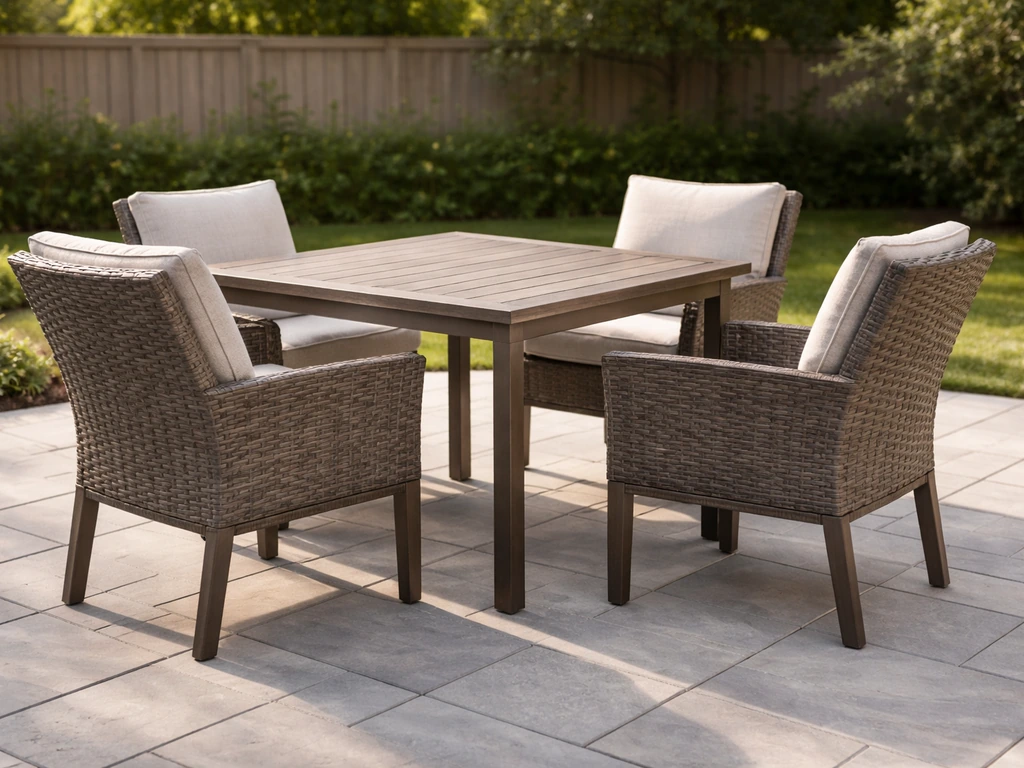
The phrase 'patio set' is genuinely ambiguous. In retail and outdoor living contexts, it almost always means a furniture set: a dining table plus chairs, a loveseat and coffee table, or a full sectional with an umbrella. Home Depot, Wayfair, and most garden centers use it this way. That said, homeowners planning a backyard project often search the same phrase when they're actually trying to budget the whole thing, including the hardscape surface itself. Because this site focuses on patio surface costs specifically, the breakdown below leans heavily into concrete, pavers, stone, and other materials. But I'll also give you realistic furniture ranges so you can build a complete budget.
Outdoor furniture set cost (the retail meaning)
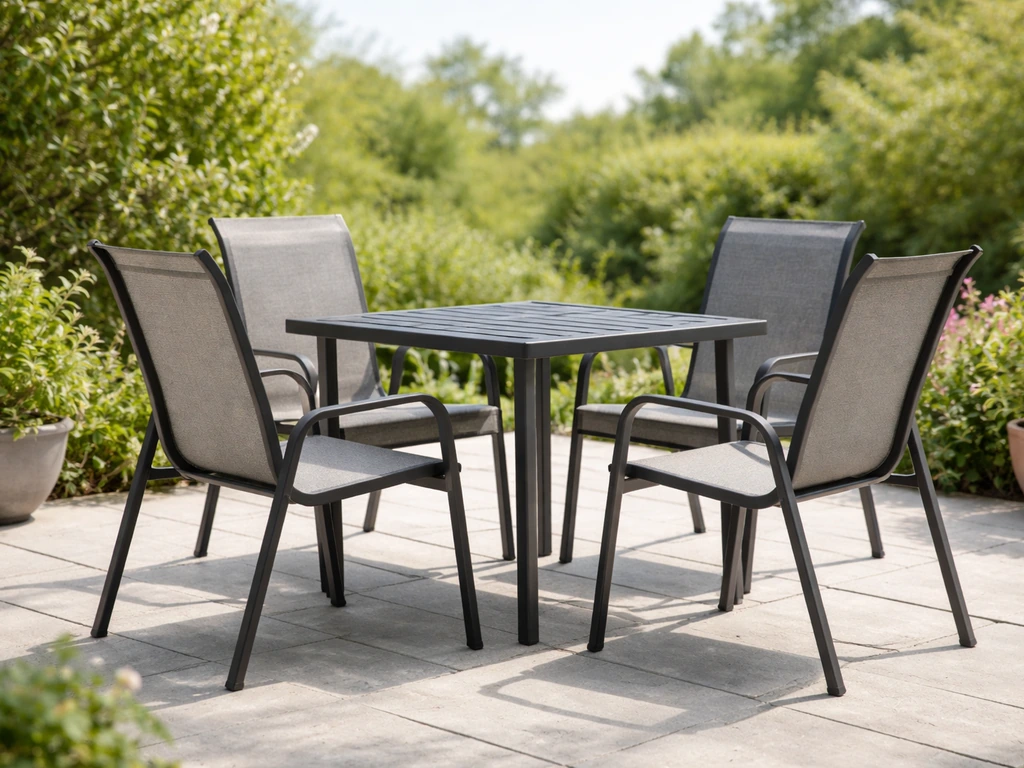
A basic 4-piece patio dining set in steel or aluminum runs $300 to $800. Mid-range sets in powder-coated aluminum or resin wicker typically land at $800 to $2,500. If you are shopping for a resin patio option for your outdoor space, the overall cost will depend on both the patio surface material and the size of the area you want to cover resin wicker. Premium teak, wrought iron, or all-weather wicker sets with cushions can push $3,000 to $6,000 or more. Cushions, a patio umbrella, and a base add another $150 to $400 on top of that. For most homeowners, a solid mid-range outdoor furniture set is a separate $1,000 to $2,500 line item on top of whatever the patio surface costs.
Patio surface cost by size
The patio surface is usually the most expensive part of the project. Costs scale fairly directly with square footage, but there are some baseline costs baked in (site prep, equipment, mobilization) that make smaller patios cost more per square foot. Here are realistic installed ranges using concrete and pavers as benchmarks, since those cover the middle of the market. Resin bound patios are popular for their smooth, permeable finish, and you can estimate cost based on the total square footage plus preparation and drainage needs concrete and pavers as benchmarks.
| Patio Size | Square Feet | Concrete (installed) | Pavers (installed) | Natural Stone (installed) |
|---|---|---|---|---|
| 10x10 | 100 sq ft | $600 – $1,500 | $1,400 – $4,000 | $2,000 – $6,000 |
| 12x12 | 144 sq ft | $860 – $2,160 | $2,000 – $5,760 | $2,880 – $8,640 |
| 16x16 | 256 sq ft | $1,540 – $3,840 | $3,580 – $10,240 | $5,120 – $15,360 |
| 20x20 | 400 sq ft | $2,400 – $6,000 | $5,600 – $16,000 | $8,000 – $24,000 |
| 20x30 | 600 sq ft | $3,600 – $9,000 | $8,400 – $24,000 | $12,000 – $36,000 |
These ranges use a concrete baseline of $6 to $15 per square foot installed and a paver baseline of $14 to $40 per square foot installed, both reflecting typical 2026 U.S. contractor pricing. Natural stone sits at the higher end. Your actual number will shift based on material choice, your region, and site conditions, all of which are covered below.
How each material affects the price
Material choice is the single biggest variable after square footage. Here's how each major option stacks up.
Poured concrete
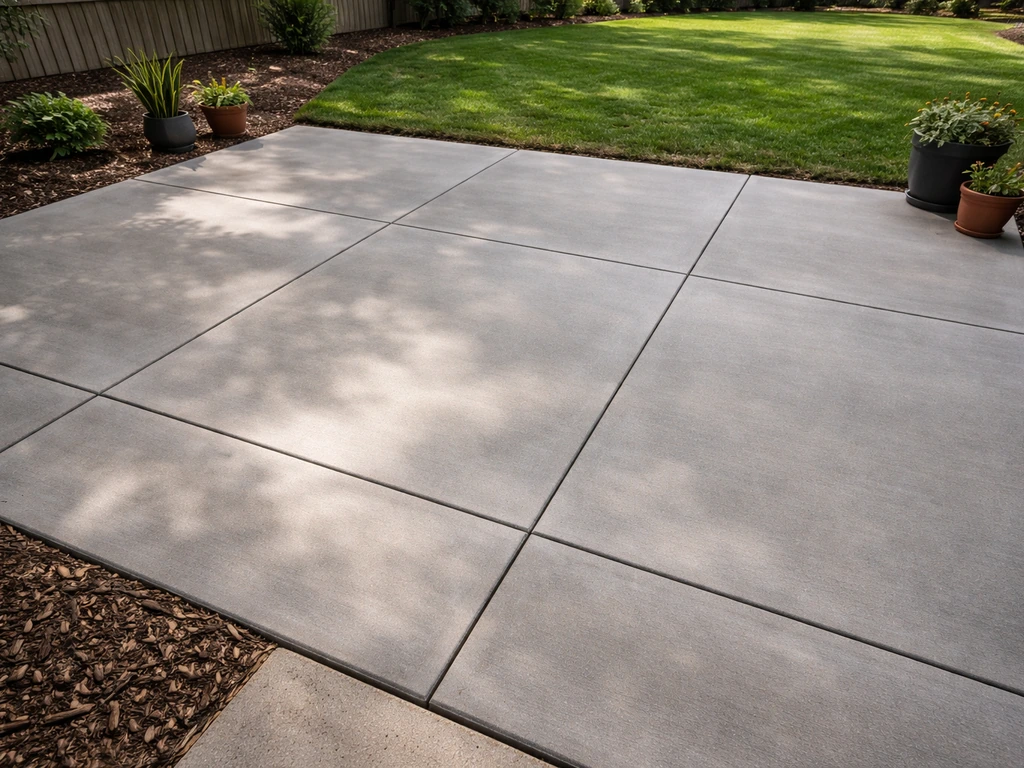
Plain poured concrete is the most affordable hardscape surface, typically running $6 to $15 per square foot installed for a standard brushed or broom finish. Resin patio costs vary by thickness and installation method, so if you're wondering whether resin patio is expensive, compare the per-square-foot totals and labor requirements to your other surface options is resin patio expensive. It's durable, low maintenance, and takes well to future resurfacing. The downside is that it can crack over time in freeze-thaw climates, and plain concrete isn't the most visually exciting option.
Stamped concrete
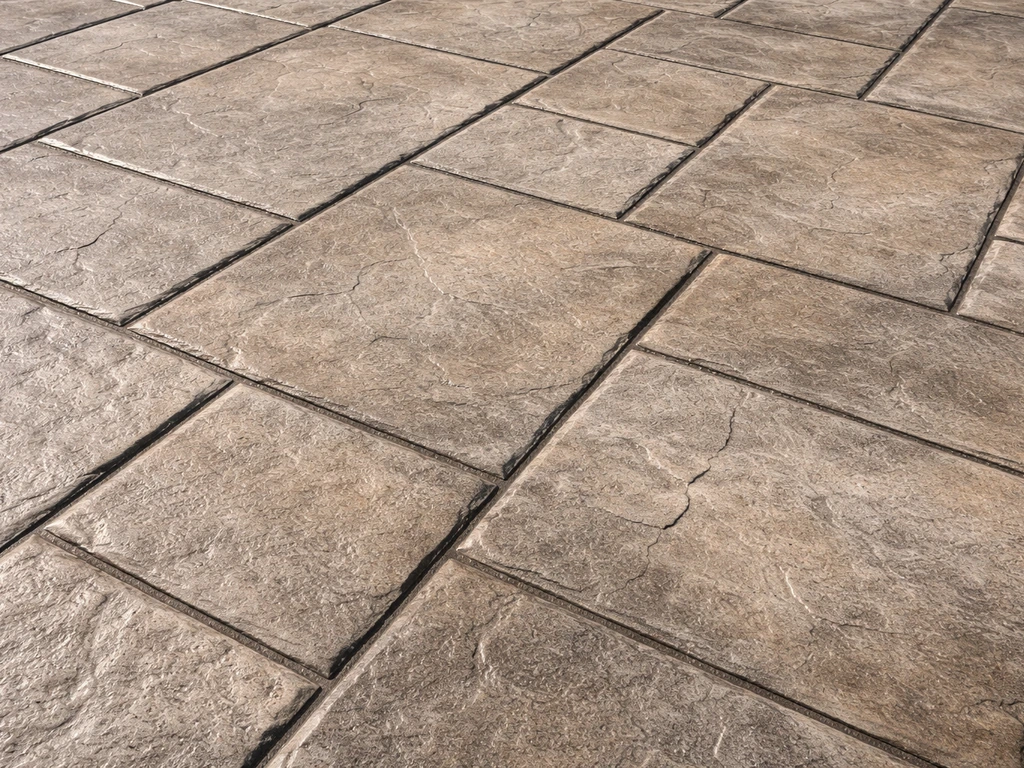
Stamped concrete starts where plain concrete leaves off. Adding a pattern and color pushes costs to roughly $7 to $20 per square foot for the decorative work, and most stamped patio projects land in the $3,000 to $8,000 range total. It mimics stone or brick at a lower cost, but it needs periodic resealing (every 2 to 3 years) to keep the color and protect the surface.
Concrete pavers
Concrete pavers are enormously popular because they're durable, replaceable if one cracks or stains, and available in dozens of styles. Installed, they typically run $14 to $40 per square foot, with labor alone accounting for $4 to $11 per square foot of that. To estimate how much a porcelain patio costs, use the same per-square-foot framework and add the porcelain and installation premiums for your size and region Installed, they typically run $14 to $40 per square foot. The wide range reflects the complexity of the pattern, the size and thickness of the pavers, and local labor rates.
Brick
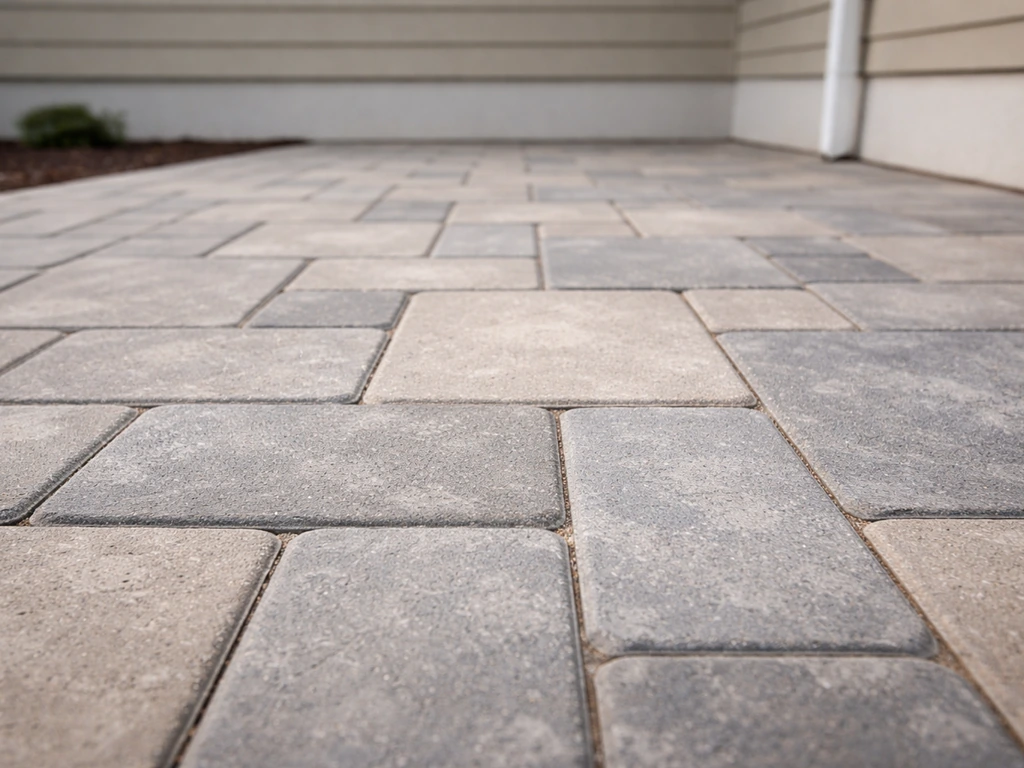
Traditional brick patios have a classic look and solid longevity, especially in moderate climates. Installed costs are similar to concrete pavers, generally $15 to $30 per square foot depending on the brick type and whether it's set in sand or mortar. Mortar-set brick runs higher because of the additional labor.
Flagstone
Flagstone, whether it's bluestone, travertine, slate, or limestone, is one of the more expensive options. Material costs alone can be $3 to $15 per square foot, and when you add skilled labor for cutting and fitting irregular shapes, installed costs often land at $20 to $40 per square foot or higher for premium stone.
Natural stone pavers
Cut natural stone pavers (think tumbled bluestone or travertine tiles) split the difference between flagstone and concrete pavers. They're more uniform than irregular flagstone, which makes installation faster, but material costs are still higher than concrete. Expect $18 to $40 per square foot installed.
| Material | Installed Cost Range (per sq ft) | Best For | Watch Out For |
|---|---|---|---|
| Plain concrete | $6 – $15 | Budget builds, large areas | Cracking in cold climates |
| Stamped concrete | $10 – $20+ | Budget stone/brick look | Resealing every few years |
| Concrete pavers | $14 – $40 | Versatility, repairability | Labor-intensive base prep |
| Brick | $15 – $30 | Classic aesthetic, durability | Mortar adds cost |
| Flagstone | $20 – $40+ | Natural look, high-end appeal | Irregular cuts = more labor |
| Natural stone pavers | $18 – $40 | Premium uniform look | Higher material cost |
DIY vs. hiring a contractor: what's the real difference?
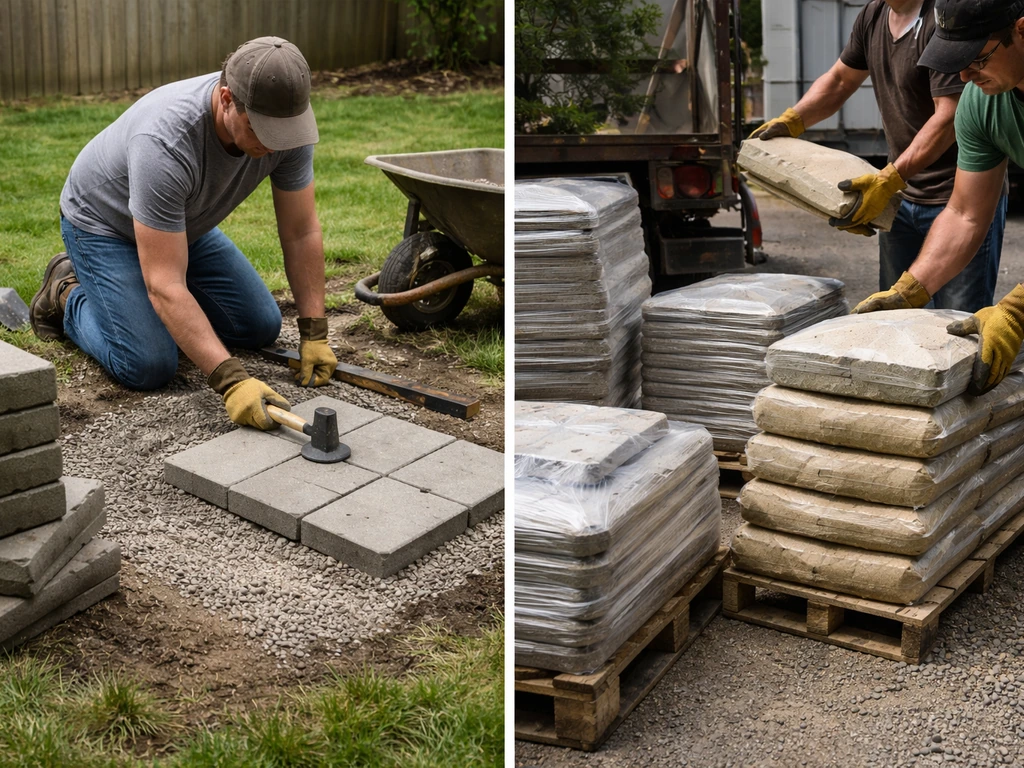
Labor is a huge chunk of patio costs, often 50% or more of the total project price. Paver installers charge $50 to $80 per hour or roughly $4 to $11 per square foot in labor alone. For a 400-square-foot patio, that's $1,600 to $4,400 just in labor before you buy a single paver.
DIY can save you that entire labor line item, but it comes with real tradeoffs. Proper paver installation requires a compacted gravel base (typically 4 inches deep for a pedestrian patio), a 1-inch sand bedding layer, precise grading for drainage, and plate compaction equipment you'll need to rent. The Western Hardscape Association notes that sand bedding thickness is typically about 3/4 inch (20 mm) to 1.5 inch (40 mm) per ICPI guidelines, which aligns with how installers size the sand layer for paver work a 1-inch sand bedding layer. If you skip or rush the base work, you'll have shifting, sinking pavers within a few years, and the base can't be fixed by adding sand on top of a finished surface. That said, a motivated DIYer with a weekend and the right equipment can absolutely do a 10x10 or 12x12 paver patio and save $500 to $2,000 in labor.
For concrete, DIY is trickier. Poured concrete has a very tight working window, requires mixing or ordering ready-mix, and finishing mistakes are permanent. Unless you have concrete experience, hiring out for poured or stamped concrete is almost always worth the money.
- DIY is most viable for: sand-set pavers, brick in sand, and simple flagstone stepping stones
- Hire out for: poured concrete, stamped concrete, mortar-set stone, and anything over 300 sq ft
- Always rent a plate compactor for paver work, even DIY (about $80 to $150/day)
- Permits: many jurisdictions don't require permits for sand-set patios, but concrete slabs often do. Check before you start
What actually drives the final price (beyond just square footage)
The square footage estimate is your starting point, but several factors can push the real number significantly higher. To get a realistic answer to how much does a new patio cost, start by estimating square footage and then add the site prep and material choices that drive your total. These are the most common ones I see catch homeowners off guard.
Site prep and excavation
Almost every patio requires excavation to remove existing soil, grass, and organics before the base goes in. The depth and difficulty of that work vary a lot. Rocky soil, tree roots, or a sloped yard all add time and cost. Contractors typically bake excavation into their quote, but it's worth asking how deep they're digging and how they're handling material removal.
Base thickness and materials
A proper patio base for foot traffic needs about 4 inches of compacted gravel. On soft or unstable soil, that might need to be 6 inches. Subgrade compaction standards recommend compacting the soil to at least 98% Standard Proctor density before the base goes in. More base material means more cost, but skimping here is the single most common reason patios fail early.
Drainage
Flat patios that pool water are a real problem, especially near a house. Proper slope (typically 1/8 to 1/4 inch per foot away from the structure), channel drains, or dry wells add to both design complexity and installed cost. If your yard has poor drainage to begin with, expect a $500 to $2,000 add-on for drainage work.
Design complexity and cutouts
Curves, angled edges, multiple patterns, insets, and cutouts for trees or fire pit rings all add labor. A simple rectangular patio in a running-bond pattern is the fastest to install. A curved patio with a herringbone pattern and a circular medallion in the center can cost 30% to 50% more per square foot just in labor.
Add-ons that change the budget fast
- Built-in fire pit or fire table: $1,500 to $5,000+
- Outdoor kitchen or grill station: $5,000 to $20,000+
- Pergola or shade structure: $2,500 to $8,000+
- Lighting (in-ground or string): $500 to $3,000
- Retaining walls or steps: $500 to $3,000 depending on size
- Permits and inspections: $50 to $500 depending on jurisdiction
Regional pricing: your location changes the number
National averages are a useful starting point, but contractor rates, material costs, and permit fees vary substantially by region. A paver patio that costs $18 per square foot installed in rural Tennessee might run $30 to $35 per square foot in the San Francisco Bay Area or New York metro. The coasts and major metros consistently run 20% to 50% above the national midpoint. The Midwest and South tend to be at or below national averages.
Professional cost estimating tools (like RSMeans' City Cost Index) let contractors and estimators apply a location factor to national benchmarks to adjust for local labor and material costs. As a homeowner, the practical version of this is to get at least three local quotes rather than relying on any national average. If you're in a high-cost metro, add 25% to 40% to the ranges in this article as a gut check before you call anyone.
| Region | Cost Adjustment vs. National Average |
|---|---|
| Northeast (NY, NJ, CT, MA) | +30% to +50% |
| West Coast (CA, WA, OR) | +25% to +45% |
| Midwest (OH, IN, IL, MN) | -5% to +10% |
| South (TX, FL, GA, TN) | -10% to +10% |
| Mountain West (CO, AZ, UT) | +5% to +20% |
How to compare quotes and make a smart decision
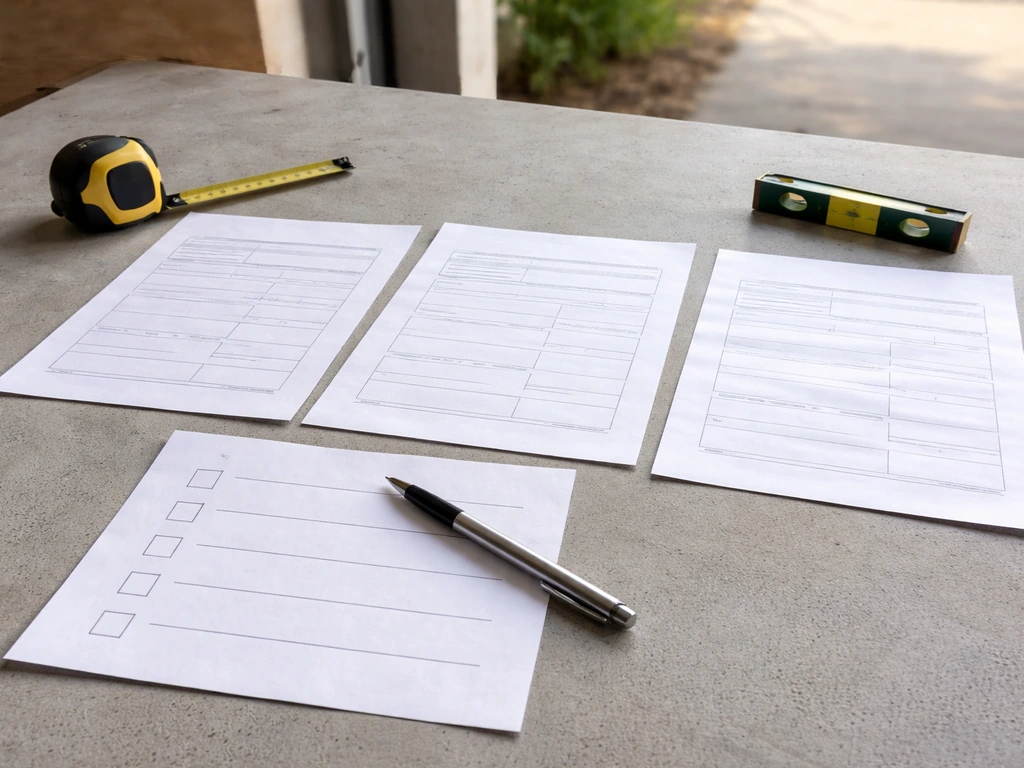
Getting three quotes is standard advice, but knowing what to look for in those quotes is what actually saves you money and headaches. A low bid that skips base preparation or doesn't include excavation disposal is often a money pit waiting to happen.
What a good patio quote should include
- Excavation depth and soil removal/disposal method
- Compacted base thickness and material type (crushed stone, Class II base, etc.)
- Bedding layer specification (typically 1 inch of coarse sand for pavers)
- Drainage plan: slope direction, any drains or dry wells included
- Material specs: brand, model, thickness, and color of pavers or stone
- Edge restraints: type and how they're anchored
- Warranty: workmanship coverage, and any manufacturer product warranty
- Permit responsibility: who pulls it and who pays for it
- Payment schedule: avoid any contractor asking for more than 30% upfront
Questions to ask every contractor
- How deep will you excavate, and what's your base material and compaction method?
- Do you use a plate compactor on the base? (If not, that's a red flag.)
- Is excavation debris removal included in the price?
- How do you handle drainage, and what's the slope plan?
- What's your warranty on workmanship, and do you have current liability insurance?
- Have you pulled permits for this type of project in this municipality before?
- Can I see a recent comparable project, ideally in a similar climate?
Building your total budget: surface + furniture
If you're pricing out a complete outdoor living setup, you'll want to add both line items together. A realistic mid-range 16x16 patio in pavers might run $5,000 to $8,000 installed, plus $1,500 for a solid furniture set, putting the all-in number at $6,500 to $10,000 before any add-ons like lighting or a pergola. At the budget end, a 10x10 concrete patio ($800 to $1,500) plus a basic furniture set ($400 to $700) gets you a functional outdoor space for under $2,500. Those are the two real anchors of the cost range most homeowners are navigating. Those are the two real anchors of the cost range most homeowners are navigating, which is where your patio cost to install usually lands.
One more thing worth considering: if you're weighing a patio against a deck, the budget math often favors a patio for ground-level builds. Many homeowners also wonder about the cost of a patio set, including how much a basic dining set versus a mid-range or premium set will run. Elevated decks involve more structural complexity and typically cost more per square foot. For ground-level outdoor living on a flat yard, concrete or pavers are almost always the more cost-effective choice, especially when you factor in long-term maintenance.
Your next steps before calling anyone
- Measure your intended patio area and write down the square footage
- Decide on a material shortlist based on your budget and the cost table above
- Check with your local municipality about permit requirements for your material choice
- Set a realistic total budget including surface, furniture, and a 10% to 15% contingency
- Get at least three written quotes using the checklist above to compare apples to apples
- Ask each contractor for a recent reference in your area and actually call it
FAQ
Is the price for “a patio set” usually furniture, or the patio surface too?
Most retailers mean the furniture set, but when contractors or homeowners talk about it in project planning, they often mean the whole patio build. If you’re comparing quotes, ask for a line-item breakdown that separates furniture (table, chairs, cushions) from the hardscape surface (demo, excavation, base, drainage, pavers or concrete).
What’s a realistic all-in budget if I want both a patio and a seating set?
A common planning approach is to budget one line for the patio surface and one for furniture. For example, a mid-range 16x16 paver patio often lands around $5,000 to $8,000 installed, then add about $1,000 to $2,500 for a mid-range furniture set, bringing you to roughly $6,000 to $10,000 before add-ons like lighting or a pergola.
How much does patio size change the cost in practice?
Costs scale with square footage, but small patios are usually less efficient because you still pay baseline items like excavation, equipment mobilization, and minimum design or permit work. If your patio is under about 150 square feet, ask your contractor whether the per-square-foot rate assumes a small or full-size job, and whether any fixed fees are included.
Do I need to include drainage costs even if my yard seems flat?
Yes, if there is any chance water will flow toward your home or pool on the slab. The typical fix may be a modest slope adjustment, but in problem yards you might need channel drains or a dry well, which can add $500 to $2,000 or more. Ask if they will verify runoff direction and provide a grading plan, not just build the surface.
What happens if I choose DIY for pavers but skip or underdo the base?
The most common failure is shifting or sinking pavers within a few seasons because the base, compaction, and edging are wrong. Once the surface is down, you cannot reliably correct base failures by adding sand on top. If you DIY, plan to invest in proper base depth, plate compaction equipment (often rented), and rigid edging, especially around the house and near gates.
Is stamped concrete “only” a little more than plain concrete, or is it a major price jump?
It can be a major jump once you account for color and pattern work plus sealing. Even when material is similar, the decorative labor is intensive, so stamped projects often land in a higher total range than plain concrete, and you should also budget for resealing about every 2 to 3 years.
How do I compare contractor quotes without getting tricked by differences in scope?
Ask whether each quote includes demo and disposal, excavation depth, base thickness (for example 4 inches of compacted gravel for typical pedestrian patios), subgrade compaction expectations, edging, and drainage solutions. Also ask what “installed” includes (material grade, paver thickness, sand bedding, and jointing), and request a written scope checklist.
Are permit fees and utility markouts something I should estimate up front?
Often yes. Even if the main pricing looks similar, permits and any required utility locating can vary widely by city and can add fixed costs and timeline delays. When you request quotes, ask whether they include permit handling or if you will be responsible for permits, inspections, and utility locate fees.
What’s the best way to estimate the cost of a patio set umbrella and cushions?
Don’t assume the furniture price includes weather parts. Many sets exclude an umbrella base, cushions, and replacement covers. A practical check is to price cushions separately (especially if they’re not “all-weather” or they’re thinner), then add the umbrella and base only if they are not explicitly included.
How much extra should I budget for a curved patio or a fancy pattern?
Curves, irregular borders, multiple cuts, and complex layouts typically cost more in labor than a simple rectangle. As a rule of thumb, more complex shapes and patterns can increase labor cost meaningfully (often on the order of 30% to 50% per square foot for those sections), so ask the contractor to price the design complexity as a multiplier or provide a separate line item.
Next Articles
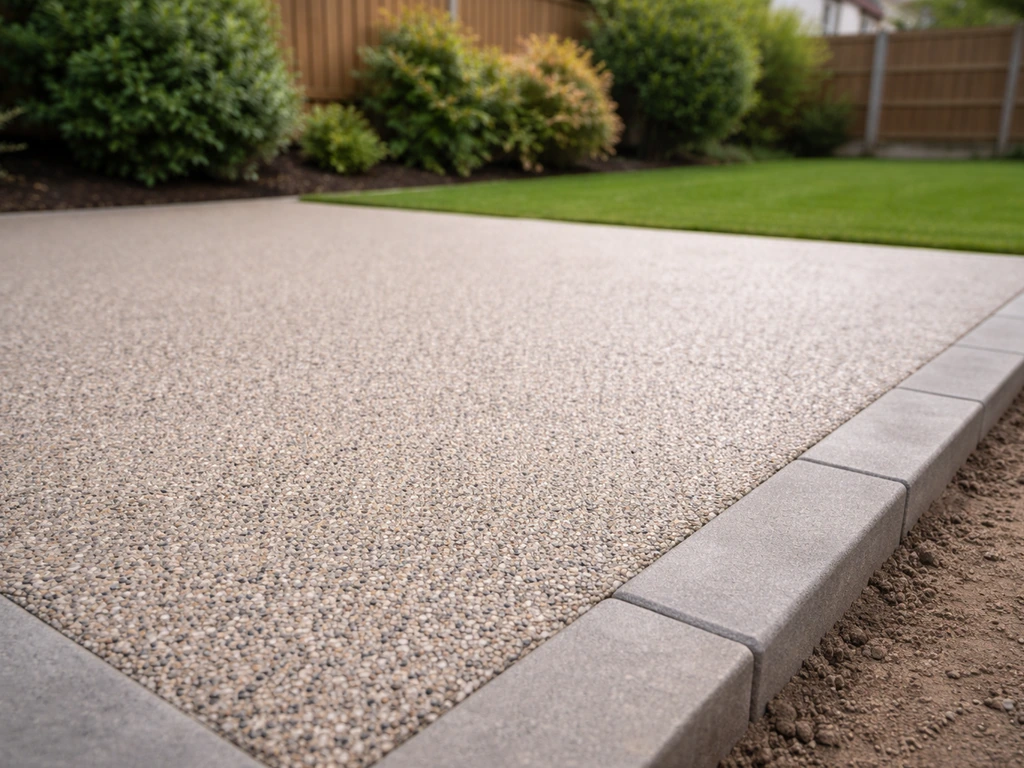
How Much Does a Resin Bound Patio Cost? 2026 Guide
2026 resin bound patio cost guide with real price ranges, breakdown, extras, and quote tips for any size.
How Much Does a Patio Bra Cost? Patio Pricing Guide
Patio pricing guide with real cost ranges, DIY vs pro, and all-in budget steps for 10x10 to 20x20 patios.
How Much Does a New Patio Cost? Prices by Type and Size
New patio cost by type and size with per sq ft pricing, DIY vs contractor breakdown, add-ons, and quote tips.