
A pool-and-patio project in 2026 typically runs between $40,000 and $150,000+ when you price everything together: pool installation, surrounding hardscape, site prep, permits, and equipment. On the low end, you're looking at a modest above-ground or small fiberglass pool with a basic concrete surround. On the high end, a large in-ground concrete pool with stamped concrete or natural stone decking, lighting, and drainage can easily push past $100,000. For just the <a data-article-id="A2DAE99B-F2AD-43D6-A057-AE60E7A52CFF">patio portion around a pool</a>, expect to spend roughly $3,000 to $20,000+ depending on size and material, with that number climbing fast if you go with premium stone or a large square footage.
How Much Does a Patio Pool Cost? Price Ranges and Tips

Felix Carver
29 Apr 2026
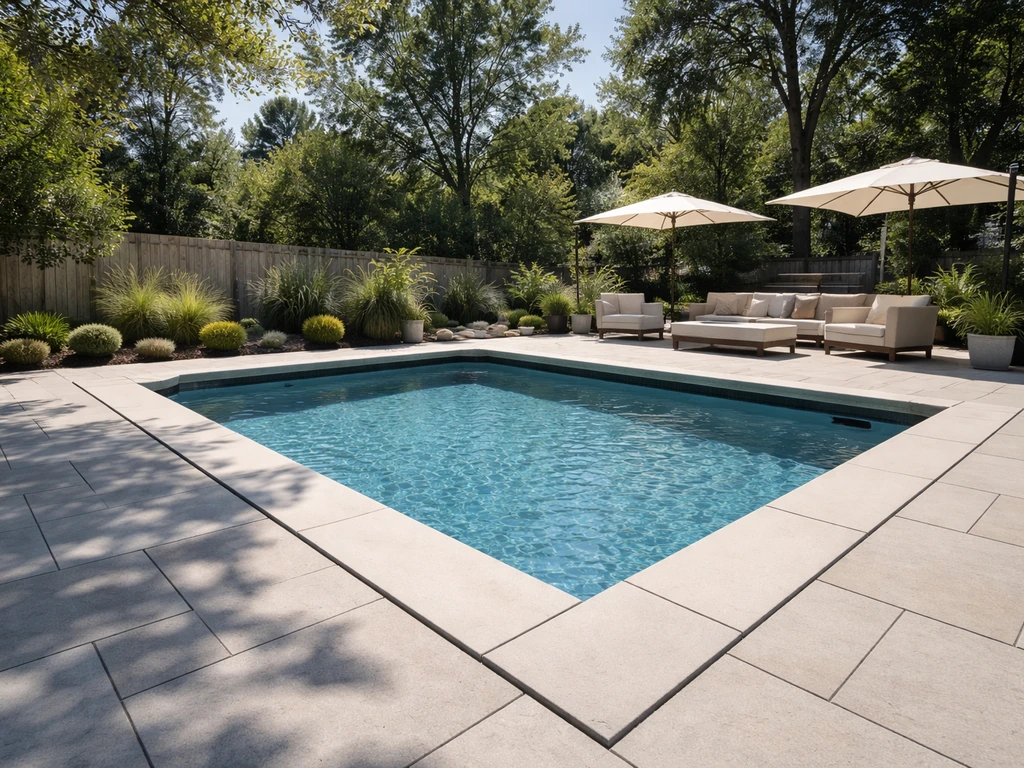
Quick ballpark ranges for common project types
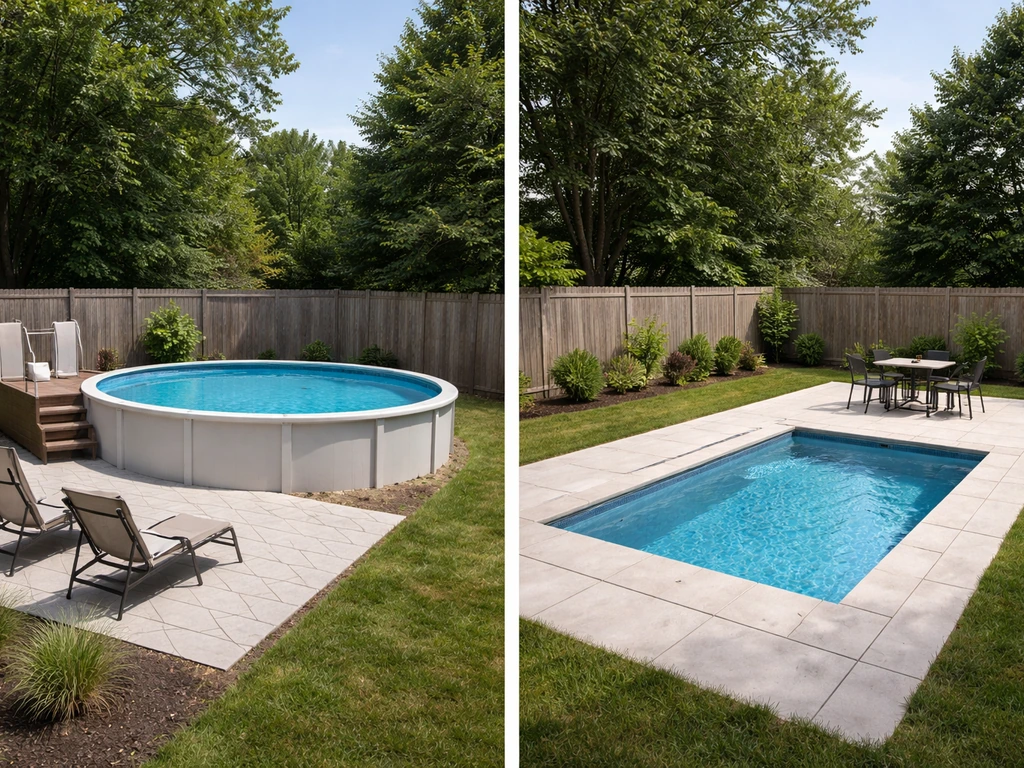
Before diving into details, here's a plain-English summary of what most homeowners actually spend depending on their situation. These are combined pool-plus-patio totals, not just the pool or just the deck.
| Project Type | Typical Total Range | What's Included |
|---|---|---|
| Above-ground pool + basic concrete patio | $8,000–$25,000 | Pool kit, concrete surround (up to 400 sq ft), basic site prep |
| Small in-ground fiberglass pool + concrete patio | $40,000–$65,000 | Pool shell, basic concrete or paver deck (~600 sq ft), standard equipment |
| Mid-size in-ground pool + pavers or stamped concrete | $60,000–$100,000 | Vinyl or fiberglass pool, 600–800 sq ft paver deck, drainage, lighting |
| Large in-ground concrete pool + premium stone/flagstone deck | $90,000–$150,000+ | Custom concrete shell, 800–1,200 sq ft natural stone, full electrical/plumbing |
These ranges assume contractor installation throughout. DIY on the patio portion can cut the deck budget by 40–60%, but pool installation itself is almost never a realistic DIY project. More on that split below.
What actually drives the cost up (or keeps it down)
Pool type and size
The pool itself is usually the biggest line item by far. In-ground pools run roughly $50–$125 per square foot of water surface area installed, according to industry pricing data. A 12x24 foot pool (288 sq ft) at $75/sq ft puts you at about $21,600 for the pool alone before you touch the deck. Pool type matters a lot here: a prefabricated fiberglass shell is typically cheaper and faster to install than a custom gunite or shotcrete concrete pool, which requires more labor and cure time. Vinyl liner pools sit in the middle on cost but have ongoing liner replacement expenses every 8–15 years.
Patio size
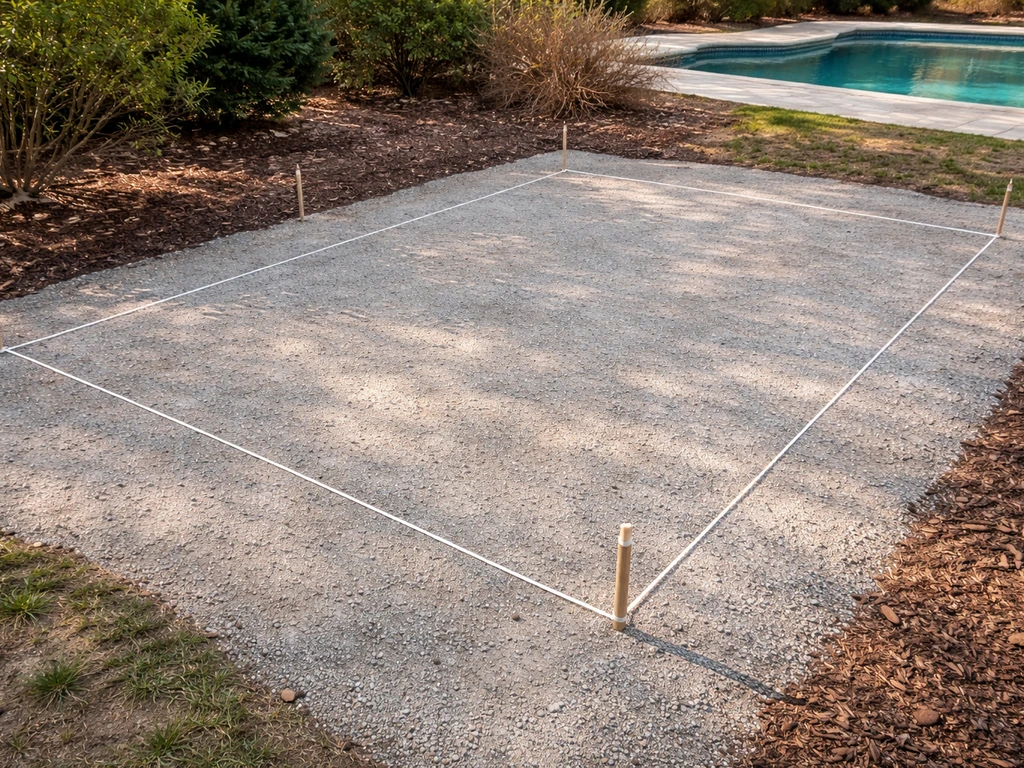
The size of the hardscaped area around your pool directly multiplies your per-square-foot material and labor costs. Common benchmarks: a small 10x10 (100 sq ft) accent section on one side, a moderate 12x24 (288 sq ft) wrap-around, or a full 20x20 (400 sq ft) or larger entertainment deck. For a pool, most designers recommend at least 4–6 feet of deck width on all sides, which for a standard 12x24 pool quickly means 500–800+ square feet of total patio surface. In-ground pool projects also need to account for how much patio fall or slope is required for proper drainage and safe footing. Every extra square foot adds material and labor costs, so knowing your target size before you get quotes is essential.
Patio surface material
Material choice is where most homeowners either save money or accidentally blow their budget. Basic concrete is the most affordable and durable option. Stamped concrete adds visual appeal at a moderate premium. Pavers offer flexibility and a high-end look. Natural stone (flagstone, travertine, slate) is the most expensive but also the most striking. The differences are real and significant at scale: on a 600 sq ft pool deck, switching from plain concrete to flagstone can add $6,000–$14,000 to your material and labor costs alone.
Patio material costs: concrete vs. pavers vs. stone vs. stamped
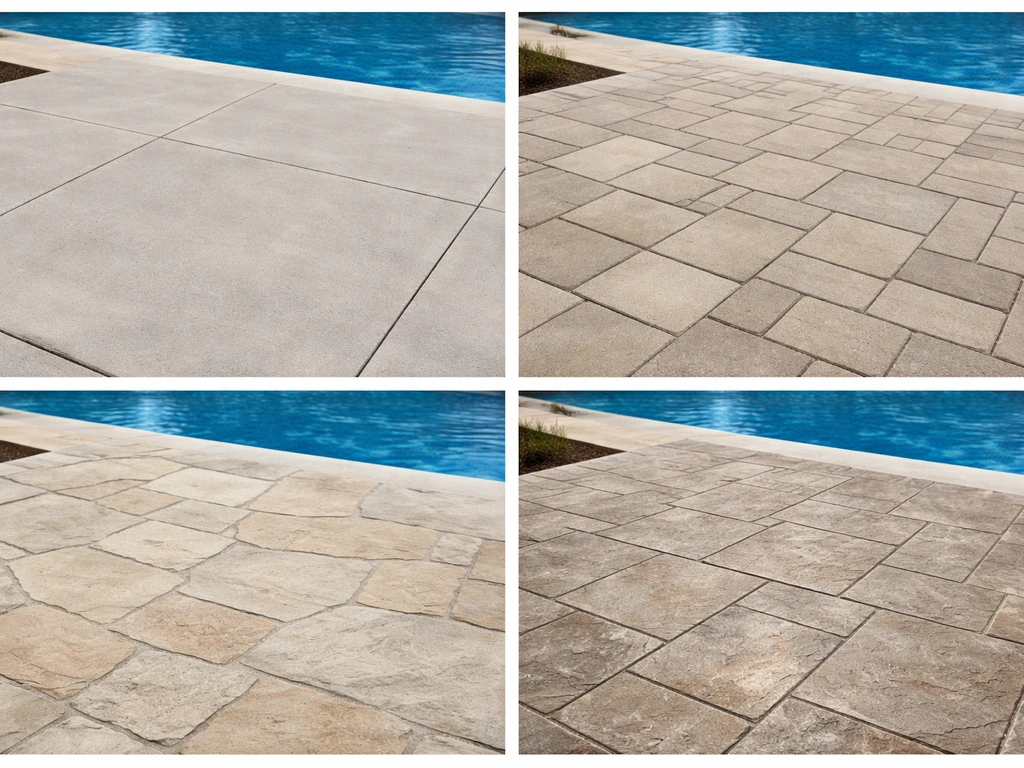
Here's how the main patio surface options compare for pool deck use. These are installed costs (materials plus labor) unless noted otherwise.
| Material | Installed Cost per Sq Ft | Pros for Pool Use | Cons |
|---|---|---|---|
| Poured concrete | $6–$17 | Durable, low maintenance, affordable, fast install | Can get slippery; limited aesthetics |
| Stamped concrete | $15–$30 | Looks like stone or pavers at lower cost, many patterns | Cracks can be harder to repair; fades over time |
| Concrete pavers | $12–$45 | Easy to repair individual sections, great drainage options | Higher upfront cost; can shift over time |
| Brick | $14–$25 | Classic look, very durable | Can get hot in direct sun; higher labor cost |
| Flagstone | $16–$30 | Natural, beautiful, stays cooler than concrete | Expensive; irregular shapes require skilled labor |
| Travertine/natural stone slabs | $20–$50+ | Premium appearance, naturally slip-resistant | Highest cost; requires sealing and maintenance |
For most homeowners prioritizing budget, basic or brushed concrete at $6–$11/sq ft is the go-to. If you want the look of stone without the full price, stamped concrete at $15–$30/sq ft is a reasonable middle ground. If budget allows and you want the best long-term result, concrete pavers or natural flagstone are worth the premium because they're easier to repair and tend to look better as they age.
Contractor-installed vs. DIY: where the savings are real
Let's be clear about what's actually DIY-able here. The pool itself, including excavation, shell installation, electrical, plumbing, and equipment hookup, is not a realistic DIY project for most homeowners. It requires licensed contractors in virtually every jurisdiction, and permits will require inspections at each stage. Attempting to DIY pool installation to save money almost always results in costly mistakes, failed inspections, or voided equipment warranties.
The patio surround, however, is a different story. A motivated homeowner with some experience can lay concrete pavers or even pour a basic concrete slab, potentially cutting labor costs by 40–60%. Labor alone on a 600 sq ft paver deck often runs $3,000–$7,000. Doing it yourself brings that to roughly $1,500–$3,000 in materials only. The trade-offs: it's physically demanding work, requires proper base prep (compacted gravel subbase is non-negotiable), and if done incorrectly, drainage problems and shifting can cost more to fix later than you saved. Natural stone and stamped concrete are genuinely difficult to do well without experience, so DIY there is higher-risk.
| Scenario | Estimated Cost | Risk Level |
|---|---|---|
| Full contractor install (pool + patio) | $40,000–$150,000+ | Low (contractor assumes liability) |
| Contractor pool, DIY paver patio | $35,000–$120,000 | Medium (patio errors possible) |
| Contractor pool, DIY concrete patio | $32,000–$110,000 | Medium-high (concrete work unforgiving) |
| Full DIY (pool + patio) | Not recommended | Very high (permits, safety, liability) |
Full project cost breakdown: what you're actually paying for
When you get a contractor quote for a pool-and-patio project, you should expect to see these cost categories. If a quote is missing any of them, ask specifically where those costs are accounted for.
- Pool shell and equipment: This is the largest cost component. It includes the pool structure itself (fiberglass shell, vinyl liner kit, or gunite/shotcrete application), filtration system, pump, heater (optional), and any built-in features like steps or benches.
- Excavation and site prep: Digging the hole for an in-ground pool runs $1,500–$5,000+ depending on soil conditions, site access, and pool size. Rocky soil or limited machine access drives this number up significantly.
- Base preparation for the patio: Proper patio installation requires compacted gravel base (4–6 inches minimum), sand setting bed for pavers, or formed and reinforced base for concrete. Skimping here is the most common cause of long-term patio problems. Budget $1–$3/sq ft for base work alone.
- Patio materials and installation: See material cost table above. For a 600 sq ft deck, this ranges from roughly $3,600 (basic concrete at $6/sq ft) to $18,000+ (premium stone at $30/sq ft).
- Drainage system: Often overlooked and frequently regretted. Pool decks need proper slope (1/8 to 1/4 inch per foot minimum) and often channel drains along pool edges. Drainage systems typically cost $10–$25 per linear foot installed.
- Electrical work: Pool equipment (pump, lighting, heater) requires dedicated electrical circuits and GFCI protection. This is almost always permitted and inspected separately. Budget $1,500–$4,000 for electrical depending on complexity and local rates.
- Plumbing: Circulation lines, return jets, skimmer lines, and optional water features require plumbing work scoped and permitted separately from the pool shell in most jurisdictions.
- Permits and inspections: Pool permits vary widely by city/county but commonly run $200–$1,500. Some municipalities require separate permits for electrical, plumbing, and the pool structure itself. Never skip permits, especially for pools. It creates serious problems when you sell.
- Demolition and haul-away (replacement projects): If you're replacing an existing concrete deck, surface removal costs $2–$6/sq ft. For a 600 sq ft deck, that's $1,200–$3,600 before you've spent a dollar on new material.
- Finishing and sealing: Concrete and natural stone typically need sealing after installation and every 2–5 years afterward. Initial sealing runs $1–$3/sq ft. Include this in your first-year budget.
How your location affects what you'll pay
Regional price differences for pool and patio projects are substantial, not just minor adjustments. Labor rates, material delivery costs, permit fees, and local contractor demand all vary significantly by state and even by metro area within a state. As a concrete example: a comparable in-ground pool project in Vermont might run $52,000–$79,000, while the same project in Alabama might come in at $34,000–$55,000. That's not a small gap. It reflects real differences in contractor labor costs and local market conditions.
As a general framework: homeowners in high-cost metros (New York, San Francisco, Boston, Seattle) should expect to be at or above the top of any national price range. Midwest and Southeast homeowners typically land near the middle or bottom of ranges. If you're using any national benchmark as a starting point (including numbers from this article), apply a rough regional multiplier: add 20–30% for high-cost coastal metros, subtract 10–20% for lower-cost Southern and Midwest markets. The best way to calibrate is to get at least three local contractor quotes, which will quickly tell you what your market looks like.
How to budget and compare contractor quotes
Before you call a single contractor
Know your priorities before you start getting quotes. Decide on pool type (fiberglass vs. vinyl vs. concrete), approximate size, and your preferred patio material and approximate square footage. Having these decisions mostly made before talking to contractors stops you from comparing apples to oranges when quotes come back at wildly different prices.
What a good quote should include

- Fully itemized scope of work: pool type and dimensions, patio square footage, material specifications (exact material, finish, color)
- Explicit statement of what is NOT included (so you know what you'll pay extra for)
- Material allowances: if quotes say 'pavers allowance $X/sq ft,' confirm that matches the material you actually want
- Who pulls permits and who pays for them
- Proof of contractor license and liability insurance (ask for it, don't just take their word)
- Payment schedule tied to project milestones, not arbitrary dates
- Warranty terms for both materials and workmanship
- Site cleanup and material haul-away confirmation
- How change orders are handled: any scope change should be written and signed before work continues
- Realistic project timeline with start and completion dates
Red flags to watch for
- A quote that's dramatically lower than all others (usually means something is excluded or they plan to cut corners)
- Requests for more than 30–40% upfront before work starts
- No written contract or vague scope descriptions like 'pool and deck as discussed'
- Contractor won't pull permits or suggests skipping them to save money
- No mention of drainage in a pool deck quote
- Inability to provide references from similar local pool-and-patio projects
A practical budgeting approach
Start with a target total budget and work backward. If your budget is $70,000 for the whole project, and pool equipment and installation realistically costs $45,000–$55,000 in your area, you have roughly $15,000–$25,000 left for the patio. A practical rule of thumb for how much should i expect to pay for a patio is to budget per square foot based on your chosen material, then scale it to your total deck area. At 600 sq ft, that's $25–$42/sq ft for the deck, which comfortably covers concrete pavers or stamped concrete but probably not premium natural stone. That kind of math, done before you talk to anyone, keeps the conversation honest and stops you from getting upsold into a budget you can't support. It's also worth noting that the cost of patio work around a pool is closely connected to the broader question of <a data-article-id="4CC27F70-5A40-4AD8-A48D-53458980D251">what patios cost overall</a>, since the same material and labor rates apply whether or not a pool is involved. If you want a quick benchmark before quotes, see what is the average cost of a patio for context on typical patio-only pricing compared to a pool-and-patio project. If you’re wondering <a data-article-id="A165E465-C964-422D-A7A0-1182567A597D">how much to do a patio</a>, start by using the patio-only line items and per-square-foot rates for your chosen material. If you’re wondering how much patio, start by using the patio-only line items and per-square-foot rates for your chosen material.
Finally, build a 10–15% contingency into your budget. Soil surprises during excavation, drainage issues that only appear once digging starts, and change orders are common on pool projects. The homeowners who end up frustrated are almost always the ones who budgeted to the dollar with no room for the unexpected.
FAQ
Is the stated cost for a patio pool the deck only or the whole pool-and-patio project?
It depends on whether the quote is pool-plus-deck or deck-only. For a patio portion around an existing or included pool, the patio work is often budgeted separately and commonly falls in the roughly $3,000 to $20,000+ range based on total square footage and material. If the quote only lists “pool” or “deck,” ask for an itemized line list for site prep, excavation, drainage, electrical, and permits so you can compare apples to apples.
Can the patio budget end up bigger than the pool cost?
In most cases, the deck is cheaper per square foot than the water container itself, but it still can become the largest cost if your design uses a very large entertainment area. Expect decking to scale quickly with square footage, especially if you are adding steps, seating walls, stairs, or custom edging that increases labor and material waste.
How should I budget if I want an all-in number instead of separate bids?
For planning purposes, many homeowners start with an all-in budget that includes a contingency, then refine with local bids. A practical approach is to reserve 10 to 15% for surprises, then allocate the remaining amount between the pool (based on the installed per-square-foot water area for in-ground) and the patio (based on your deck square footage and chosen surface). This prevents you from being forced into cheaper finishes because a drainage or soil issue appears.
What hidden factors most often increase patio pool project costs?
Yes, buried and site-specific work can raise costs even when the visible patio materials stay the same. Common examples are relocating utility lines, handling unexpected soil conditions, repairing or extending drainage systems for safe footing and proper fall, and adding electrical conduit for lights or outlets.
What should I check on a contractor quote to avoid surprise add-ons?
Not always. Some companies quote a low “base” number and later add items like permits, electrical upgrades, additional excavation, rebar/steel, plumbing tie-ins, or extra patio thickness and base. When reviewing quotes, confirm whether they include site prep, base installation, drainage corrections, and any required inspections at each stage.
Why do patio pool prices vary so much between cities and states?
Regional pricing affects both labor and delivery, but the slope of the cost difference usually shows up in hardscapes first. If you are in a high-cost metro, you may see higher install labor for pavers or stamped concrete, and sometimes higher permit or inspection fees. Use local quotes to calibrate rather than relying only on national ranges.
How does drainage and patio slope affect the final price?
Yes, patio fall (slope) and drainage requirements can change the design footprint and material needs. If your yard requires more grade correction, you may need additional excavation, thicker sections, or added drainage components, which can add cost even if you keep the same deck material.
If vinyl pools are mid-range in price, what ongoing costs should I plan for?
Expect the liner category to include future cost planning. Vinyl liner pools typically require replacement every 8 to 15 years, so a lower initial install may cost more over time than fiberglass or concrete if you do not budget for eventual liner and related labor.
Where is DIY realistic for a patio pool, and what are the biggest DIY mistakes to avoid?
DIY can reduce patio labor, but it increases risk if base prep or drainage is wrong. Concrete pavers and slab work require proper compacted subbase, correct thickness, correct edging, and attention to runoff. If you skip or shortcut base prep, shifting and pooling water often appear after rain cycles, and repairs can erase much of the savings.
How do material upgrades change the price beyond just the per-square-foot rate?
Yes. Materials can vary in total cost because upgrades change both unit price and installation time. Natural stone tends to cost more per square foot and often needs more labor for layout and leveling, stamped concrete can require more preparation and finishing skill, and pavers can add cost when you include complex borders or multiple elevations.
How can I compare contractor quotes without getting misled by different scopes?
If you are comparing two quotes, ensure they include the same pool type, same approximate pool dimensions, and a comparable patio scope and size. Also confirm the deck width recommendation on all sides, whether steps and railings are included, and whether the company is including drainage and utility tie-ins. Small scope differences can create large total price gaps.
What’s a practical method to work backward from my total budget to a patio size?
A quick way is to estimate your deck square footage, pick your finish tier, and apply a per-square-foot planning range, then subtract that from your total target budget to see what remains for the pool. If the remaining amount does not cover realistic pool installation locally, you can adjust by shrinking deck size, choosing a lower-cost surface, or switching pool type.
Next Articles
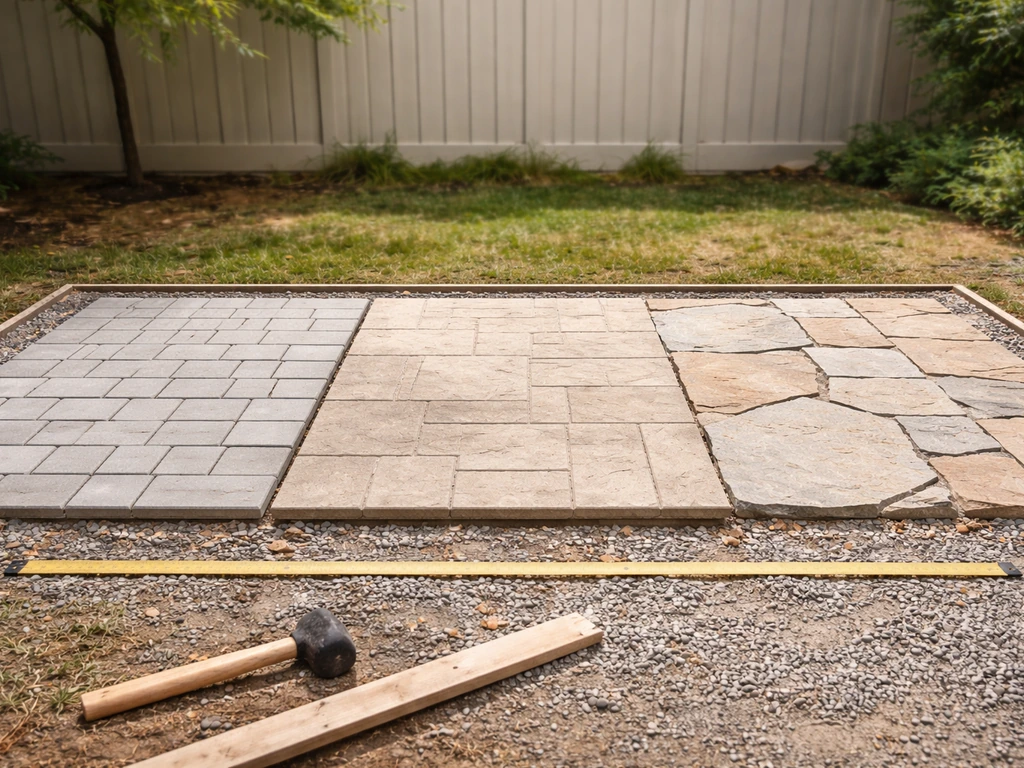
How Much Patio Costs: Pricing by Size and Material
Concrete, pavers, stone and stamped patio costs by size with real price ranges, add-ons, and bid checklist to budget fas
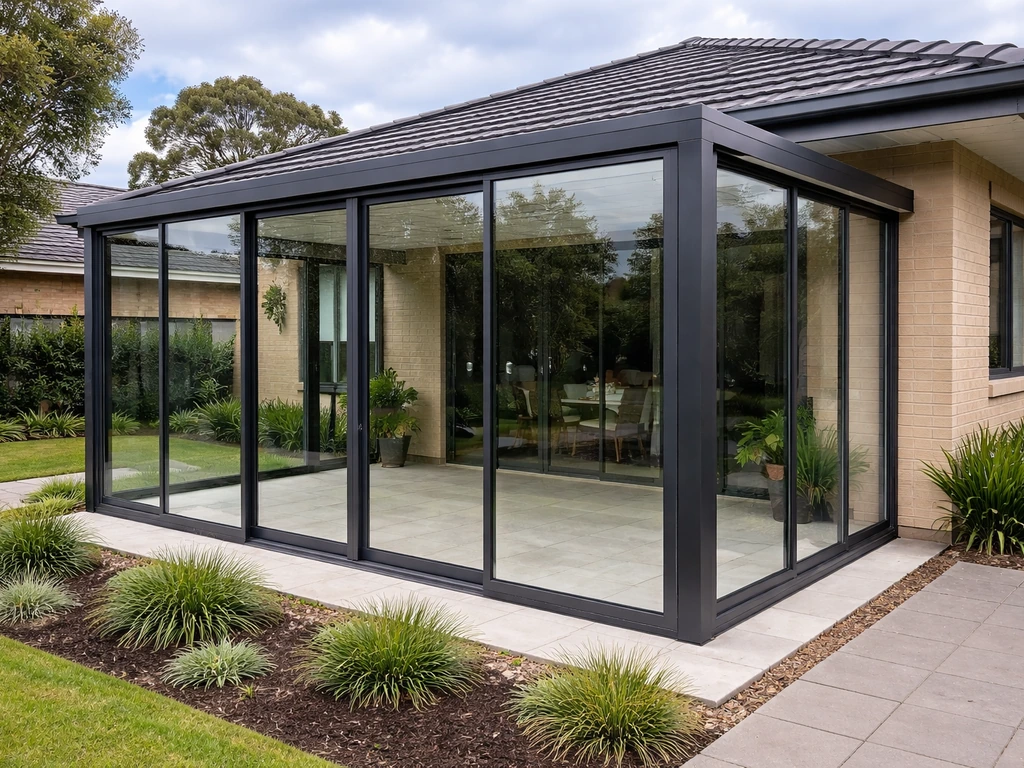
How Much Does It Cost to Enclose a Patio in Australia
Patio enclosure costs in Australia by material and size, with price ranges, cost drivers, and quote checklist for accura
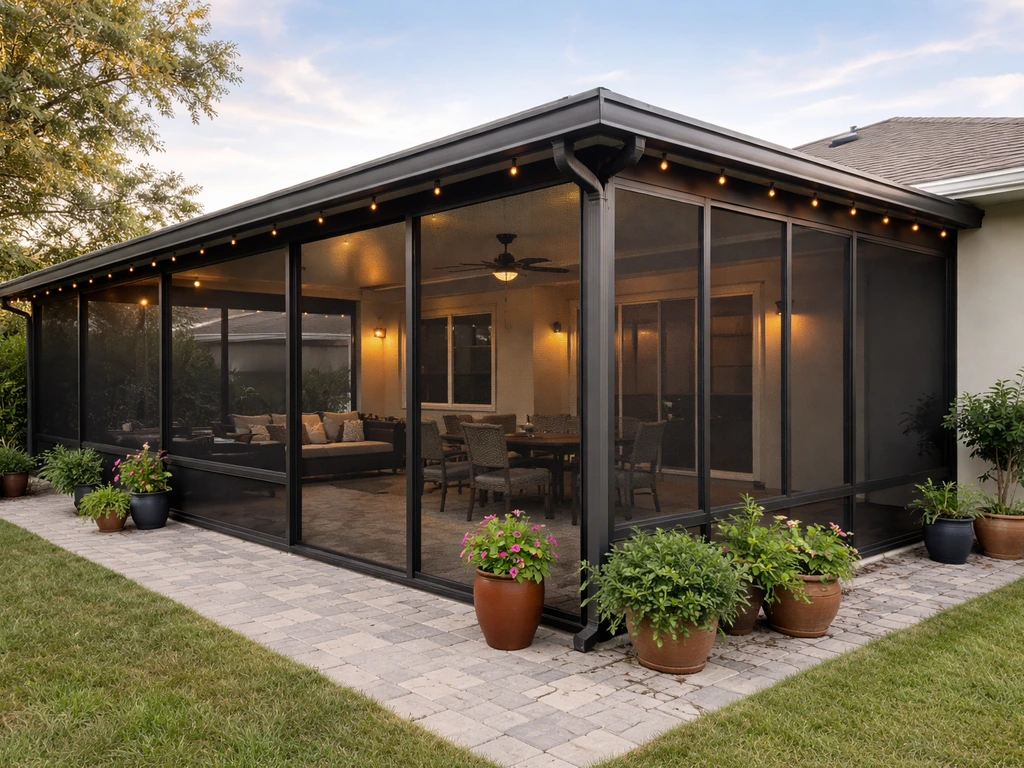
How Much Does It Cost to Close in a Patio? Budget Guide
Estimate the cost to enclose a patio, compare screen vs glass, and budget for sizes like 10x10 to 20x20.